
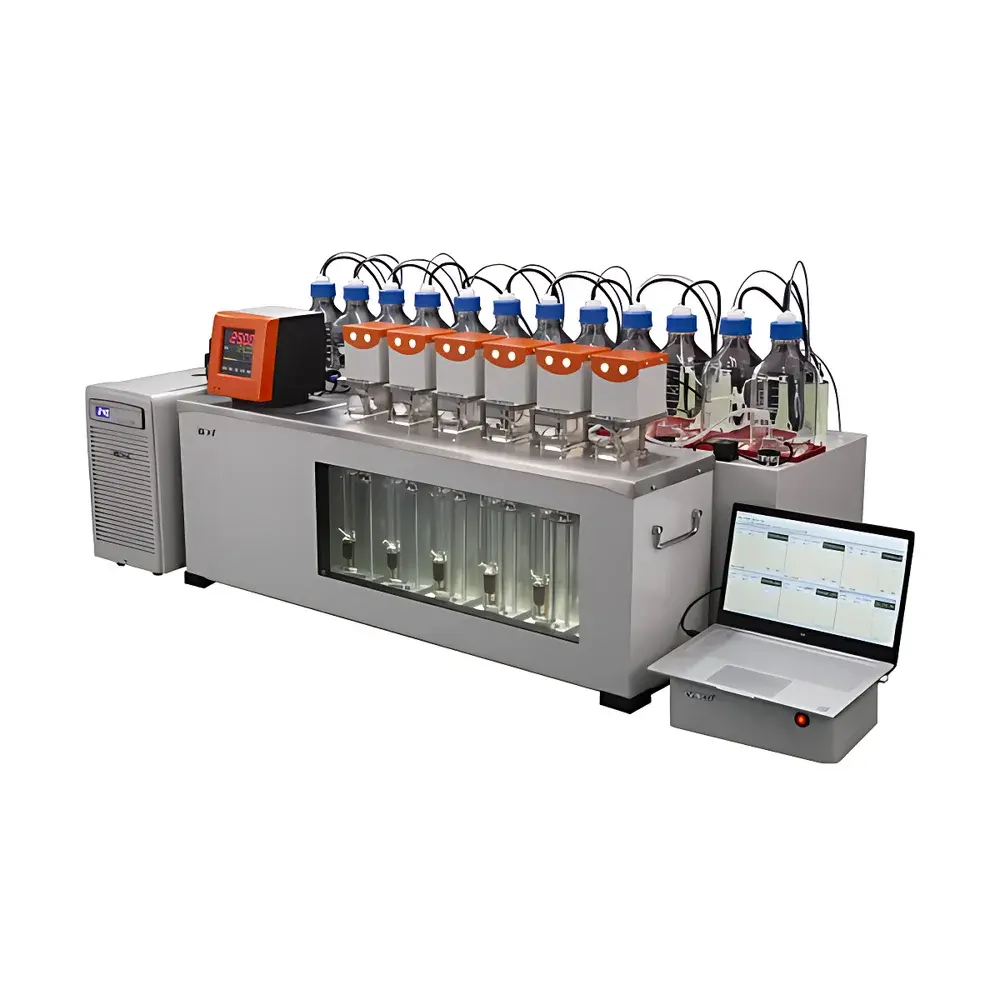
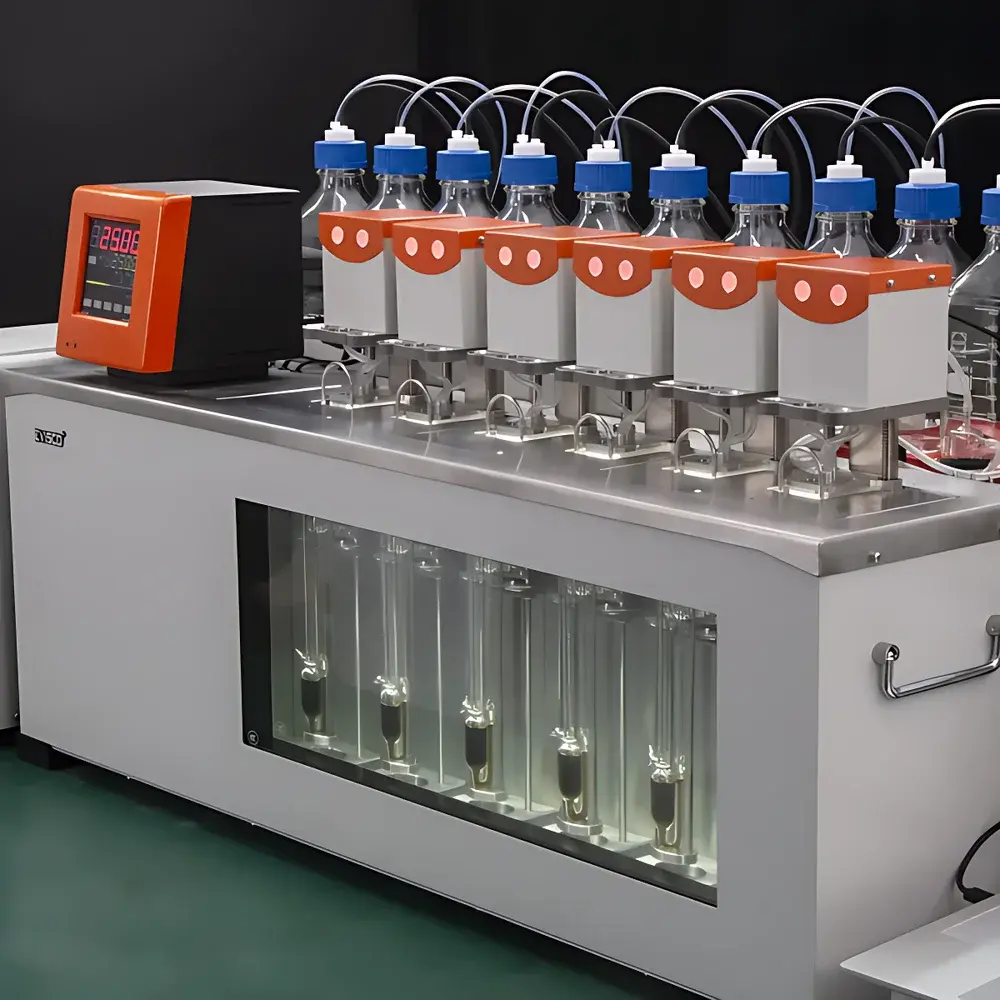
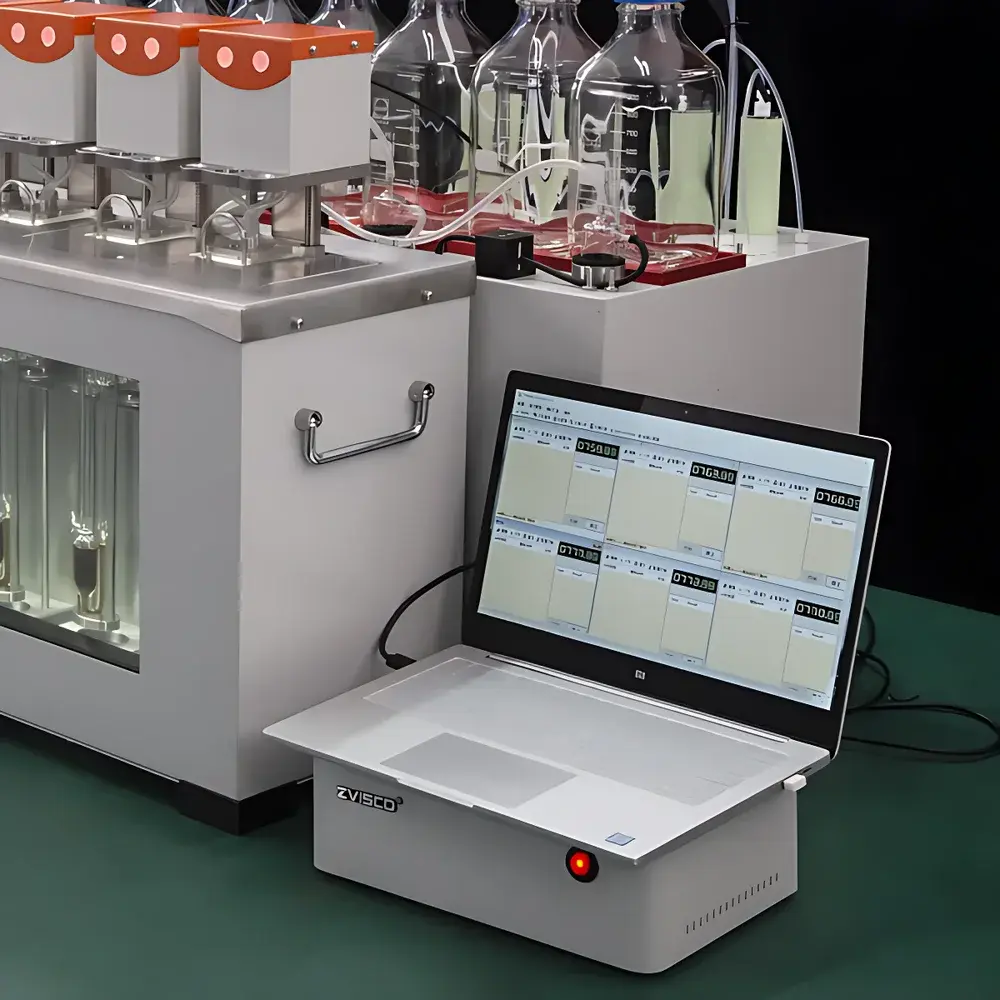
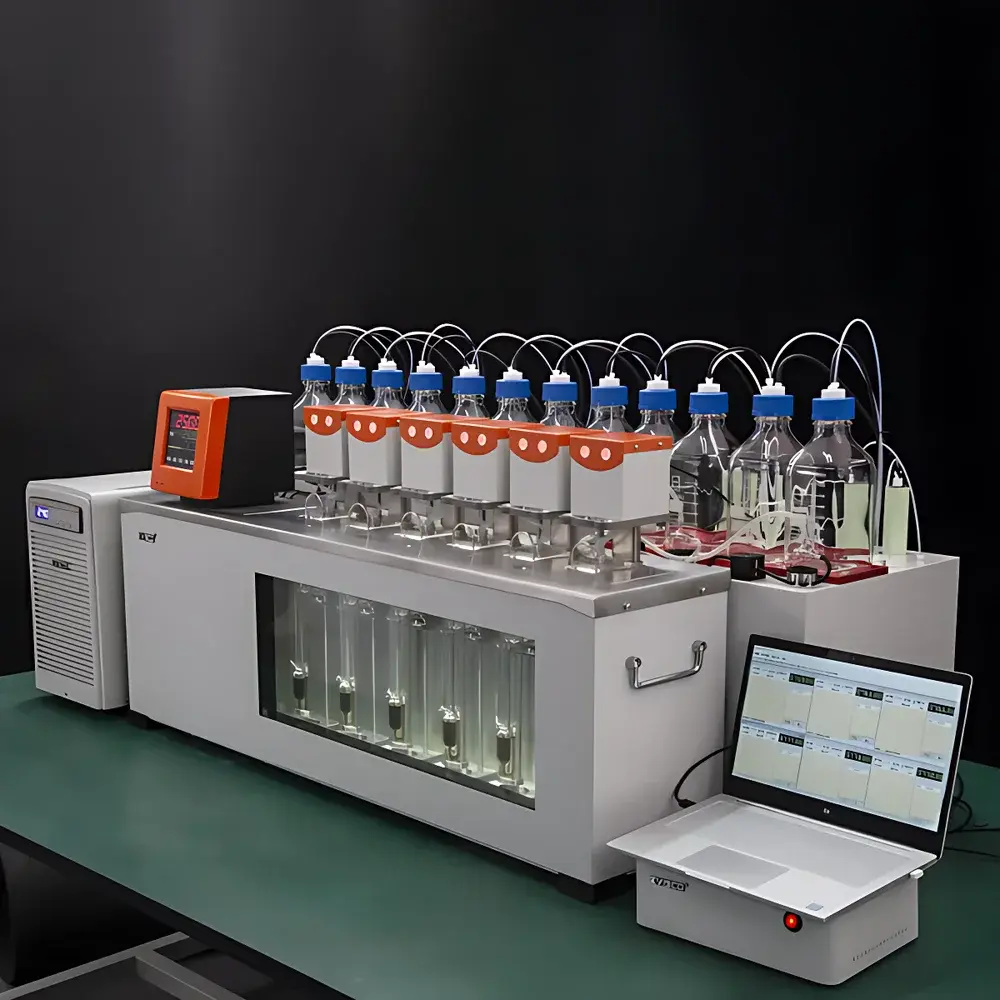
ZVISCO IV6600 Automated Ubbelohde Viscometer
| Brand | ZVISCO |
|---|---|
| Origin | Zhejiang, China |
| Manufacturer Type | Direct Manufacturer |
| Product Category | Domestic Instrument |
| Model | IV6600 |
| Instrument Type | Capillary Viscometer |
| Viscosity Range | 0.3–5000 mm²/s |
| Temperature Control Range | 15–65 °C |
| Temperature Uniformity & Stability | ≤ ±0.01 °C |
| Timing Resolution | 0.0001 s |
| Measuring Time Range | 0.01–9999.99 s |
| Cleaning/Drying Fluid Consumption per Cycle | < 13 mL |
| Compatible Capillaries | Ubbelohde, Micro-Ubbelohde, Dilution-type Ubbelohde (compliant with ISO 3105, GB/T 1632–1993, ASTM D 446, DIN 51562) |
| Software Platform | Windows XP/7/8/10 |
| Power Supply | 220 V / 50 Hz |
| Rated Power | 1.9 kW |
| Dimensions (L×W×H) | 1300 × 600 × 600 mm |
Overview
The ZVISCO IV6600 Automated Ubbelohde Viscometer is an ISO- and ASTM-compliant capillary viscometry system engineered for high-precision, fully automated measurement of intrinsic, relative, specific, and logarithmic specific viscosity in polymer solutions. It operates on the fundamental principle of Poiseuille flow through calibrated glass capillaries—specifically Ubbelohde, micro-Ubbelohde, and dilution-type capillaries—under controlled thermostatic conditions. Designed for laboratories requiring regulatory-grade reproducibility in polymer characterization, the IV6600 implements standardized gravimetric or volumetric timing protocols to determine kinematic viscosity (mm²/s), which serves as the basis for calculating intrinsic viscosity [η], Mark–Houwink molecular weight parameters, Huggins and Schulz–Blaschke coefficients, and other critical rheological indices defined in ISO 1628 (Parts 1, 2, 4, 5), ASTM D 4603, ISO 307, and pharmacopoeial monographs (e.g., USP <911>, EP 2.2.34). Its dual-chamber thermostatic bath ensures thermal homogeneity ≤ ±0.01 °C across the full 15–65 °C operating range—essential for minimizing temperature-induced drift in time-based capillary measurements.
Key Features
- Full automation cycle: sample aspiration, efflux timing, solvent dispensing, high-pressure pulsed reverse-flow cleaning, inert-gas-assisted drying, and waste segregation—all executed without manual intervention.
- Modular architecture: integrates HCT-series precision thermostatic bath, IV-series viscometry module, and ACL auxiliary control unit—each linked via standardized USB 2.0 interfaces for deterministic data synchronization and serviceability.
- Optical detection system: employs corrosion-resistant stainless-steel-armored near-infrared photodiodes with adaptive threshold logic, enabling reliable meniscus detection across opaque samples—including carbon-black-filled polymer melts and highly pigmented masterbatches.
- Thermal management: dual-zone bath design with laminar forced circulation delivers uniform temperature distribution (≤0.01 °C deviation) and eliminates stratification effects that compromise capillary efflux repeatability.
- Safety & maintenance engineering: includes low/high bath-level alarms, overtemperature cutoff, tool-free bath–controller separation for cleaning the mixing zone, and fail-safe fluid-level monitoring during all liquid-handling steps.
- Flexible measurement modes: supports single-point, serial extrapolation, and parallel extrapolation protocols per ISO 1628–1 and ASTM D 4603 Annex A1—enabling rigorous determination of limiting viscosity numbers under varying concentration gradients.
Sample Compatibility & Compliance
The IV6600 is validated for use with a broad spectrum of synthetic and natural polymers dissolved in common organic solvents (e.g., phenol/o-chlorophenol, sulfuric acid, formic acid, HFIP, DMF) and aqueous media. Certified compatibility includes PET, PBT, PBAT, PA (nylon 6/66), PES, PVC, PVDF, PLA, PLGA, PMMA, PAN, PC, cellulose derivatives, hyaluronic acid, polyacrylamide, and polysaccharides. All capillary types meet dimensional tolerances specified in ISO 3105 and GB/T 1632–1993. The system satisfies audit requirements for GLP and GMP environments: software enforces role-based access control (administrator, analyst, reviewer), maintains immutable audit trails per FDA 21 CFR Part 11, and logs all parameter changes, measurement events, and calibration actions with timestamps and user IDs.
Software & Data Management
ZVISCO V1.0 Viscometry Suite provides native implementation of 14 internationally recognized viscosity calculation models—including Huggins, Schulz–Blaschke, Solomon–Ciuta, Billmeyer, Maron, Martin, and Mark–Houwink equations—with real-time regression diagnostics and outlier rejection. Results include intrinsic viscosity [η], reduced viscosity (ηsp/c), inherent viscosity (ln ηr/c), Fickentscher’s K-value, viscosity-average molecular weight (Mv), degree of polymerization (DP), dynamic viscosity (η), and statistical summaries (mean, SD, %RSD). Data export supports CSV, PDF, and native Excel (.xlsx) formats; reports comply with ISO/IEC 17025 documentation standards. Custom formula integration is supported via documented API hooks—subject to validation by end-user QA teams.
Applications
- Quality control of polymer feedstocks and finished resins in petrochemical and fiber manufacturing.
- Batch release testing of pharmaceutical excipients (e.g., hydroxypropyl methylcellulose, sodium alginate) per USP/EP monographs.
- R&D of biodegradable polymers (PLA, PBAT, PHA) where intrinsic viscosity correlates directly with mechanical performance and degradation kinetics.
- Regulatory submission support for medical device polymers (e.g., PVDF catheters, PEEK spinal implants) requiring ISO 10993–12-compliant material characterization.
- Academic research in polymer physics, including conformational analysis via Mark–Houwink–Sakurada plots and solvent quality assessment using Huggins coefficients.
FAQ
Does the IV6600 support multi-concentration serial dilution protocols required by ISO 1628–1?
Yes—it executes programmable dilution sequences using integrated peristaltic pumps and gravimetric verification, maintaining concentration accuracy within ±0.5% RSD.
Can the system be validated for 21 CFR Part 11 compliance in pharmaceutical labs?
Yes—audit trail logging, electronic signature enforcement, and password-protected configuration locks are preconfigured and IQ/OQ/PQ protocol templates are provided.
What capillary cleaning agents are compatible with the high-pressure pulse system?
Standard laboratory-grade solvents (e.g., chloroform, THF, acetone, concentrated sulfuric acid) are supported; corrosive reagents require optional chemically resistant fluid path upgrades.
Is temperature calibration traceable to national standards?
Yes—bath sensors are NIST-traceable Pt100 elements; factory calibration certificates include uncertainty budgets per ISO/IEC 17025.
How does the system handle viscous or particulate-laden samples that risk capillary clogging?
Pre-filtration is recommended per ISO 1628; the ACL module optionally integrates inline syringe filters (0.45 µm) and pressure-monitoring feedback to abort cycles if backpressure exceeds user-defined thresholds.



