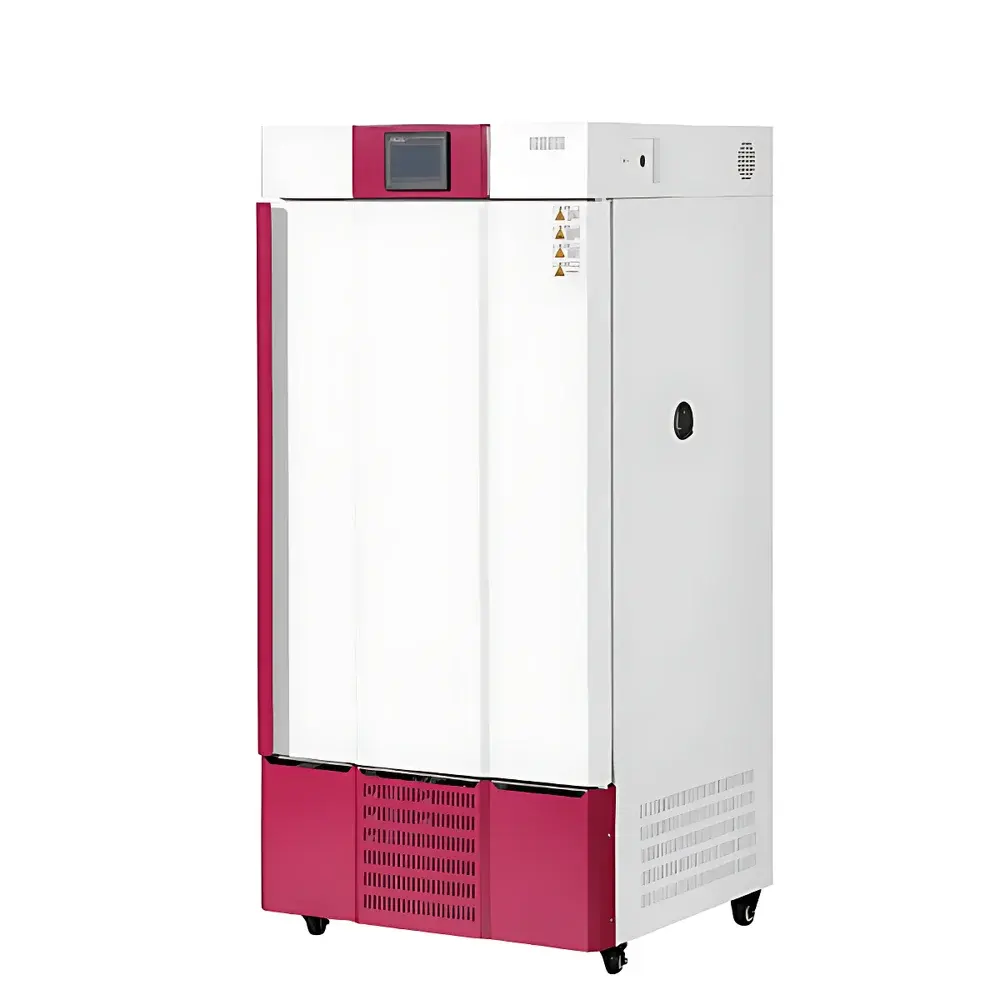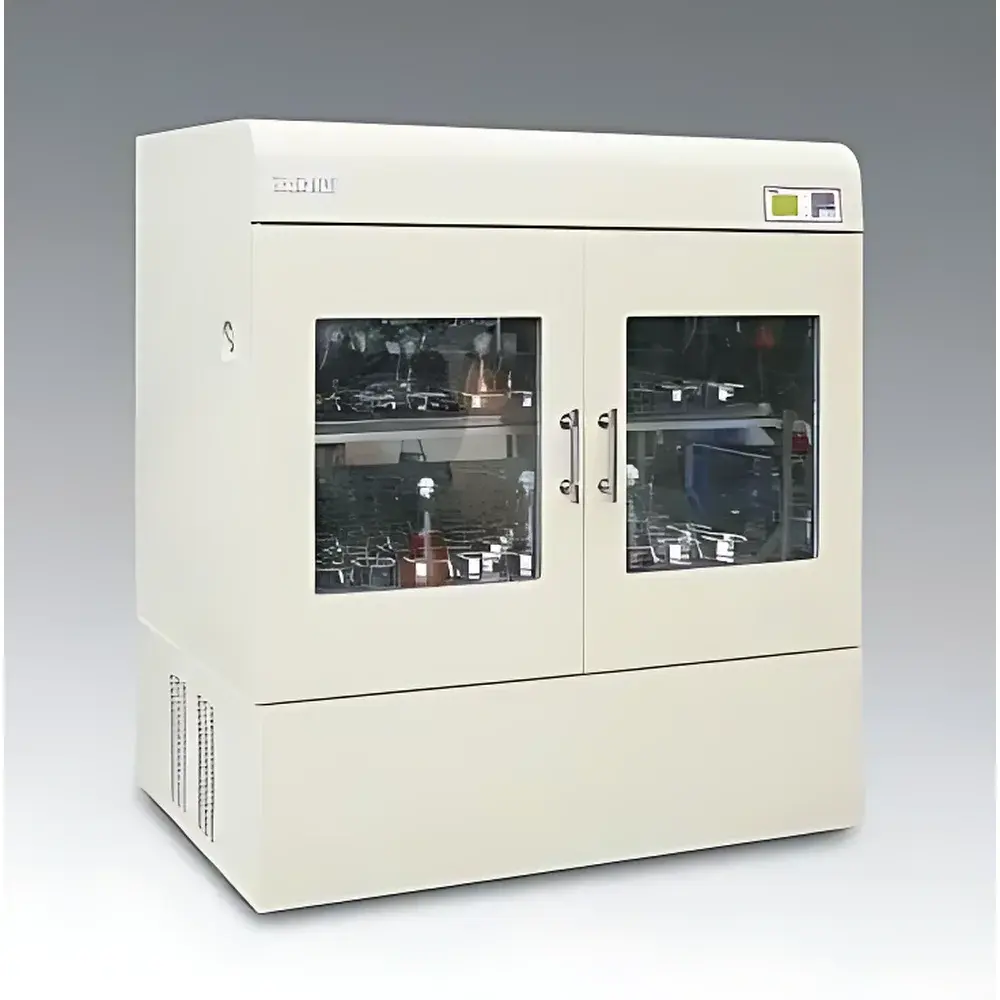
ZWF-A2112 Dual-Layer Programmable Temperature-Controlled Orbital Shaker
| Origin | Shanghai, China |
|---|---|
| Manufacturer Type | Authorized Distributor |
| Origin Category | Domestic (China) |
| Model | ZWF-A2112 |
| Pricing | Upon Request |
Overview
The ZWF-A2112 Dual-Layer Programmable Temperature-Controlled Orbital Shaker is an engineered platform for precision-controlled microbial cultivation, enzymatic assays, cell suspension culture, and biochemical reaction kinetics under tightly regulated thermal and mechanical conditions. Designed around orbital shaking dynamics—where the platform moves in a circular horizontal motion with adjustable amplitude—the system ensures uniform mixing and oxygen transfer across large-volume cultures while minimizing shear stress on sensitive biological samples. Its dual-layer architecture enables independent or synchronized operation of two shaker decks, supporting parallel experiments with differentiated temperature and speed profiles. The unit employs PID-based microprocessor control with environmental scanning logic to maintain setpoint stability against ambient fluctuations (5–25 °C), delivering ±0.1 °C temperature resolution and ≤±0.1 °C fluctuation at 37 °C—a performance benchmark aligned with ISO 13485-compliant bioprocess instrumentation requirements.
Key Features
- Dual independent shaker decks (940 × 580 mm each), configurable for synchronized or differential operation
- Programmable orbital motion: 30–180 rpm, ±1 rpm accuracy, with 0–70 mm amplitude adjustment (stepless)
- Temperature control range: 4–60 °C, achieved via R134a refrigerant-based air-cooling system with frost-free, auto-regulated cooling capacity
- Six-segment, twelve-step programmable logic: supports cascade temperature ramps, multi-stage oscillation protocols, repeat cycles, and hold steps—each segment up to 100 hours
- Integrated thermal safety architecture: dual independent overtemperature cut-offs (adjustable and fixed), door-open stop, leakage current protection, compressor overload monitoring, and real-time sensor fault detection
- Intelligent water-level management: automatic optical water-level sensing with audible/visual low-water alarm and optional auto-refill interface
- Robust mechanical design: brushless AC induction motor with constant torque delivery, maintenance-free operation, and soft-start acceleration profile to prevent sample splashing or tube dislodgement
- Large backlit LCD display (graphical interface) showing real-time setpoints and measured values for temperature, speed, amplitude, time, and program status
- Electropolished stainless-steel interior chamber (1075 × 620 × 815 mm), static-dissipative powder-coated steel exterior, and tempered glass double-door viewport
Sample Compatibility & Compliance
The ZWF-A2112 accommodates standard laboratory vessels—including Erlenmeyer flasks (100–1000 mL), test tubes, deep-well plates, and custom bioreactor bags—via interchangeable spring-loaded clamps and universal platforms. Its 543 L internal volume and dual-tier layout support maximum loading configurations: 164 × 100 mL, 90 × 250 mL, 76 × 500 mL, 48 × 750 mL, or 44 × 1000 mL flasks per deck. All materials contacting samples conform to USP Class VI and ISO 10993-5 cytotoxicity standards. The device meets IEC 61010-1 safety specifications for laboratory equipment and supports GLP/GMP workflows through audit-trail-capable parameter logging (via RS-232 serial interface). Optional data export enables alignment with FDA 21 CFR Part 11 requirements when paired with validated third-party software.
Software & Data Management
While the ZWF-A2112 operates autonomously via its embedded microcontroller, it provides full bidirectional communication through an RS-232 port compliant with EIA/TIA-232-F standards. This interface permits remote parameter configuration, real-time telemetry streaming (temperature, rpm, program step, elapsed time), and event-triggered data capture—including alarm timestamps and safety interlock activations. An integrated thermal printer outputs hard-copy logs of critical parameters at user-defined intervals or upon program completion. All settings—including speed calibration offsets, temperature correction factors, and encrypted user profiles—are retained in non-volatile memory with power-loss resilience. The system supports “power recovery” mode: after grid interruption, it resumes operation from the exact point of failure, preserving experimental integrity without manual reinitialization.
Applications
This shaker serves as a core platform in academic, pharmaceutical, and industrial life science laboratories for applications requiring concurrent thermal and kinetic control. Typical use cases include aerobic bacterial growth (e.g., E. coli expression cultures), yeast fermentation optimization, mammalian suspension cell expansion, plasmid DNA amplification, antigen-antibody binding kinetics, enzyme activity profiling under variable thermal gradients, and stability testing of biologics under accelerated aging conditions. Its dual-deck capability is especially valuable for comparative studies—such as dose-response assays across temperature gradients—or high-throughput strain screening where identical shaking profiles must be replicated across multiple vessel sets. Regulatory-grade validation packages are available for IQ/OQ/PQ documentation per ASTM E2500 and ISO/IEC 17025 frameworks.
FAQ
What is the maximum load capacity per deck?
Each deck supports up to 48 kg distributed load, with total instrument capacity rated at 543 L internal volume and 44 × 1000 mL flasks per layer.
Does the unit comply with electromagnetic compatibility (EMC) standards?
Yes—it conforms to EN 61326-1:2013 for laboratory equipment, including immunity to electrostatic discharge (IEC 61000-4-2) and radiated RF fields (IEC 61000-4-3).
Can temperature and speed be programmed independently per deck?
No—the ZWF-A2112 maintains synchronized temperature and oscillation parameters across both decks; however, users may run separate programs sequentially using the built-in memory scheduler.
Is firmware upgrade supported in-field?
Firmware updates require connection to a certified service terminal via RS-232 and authorized diagnostic software; no user-accessible OTA or USB update path is provided.
What maintenance is required for long-term reliability?
Annual verification of temperature uniformity (per ISO 17025 Annex C), speed calibration against NIST-traceable tachometer, and inspection of refrigerant charge integrity by qualified HVAC-R technicians.