
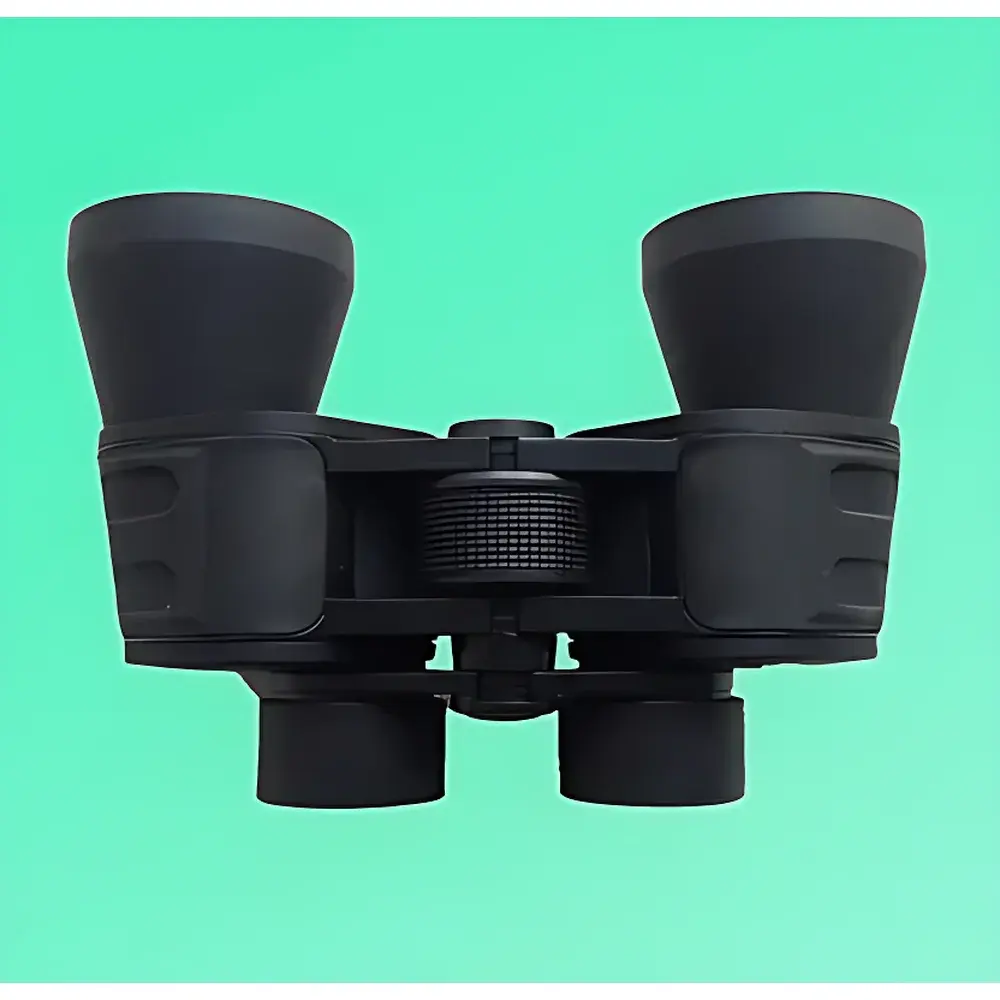
ZY-10 Lineman Smoke Density Telescope
| Origin | Beijing |
|---|---|
| Manufacturer Type | Distributor |
| Origin Category | Domestic |
| Model | ZY-10 |
| Price Range | USD 1,400 – 7,000 |
| Instrument Type | Other Flue Gas Analyzer |
| Indication Error | ≤ Class 0.5 |
| Repeatability | ≤ 2% |
| Response Time | ≤ 60 s |
| Stability | ≤ 5% |
| Magnification | 10× |
| Objective Aperture | 50 mm |
| Ringelmann Scale Range | 0–5 (inclusive) |
| Visual Observation Accuracy | ≤ Class 0.5 |
Overview
The ZY-10 Lineman Smoke Density Telescope is a field-deployable optical instrument engineered for quantitative visual assessment of smoke opacity in industrial flue gas emissions. It operates on the internationally standardized Ringelmann scale—a six-grade grayscale reference system (0 to 5), where 0 represents transparent exhaust and 5 indicates fully opaque black smoke. Unlike digital photometric or laser-based opacity meters, the ZY-10 employs a dual-eyepiece prism optical system with an integrated reticle featuring precisely calibrated gray-scale patches corresponding to Ringelmann grades 0 through 5. This design enables direct side-by-side visual comparison between plume contrast and reference tones under ambient daylight conditions—eliminating reliance on electronic sensors or power sources. The instrument is widely accepted in regulatory monitoring programs across Asia and emerging markets where ISO 13956:2021 (Determination of smoke density—Ringelmann method) and national emission standards (e.g., China’s GB 31571–2015, India’s CPCB guidelines) recognize manual Ringelmann observation as a valid compliance verification method when performed by trained personnel.
Key Features
- 10× magnification with 50 mm objective lens diameter ensures high light-gathering capability and extended effective observation range (up to 300 m under optimal atmospheric conditions)
- Optically aligned dual-eyepiece configuration minimizes parallax error and supports binocular fatigue reduction during prolonged field surveys
- Internally mounted reticle with photometrically validated Ringelmann gray steps (0–5), manufactured using stable ceramic-coated glass substrate to prevent fading or thermal drift
- Class 0.5 indication accuracy per JJG 968–2019 (Chinese metrological verification regulation for smoke density meters), verified against NIST-traceable neutral density filters
- Robust aluminum alloy chassis with non-slip rubberized grip; IP54-rated housing resists dust ingress and incidental moisture exposure
- No battery or firmware required—fully passive optical operation ensures zero downtime, no calibration drift from electronics, and full compatibility with GLP audit requirements for manual measurement records
Sample Compatibility & Compliance
The ZY-10 is designed exclusively for qualitative-to-semiquantitative assessment of visible particulate emissions from stationary combustion sources—including coal-fired boilers, biomass furnaces, brick kilns, asphalt plants, and diesel generator stacks. It does not measure gaseous pollutants (e.g., SO₂, NOₓ, CO) or particle mass concentration. Its use complies with ASTM D2156–20a (Standard Test Method for Smoke from Burning Fuels in Appliances), ISO 13956:2021, and EU BREF (Best Available Techniques Reference) guidance for visual smoke assessment. Regulatory agencies require observers to complete documented training and pass annual proficiency testing per EN 15548-1:2017. The instrument itself requires no periodic recalibration but must be verified annually for optical alignment and reticle integrity using certified test charts.
Software & Data Management
As a purely optical analog instrument, the ZY-10 generates no digital output or native data stream. All observations are recorded manually in field logbooks or structured paper forms compliant with ISO/IEC 17025:2017 Clause 7.5.2 (Control of records). Users may digitize entries via validated LIMS or EPA-approved electronic reporting platforms (e.g., US EPA’s CDX, China’s National Emission Permit Management Platform), provided handwritten original records are retained for minimum 5 years per GLP and GMP archival requirements. Optional accessories include a tripod mount (M12 thread) and calibrated neutral-density reference cards for on-site observer validation.
Applications
- Routine stack inspections during environmental compliance audits
- Pre-commissioning and post-maintenance smoke opacity verification for industrial boilers
- Field validation of continuous opacity monitoring systems (COMS) per US EPA Performance Specification 1 (PS-1)
- Training tool for environmental technicians in visual emission assessment methodology
- Supporting Tier 1 assessments under UNFCCC’s GHG inventory guidelines where particulate emission factors correlate with Ringelmann grade
- Emergency response screening during uncontrolled combustion events (e.g., landfill fires, agricultural burning)
FAQ
What lighting conditions are required for valid Ringelmann readings?
Observations must be conducted under diffuse daylight with illumination perpendicular to the line of sight—avoid direct sun backlighting or frontal illumination. Overcast skies reduce contrast; in such cases, apply documented bias correction per ISO 13956 Annex B.
Can the ZY-10 be used at night or under artificial lighting?
No. The Ringelmann method is defined for natural daylight only. Nighttime or artificial-light assessments violate ISO 13956 and invalidate regulatory submissions.
Is operator training mandatory for regulatory use?
Yes. Certified observer training—including inter-laboratory proficiency testing—is required by EPA Method 9, China’s HJ/T 398–2007, and EU Directive 2010/75/EU. Annual requalification is enforced.
Does the instrument require calibration certificates?
No formal calibration is performed, but metrological verification of optical alignment and reticle fidelity must be documented annually using traceable reference standards.
How is repeatability (≤2%) verified in practice?
Repeatability is determined per JJG 968–2019 via repeated observations of standardized smoke plumes by ≥3 trained observers over ≥10 trials; statistical analysis confirms intra- and inter-observer standard deviation ≤2% of full scale (0–5).







