
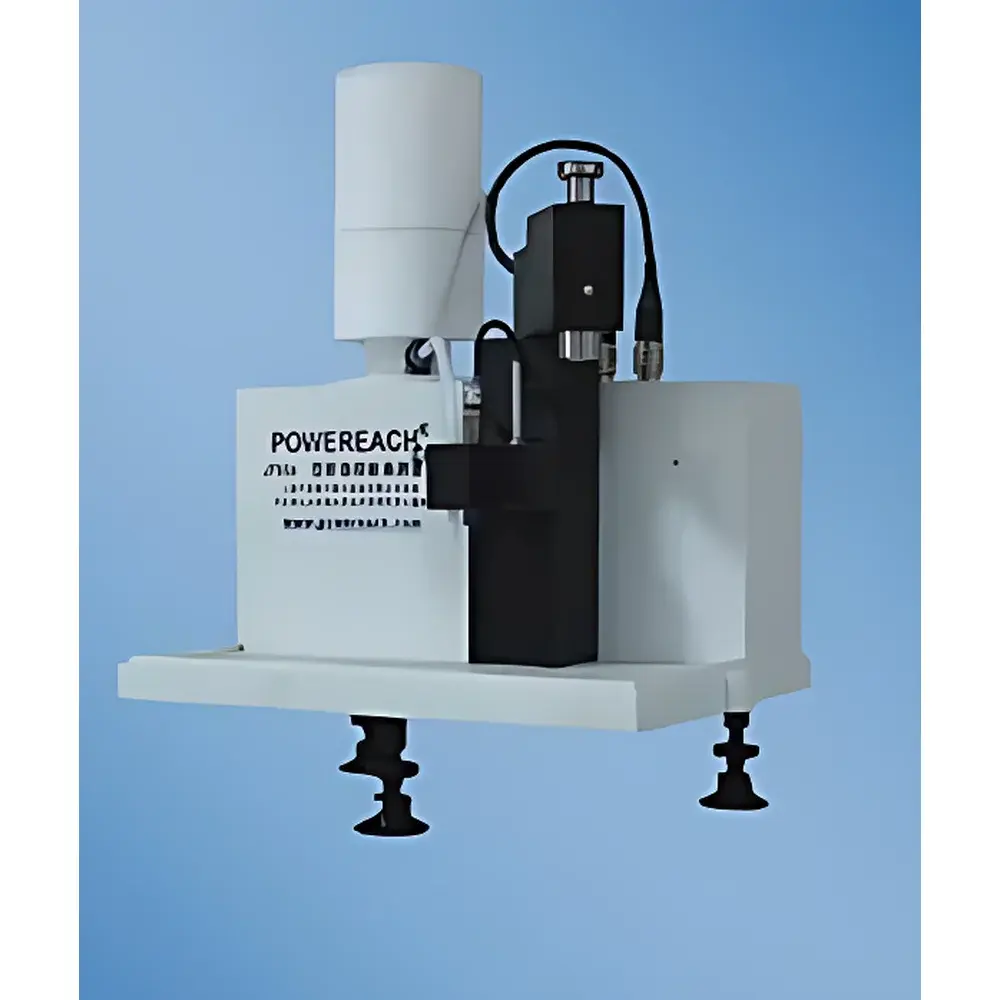
ZYKX JF99M Automated Powder Contact Angle Analyzer
| Brand | ZYKX |
|---|---|
| Origin | Beijing, China |
| Manufacturer Type | Authorized Distributor |
| Country of Origin | China |
| Model | JF99M |
| Measurement Method | Washburn Capillary Rise Method |
| Pressure Range | 0–330 mbar |
| Pressure Resolution | 0.16 mbar |
| Operating Temperature | Ambient |
| Quartz Tube Dimensions | OD 10 mm, ID 8 mm or 6 mm |
| Power Supply | 220 V AC, 20 W |
Overview
The ZYKX JF99M Automated Powder Contact Angle Analyzer is a dedicated instrument engineered for the quantitative determination of contact angles on granular and powdered solid materials—where conventional sessile drop or tilting plate methods are inapplicable due to surface heterogeneity, lack of mechanical stability, and absence of a defined planar interface. Unlike solid substrates, powders cannot support static droplets; thus, this system implements the Washburn capillary rise principle—a well-established thermodynamic and hydrodynamic approach rooted in Lucas–Washburn theory—to derive the equilibrium contact angle (θ) from the time-dependent penetration kinetics of a probe liquid into a consolidated powder bed. The instrument measures the differential pressure generated during spontaneous liquid ingress under controlled capillary driving force, enabling calculation of θ via rearrangement of the Washburn equation: ln h = ln(γ·cosθ·r / 4η) + 0.5·ln t, where h is penetration depth, γ is liquid surface tension, r is effective pore radius, η is dynamic viscosity, and t is time. This method is widely accepted in ASTM D7484-19 (Standard Test Method for Determining Wettability of Powders by Capillary Rise) and aligns with ISO 15987:2011 (Surface Chemical Analysis — Determination of Contact Angle of Powders).
Key Features
- Automated Washburn-based measurement with high-resolution differential pressure transduction (0.16 mbar resolution) across a 0–330 mbar range
- Dual-diameter quartz capillary tubes (ID 6 mm and 8 mm) supplied as standard, enabling comparative analysis across packing densities and particle size distributions
- Integrated powder compaction module with programmable tap density simulation: user-defined tap count, consistent impact energy, and real-time cycle counting—mimicking standardized USP & EP tap density protocols
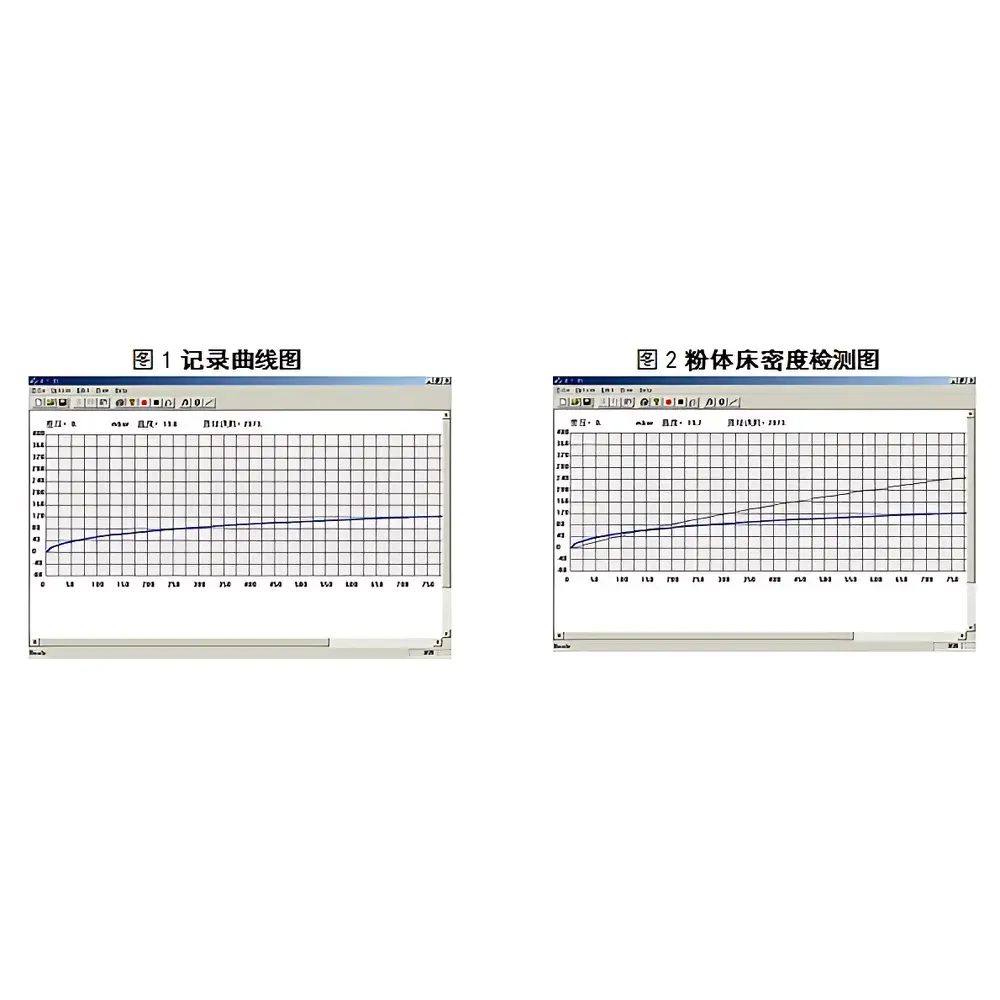
- Onboard density validation function: graphical real-time feedback (linear regression of ln(h) vs. ln(t)) displayed during infiltration; deviation from linearity triggers operator alert for sample reconditioning
- Low-power, air-cooled architecture (20 W, 220 V AC) designed for continuous operation in regulated QC laboratories without thermal drift interference
- Modular hardware design compliant with IEC 61326-1 for electromagnetic compatibility in shared analytical instrumentation environments
Sample Compatibility & Compliance
The JF99M accommodates free-flowing, cohesive, and agglomerated powders—including pharmaceutical excipients (e.g., microcrystalline cellulose, lactose), catalyst supports (SiO₂, Al₂O₃), battery electrode materials (LiCoO₂, graphite), and ceramic precursors—with particle sizes ranging from 1 µm to 500 µm. Sample mass requirements are 0.5–2.0 g depending on tube ID and target bed height (typically 15–25 mm). All measurements adhere to GLP documentation standards: raw pressure-time data, calculated slope values, and pass/fail density diagnostics are timestamped and exportable. The system supports reference liquid calibration using n-hexadecane (γ = 27.5 mN/m) and diiodomethane (γ = 50.8 mN/m), satisfying ASTM D7484’s requirement for at least two liquids of known surface tension. No hazardous solvents or vacuum chambers are required—enhancing safety and operational simplicity.
Software & Data Management
The embedded control interface provides real-time plotting of ln(h) vs. ln(t), automatic linear fit (R² ≥ 0.995 required for valid θ calculation), and one-click export of CSV-formatted datasets. All measurement sessions include metadata tagging (operator ID, sample ID, date/time, tube ID, ambient temperature). For regulated environments, optional PC-based software (ZYKX DataLink v3.2) adds 21 CFR Part 11 compliance: electronic signatures, audit trail logging, role-based access control, and encrypted database storage. Raw pressure traces and fitted parameters are retained indefinitely unless purged per site-specific retention policies.
Applications
- Pharmaceutical formulation development: quantifying wettability of active pharmaceutical ingredients (APIs) and excipients to predict dissolution behavior and granulation efficiency
- Electrode material screening: correlating contact angle with electrolyte uptake in Li-ion battery cathodes/anodes
- Coating pigment dispersion assessment: evaluating surface hydrophobization efficacy post-silane treatment
- Food powder processing: diagnosing caking propensity and flow aid performance via interfacial energy mapping
- Geotechnical and environmental science: characterizing clay mineral wettability for soil-water retention modeling
FAQ
What liquids are suitable for Washburn-based contact angle measurement?
Non-volatile, low-viscosity liquids with known surface tension and density—such as alkanes (n-hexadecane), alcohols (ethanol), and halogenated solvents (diiodomethane)—are recommended. Volatile or reactive liquids (e.g., acetone, HCl solutions) are excluded due to evaporation artifacts and tube corrosion risk.
Can the JF99M measure advancing and receding contact angles?
No. As a capillary-driven, single-direction infiltration method, it yields an equilibrium (or “intrinsic”) contact angle representative of the most energetically favorable wetting state. Dynamic contact angle hysteresis requires complementary techniques such as centrifugal liquid expulsion or forced imbibition reversal.
Is calibration traceable to national standards?
Yes. Pressure sensor calibration is performed against NIST-traceable dead-weight testers, and surface tension references are certified per ISO 8297. Calibration certificates are provided with each instrument shipment.
How does powder bed density affect measurement validity?
Bed density directly governs effective pore radius (r) in the Washburn equation. Under-compaction yields excessive void space and non-Darcian flow; over-compaction collapses pores and suppresses infiltration. The JF99M’s built-in linearity diagnostic ensures only reproducible, laminar capillary flow conditions are accepted for analysis.



