
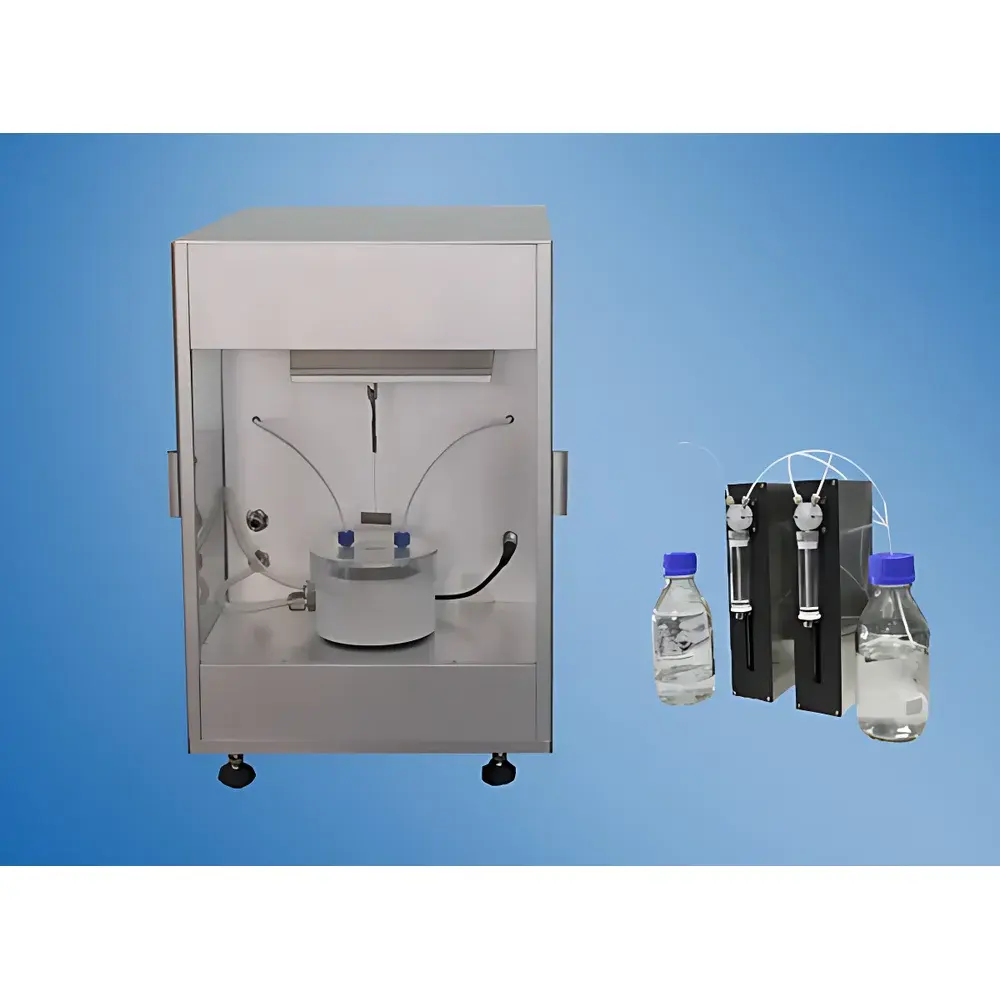
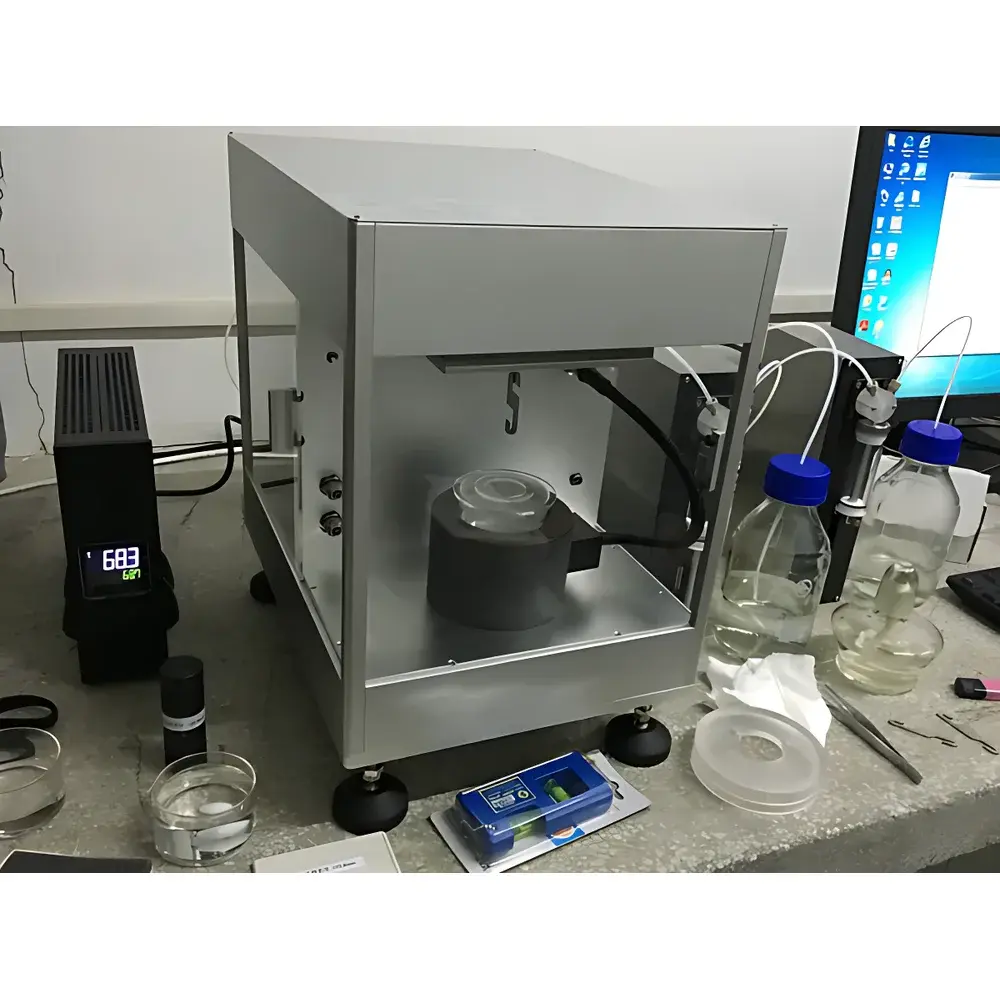
ZYKX JK2000DM Advanced Automated Surface Tensiometer with CMC Measurement Module
| Brand | ZYKX |
|---|---|
| Origin | Beijing, China |
| Model | JK2000DM |
| Measurement Range | 0–500 mN/m |
| Resolution | <0.05 mN/m |
| Methods | Du Noüy Ring Method & Wilhelmy Plate Method |
| Sampling Cycle | 1–5 s (Plate), 20–150 s (Ring) |
| Temperature Control | Integrated恒温 Platform (Compatible with External Circulating Bath) |
| Sensor | Imported Japanese High-Precision Force Transducer |
| Compliance | SY/T 5370–1999 |
| Power | AC 220 V ± 22 V, 50 Hz, <150 W |
| Operating Humidity | 30–85% RH |
| Optional Modules | Magnetic Stirring, Dynamic Contact Angle, Fiber Wettability, Density & Powder Wettability Kits |
Overview
The ZYKX JK2000DM is an advanced automated surface tensiometer engineered for high-precision, traceable measurement of surface tension (liquid–air interface) and interfacial tension (liquid–liquid interface) across research, quality control, and industrial process development environments. It operates on two internationally standardized physical principles: the Wilhelmy plate method—based on vertical force balance of a platinum plate partially immersed in the test liquid—and the Du Noüy ring method—relying on the maximum pull force required to detach a platinum ring from the liquid surface. Both methods comply with ASTM D971, ISO 6295, and SY/T 5370–1999, ensuring metrological consistency for regulatory reporting and cross-laboratory comparison. The instrument’s core architecture integrates a temperature-stabilized sample platform (compatible with external refrigerated/heated circulators), a microprocessor-controlled motorized lift stage, and a high-stability Japanese-sourced force transducer (<0.05 mN/m resolution, repeatability ≤±0.2% RSD). Unlike legacy electromagnetic balance-based tensiometers, the JK2000DM eliminates drift-related uncertainty through direct force sensing—critical for time-resolved CMC profiling and low-tension systems (<1 mN/m).
Key Features
- Automated dual-method operation: seamless switching between Wilhelmy plate (1–5 s acquisition) and Du Noüy ring (20–150 s acquisition) via software-selectable protocols—optimized for low-viscosity surfactant solutions or high-viscosity oils, polymers, and emulsions.
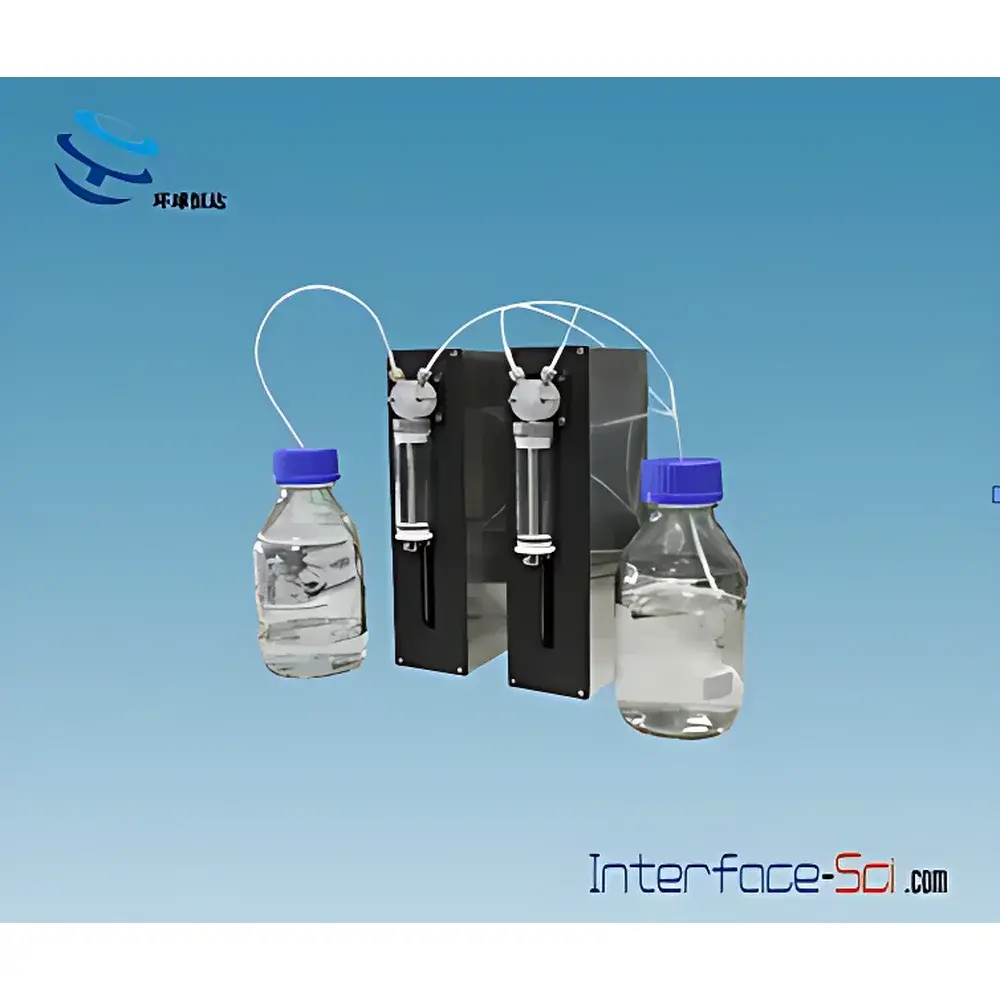
- Integrated CMC measurement module: programmable concentration series dilution (via optional precision peristaltic pump), real-time surface tension vs. log[concentration] curve generation, automatic inflection-point detection, and ISO 14389-compliant CMC calculation with uncertainty estimation.
- Thermal management system: built-in thermostatic platform with ±0.25 °C stability (when paired with external bath), enabling temperature-dependent surface thermodynamics studies (e.g., dγ/dT analysis per Gibbs adsorption equation).
- Standalone & PC-connected operation: embedded LCD interface with on-board data logging, thermal printer output, and RS232 serial interface for GLP-compliant audit trail export (timestamped raw force values, environmental metadata, operator ID).
- Modular expandability: field-upgradable options include magnetic stirring (for homogeneous surfactant dissolution), fiber contact angle attachment (for wettability mapping), density measurement kit (for interfacial tension correction), and powder wettability cell (per ASTM D7490).
Sample Compatibility & Compliance
The JK2000DM accommodates aqueous and non-aqueous systems—including anionic, cationic, zwitterionic, and nonionic surfactants; crude oil–brine interfaces; polymer melts; pharmaceutical formulations; and nanofluids—within its 0–500 mN/m range. Its Wilhelmy plate configuration supports viscous samples (up to 10,000 mPa·s) without ring deformation artifacts, while the ring method maintains accuracy for volatile solvents where plate wetting hysteresis may occur. All measurements adhere to SY/T 5370–1999 (Petroleum Industry Standard for Interfacial Tension Determination) and are traceable to NIST-certified reference liquids (e.g., distilled water at 20 °C: γ = 72.75 mN/m). For regulated environments, the system supports 21 CFR Part 11–aligned electronic signatures and audit logs when operated under validated software configurations.
Software & Data Management
The Windows-based control software provides ISO/IEC 17025-aligned workflow management: user-defined method templates (including CMC ramp protocols), real-time force–time curve visualization, automatic baseline correction, and batch statistical reporting (mean, SD, %RSD, confidence intervals). Raw data exports to CSV or Excel preserve full timestamped sensor readings, ambient temperature/humidity logs, and operator annotations. Calibration routines include multi-point force verification using certified weights and surface tension standards. Data integrity safeguards include write-protected archives, version-controlled method files, and optional password-protected user roles (administrator, analyst, reviewer) compliant with GLP and GMP documentation requirements.
Applications
- Oilfield Chemistry: Quantification of ultra-low interfacial tension (<0.01 mN/m) in ASP (alkaline–surfactant–polymer) flooding formulations for enhanced oil recovery screening.
- Coatings & Inks: Optimization of substrate wettability and leveling behavior via dynamic surface tension analysis at 0.1–100 s timescales.
- Pharmaceuticals: CMC determination of excipients (e.g., polysorbates, poloxamers) to predict micellar solubilization capacity and colloidal stability.
- Agrochemicals: Assessment of spray droplet adhesion and leaf surface penetration using contact angle–surface tension correlation models.
- Electrical Insulating Fluids: Monitoring oxidation-induced surface activity in transformer oils per IEC 60156 and ASTM D923.
- Academic Research: Teaching Gibbs adsorption isotherms, Marangoni flow analysis, and surfactant self-assembly thermodynamics.
FAQ
What standards does the JK2000DM comply with for surface tension measurement?
It conforms to SY/T 5370–1999, ASTM D971 (ring method), ASTM D1331 (plate method), ISO 6295, and ISO 14389 (CMC determination).
Can the instrument measure interfacial tension between two immiscible liquids?
Yes—using either the Wilhelmy plate or Du Noüy ring method, with appropriate calibration against biphasic reference systems (e.g., n-hexadecane/water).
Is the CMC module capable of unattended sequential measurements?
Yes—the optional peristaltic pump enables automated dilution series; software schedules up to 24 concentration steps with auto-zeroing and curve-fitting between runs.
How is temperature control implemented?
The integrated platform accepts Peltier or circulating bath connections; external temperature sensors feed real-time compensation into surface tension calculations per the Eötvös equation.
Does the system support FDA 21 CFR Part 11 compliance?
When deployed with validated software configuration, electronic signatures, and audit-trail-enabled hardware logging, it meets Part 11 requirements for electronic records and signatures.



