
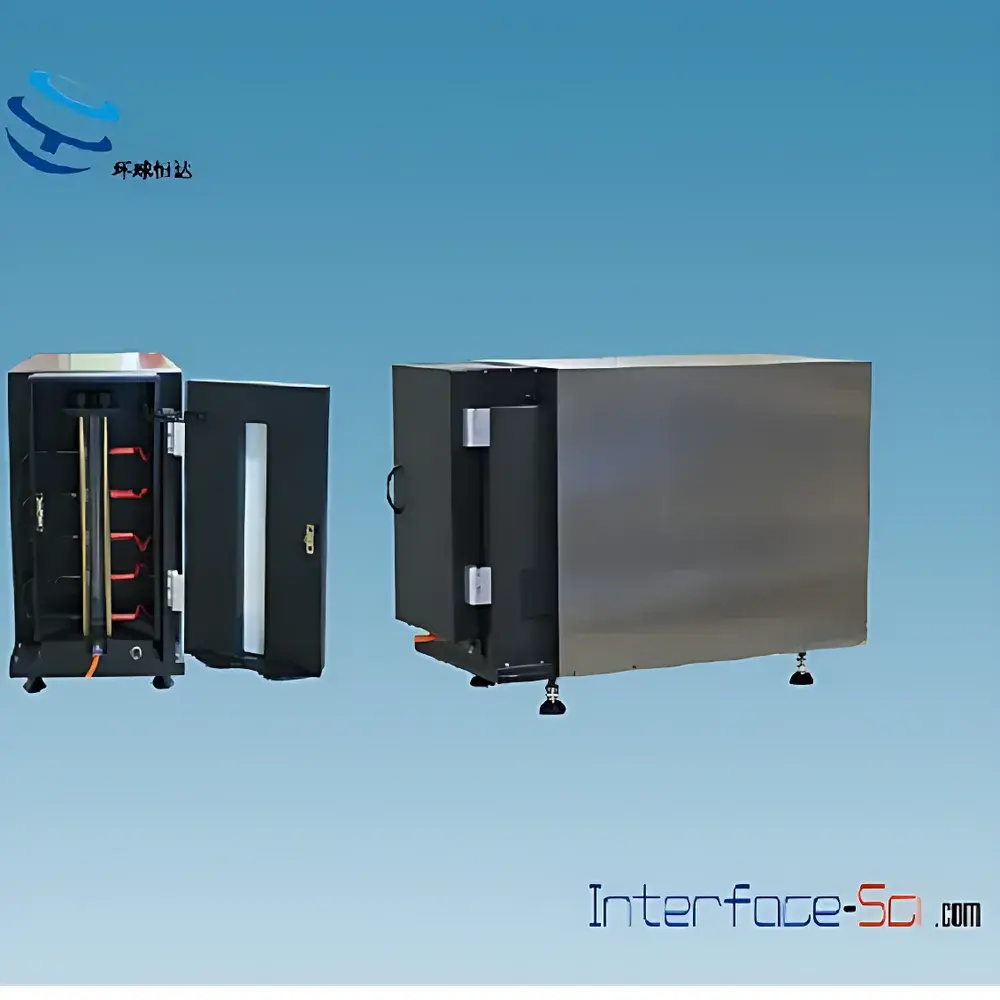
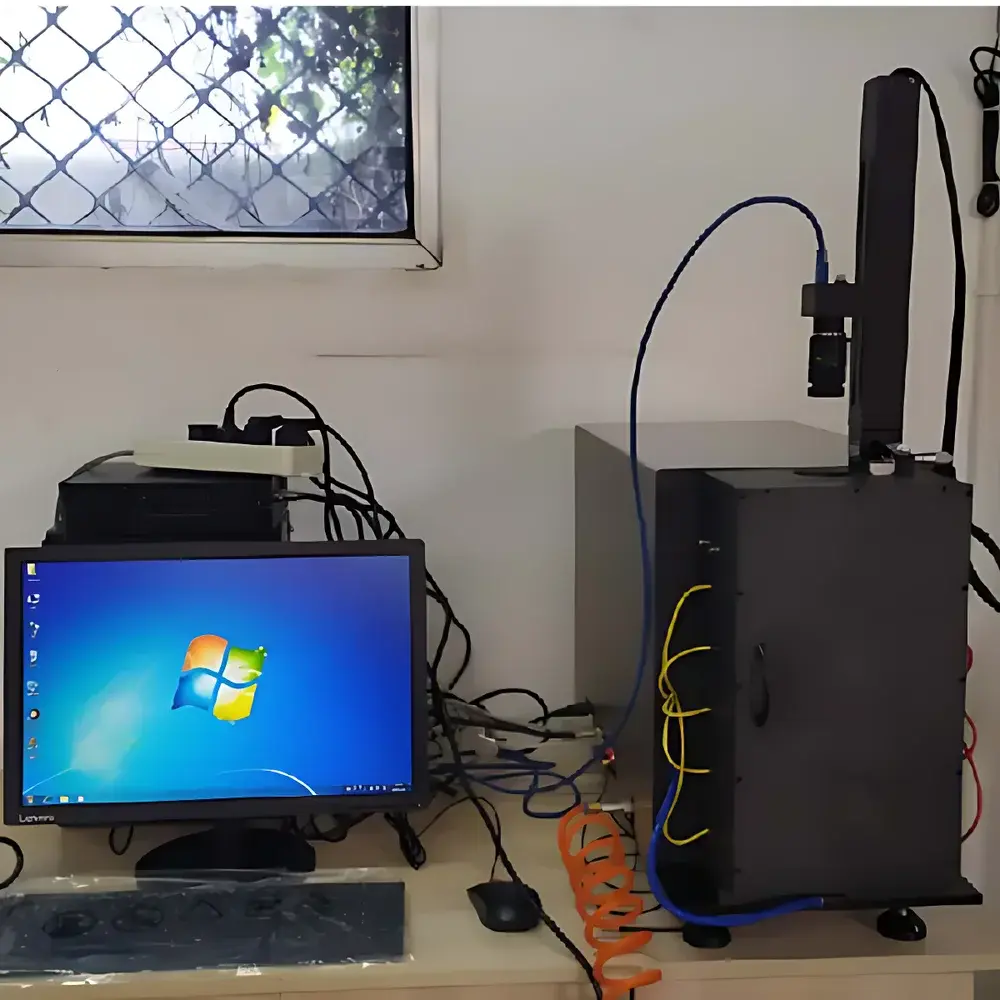
ZYKX JPM2012M Automated Foam Analyzer
| Brand | ZYKX |
|---|---|
| Model | JPM2012M |
| Origin | Beijing, China |
| Power Supply | 220 V AC, 300 W |
| Dimensions (W×D×H) | 690 × 310 × 480 mm |
| Gas Flow Range | 0–500 mL/min (±0.5% accuracy, max pressure 0.5 MPa) |
| Foam Height Measurement | 0–280 mm via high-resolution video imaging |
| Minimum Sample Volume | 20 mL |
| Conductivity Sensing | 5-channel electrodes, resolution 0.01 µS/cm |
| Imaging System | 1300K-pixel digital camera, 25 fps, 5 mm macro lens |
| Foam Generator Pore Size (standard) | 1.0–1.6 µm |
| Temperature Control (optional) | ambient to 90 °C via integrated heating rod |
| Data Acquisition & Control | PC-based system with pre-installed proprietary software for real-time parameter configuration, curve visualization, and Excel-exportable reports |
| Optional Add-ons | top-view industrial CCD observation module, mechanical stirring foam generation unit |
Overview
The ZYKX JPM2012M Automated Foam Analyzer is a precision-engineered laboratory instrument designed for quantitative, time-resolved characterization of foam formation, stability, and drainage behavior under controlled gas injection or mechanical agitation. It operates on the principle of dynamic gas sparging through calibrated porous frits—enabling reproducible bubble nucleation—and integrates synchronized optical imaging, multi-point conductivity monitoring, and volumetric tracking to deliver comprehensive foam rheological and structural metrics. Unlike empirical foam testers, this system captures both macroscopic (foam height, volume, liquid fraction) and microscopic (conductivity-based liquid distribution, bubble coalescence kinetics) parameters in parallel, supporting rigorous method development for formulations in personal care, pharmaceutical emulsions, food science, oilfield chemistry, and detergent R&D.
Key Features
- Modular glass sample tube design enables rapid disassembly, solvent-compatible cleaning, and contamination-free reuse across diverse surfactant systems.
- Independent control of gas flow rate (0–500 mL/min), bubbling duration, and pause intervals ensures precise replication of industrial aeration conditions.
- High-fidelity video acquisition (25 fps, 1300K pixels, fixed-focus 5 mm lens) delivers sub-millimeter spatial resolution for automated foam height and collapse front tracking.
- Five-electrode conductivity array embedded along the foam column provides vertical liquid fraction profiling—critical for quantifying drainage kinetics and lamella thinning rates.
- Standard 1.0–1.6 µm sintered stainless-steel frit ensures uniform bubble size distribution; optional frits (e.g., 0.5 µm, 5.0 µm) support comparative studies of pore-dependent foamability.
- Integrated temperature-controlled sample chamber (ambient to 90 °C, optional) permits thermal stability assessment of thermosensitive foams, including protein-based or polymer-stabilized systems.
- PC-based control architecture supports full automation: parameter scripting, real-time data overlay, alarm-triggered shutdown, and timestamped audit trails compliant with GLP documentation requirements.
Sample Compatibility & Compliance
The JPM2012M accommodates aqueous and non-aqueous solutions, polymer dispersions, micellar systems, and low-viscosity emulsions. Its 20 mL minimum sample volume reduces reagent consumption without compromising statistical robustness—validated per ISO 697 and ASTM D1173 protocols for foam testing. The system meets electromagnetic compatibility (EMC) standards IEC 61326-1 and electrical safety requirements IEC 61010-1. All firmware and software modules are designed for traceability: user actions, parameter changes, and measurement events are logged with timestamps and operator IDs—supporting FDA 21 CFR Part 11 readiness when deployed in regulated QC environments.
Software & Data Management
The proprietary acquisition and analysis suite runs on Windows OS and provides dual-mode operation: guided wizard mode for routine QC testing and advanced script mode for custom method development. Real-time visualization includes synchronized plots of foam height vs. time, conductivity decay profiles, and derived metrics such as liquid fraction and bubble growth rate. All raw image sequences, sensor logs, and calculated outputs (e.g., Bikerman index, foam expansion ratio, half-life of foam volume) are stored in a structured binary format with metadata embedding. Export options include CSV, PDF reports, and native Excel (.xlsx) files containing formatted curves and summary tables—enabling direct integration into LIMS or statistical process control platforms.
Applications
- Surfactant screening: ranking anionic, cationic, and nonionic agents by foam capacity, stability, and drainage resistance.
- Formulation optimization: evaluating synergistic effects of co-surfactants, polymers, or nanoparticles on foam microstructure.
- Quality control: batch-to-batch consistency checks for shampoos, shaving creams, fire-fighting foams, and ore flotation reagents.
- Stability prediction: correlating early-stage conductivity decay with long-term storage performance under accelerated aging conditions.
- Regulatory submissions: generating data packages aligned with USP , Ph. Eur. 2.9.39, and OECD TG 302 for environmental fate assessment of foaming agents.
FAQ
What foam generation methods does the JPM2012M support?
Standard operation uses gas sparging through calibrated porous frits; optional mechanical stirring module enables shear-induced foam generation for comparison studies.
Can the system quantify foam collapse mechanisms beyond height loss?
Yes—simultaneous conductivity profiling allows calculation of liquid drainage velocity, lamella rupture frequency, and fractional liquid retention at defined heights over time.
Is temperature control mandatory for all tests?
No—temperature regulation is optional; the base system operates at ambient conditions, but the heating rod (ambient to 90 °C) is recommended for temperature-dependent kinetic studies.
How is data integrity ensured during extended runs?
All measurements are timestamped, checksum-verified, and written to non-volatile storage; software enforces user authentication and maintains immutable audit logs per GLP/GMP requirements.
Does the system comply with international foam testing standards?
The hardware and methodology align with core principles of ISO 697 (foaming power), ASTM D1173 (foam stability), and DIN 53902 (foam collapse), though users must validate specific test protocols against their internal SOPs.



