ATSEVA Avesta Faraday Isolator / Faraday Rotator
| Key | Brand: ATSEVA |
|---|---|
| Origin | Russia |
| Product Type | Faraday Isolator / Rotator |
| Core Material | TGG (Terbium Gallium Garnet) or Terbium-Doped Glass |
| Peak Isolation | >38 dB (up to >60 dB for dual-stage) |
| Transmission | >90% (up to 98%) |
| Spectral Range | 400–1250 nm (model-dependent) |
| Aperture | 2–15 mm (customizable) |
| Damage Threshold | 1 J/cm² @ 10 ns (isolators), 5 J/cm² @ 160 ns (rotators) |
| Compliance | Designed for alignment with ISO 10110 optical surface specifications and RoHS-compliant packaging |
| Software Interface | None (passive, free-space optical component) |
| Mounting | Standard SM1 (1.035"-40) or custom kinematic mounts available |
Overview
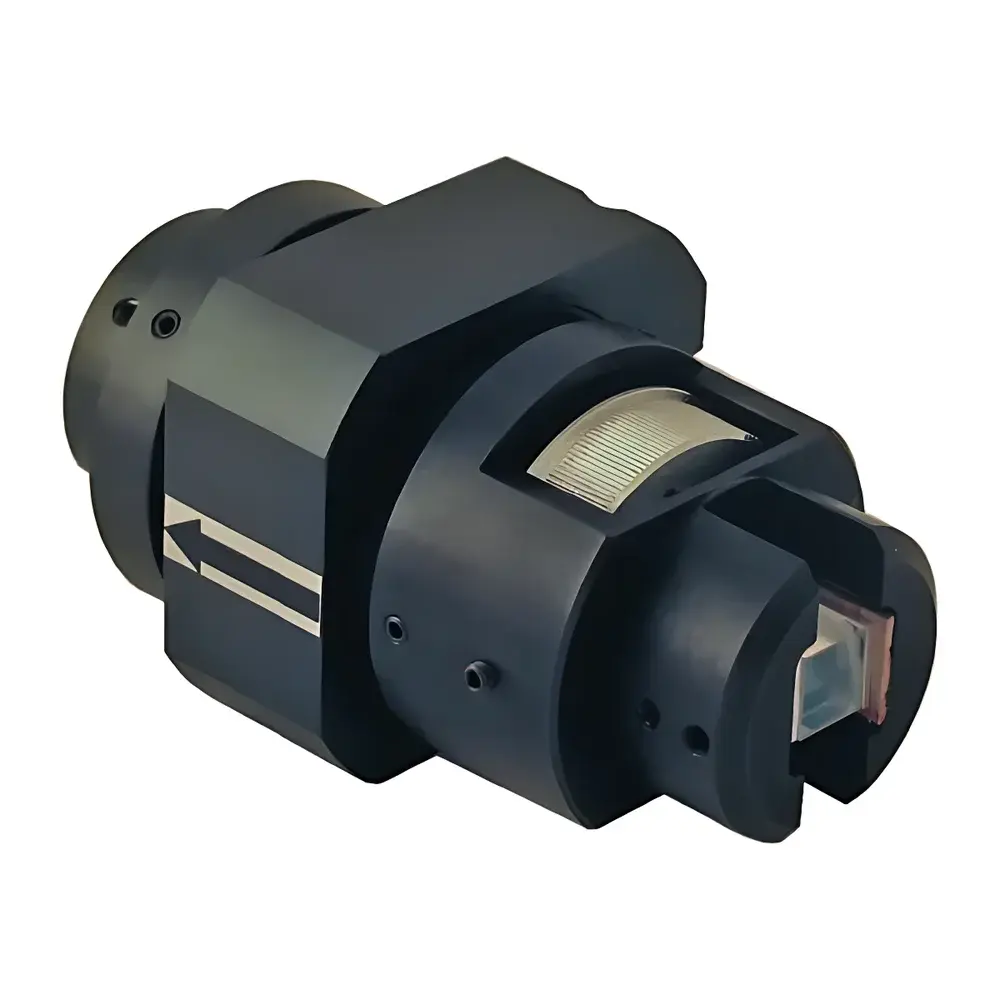
The ATSEVA Avesta Faraday Isolator and Faraday Rotator are passive, non-reciprocal magneto-optic devices engineered for high-fidelity laser system protection and polarization control. Based on the Faraday effect—a magneto-optic phenomenon where the plane of polarization rotation is proportional to the magnetic field strength and material Verdet constant—these components provide unidirectional transmission by combining a magneto-optically active crystal (typically TGG or terbium-doped glass) with permanent magnets and precision-aligned polarizers. The isolator configuration consists of an input polarizer, Faraday rotator (45° rotation), and output polarizer aligned at 45° to the input; this arrangement permits forward transmission while attenuating backward-propagating light by ≥38 dB (single-stage) or >60 dB (dual-stage). The rotator variant omits polarizers and delivers pure polarization rotation, enabling integration into custom optical setups requiring non-reciprocal phase control. Both variants operate without electrical input, ensuring intrinsic stability, zero insertion loss drift, and immunity to electromagnetic interference.
Key Features
- High isolation performance: Standard single-stage models deliver ≥38 dB isolation; dual-stage configurations achieve >60 dB, sufficient for protecting ultra-stable oscillators and fiber amplifiers from feedback-induced mode hopping or frequency pulling.
- Optimized transmission efficiency: TGG-based isolators achieve >98% peak transmission across visible to NIR bands; terbium-glass variants maintain >90% transmission with broader spectral tolerance.
- Wavelength flexibility: Fixed-wavelength models cover discrete bands from 400 nm (UV-grade fused silica optics) to 1250 nm (InGaAs-compatible); broadband variants support ±60 nm bandwidths (e.g., 700–880 nm tunable range); custom center wavelengths available upon request.
- Robust thermal and damage resistance: TGG crystals exhibit superior thermal conductivity and higher laser-induced damage threshold (LIDT) compared to glass—rated at >10 W/cm² CW and 1 J/cm² @ 10 ns pulse width for isolators, 5 J/cm² @ 160 ns for rotators.
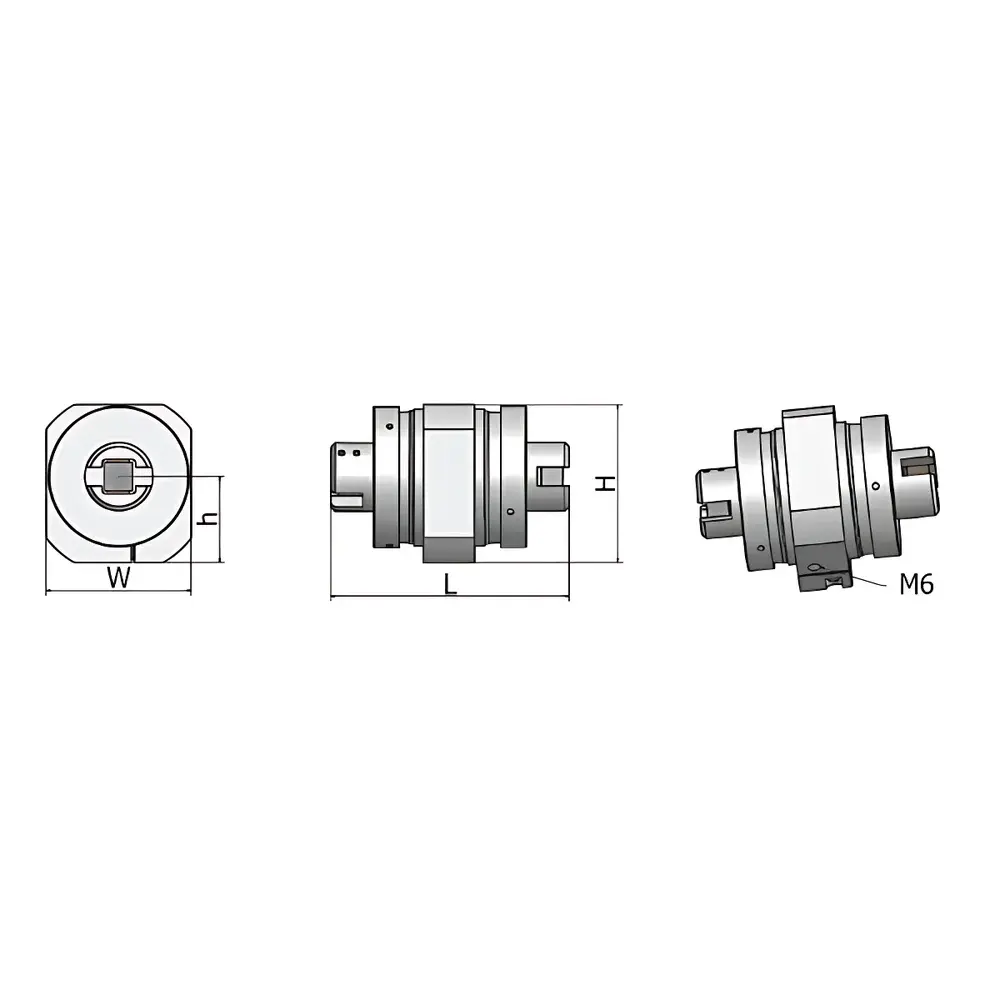
- Modular mechanical design: All units feature industry-standard mounting interfaces (SM1-threaded housings, kinematic base options), precise bore alignment (≤±0.1 mrad angular deviation), and vacuum-compatible stainless-steel or black-anodized aluminum bodies.
Sample Compatibility & Compliance
The ATSEVA Avesta Faraday devices are compatible with linearly polarized free-space beams meeting 1/e² diameter requirements specified per model (e.g., 2–15 mm clear aperture). They accommodate Gaussian, flat-top, and multimode profiles provided beam divergence remains within ±2.5 mrad and wavefront distortion does not exceed λ/8 RMS over the aperture. Polarization extinction ratio of incident light should exceed 100:1 for optimal isolation. All TGG elements are polished to ISO 10110-3 scratch-dig 10/5 specification and coated with AR layers optimized for target wavelength bands (R<0.25% per surface). Devices conform to RoHS Directive 2011/65/EU for hazardous substance restrictions and are supplied with traceable calibration documentation—including measured isolation vs. wavelength curves and transmission spectra—supporting GLP-compliant laboratory validation protocols.
Software & Data Management
As fully passive optical components, ATSEVA Avesta Faraday Isolators and Rotators require no firmware, drivers, or software interface. Performance parameters are factory-characterized using NIST-traceable laser sources and calibrated photodetectors (Thorlabs PM100D series, Ophir Vega meters). Each unit ships with a digital test report containing: measured isolation (dB) vs. wavelength (0.5 nm step), transmission (%) vs. wavelength, angular acceptance data, and LIDT verification records. Raw spectral datasets are provided in CSV format for integration into internal QA databases or automated optical alignment workflows. No FDA 21 CFR Part 11 compliance is applicable, as these are Class I non-electronic optical components under IEC 60825-1:2014 laser safety standards.
Applications
- Laser cavity protection: Preventing destabilizing back-reflections into diode-pumped solid-state (DPSS), Ti:sapphire, and fiber lasers—critical for maintaining longitudinal mode stability and suppressing Q-switched spikes.
- Amplifier chain isolation: Deployed between pre-amplifier and power amplifier stages in chirped-pulse amplification (CPA) systems to avoid parasitic lasing and gain narrowing effects.
- Quantum optics infrastructure: Enabling unidirectional signal routing in atomic physics experiments (e.g., MOTs, optical lattices) where retroreflected light induces Zeeman shifts or AC Stark broadening.
- Polarization management: Faraday rotators serve as core elements in electro-optic modulator bias control, optical circulators, and non-reciprocal interferometric sensing architectures.
- Industrial laser processing: Integrated into high-power cutting/welding systems to mitigate feedback from reflective workpieces, thereby extending diode bar lifetime and stabilizing modulation depth.
FAQ
What is the difference between an AFR and AFI model?
AFR denotes a Faraday Rotator (polarization-rotating element only); AFI denotes a complete Faraday Isolator (rotator + input/output polarizers). Rotators require external polarization control; isolators provide self-contained unidirectional transmission.
Can these isolators be used with femtosecond pulses?
Yes—TGG-based models support pulses down to <100 fs duration when dispersion-compensated; group delay dispersion (GDD) is characterized per batch and provided in test reports.
Is custom aperture or wavelength available?
Yes—apertures up to 25 mm and center wavelengths from 355 nm to 2000 nm are manufacturable with lead times of 8–12 weeks; minimum order quantity applies.
Do you offer fiber-pigtailed versions?
Standard models are free-space only; however, PI-series polarization-independent isolators (e.g., PI35C) are available with FC/APC or SMA905 fiber coupling options.
How is thermal lensing managed at high average powers?
TGG’s thermal conductivity (5.4 W/m·K) and low thermo-optic coefficient (dn/dT ≈ 2.5×10⁻⁶ K⁻¹) minimize thermal lensing; water-cooled mounts are recommended for sustained operation >50 W.