
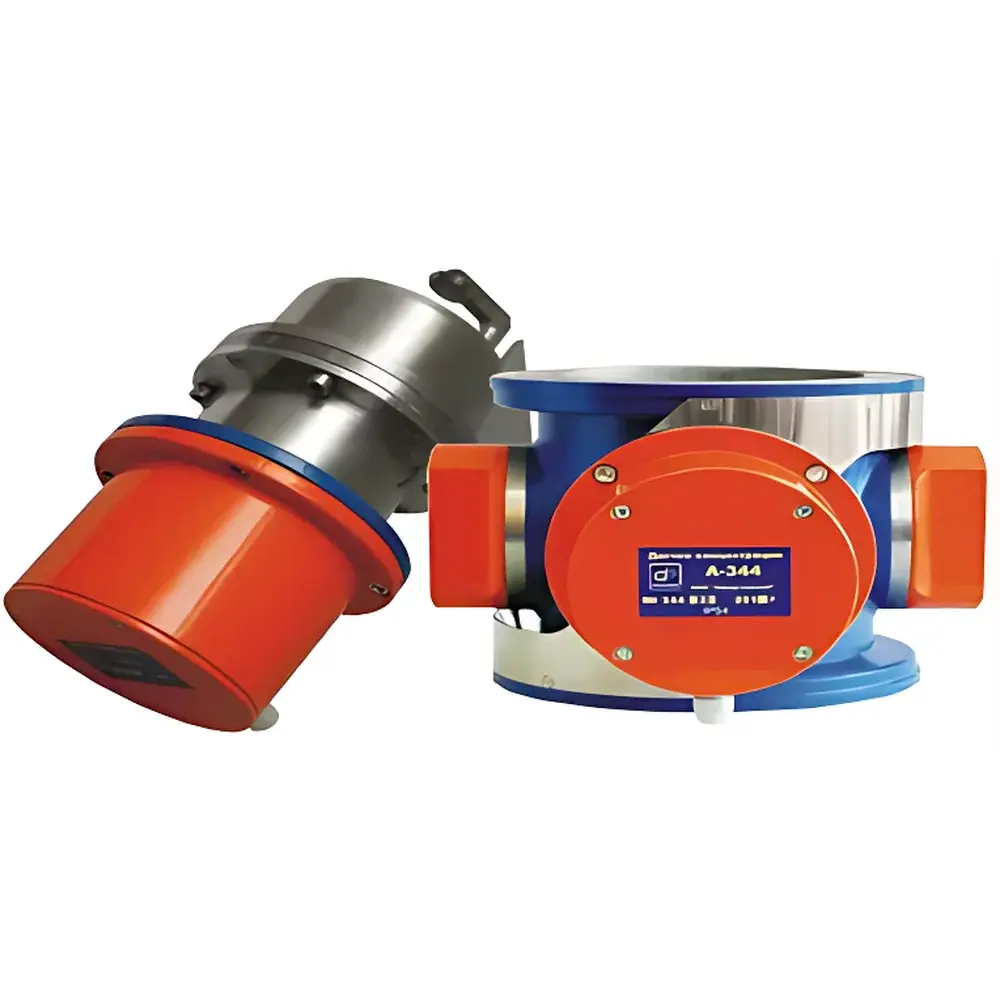
AQUAR-SYSTEM A344W Online Total Solids Concentration Analyzer
| Brand | AQUAR-SYSTEM |
|---|---|
| Origin | Belarus |
| Model | A344W |
| Measurement Range | 0–8% Cs (Total Solids by Weight) |
| Repeatability | ±0.02% |
| Accuracy (Stable Conditions) | ±0.02% |
| Operating Pressure | 1.5–8.0 bar |
| Conductivity Range | 0–10.0 mS/m |
| Communication Interface | RS-485 |
| Sampling Interval | 1 s |
| Control Panel Power Supply | 220 VAC / 50 Hz |
| Sensor Power Supply | 24 VDC |
| Air Content Limit in Sample | ≤1% (v/v) |
| Minimum Process Pressure at Measurement Zone | ≥1.5 bar |
Overview
The AQUAR-SYSTEM A344W Online Total Solids Concentration Analyzer is a non-invasive, microwave-based process analytical instrument engineered for continuous, real-time measurement of total solids (TS) concentration in aqueous slurry streams within municipal and industrial wastewater treatment plants. Unlike optical or ultrasonic sensors—whose performance degrades rapidly due to fouling from calcium carbonate deposits, biofilm, or organic scum—the A344W employs frequency-modulated continuous-wave (FMCW) microwave transmission through the process medium. This principle relies on the dielectric contrast between water (εr ≈ 80) and suspended solids (εr ≈ 2–10), enabling robust, calibration-stable quantification of dry solids mass fraction (Cs, % w/w) without optical windows or moving parts. Designed for integration into critical unit processes—including primary/secondary clarifier sludge withdrawal, thickening, anaerobic digestion feed control, dewatering conditioning, and thermal drying—this analyzer supports closed-loop automation under dynamic hydraulic and compositional conditions.
Key Features
- Microwave sensing technology with immunity to sensor surface fouling, eliminating routine cleaning cycles and drift-related recalibration
- High-resolution measurement capability (±0.02% repeatability and accuracy under stable process conditions)
- Real-time sampling interval of 1 second, supporting fast-response control logic in PLC or DCS environments
- Pressure-rated sensor housing (1.5–8.0 bar) compatible with pressurized sludge transfer lines and centrifuge feed headers
- Wide conductivity tolerance (0–10.0 mS/m), ensuring reliable operation across varying salinity and ion content in domestic and industrial influents
- RS-485 Modbus RTU interface for seamless integration with SCADA systems, programmable logic controllers (PLCs), and distributed control systems (DCS)
- Low-maintenance architecture: no consumables, no reagents, no optical components requiring alignment or replacement
Sample Compatibility & Compliance
The A344W is validated for use with heterogeneous, non-Newtonian, aerated, and highly variable sludge matrices—including primary sludge, waste activated sludge (WAS), mixed liquor, digested sludge, and dewatered cake slurries. It requires a maximum entrained air content of ≤1% (v/v) and a minimum static pressure of 1.5 bar at the measurement zone to ensure consistent wave propagation and signal integrity. While not certified to IEC 61508 or SIL-2 out-of-the-box, the device conforms to EN 61326-1 (EMC for industrial environments) and meets IP66 ingress protection standards. Its measurement methodology aligns with established practices referenced in ISO 11923 (determination of total solids in sludge) and ASTM D5907 (standard test method for total suspended solids in water), serving as a process surrogate for laboratory gravimetric analysis. For regulated facilities operating under GLP or GMP frameworks, audit trails and data integrity can be maintained via external historian systems compliant with FDA 21 CFR Part 11 when interfaced through validated OPC UA or Modbus TCP gateways.
Software & Data Management
The A344W operates as a field-level smart sensor with embedded firmware; it does not include onboard HMI or configuration software. Configuration, diagnostics, and real-time monitoring are performed externally via standard industrial protocols. Engineers access live TS values, status flags (e.g., signal quality index, pressure warning, temperature derating), and diagnostic logs through existing plant SCADA interfaces or third-party Modbus master tools. Historical trend data—including concentration profiles synchronized with pump runtimes, polymer dosing rates, or digester biogas yield—is archived in plant historians (e.g., OSIsoft PI, Emerson DeltaV Datalink). When integrated with model-predictive control (MPC) architectures, the A344W’s low-latency output enables dynamic adjustment of polymer dosing pumps, sludge recirculation ratios, and centrifuge bowl speeds—supporting energy-efficient, demand-driven operation rather than fixed-time scheduling.
Applications
- Clarifier Sludge Withdrawal Control: Replaces time-based sludge wasting with concentration-triggered pumping, increasing withdrawn sludge solids content by up to 30% and reducing downstream handling volume and pumping energy.
- Anaerobic Digestion Feed Optimization: Enables feed-forward control of digester loading rate based on incoming TS concentration, maximizing volatile solids destruction and biogas production while avoiding overloading or foaming events.
- Dewatering Chemical Dosing: Provides real-time TS input to PLC-controlled polymer metering systems, reducing polyacrylamide (PAM) consumption by ~20% annually—validated in multiple 50,000–100,000 m³/d facilities.
- Thermal Dryer & Incinerator Fuel Management: Supplies precise dry solids content to combustion controllers, allowing accurate stoichiometric adjustment of auxiliary fuel (natural gas/oil) and improving thermal efficiency and emissions compliance.
- Sludge Transport Logistics: Supports truck-loading optimization by verifying cake solids prior to dispatch, minimizing transport frequency and disposal tipping fees.
FAQ
Does the A344W require periodic calibration against lab measurements?
No—microwave dielectric response is inherently stable over time. However, quarterly verification against grab-sample gravimetric analysis (ISO 11923) is recommended for QA/QC documentation in audited facilities.
Can the sensor operate in aerated or foamy sludge streams?
It is rated for ≤1% v/v entrained air. Excessive aeration (>1%) must be mitigated upstream (e.g., via degassing weirs or retention time adjustment) to maintain measurement fidelity.
Is the A344W suitable for seawater-influenced wastewater?
Yes—the 0–10.0 mS/m conductivity range accommodates typical marine-impacted influents without signal attenuation or baseline shift.
What is the minimum pipe diameter for installation?
The standard flanged sensor variant is designed for DN80–DN200 pipelines. Custom spool pieces are available for smaller or larger diameters upon engineering review.
How is sensor alignment handled during installation?
The A344W uses coaxial microwave coupling; no mechanical alignment is required. Installation follows standard ASME B16.5 flange specifications with full-face gasket sealing.







