
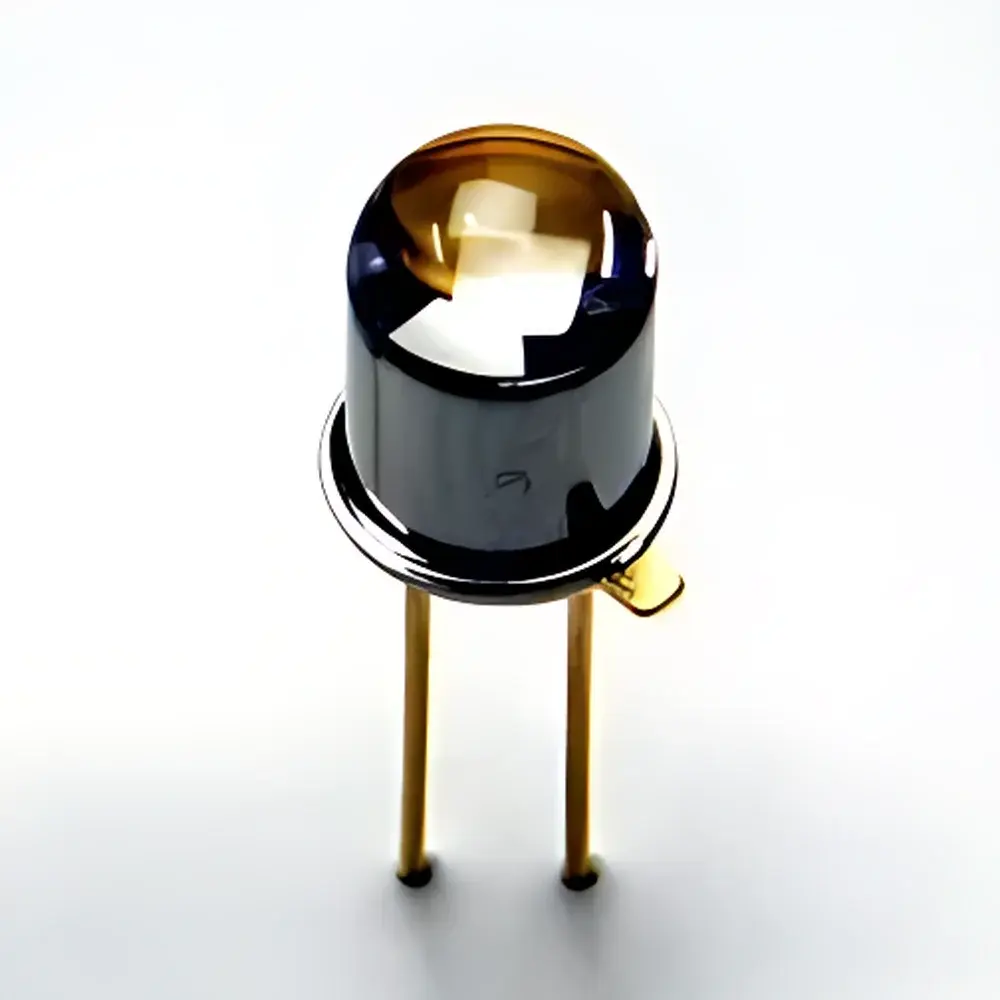

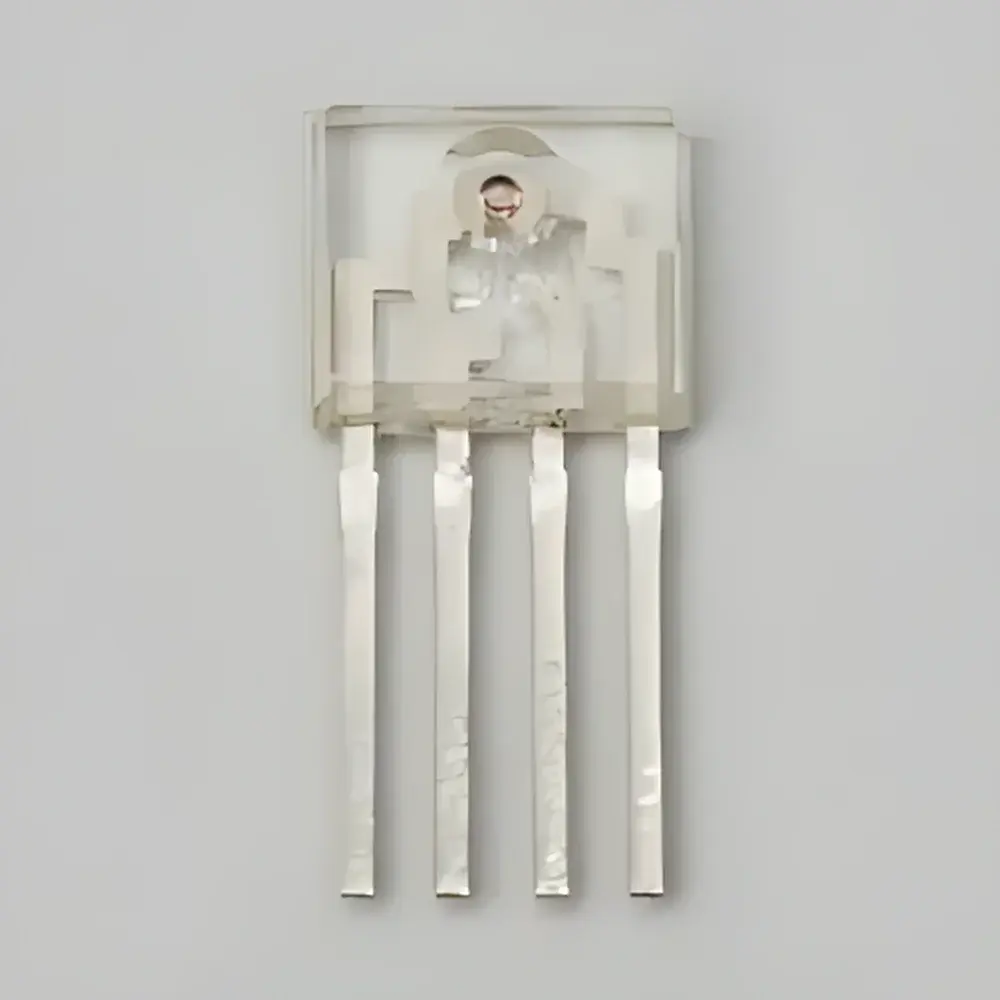
Hamamatsu L1 Series High-Power Infrared LED Emitters
| Brand | Hamamatsu |
|---|---|
| Origin | Japan |
| Manufacturer Type | Original Equipment Manufacturer (OEM) |
| Import Status | Imported |
| Model | L1 |
| Light Source Type | Infrared LED |
| Illumination Mode | External Irradiation |
| Peak Emission Wavelength (Typ.) | 870 nm |
| Radiant Flux (Typ.) | 80 mW |
| Cutoff Frequency (Typ.) | 40 MHz |
Overview
The Hamamatsu L1 Series high-power infrared light-emitting diodes (IR LEDs) are semiconductor optoelectronic devices engineered for stable, efficient conversion of electrical current into near-infrared radiation. Operating on electroluminescence principles in the 850–950 nm spectral range, these devices deliver precise, spectrally narrow emission without coherence or spatial mode structure—distinguishing them fundamentally from laser diodes (LDs). Their non-laser nature eliminates concerns related to speckle noise, eye safety class restrictions (typically Class 1 under IEC 60825-1), and complex driver requirements, making them ideal for industrial sensing, optical encoding, proximity detection, and low-data-rate free-space optical communication systems where reliability, cost efficiency, and long-term operational stability are critical design criteria.
Key Features
- High radiant output: Up to 80 mW typical radiant flux at 870 nm, enabling robust signal-to-noise ratios in reflective and transmissive detection configurations.
- Fast temporal response: 40 MHz cutoff frequency supports pulse modulation up to ~30 MHz square-wave operation—suitable for high-speed optical switching and encoder applications requiring sub-30 ns rise/fall times.
- Hermetic plastic package: Optimized thermal dissipation and mechanical robustness for integration into automated assembly lines and embedded OEM modules.
- Stable spectral output: Tight peak wavelength tolerance (±10 nm) and minimal temperature drift (<0.3 nm/°C) ensure consistent performance across ambient operating ranges (−40°C to +85°C).
- OEM-ready form factor: Standard 5.0 mm × 3.0 mm surface-mount and through-hole packages compatible with reflow soldering (JEDEC J-STD-020 compliant) and automated optical alignment fixtures.
Sample Compatibility & Compliance
The L1 Series is designed for compatibility with standard photodetectors including silicon PIN photodiodes (e.g., Hamamatsu S120VC), InGaAs sensors (for extended NIR applications), and CMOS image sensors with NIR-enhanced quantum efficiency. All devices comply with RoHS Directive 2011/65/EU and REACH Regulation (EC) No. 1907/2006. Electrical characteristics meet JEDEC JESD22-A114 reliability standards for electrostatic discharge (HBM ≥ 2 kV). While not classified as medical devices, their stable radiometric output supports traceable calibration workflows aligned with ISO/IEC 17025-accredited laboratories when used in metrological setups such as optical power reference chains or beam profiling validation.
Software & Data Management
As a passive emitter, the L1 Series requires no embedded firmware or host software. However, it integrates seamlessly into programmable optical test platforms—including National Instruments PXI-based systems, Arduino-compatible driver boards (e.g., TPS61088-based constant-current modules), and LabVIEW-controlled pulsed current sources. Radiometric data sheets (including angular intensity distribution, spectral irradiance curves, and forward voltage vs. temperature curves) are provided in NIST-traceable PDF and CSV formats. Hamamatsu’s official technical documentation includes full IEC 62471 photobiological safety assessments and detailed thermal resistance (Rth) modeling parameters for thermal interface material selection and heatsink sizing in continuous-wave (CW) or pulsed operation.
Applications
- Industrial position and speed sensing in rotary encoders and linear scales
- Proximity and presence detection in automotive cabin monitoring and robotics end-effectors
- Optical isolation in PLC I/O modules and medical instrument signal conditioning circuits
- Reference illumination in FTIR spectrometer alignment and detector linearity verification
- Low-bandwidth optical data links (up to 10 Mbps) in intrinsically safe environments where laser-class restrictions apply
- Calibration sources for NIR camera sensitivity mapping and lens flare characterization
FAQ
What is the maximum permissible continuous forward current for the L1 model?
The absolute maximum DC forward current is 100 mA; however, derating to ≤70 mA is recommended for >10,000-hour lifetime at 25°C ambient per Hamamatsu’s accelerated life testing data.
Can the L1 be driven with pulsed current to increase peak radiant output?
Yes—pulse widths ≥100 µs and duty cycles ≤10% allow transient radiant flux up to 120 mW, provided peak current remains within 200 mA and junction temperature stays below 100°C.
Is there a datasheet available with full spectral power distribution (SPD) data?
Yes—Hamamatsu provides SPD curves measured with calibrated integrating sphere spectroradiometers (e.g., CAS 140D), traceable to NIST SRM 2030, downloadable via their global technical support portal.
Does this device require external heat sinking in continuous operation?
For operation above 50 mA CW at ambient temperatures >40°C, a thermal pad (Rth ≤ 15 K/W) or aluminum PCB substrate is advised to maintain junction temperature <85°C.
Are lead-free soldering profiles supported?
Yes—the L1 package conforms to IPC/JEDEC J-STD-020D moisture sensitivity level (MSL) 1 and supports lead-free reflow profiles up to 260°C peak temperature for 10 seconds.






