
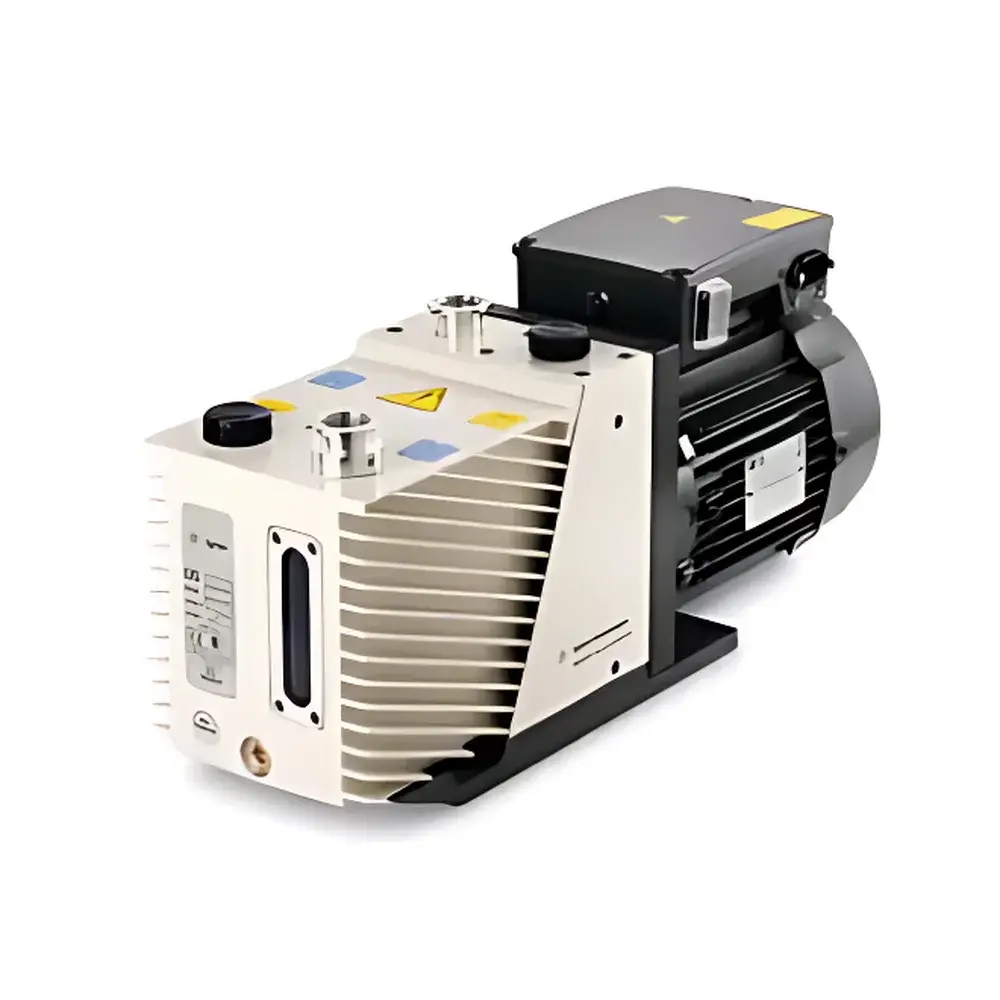
Agilent DS 602 Dual-Stage Oil-Sealed Rotary Vane Vacuum Pump
| Brand | Agilent Technologies |
|---|---|
| Origin | USA |
| Manufacturer Type | Original Equipment Manufacturer (OEM) |
| Product Category | Imported |
| Model | DS 602 Rotary Vane Pump |
| Pump Type | Dual-Stage Oil-Sealed Rotary Vane |
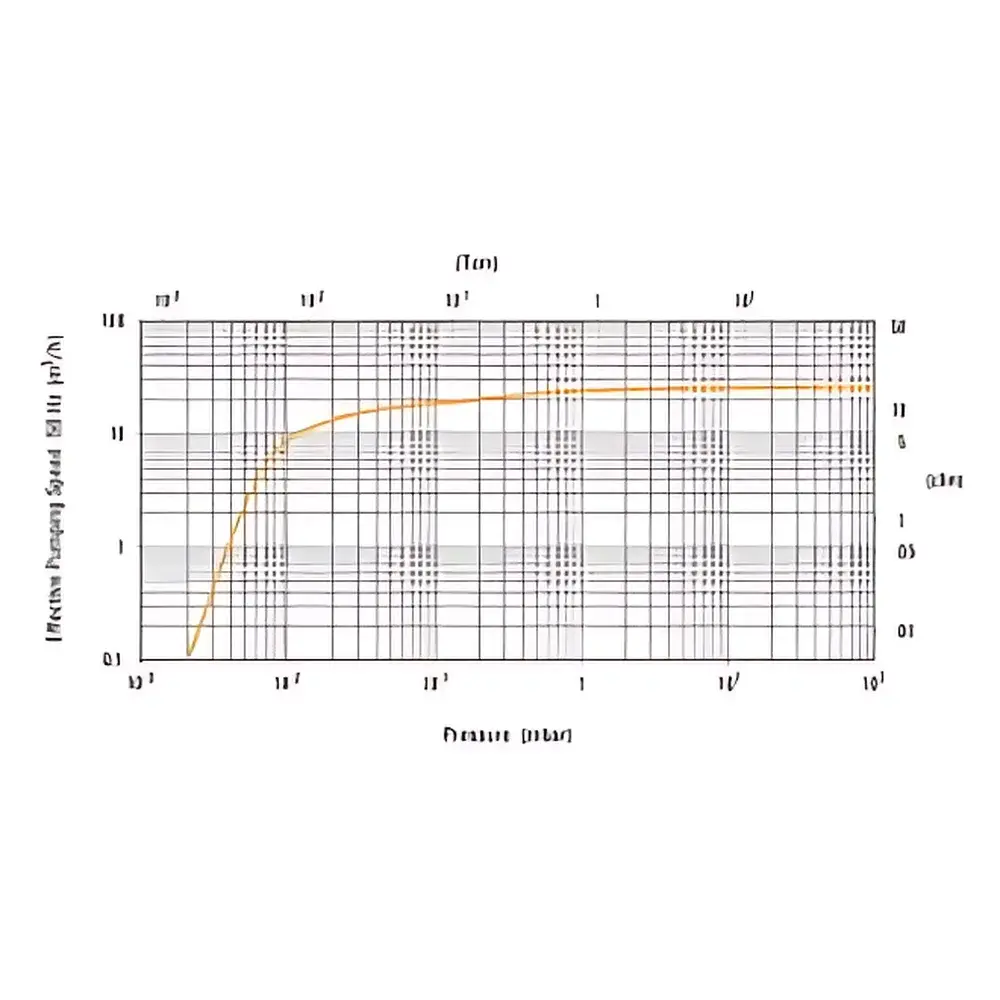
| Ultimate Pressure | < 2 × 10⁻³ mbar |
| Pumping Speed | 25 m³/h (17.6 CFM) |
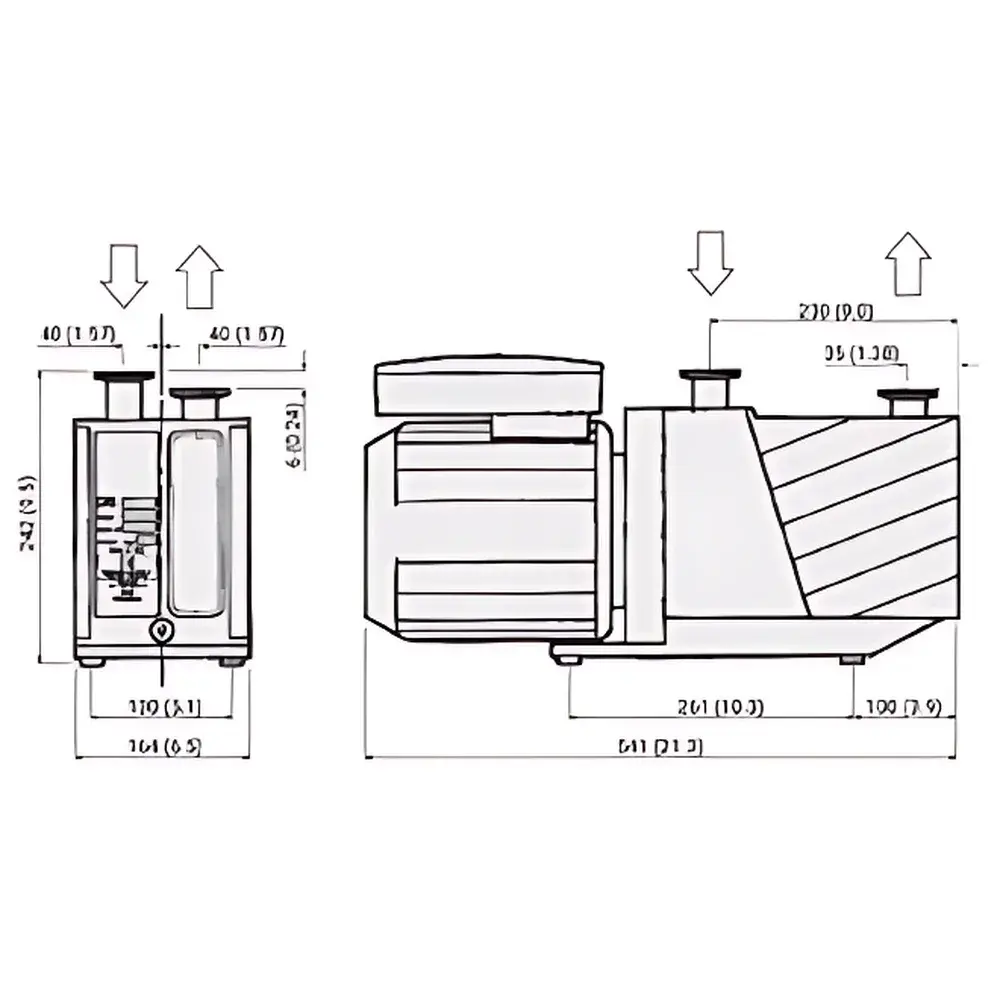
| Dimensions (W × L × H) | 164 mm × 541 mm × 242 mm |
| Weight | 35 kg |
| Motor Options | Universal single-phase or optional three-phase, IEC 320 C14 inlet |
| Integrated Inlet Isolation Valve | Yes |
| Gas Ballast (Air Bleed) Capacity | 550 g/h H₂O vapor |
| Sound Pressure Level | Low-noise operation (< 55 dB(A) at 1 m) |
| Operating Temperature Range | Ambient 10–40 °C |
Overview
The Agilent DS 602 is a dual-stage, oil-sealed rotary vane vacuum pump engineered for reliable, continuous-duty operation in analytical, research, and industrial laboratory environments. Based on the proven principles of positive displacement via rotating vanes within an eccentrically mounted rotor, the DS 602 achieves ultimate vacuum pressures below 2 × 10⁻³ mbar while maintaining high volumetric throughput—up to 25 m³/h (17.6 CFM) at atmospheric inlet pressure. Its two-stage compression architecture enables stable operation across a broad pressure range (10⁵ to <10⁻³ mbar), with enhanced efficiency in the critical low-pressure regime (10⁻² to 10⁻³ mbar) where single-stage pumps typically exhibit declining performance and increased backstreaming risk. The pump’s thermally balanced design minimizes operating temperature rise during extended duty cycles, reducing oil degradation and extending service intervals. It serves as a primary roughing pump for high-vacuum systems—including turbomolecular, diffusion, and cryogenic pumps—as well as a standalone solution for vacuum ovens, freeze dryers, mass spectrometry sample introduction, and vacuum filtration.
Key Features
- Dual-stage oil-sealed rotary vane mechanism for improved ultimate vacuum (< 2 × 10⁻³ mbar) and reduced oil backstreaming compared to single-stage equivalents
- Integrated inlet isolation valve automatically seals the suction port upon power loss or shutdown, preserving system vacuum integrity and preventing oil contamination of downstream chambers
- Manually adjustable gas ballast (air bleed) valve enabling controlled admission of dry air into the second compression stage; supports continuous handling of up to 550 g/h water vapor load without significant loss of ultimate pressure
- Low-noise motor assembly (< 55 dB(A) at 1 m) suitable for shared laboratory spaces and noise-sensitive applications
- Universal single-phase motor with integrated IEC 320 C14 inlet—no internal rewiring required for voltage adaptation; optional three-phase motor available for higher reliability and smoother torque delivery
- Compact footprint (541 mm length, 164 mm width) and modular mechanical design facilitate integration into OEM instruments and benchtop vacuum systems
Sample Compatibility & Compliance
The DS 602 is compatible with non-corrosive, non-reactive gases and vapors commonly encountered in general laboratory vacuum applications—including air, nitrogen, argon, water vapor (within specified gas ballast limits), and organic solvent vapors at low partial pressures. It is not intended for use with aggressive chemicals (e.g., halogenated solvents, strong acids, or oxidizers) or explosive atmospheres. The pump complies with IEC 61000-6-3 (EMC emission standards) and IEC 61000-6-2 (immunity), meets CE marking requirements under the EU Machinery Directive 2006/42/EC and Low Voltage Directive 2014/35/EU, and conforms to RoHS 2011/65/EU restrictions on hazardous substances. Its design supports GLP-compliant operation when integrated into validated instrument platforms, and the isolation valve functionality contributes to audit-ready system behavior per FDA 21 CFR Part 11 expectations for process control integrity.
Software & Data Management
As a standalone mechanical vacuum pump, the DS 602 does not incorporate embedded firmware or digital communication interfaces (e.g., RS-485, Modbus, or Ethernet). However, it is fully compatible with third-party vacuum system controllers and SCADA platforms via auxiliary dry-contact inputs/outputs (e.g., for run status, overtemperature alarm, or isolation valve position feedback) when paired with optional sensor modules (e.g., Pirani or capacitance manometers). Agilent provides comprehensive technical documentation—including dimensional drawings, piping schematics, maintenance schedules, and oil change protocols—in English PDF format. All operational logs (e.g., runtime hours, oil replacement dates, gas ballast usage patterns) are maintained externally by the host system or facility maintenance records, supporting traceability in regulated environments.
Applications
- Roughing pump for high-vacuum systems: turbomolecular pumps, ion pumps, and cryopumps in surface science, thin-film deposition, and electron microscopy
- Vacuum drying and lyophilization: consistent low-pressure environment for pharmaceutical and biotech sample processing
- Mass spectrometry: sample introduction line evacuation and interface backing in GC-MS and LC-MS systems
- Gas chromatography: carrier gas supply regulation and detector housing evacuation
- Physical testing: vacuum impregnation, degassing of resins and composites, and vacuum-assisted casting
- Academic research: teaching labs requiring robust, repeatable vacuum generation for physics, chemistry, and materials science experiments
FAQ
What is the recommended operating oil for the DS 602?
Agilent specifies the use of Agilent Vacuum Pump Oil 5010-2325 (ISO VG 100 grade, PAO-based) for optimal performance, thermal stability, and vapor pressure characteristics. Substitution with non-approved oils may compromise ultimate pressure, increase backstreaming, and void warranty coverage.
Can the DS 602 be operated continuously at full load?
Yes—the DS 602 is rated for continuous-duty operation under nominal conditions (ambient temperature ≤ 35 °C, clean intake air, proper ventilation). For sustained operation above 40 °C ambient or with elevated water vapor loads, periodic inspection of oil condition and gas ballast valve adjustment are advised.
Is the inlet isolation valve electrically actuated or mechanical?
It is a spring-loaded, pneumatically balanced mechanical valve that closes automatically upon loss of inlet pressure differential—no external power or control signal is required.
Does the DS 602 support remote start/stop functionality?
Not natively; however, external contactor-based control circuits can be interfaced using the pump’s auxiliary terminals (if equipped) or via the motor’s power supply line—consult Agilent’s Application Note AN-DS602-CTRL for wiring guidance.
How often should the oil be changed under typical lab use?
Under normal conditions (≤ 8 h/day, low moisture load), oil change intervals are recommended every 3,000 operating hours or annually—whichever occurs first. More frequent changes are required in high-humidity or solvent-laden environments.



