
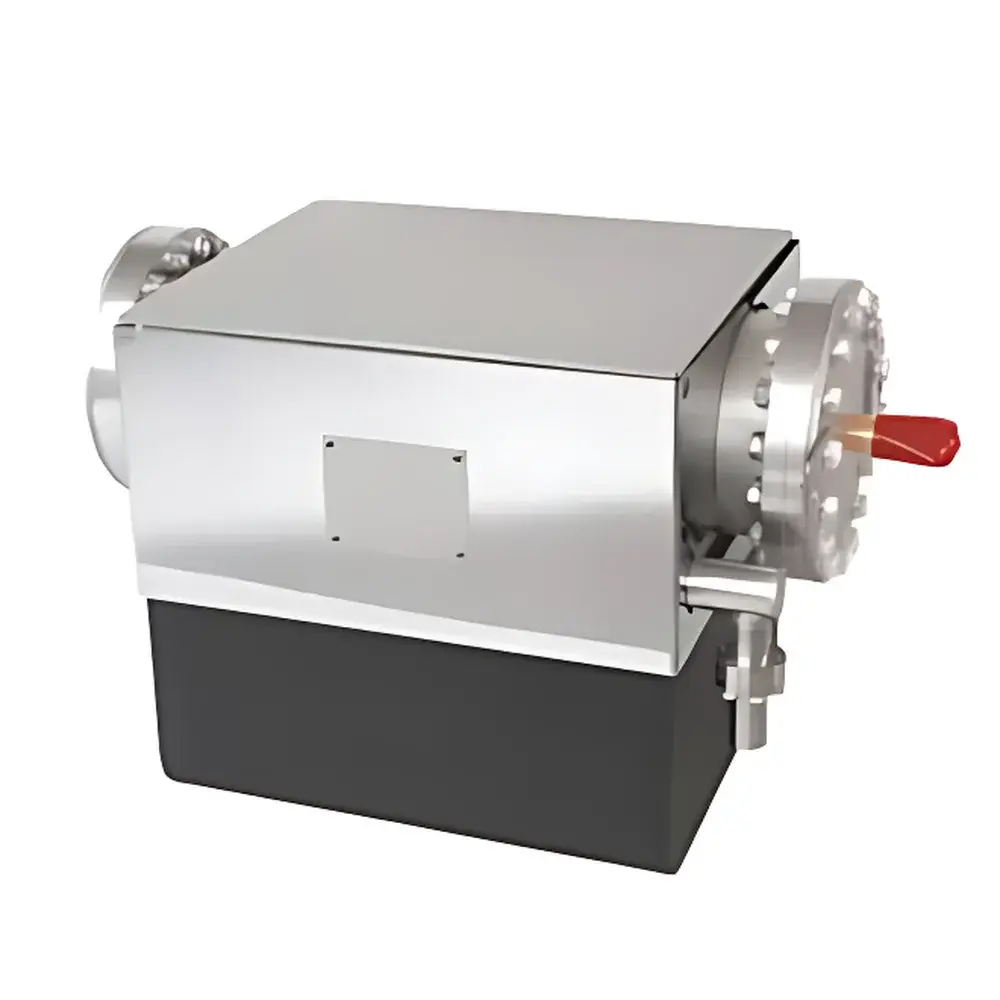
Agilent CombiNEG 150-1000/2000 Non-Evaporable Getter (NEG) Hybrid Ion Pump
| Brand | Agilent Technologies |
|---|---|
| Origin | USA |
| Manufacturer Type | Original Equipment Manufacturer (OEM) |
| Product Category | Imported |
| Model | CombiNEG 150-1000/2000 |
| Ultimate Vacuum | < 1 × 10⁻¹¹ mbar |
| Weight | 43 kg (94 lbs) |
Overview
The Agilent CombiNEG 150-1000/2000 is a hybrid ultra-high vacuum (UHV) and extreme-high vacuum (XHV) pumping solution engineered for demanding scientific and industrial applications requiring simultaneous, high-efficiency removal of both inert and reactive gas species. It integrates a 150 L/s VacIon™ ion pump — available in either bipolar or triode configuration — with a high-capacity non-evaporable getter (NEG) cartridge: D1000 (1000 L nominal gettering capacity) or D2000 (2000 L nominal capacity). This dual-mechanism architecture leverages the ion pump’s strong sputtering-based pumping action on noble gases (e.g., Ar, He, Ne) and residual hydrocarbons, while the sintered Zr–V–Fe alloy NEG provides rapid, chemisorption-driven capture of active gases including H₂, CO, CO₂, N₂, O₂, and H₂O vapor. The result is a synergistic pumping profile optimized for rapid pump-down to <1 × 10⁻¹¹ mbar, stable long-term base pressure maintenance, and minimal outgassing after activation.
Key Features
- Hybrid pumping architecture combining a 150 L/s VacIon™ ion pump (bipolar or triode) with a sintered D1000 or D2000 NEG cartridge for broad-spectrum gas removal
- Sintered NEG design eliminates risks associated with pressed-powder getters — no particulate shedding, improved mechanical integrity, and higher thermal stability
- Integrated internal shield minimizes electron bombardment-induced degradation of the NEG surface, extending operational lifetime under continuous UHV/XHV conditions
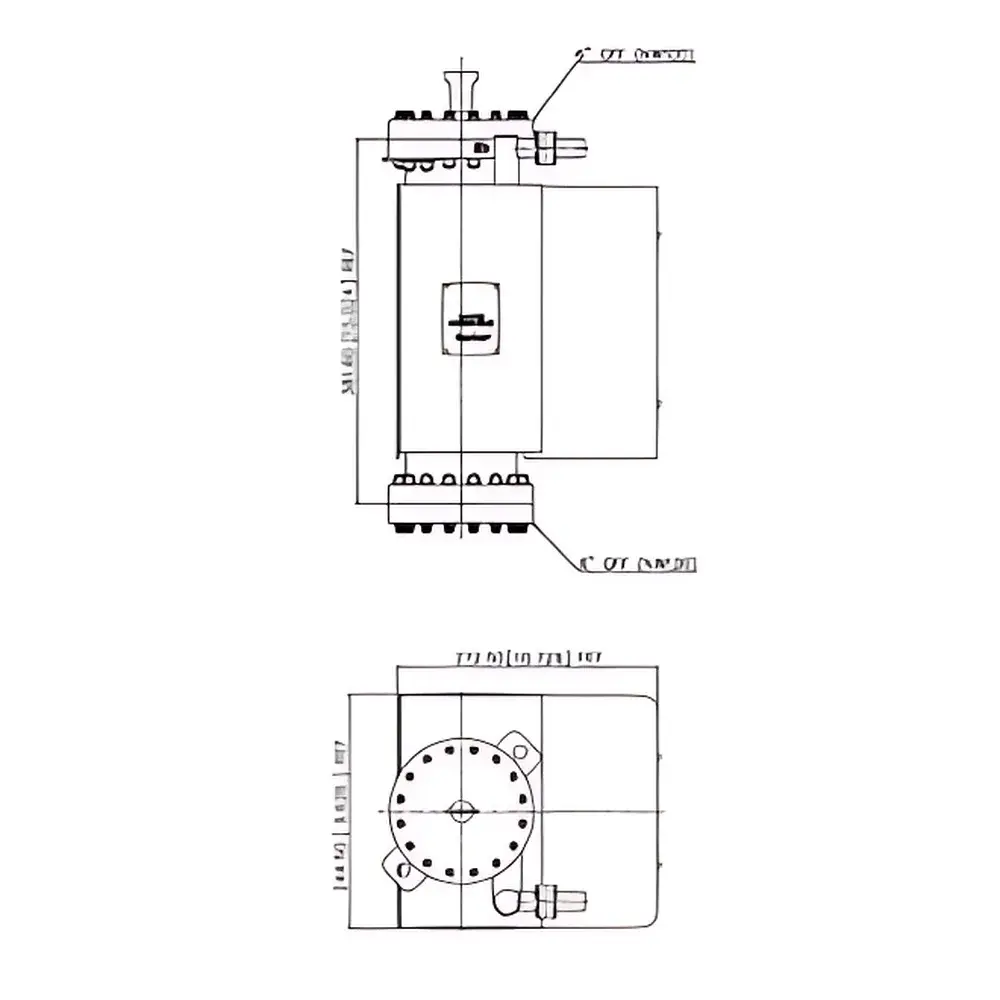
- ConFlat® 6″ (152 mm) non-rotating main inlet flange (CF-6″) and an additional CF-6″ side port dedicated to NEG activation and monitoring
- Modular vacuum feedthrough orientation — customizable electrical feedthrough direction (top, side, or rear) to accommodate complex chamber layouts and minimize magnetic interference
- Zero moving parts: inherently vibration-free operation critical for electron microscopy, surface science (XPS, AES), atomic physics, and quantum sensing setups
- Low leakage current (<1 nA typical) ensures compatibility with high-impedance vacuum gauges and enables stable, low-noise pressure readout
- Low intrinsic magnetic field (<0.5 mT at 10 cm distance) reduces perturbation of electron beams, ion trajectories, and sensitive magnetic sensors
- Pre-activated and vacuum-sealed: undergoes bake-out at >400 °C under vacuum, followed by cold welding (pinch-off) to preserve cleanliness and ensure leak-tight integrity prior to installation
Sample Compatibility & Compliance
The CombiNEG 150-1000/2000 is compatible with stainless steel (304L/316L), copper, and aluminum vacuum systems rated for UHV/XHV service (≤10⁻¹⁰ mbar operating range). Its materials and construction comply with ASTM E595 for total mass loss (TML) and collected volatile condensable materials (CVCM), supporting NASA and ESA space-qualified vacuum environments. The device meets ISO 27893:2020 requirements for residual gas analysis (RGA)-compatible vacuum components and is suitable for installations requiring adherence to GLP and GMP documentation protocols where traceable vacuum performance and contamination control are mandated.
Software & Data Management
While the CombiNEG itself operates passively post-activation, it is fully compatible with Agilent’s VacuGraph™ and third-party vacuum control platforms (e.g., MKS Instruments’ IntelliMax®, Pfeiffer Vacuum’s TPG300 series) via standard analog (0–10 V) and digital (RS-485, Modbus RTU) interfaces. Integrated ion pump current monitoring enables real-time estimation of gas load composition trends (e.g., H₂ vs. Ar partial pressures) when paired with calibrated RGA data. All activation logs, bake-out profiles, and pressure history can be archived in accordance with FDA 21 CFR Part 11-compliant electronic record systems when used in regulated analytical laboratories.
Applications
- Ultra-high vacuum chambers for scanning/transmission electron microscopy (SEM/TEM) and focused ion beam (FIB) systems
- Surface analysis instrumentation: X-ray photoelectron spectroscopy (XPS), Auger electron spectroscopy (AES), and low-energy electron diffraction (LEED)
- Atomic and molecular beam experiments, cold atom traps, and quantum computing testbeds requiring XHV stability and minimal magnetic noise
- Particle accelerator beamlines and synchrotron front-end vacuum systems
- Space simulation chambers and satellite component testing facilities
- High-resolution mass spectrometry sources and time-of-flight (TOF) analyzers where background gas interference must be minimized
FAQ
What gases does the CombiNEG pump most effectively?
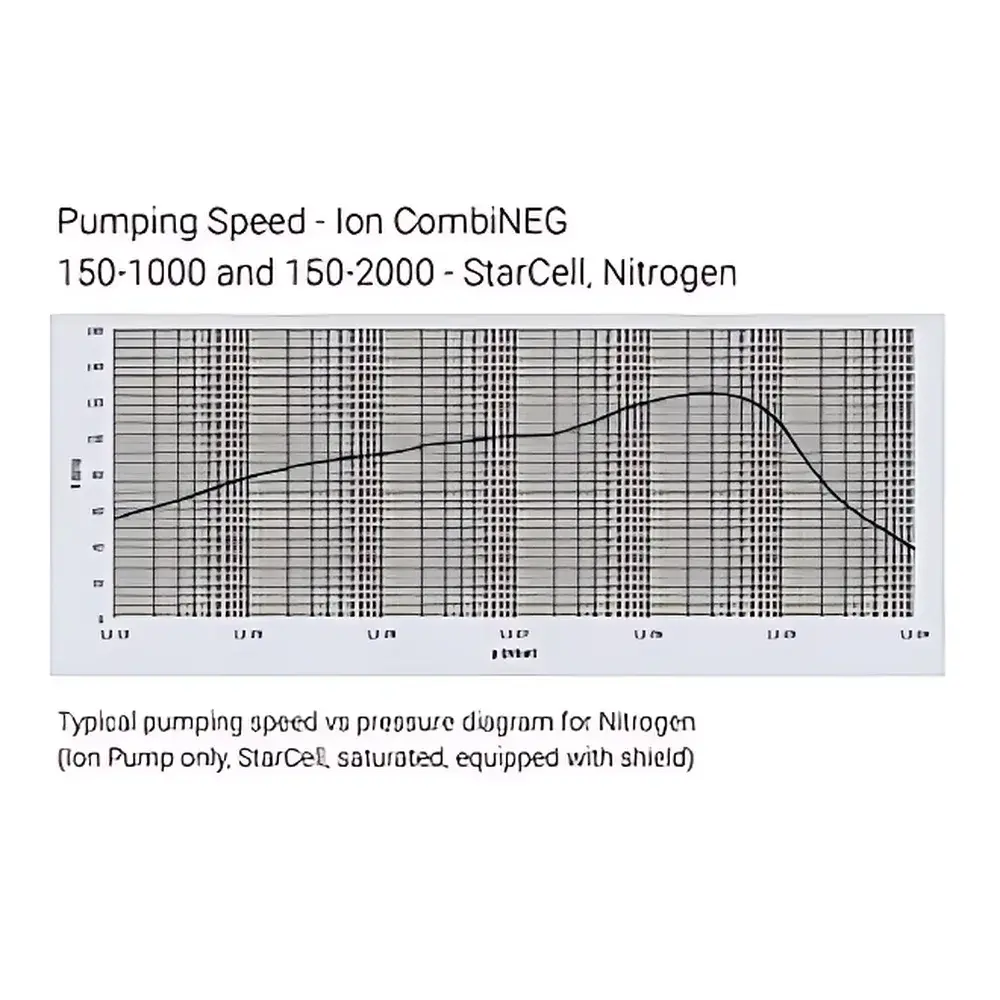
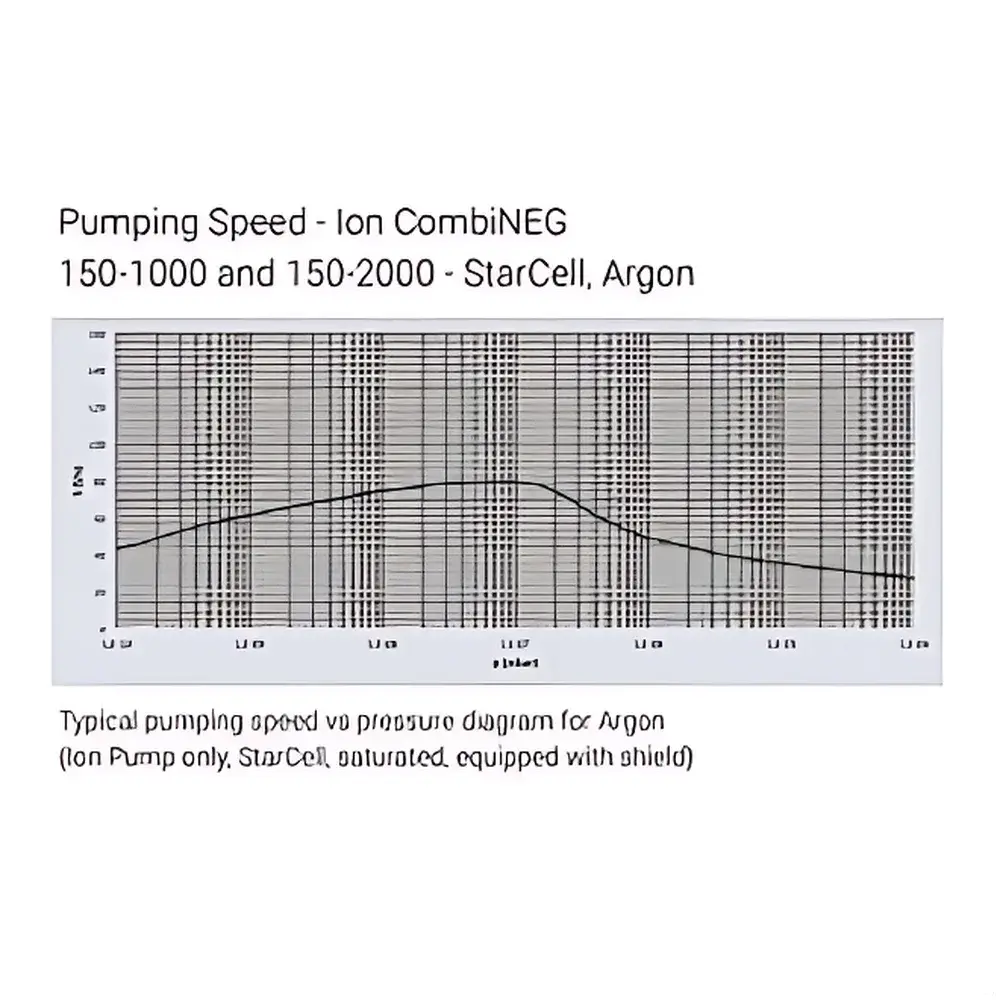
It achieves high pumping speeds for hydrogen (H₂), carbon monoxide (CO), carbon dioxide (CO₂), nitrogen (N₂), oxygen (O₂), and water vapor (H₂O) via the NEG cartridge, and for argon (Ar), helium (He), neon (Ne), and residual hydrocarbons via the ion pump section.
Can the NEG cartridge be reactivated in situ?
Yes — the D1000/D2000 cartridge supports multiple thermal reactivations (typically at 400–450 °C for 1–2 hours under vacuum), restoring >95% of initial pumping speed for reactive gases.
Is the pump compatible with magnetic shielding requirements?
Yes — its low intrinsic magnetic field and optional mu-metal shielding kits make it suitable for ultra-sensitive magnetic measurement environments, including SQUID magnetometers and spin-polarized STM.
What is the recommended mounting orientation?
Vertical mounting (inlet up) is preferred to prevent gravitational settling of any potential debris; however, horizontal and inverted configurations are mechanically validated and supported with appropriate support brackets.
Does the pump require external cooling?
No — it operates passively without forced air or water cooling; ambient convection is sufficient for thermal management under continuous UHV/XHV operation.



