
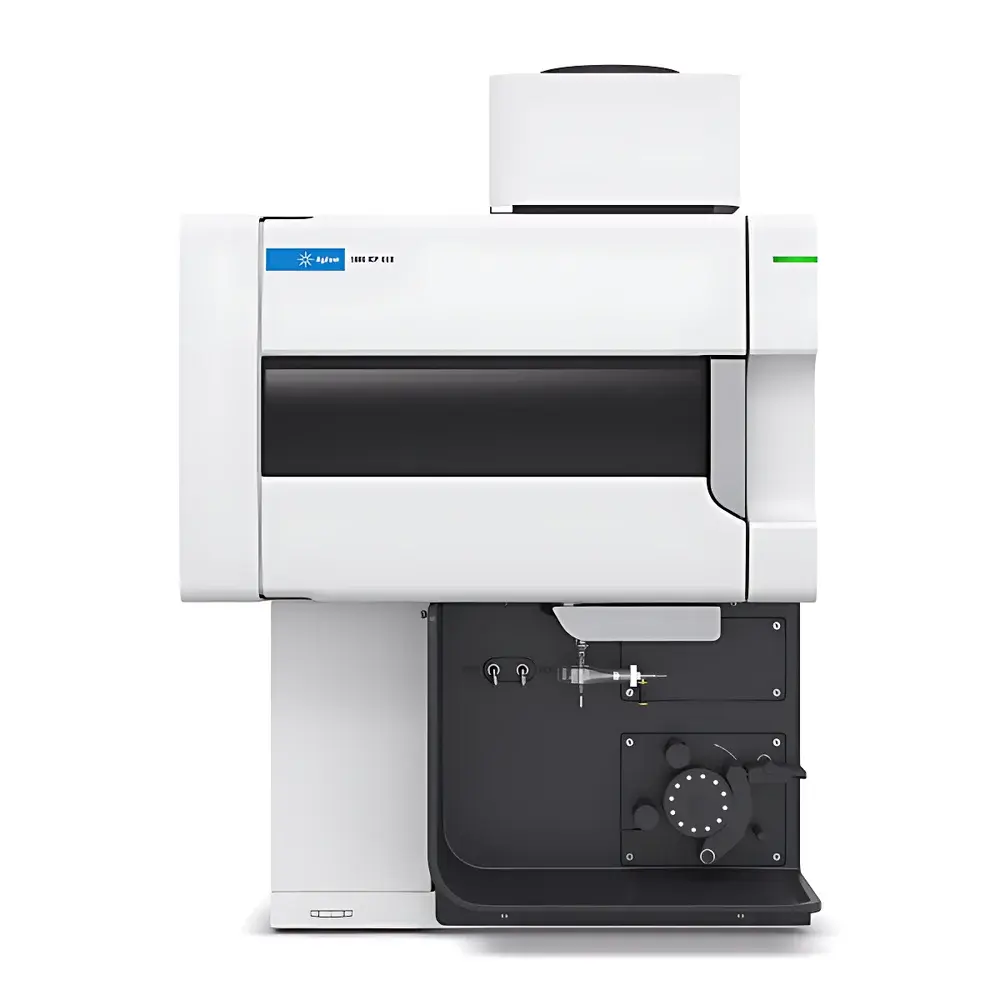
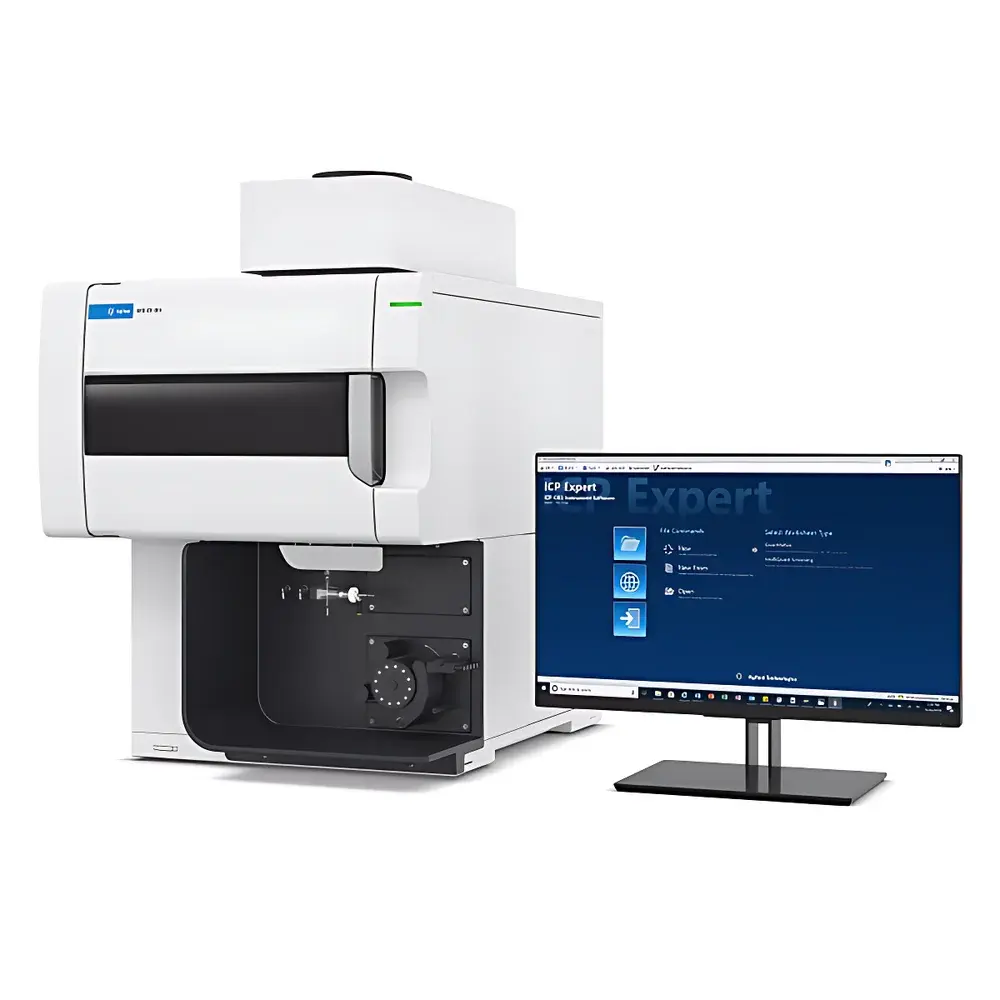

Agilent 5800 Inductively Coupled Plasma Optical Emission Spectrometer
| Brand | Agilent Technologies |
|---|---|
| Origin | Malaysia |
| Manufacturer Status | Original Equipment Manufacturer (OEM) |
| Import Category | Imported Instrument |
| Model | 5800 |
| Instrument Type | Full-Spectrum Simultaneous ICP-OES |
| Detection Limit | S (180.669 nm) < 5 µg/L |
| Precision (RSD) | ≤1.0% |
| Short-Term Stability (RSD) | ≤0.5% |
| Wavelength Range | 167–785 nm |
| Optical Resolution | ≤0.0065 nm (at As 188.980 nm) |
Overview
The Agilent 5800 Inductively Coupled Plasma Optical Emission Spectrometer (ICP-OES) is an engineered solution for high-throughput analytical laboratories requiring robust, reliable, and intelligent elemental analysis. Based on the fundamental principle of inductively coupled plasma optical emission spectroscopy—where liquid samples are atomized, ionized, and excited in a high-temperature argon plasma (≈6,000–10,000 K)—the instrument detects element-specific atomic/ionic emission lines across the ultraviolet to near-visible spectrum (167–785 nm). Its proprietary freeform optical design replaces conventional toroidal or spherical mirrors with aspheric, non-symmetric surfaces optimized via ray-tracing algorithms. This architecture delivers superior light throughput, reduced optical aberrations, and enhanced spectral resolution (≤0.0065 nm at As 188.980 nm), enabling accurate separation of closely spaced emission lines—critical for complex matrices such as battery electrolytes or geological digests.
Key Features
- Vertical Dual View (VDV) Plasma Observation: Switches seamlessly between axial and radial viewing paths without mechanical repositioning—minimizing interferences from molecular bands (e.g., OH, NO) while extending linear dynamic range up to 6 orders of magnitude.
- Freeform Optics Platform: Compact monochromator design reduces footprint by >30% versus conventional Czerny-Turner systems; accelerates argon purge and thermal equilibration (<15 min warm-up), lowering operational gas consumption and energy use.
- IntelliQuant Software Intelligence: Employs rule-based spectral interference recognition using certified NIST and IUPAC line databases; recommends optimal analyte wavelengths and flags potential overlaps (e.g., Ca II 317.933 nm vs. Fe I 317.941 nm) prior to method setup.
- Early Maintenance Feedback (EMF): Continuously monitors >100 hardware parameters—including plasma torch alignment, nebulizer pressure, RF forward/reflected power, and detector temperature—triggering contextual alerts before performance drift exceeds ASTM D512-22 or ISO 17294-2 compliance thresholds.
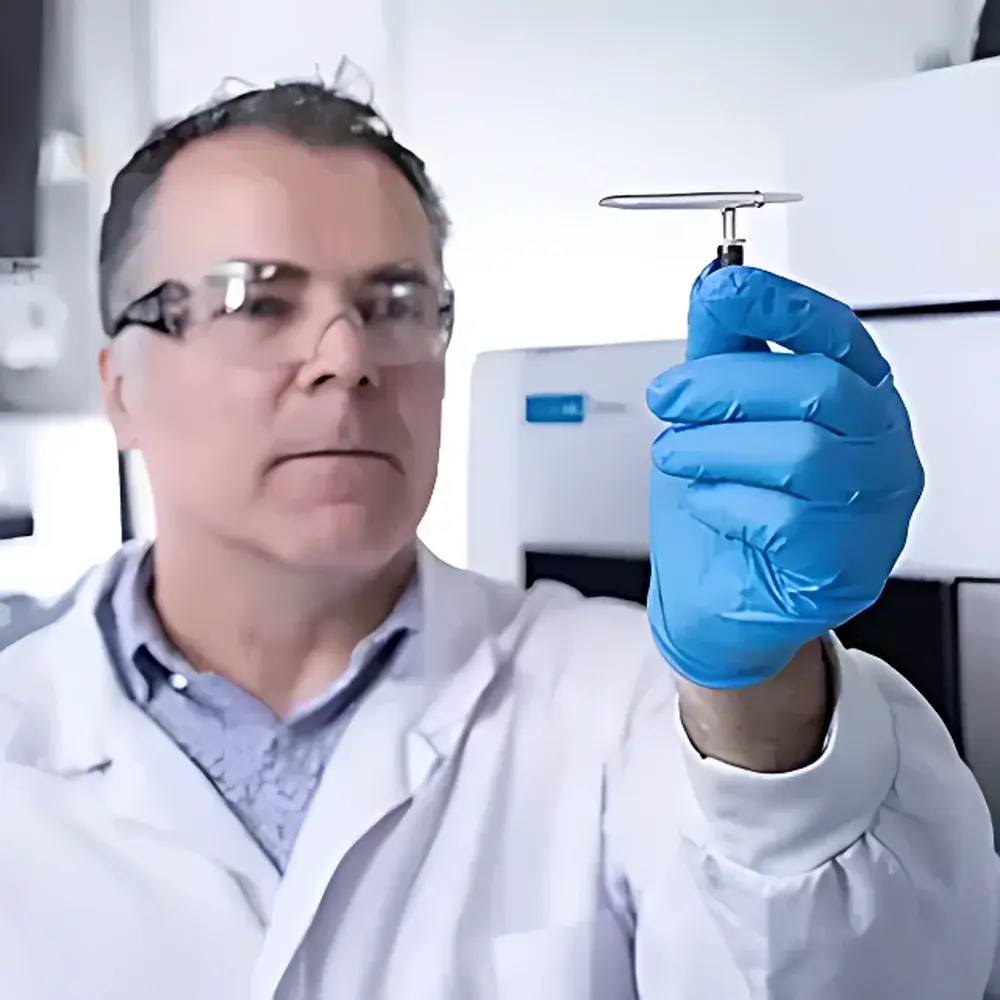
- Neb Alert Monitoring: Real-time acoustic and pressure signature analysis of the concentric glass nebulizer detects clogging onset or seal degradation, preventing sample carryover and calibration drift.
- Advanced Background Correction: Integrates Fit Background Correction (FBC), Fast Automatic Curve Fitting (FACT), and Inter-Element Correction (IEC) algorithms compliant with USP and EPA Method 200.7 for multi-element quantitation in saline, acidic, or organic-rich digestates.
Sample Compatibility & Compliance
The Agilent 5800 supports aqueous solutions (0.1–20% v/v HNO₃/HCl), microwave-digested environmental solids (EPA 3050B, 3052), fused borate beads (ASTM E2165), and diluted organic solvents (up to 20% MIBK or xylene). Its plasma interface accommodates both standard and high-solids nebulizers (e.g., MicroMist, SeaSpray), enabling direct analysis of brines, sludges, and Li-ion battery cathode slurries without dilution. The system meets ISO/IEC 17025:2017 requirements for method validation, supports FDA 21 CFR Part 11-compliant electronic signatures and audit trails via ICP Expert software, and is routinely deployed in GLP-regulated contract laboratories performing testing per ASTM E1479 (pharmaceutical impurities) and ISO 14852 (biodegradability trace metals).
Software & Data Management
ICP Expert software provides a validated, workflow-driven interface aligned with laboratory quality management systems. It includes automated QC checks (e.g., bracketing standards, continuing calibration verification per CLSI EP28-A3c), customizable reporting templates compliant with LIMS export (ASTM E1482), and secure role-based access control. Raw spectral data (intensity vs. wavelength) and processed results are stored in vendor-neutral .csv and .xml formats; full spectral archives support retrospective interference investigation and method reprocessing without re-injection. All software modules undergo annual cybersecurity patching and are validated against Agilent’s internal IQ/OQ/PQ protocols.
Applications
The Agilent 5800 demonstrates proven utility in regulated and R&D environments demanding multi-element precision at sub-ppb levels. In lithium-ion battery manufacturing, it quantifies Li, Co, Ni, Mn, Al, and Fe in cathode precursors (NMC, LFP), anode graphite coatings, and electrolyte additives—meeting QC specifications outlined in GB/T 30835–2014 and UL 1642. For environmental monitoring, it performs simultaneous determination of 25+ elements in wastewater per EPA Method 200.7, including As, Cd, Cr, Pb, and Se at detection limits below regulatory action levels. Additional validated applications include catalyst residue analysis in petrochemical feedstocks (ASTM D5708), nutrient profiling in fortified foods (AOAC 984.27), and rare earth element mapping in recycled NdFeB magnets.
FAQ
What plasma observation modes does the 5800 support?
It features Vertical Dual View (VDV), allowing real-time switching between axial and radial plasma observation without manual torch movement or recalibration.
Is the system compliant with 21 CFR Part 11?
Yes—ICP Expert software includes electronic signature workflows, audit trail logging, and user privilege management validated per Agilent’s Part 11 implementation guide.
Can the 5800 analyze high-salt or high-acid samples?
Yes—its robust plasma interface and optional cyclonic spray chamber enable stable operation with up to 25% total dissolved solids (TDS) or 10% HCl matrix when paired with the SeaSpray nebulizer.
How does IntelliQuant improve method development time?
By cross-referencing over 12,000 certified emission lines against known interferences, it reduces manual wavelength selection from hours to minutes and flags potential matrix effects before sample introduction.
What maintenance alerts does EMF provide?
EMF monitors RF generator stability, plasma torch position drift, nebulizer gas flow consistency, and detector dark current—issuing tiered notifications (warning, caution, critical) based on statistical process control (SPC) limits derived from historical baseline performance.





