
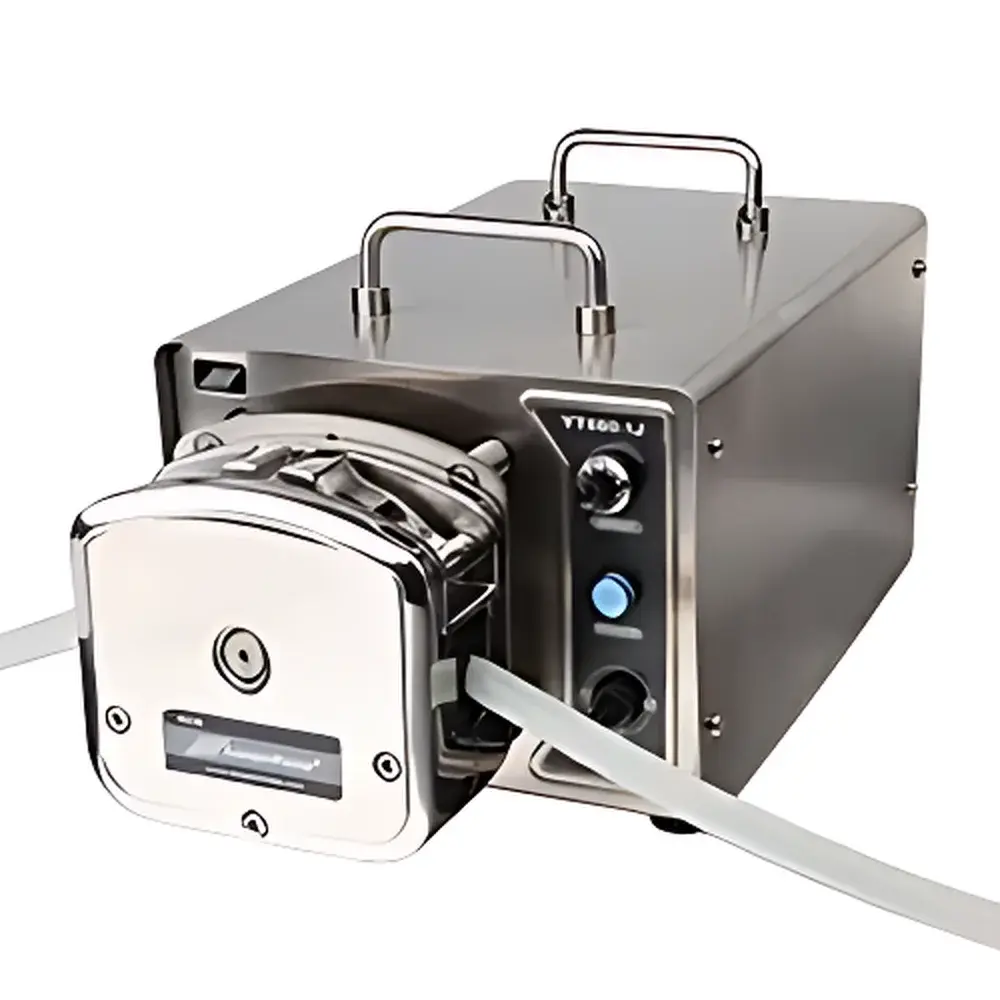
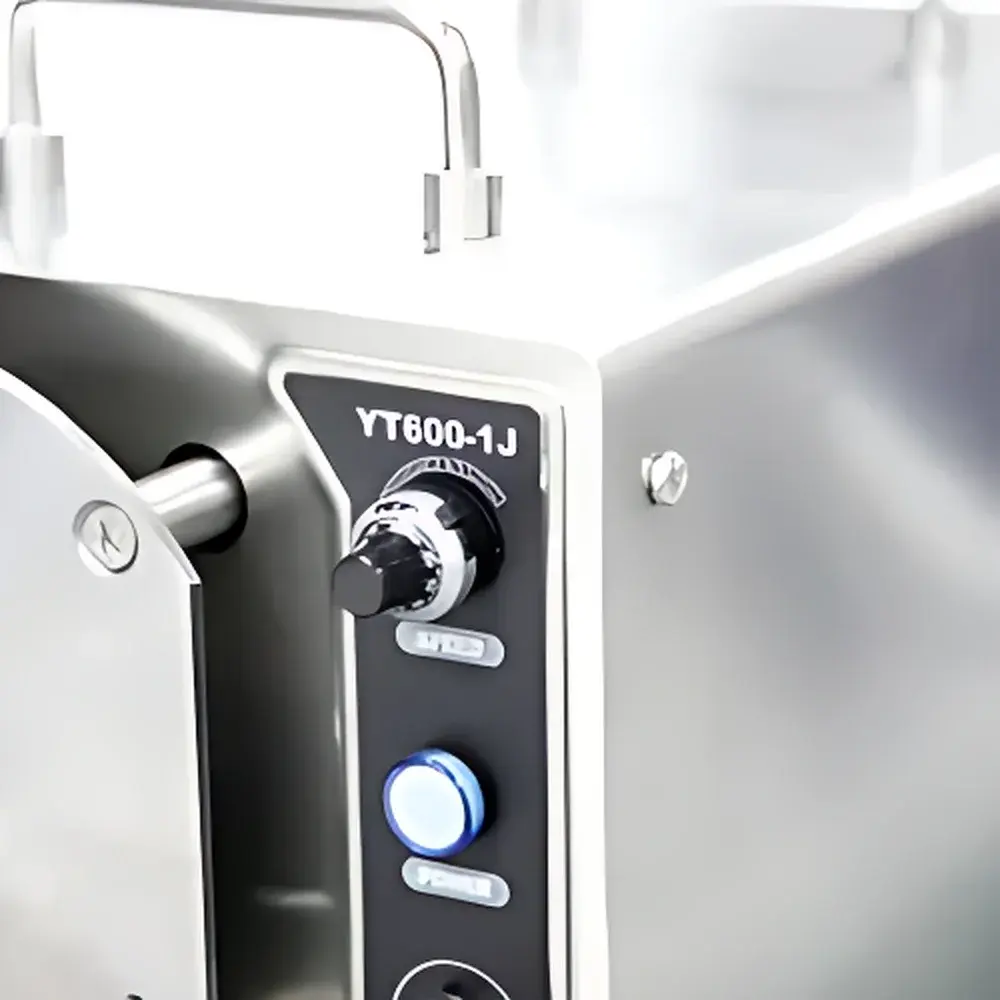
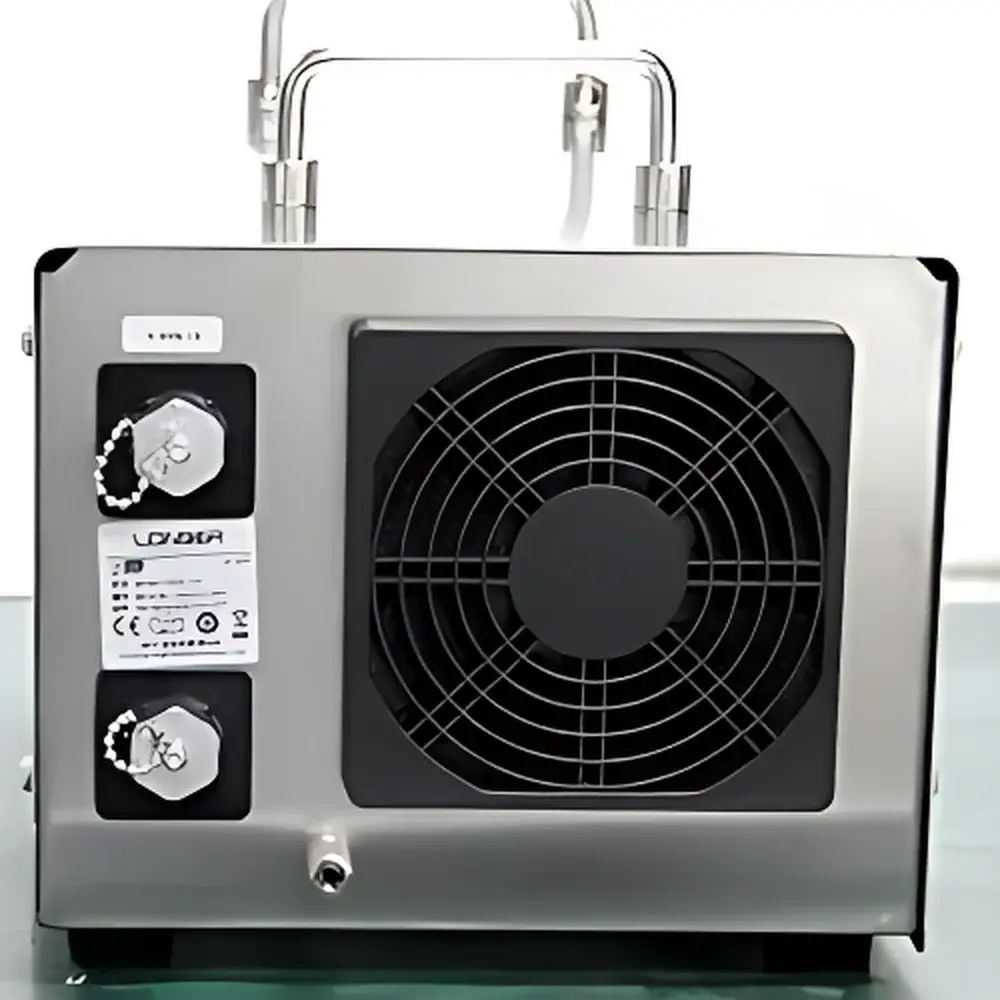
Longer YT600-1J Industrial-Grade Peristaltic Pump
| Brand | LongerPump |
|---|---|
| Origin | Hebei, China |
| Model | YT600-1J |
| Flow Rate Range | 600–11,000 mL/min (per channel) |
| Speed Range | 60–600 rpm |
| Control Inputs | 4–20 mA / 1–10 V / 1–10 kHz |
| IP Rating | IP54 |
| Power Supply | AC 220 V ±20%, 400 W |
| Dimensions (L×W×H) | 380 × 326 × 214 mm |
| Weight | 20 kg |
| Operating Temperature | 0–40 °C |
| Relative Humidity | <80% RH |
| Enclosure Material | Stainless Steel |
| Pump Head Compatibility | YZ35-13, KZ35 |
Overview
The Longer YT600-1J is an industrial-grade peristaltic pump engineered for continuous, high-flow fluid transfer in demanding manufacturing, chemical processing, and bulk material handling environments. Based on the positive displacement principle of peristaltic action—where rollers compress elastomeric tubing to propel fluid without contact between the pump mechanism and the medium—the YT600-1J ensures contamination-free operation, precise volumetric delivery, and long-term reliability. Its robust stainless steel chassis, IP54-rated enclosure, and thermally stable DC motor drive system make it suitable for installation in non-classified industrial zones with elevated dust exposure, moderate humidity, and ambient temperature fluctuations. Unlike laboratory-scale peristaltic pumps, the YT600-1J is designed for integration into production lines, OEM equipment, and automated batching systems requiring sustained flow rates up to 11 L/min per channel and operational uptime exceeding 10,000 hours under rated load.
Key Features
- High-capacity flow performance: Delivers 600–11,000 mL/min per channel when paired with KZ35 or YZ35-13 pump heads and compatible reinforced silicone or Viton® tubing (e.g., Norprene® L/S 73 or L/S 82).
- Dual-mode speed control: Local adjustment via precision rotary knob and push-button interface; remote operation via analog (4–20 mA or 1–10 V) or frequency-based (1–10 kHz) input signals—enabling seamless integration with PLCs, SCADA systems, or PID controllers.
- Fail-safe operational continuity: Built-in power-loss memory retains last-used speed, direction, and status settings; automatic resumption upon power restoration eliminates manual reconfiguration during grid interruptions.
- Full-speed override function: Dedicated hardware button enables instantaneous maximum-speed operation for rapid line priming, system purging, or emergency discharge—without altering stored parameters.
- Industrial-grade mechanical architecture: Sealed bearing assemblies, hardened roller trains, and corrosion-resistant stainless steel housing ensure durability under vibration, thermal cycling, and intermittent overload conditions typical in factory-floor deployments.
Sample Compatibility & Compliance
The YT600-1J does not contact process fluids directly; compatibility is determined by tubing selection. It supports standard peristaltic tubing sizes including L/S 73, L/S 82, and A/B series equivalents (ID 3.2–6.4 mm), enabling transport of aqueous solutions, acids, bases, solvents, slurries, and shear-sensitive biologics—provided tubing material is chemically resistant and pressure-rated accordingly. While the base unit meets CE marking requirements upon customer request (to be specified at order entry), its electrical design complies with IEC 61000-6-2 (immunity) and IEC 61000-6-4 (emission) standards. For regulated industries, the pump may be validated as part of a larger GMP-compliant process train when operated with audit-trail-capable external controllers and documented tubing change protocols aligned with ISO 20556 and USP .
Software & Data Management
The YT600-1J operates as a standalone hardware controller with no embedded firmware-based data logging or network connectivity. All operational parameters—including speed setpoint, direction, run time, and fault codes—are managed locally or via external signal sources. When integrated with third-party automation platforms (e.g., Siemens S7, Allen-Bradley CompactLogix), full traceability is achievable through programmable logic controllers that record timestamps, command acknowledgments, and analog feedback loops. For applications requiring electronic records under FDA 21 CFR Part 11, users must implement compliant supervisory software layers upstream of the pump’s analog/frequency inputs—ensuring user authentication, audit trails, and electronic signatures for critical parameter changes.
Applications
- Chemical dosing and additive injection in water treatment plants and polymer synthesis reactors.
- Continuous feeding of catalysts, pigments, or liquid monomers in batch and semi-batch manufacturing.
- High-volume media transfer in fermentation and bioreactor support systems (non-sterile loop applications).
- OEM integration into analytical instrumentation requiring pulseless, low-shear sample introduction (e.g., ICP-OES sample introduction modules).
- Automated filling and dispensing stations where repeatable volume delivery is required across variable viscosity ranges (1–10,000 cP).
FAQ
Does the YT600-1J include CE certification by default?
No. CE marking is available upon explicit request at time of order placement and requires additional factory verification and documentation.
Can multiple YT600-1J units be synchronized for parallel operation?
Yes—via shared analog or frequency reference signals from a master controller; however, phase alignment must be verified empirically due to minor timing variances between individual drive electronics.
What is the maximum backpressure the pump can sustain with KZ35 and L/S 82 tubing?
Typical maximum sustainable backpressure is 0.2 MPa (2 bar) at 600 rpm with properly tensioned L/S 82 tubing; pressure capability decreases with increasing speed and tubing wear.
Is tubing life monitored or reported by the pump?
No. Tubing replacement intervals must be determined empirically based on application-specific factors including flow rate, pressure, chemical exposure, and duty cycle—and documented per internal maintenance SOPs.
Can the YT600-1J operate continuously for 24/7 production shifts?
Yes, provided ambient conditions remain within specifications (0–40 °C, <80% RH), ventilation is adequate, and scheduled preventive maintenance—including roller lubrication and tubing inspection—is performed every 2,000 operating hours.



