
Agilent HLD BR30 Benchtop Helium Mass Spectrometer Leak Detector
| Brand | Agilent Technologies |
|---|---|
| Origin | USA |
| Manufacturer Type | Original Equipment Manufacturer (OEM) |
| Origin Category | Imported |
| Model | HLD BR30 |
| Pricing | Available Upon Request |
Overview
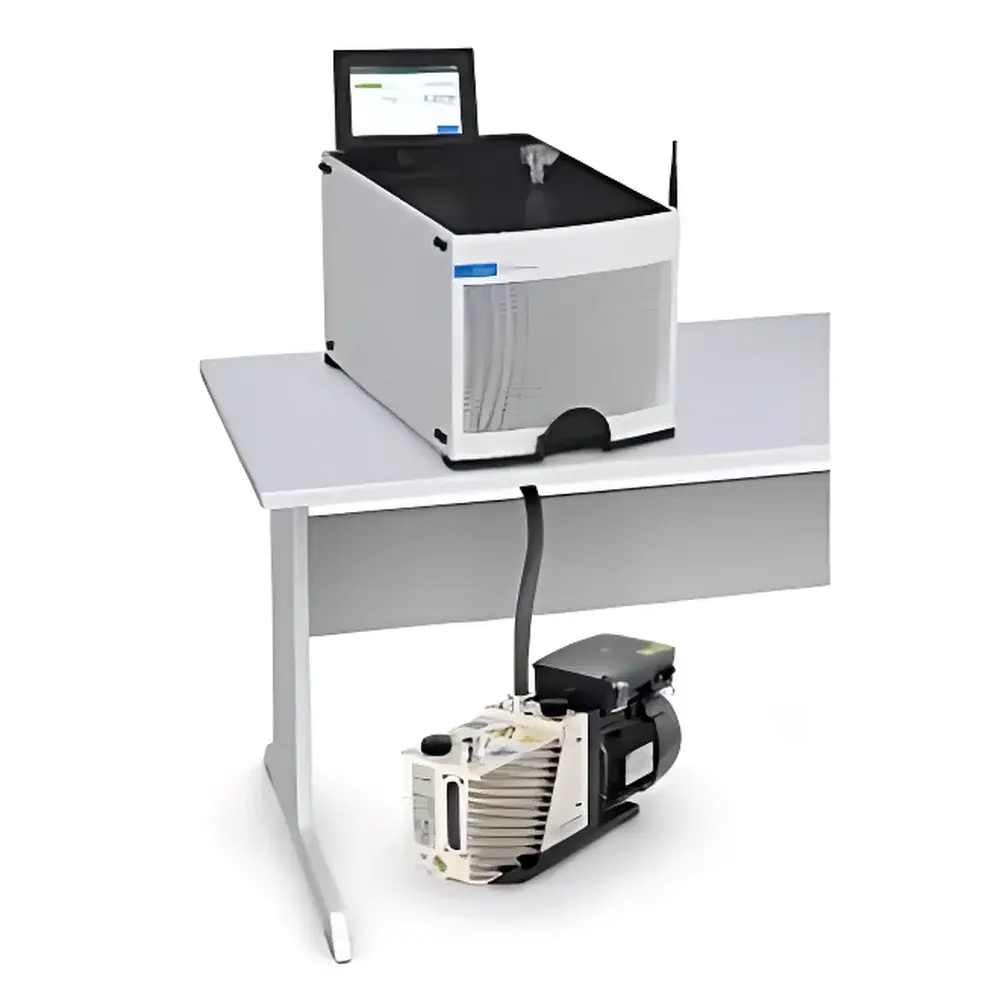
The Agilent HLD BR30 Benchtop Helium Mass Spectrometer Leak Detector is a high-sensitivity, dedicated helium detection system engineered for quantitative leak rate measurement and precise leak localization in sealed components and vacuum systems. It operates on the principle of quadrupole mass spectrometry, selectively ionizing and detecting helium atoms (mass-to-charge ratio m/z = 4) with high specificity and minimal interference from background gases. Unlike broad-spectrum residual gas analyzers, the HLD BR30 employs optimized ion optics, a high-transmission mass filter, and a low-noise electron multiplier detector to achieve detection limits down to 5 × 10⁻¹² mbar·L/s (typical), making it suitable for demanding applications in semiconductor packaging, medical device validation, vacuum chamber integrity testing, and aerospace component qualification. Its benchtop form factor integrates a complete vacuum architecture—including a built-in Agilent DS-602 dual-stage rotary vane pump (pumping speed: 30 m³/h at 50 Hz)—enabling rapid evacuation of test parts and efficient background helium clearance between cycles.
Key Features
- Dedicated helium mass spectrometry platform with quadrupole analyzer and electron multiplier detector for high signal-to-noise ratio and long-term stability.
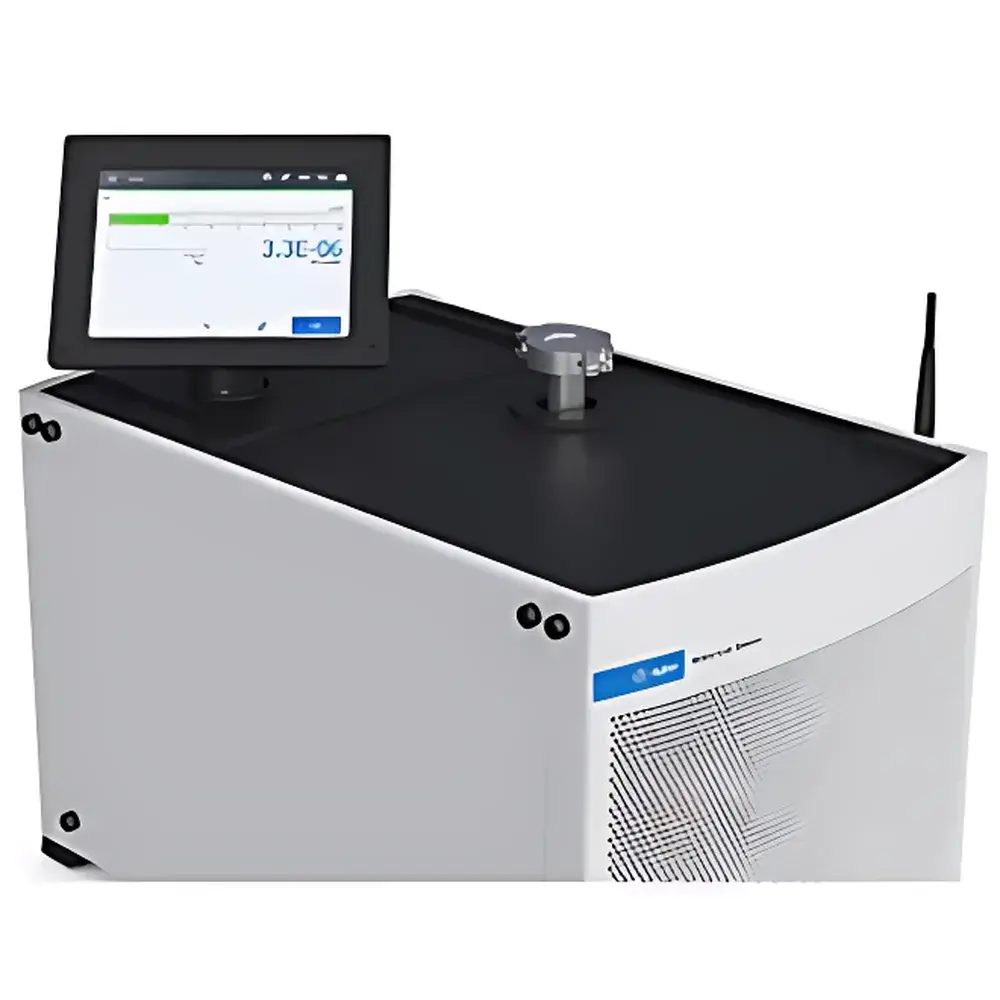
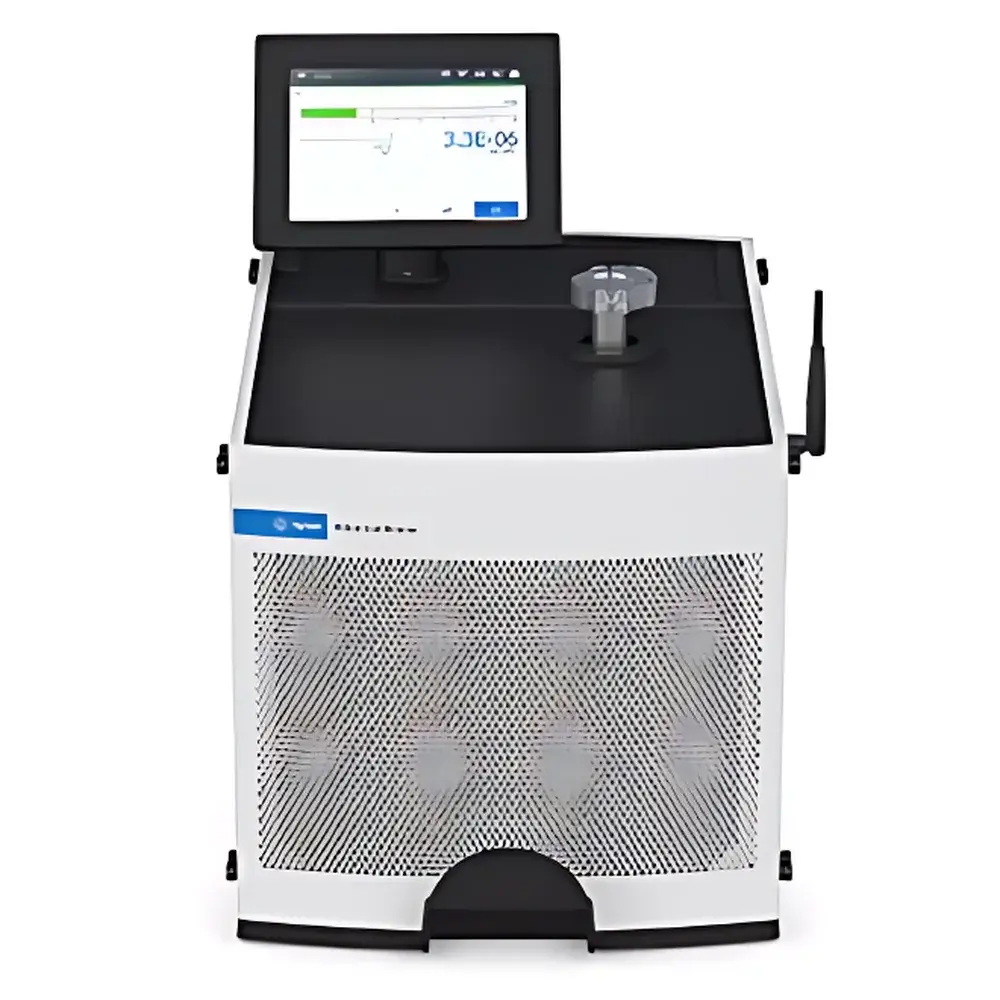
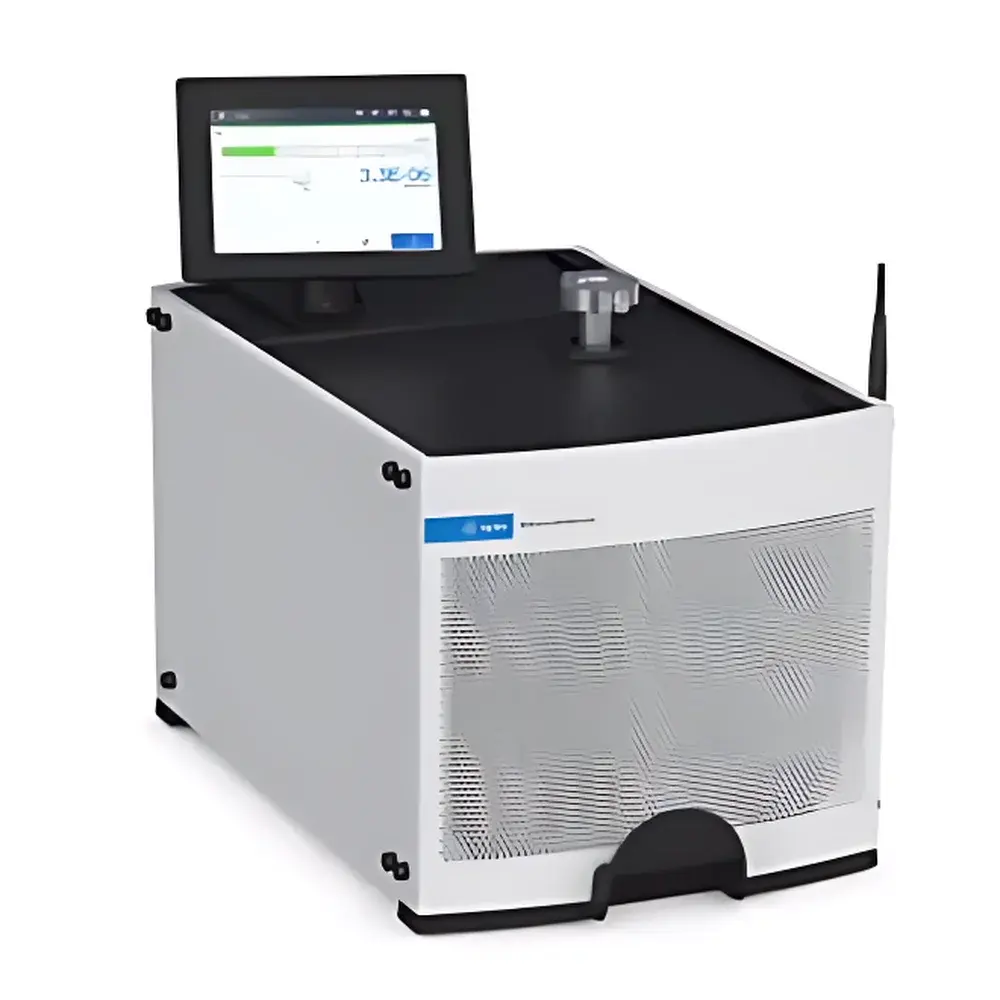
- 180° rotatable industrial-grade capacitive touchscreen interface with intuitive flat-menu navigation and context-sensitive soft keys for rapid parameter access.
- Six preconfigured application wizards—covering HVAC components, stainless-steel tubing, hermetic electronic enclosures, pharmaceutical vials, MEMS devices, and vacuum flange joints—guide users through optimal pressure, scan time, and sensitivity settings.
- Enhanced data visualization suite featuring real-time color-coded trend plots of leak rate (mbar·L/s) and chamber pressure (mbar) over time, with pinch-to-zoom functionality and user-definable alarm thresholds.
- Expanded work surface (420 mm × 320 mm) accommodates large fixtures, custom test manifolds, and auxiliary instrumentation without compromising ergonomic operation.
- Intelligent shutdown protocol maintains turbomolecular pump vacuum integrity post-cycle; eliminates unnecessary pump-down sequences and extends pump lifetime.
- Integrated hardware kit includes vibration-dampened mounting brackets, DN25 CF-compatible foreline adapters, and shielded signal cables for seamless DS-602 pump integration—supporting floor-mounted or under-bench pump placement to reduce acoustic noise and improve thermal management.
Sample Compatibility & Compliance
The HLD BR30 supports a wide range of sample geometries via standard ISO-KF 25/40 and CF 35/63 vacuum ports, compatible with common test fixtures including sniffer probes, vacuum chambers, accumulation chambers, and helium spray nozzles. It meets essential requirements for regulated environments: compliant with ISO 9001 quality management systems, aligned with ASTM E493 and E1514 leak testing standards, and validated for use in GLP and GMP settings where traceable calibration and audit-ready operation are required. The instrument’s firmware supports optional 21 CFR Part 11-compliant electronic signatures and audit trail logging when paired with Agilent’s OpenLab ECM software.
Software & Data Management
Instrument control and data acquisition are managed through Agilent’s proprietary HLD Control Software, which runs natively on Windows 10/11 platforms. The software enables full remote operation via Ethernet, automatic report generation in PDF/CSV formats, and export of timestamped raw data streams—including ion current traces, pressure logs, and alarm event timestamps. All user actions, method changes, and calibration events are recorded in an immutable audit trail. Data files adhere to ASTM E2724-21 metadata conventions, ensuring interoperability with LIMS and enterprise QA databases. Optional integration with Agilent OpenLab ECM provides centralized method library management, role-based access control, and electronic batch record linkage.
Applications
- Leak rate verification of implantable medical devices (e.g., pacemaker housings, insulin pumps) per ISO 11607 and USP .
- Hermeticity validation of MEMS sensors, optical enclosures, and laser diode packages during production line final test.
- Process gas line integrity checks in semiconductor fab tools and photolithography steppers.
- Pre-shipment acceptance testing of vacuum-insulated panels (VIPs) and cryogenic dewars.
- R&D-level leak mapping of microfluidic chips using localized helium spraying and positional correlation algorithms.
- Root cause analysis of vacuum degradation in UHV systems through sequential component isolation and differential pumping analysis.
FAQ
What is the minimum detectable leak rate of the HLD BR30 under standard test conditions?
Typical base sensitivity is 5 × 10⁻¹² mbar·L/s when operated with clean, dry helium and optimal foreline pressure (≤0.1 mbar). Actual performance depends on test configuration, background helium concentration, and pumping speed.
Does the HLD BR30 require external calibration gases or annual recalibration?
No certified reference leaks are required for routine operation. The system features internal gain stabilization and automatic zero tracking. Annual performance verification using NIST-traceable calibrated leaks is recommended for ISO/IEC 17025-accredited labs.
Can the DS-602 pump be replaced with a different brand or model?
Agilent specifies the DS-602 for optimal forepressure control and helium clearance kinetics. Substitution may compromise sensitivity, cycle time, and warranty coverage.
Is the HLD BR30 suitable for testing pressurized components using the sniffer mode?
Yes—the instrument supports both vacuum-mode (inside-out) and sniffing-mode (outside-in) configurations. Sniffer probe operation requires optional helium accumulation chamber accessories and flow-controlled helium injection.
How does the system handle ambient helium contamination in laboratory environments?
The HLD BR30 incorporates adaptive background subtraction algorithms and programmable purge cycles. For facilities with elevated ambient helium (e.g., near MRI suites), installation in a dedicated low-helium room or use of nitrogen purging is advised.
Related Products





