
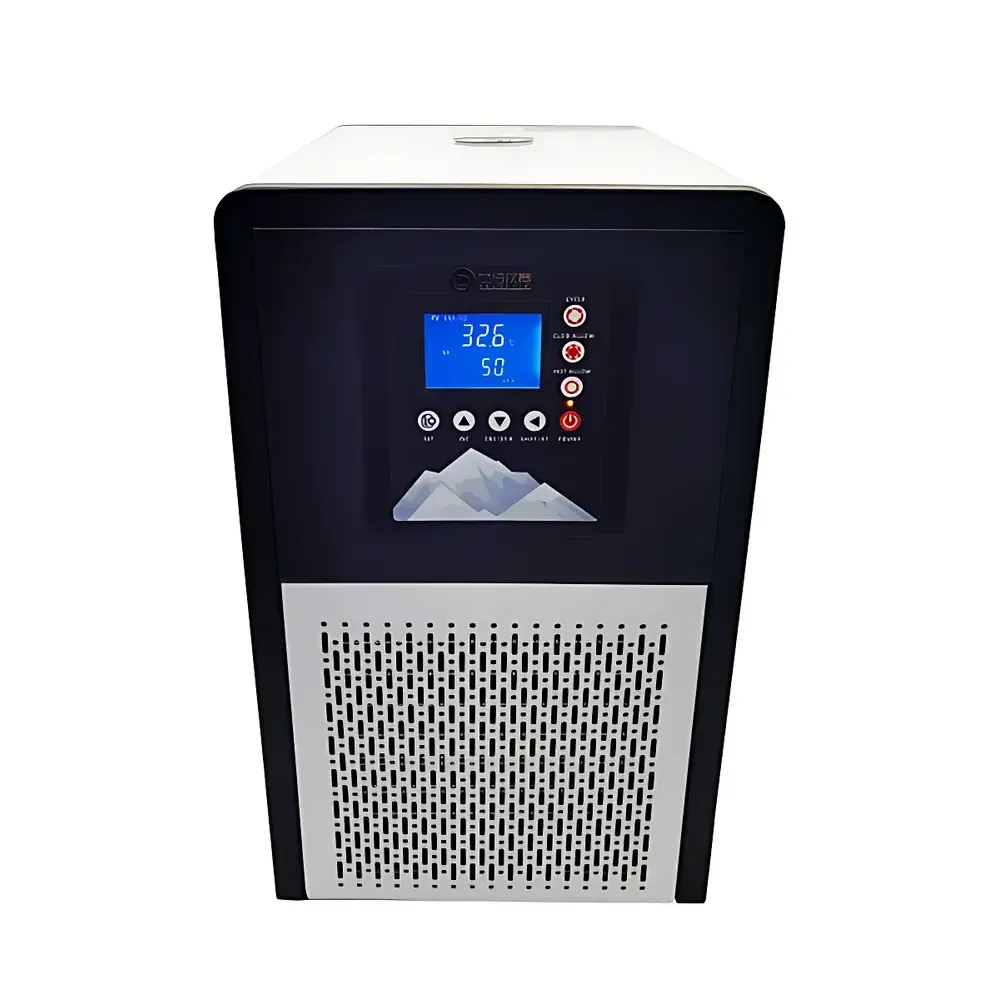
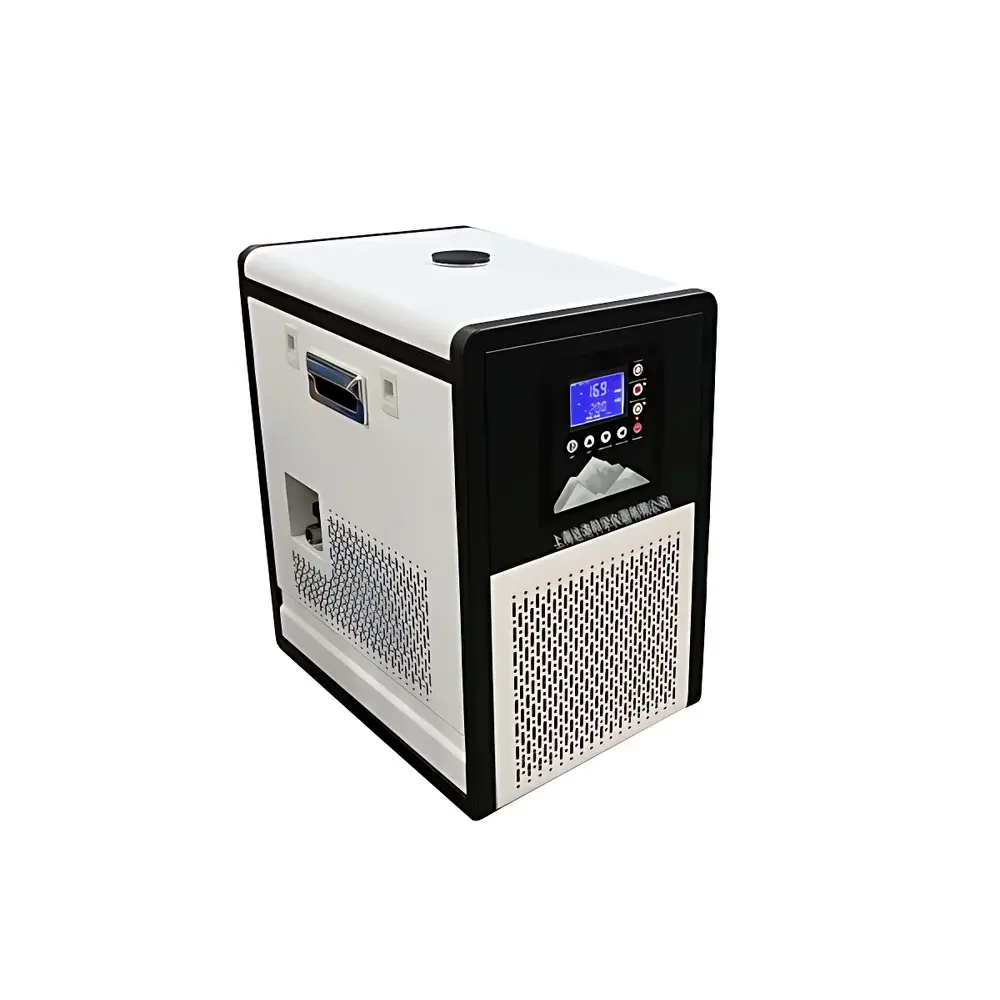
Daxluot DLM1503 Benchtop Low-Temperature Circulating Chiller
| Brand | Daxluot |
|---|---|
| Origin | Shanghai, China |
| Model | DLM1503 |
| Cooling Method | Air-Cooled |
| Temperature Range | −15 °C to 100 °C |
| Refrigeration Capacity | 1000 W |
| Temperature Stability | ±0.5 °C |
| Circulation Pressure | 0.7 bar |
| Flow Rate | 8 L/min |
| Reservoir Volume | 3.5 L |
| Operation Mode | Continuous |
| Display Resolution | 0.1 °C |
| Power Supply | 220 V / 50 Hz |
| Dimensions (W×D×H) | 440 × 300 × 510 mm |
| Housing Material | ABS Molded Enclosure |
| Pump Type | Sealed, Low-Heat, Low-Noise Circulation Pump |
| Safety Features | Overtemperature Alarm, Low-Liquid-Level Protection, Compressor Overheat & Overcurrent Protection, Dual-Mode (Heating/Cooling) Independent Control |
| Fluid Interface | 304 Stainless Steel Bayonet Fittings |
| Drainage | Integrated Hidden Drain Valve |
| Accessories | Silicone Circulation Tubing, Thermal Insulation Sleeve, Drain Spout |
Overview
The Daxluot DLM1503 is a compact, air-cooled benchtop circulating chiller engineered for precise temperature control in laboratory-scale applications requiring stable thermal management between −15 °C and 100 °C. It integrates a hermetically sealed refrigeration system with independent heating and cooling circuits, enabling rapid thermal response and high reproducibility in both cooling-only and dynamic temperature ramping protocols. Unlike immersion-based or open-bath systems, the DLM1503 delivers closed-loop circulation of heat-transfer fluid—typically water, water-glycol mixtures, or low-viscosity silicone oils—to external equipment such as rotary evaporators, condensers, spectrophotometer cells, small-scale reactors, or analytical instrument jackets. Its thermodynamic architecture follows standard vapor-compression principles, utilizing R134a or equivalent environmentally compliant refrigerant, and is optimized for continuous-duty operation under ambient conditions up to 32 °C. Designed for integration into confined workspaces—including fume hoods, laminar flow cabinets, and modular lab benches—the unit’s footprint (440 × 300 × 510 mm) and 3.5 L reservoir support sustained operation without frequent refilling.
Key Features
- Microprocessor-based PID temperature controller with backlit LCD interface; displays setpoint, real-time bath temperature, and system status with 0.1 °C resolution
- Independent dual-mode control: simultaneous or isolated activation of heating and refrigeration circuits for fast thermal equilibration
- Hermetically sealed, low-noise air-cooled compressor with integrated overheat and overcurrent protection circuits
- Sealed circulation pump delivering 8 L/min at 0.7 bar pressure; designed for minimal heat generation and extended service life
- ABS molded housing with tool-free side-panel access for routine maintenance and coil inspection
- Integrated safety suite: audible/visual overtemperature alarm, low-fluid-level cutoff (preventing dry-heater operation), overflow drain port, and transparent level window with calibrated scale
- 304 stainless steel bayonet-style fluid connectors for corrosion resistance and leak-resistant coupling
- Hidden internal drain valve and quick-connect silicone tubing kit (with thermal insulation sleeve) included as standard
Sample Compatibility & Compliance
The DLM1503 is compatible with aqueous solutions, 30–50% ethylene glycol/water blends, and low-conductivity silicone oils suitable for temperatures down to −15 °C. Its fluid path contains no copper or zinc components, minimizing electrochemical degradation risk when used with sensitive instrumentation. While not certified to ISO/IEC 17025 or GLP-specific validation protocols out-of-the-box, the unit supports traceable calibration via external PT100 probe input (optional accessory) and maintains stable operation within ±0.5 °C across its full range—meeting typical requirements for ASTM E2926 (thermal stability testing), USP (temperature-controlled dissolution apparatus), and ISO 17025 Clause 6.4.1 (environmental condition monitoring). All electrical components comply with IEC 61010-1:2010 for laboratory equipment safety.
Software & Data Management
The DLM1503 operates via embedded firmware with no external software dependency. However, it supports analog output (0–5 V or 4–20 mA) for connection to SCADA systems or data loggers, enabling time-stamped temperature tracking and remote alarm triggering. The controller stores last-set parameters through power cycles and retains user-defined setpoints across reboots. For laboratories operating under FDA 21 CFR Part 11 or EU Annex 11 requirements, optional RS485 Modbus RTU communication (firmware upgrade required) allows integration with validated LIMS or ELN platforms—supporting audit trails, electronic signatures, and change history logging when paired with compliant host software.
Applications
- Condenser cooling for rotary evaporation and short-path distillation systems
- Temperature stabilization of UV-Vis and FTIR sample compartments
- Thermal regulation of small-volume jacketed reactors (≤2 L) and microfluidic platforms
- Calibration reference baths for thermometer and thermocouple verification
- Cooling of laser sources, CCD detectors, and electrophoresis power supplies
- Supporting accelerated stability studies per ICH Q1A(R3) guidelines where controlled thermal cycling is required
FAQ
What is the minimum allowable ambient temperature for continuous operation?
The unit is rated for ambient environments between 5 °C and 32 °C. Operation below 5 °C may impair compressor oil viscosity and reduce refrigerant efficiency.
Can the DLM1503 be used with flammable solvents in the circulation loop?
No. The system is designed exclusively for non-flammable, low-volatility heat-transfer fluids. Flammable liquids pose fire and explosion hazards and void warranty coverage.
Is external calibration possible, and does it support NIST-traceable verification?
Yes. An optional external PT100 sensor input enables field calibration against a certified reference thermometer. Full NIST-traceable calibration requires third-party metrology services using accredited standards.
How often should the condenser coils be cleaned, and what maintenance is recommended?
In typical lab environments, coil cleaning every 6 months is sufficient. Use compressed air or a soft brush; avoid water jets or chemical cleaners. Check fluid level weekly and replace coolant annually or per manufacturer-recommended intervals.
Does the unit meet CE or UL safety certification requirements?
The DLM1503 complies with CE marking requirements under the EMC Directive 2014/30/EU and Low Voltage Directive 2014/35/EU. UL listing is not available; users requiring UL certification should consult Daxluot’s OEM engineering team for custom-certified variants.



