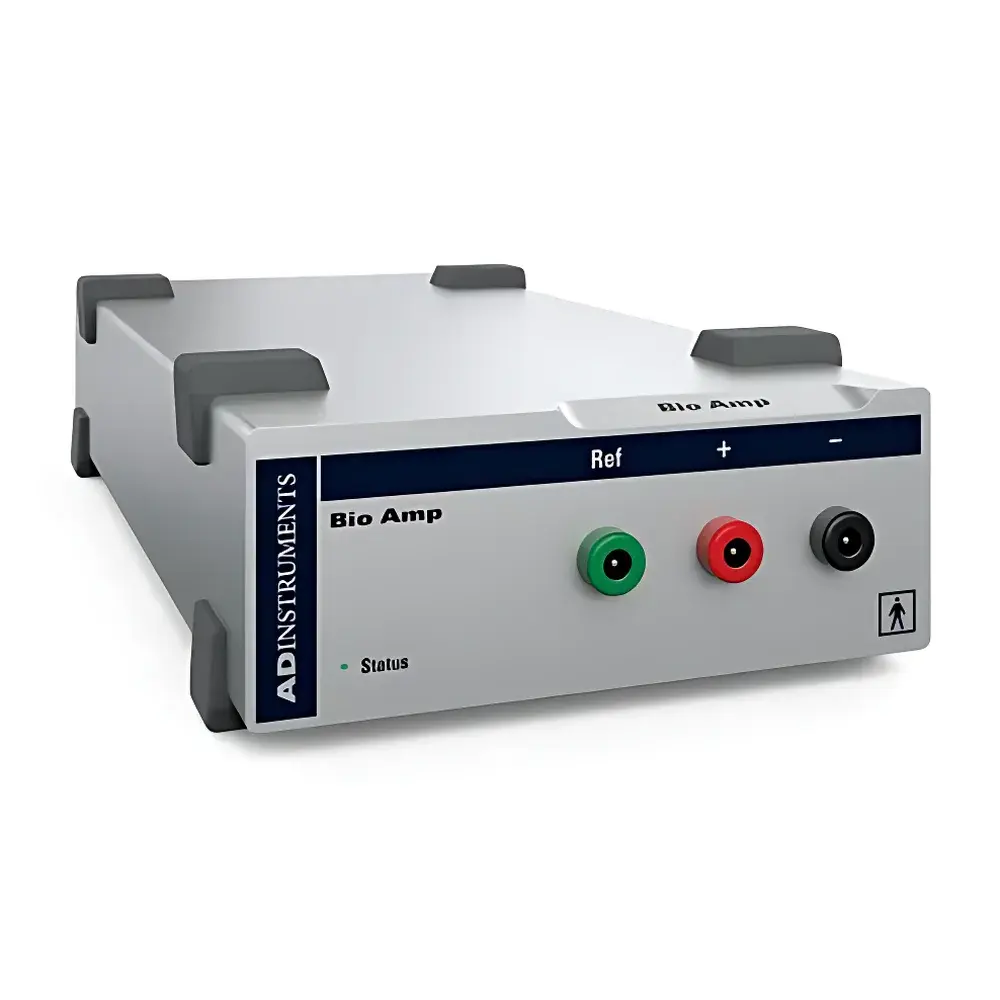
ADInstruments PowerLab 35 Series Physiological Signal Acquisition System
| Brand | ADInstruments (YUYANBIO distributed) |
|---|---|
| Country of Origin | New Zealand |
| Manufacturer Type | Original Equipment Manufacturer (OEM) |
| Import Status | Imported |
| Model | PowerLab 35 Series |
| Price Range | USD 10,500 – 19,800 (FOB NZD equivalent) |
| Max Sampling Rate | 200 kS/s per channel (400 kS/s aggregate) |
| ADC Resolution | 16-bit |
| Input Voltage Range | ±2 mV to ±10 V (12 ranges) |
| Input Impedance | ~1 MΩ |
| Input Noise | <1 µVrms |
| Low-Pass Filter | 1 Hz–25 kHz (logarithmic step selection) |
| AC Coupling | DC or 0.15 Hz (software-selectable) |
| Analog Output | 16-bit, ±200 mV to ±10 V (6 ranges), 50 mA max drive |
| Trigger Threshold | +1.3 V (rising), +1.1 V (falling) |
| Dimensions (W×H×D) | 240 × 70 × 260 mm |
| Power Supply | 90–250 VAC, 50/60 Hz |
Overview
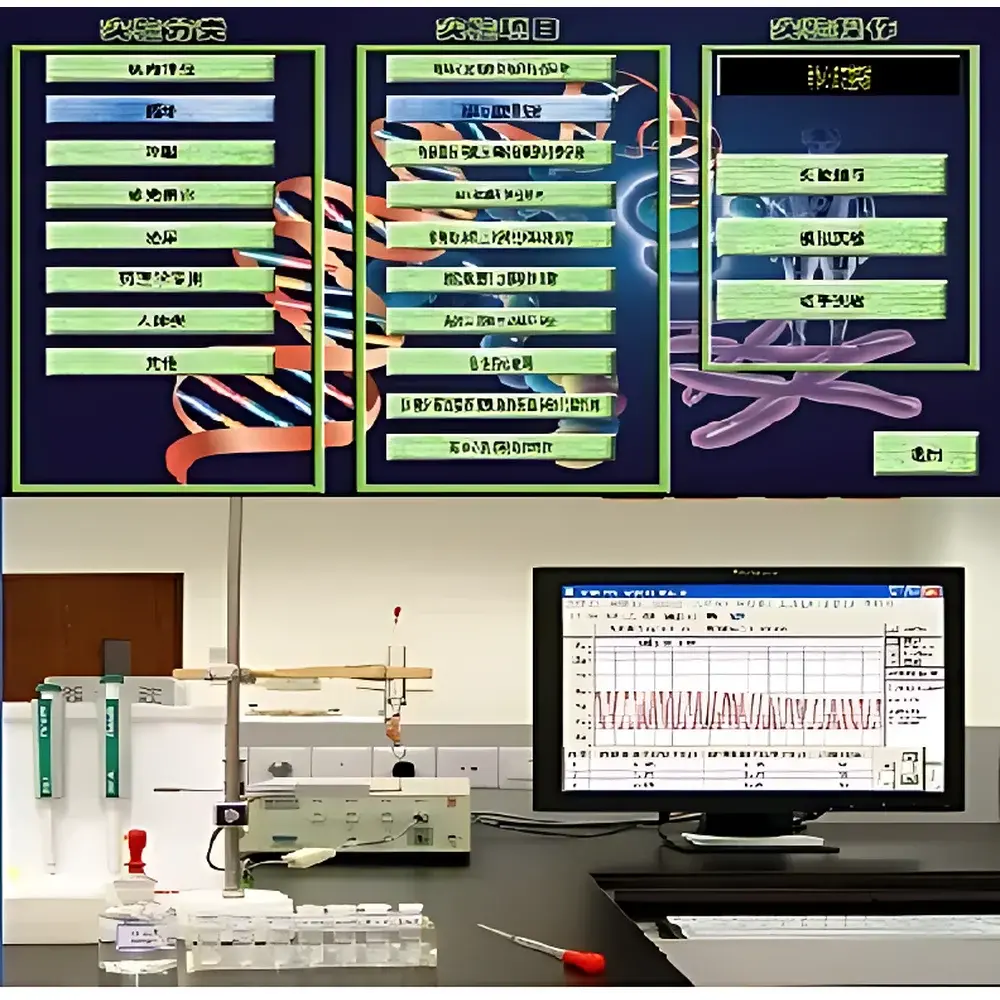
The ADInstruments PowerLab 35 Series is a high-fidelity, computer-based physiological signal acquisition and analysis system engineered for rigorous life science research and advanced teaching laboratories. Built upon a real-time embedded architecture featuring a 240 MHz PowerPC 405GPr processor and 16 MB SDRAM, the system delivers deterministic data capture with hardware-accelerated signal conditioning and low-latency USB 2.0 communication. Its core measurement principle relies on precision analog-to-digital conversion (16-bit ADC) coupled with programmable gain, filtering, and coupling configurations—enabling accurate digitization of biopotentials (e.g., ECG, EMG, EEG), mechanical transducers (force, displacement), pressure waveforms, thermal gradients, airflow dynamics, and volumetric flow signals. Unlike legacy chart recorders or generic DAQ devices, PowerLab integrates tightly with LabChart software to provide synchronized multi-channel acquisition across heterogeneous sensor types, maintaining temporal coherence essential for kinetic modeling, pharmacodynamic profiling, and closed-loop experimental paradigms.
Key Features
- Real-time sampling up to 200 kS/s per channel (400 kS/s aggregate) with hardware-triggered acquisition and onboard buffering to prevent data loss during host latency events.
- Programmable analog input configuration: 12 voltage ranges (±2 mV to ±10 V), selectable AC/DC coupling (including 0.15 Hz high-pass), and logarithmically spaced low-pass filters (1 Hz–25 kHz) for optimal noise suppression without phase distortion.
- Integrated signal conditioning compatibility: automatic detection and parameter loading for ADInstruments’ range of isolated amplifiers (e.g., ML136 BioAmp, ML191 Bridge Amp) and third-party analog-output instruments meeting IEC 61000-4-5 surge immunity standards.
- Dual-function analog output (16-bit, ±200 mV to ±10 V) supporting stimulus generation, feedback control loops, and hardware synchronization with external equipment such as stimulators or perfusion pumps.
- Robust physical design: fanless operation, medical-grade isolation (reinforced insulation per IEC 60601-1 Class I), and CE/FCC/RCM compliance for deployment in regulated academic and preclinical environments.
Sample Compatibility & Compliance
PowerLab interfaces with a broad spectrum of physiological transducers—including piezoresistive pressure catheters, strain-gauge force transducers, thermistors, pneumotachographs, and glass microelectrodes—via standardized BNC, DIN, and mini-DIN connectors. All signal paths meet IEC 60601-1 requirements for patient-connected applications when used with certified isolation accessories. The system supports GLP-compliant workflows through LabChart’s audit-trail-enabled user management, electronic signature support (per FDA 21 CFR Part 11), and export formats compliant with ISO/IEC 17025 documentation standards. It is routinely deployed in studies adhering to OECD Test Guidelines (e.g., TG 426 for neurotoxicity), USP Analytical Instrument Qualification, and ISO 13485-aligned quality systems.
Software & Data Management
LabChart 8 software serves as the native analytical environment, offering FDA 21 CFR Part 11–compliant data integrity controls including immutable raw file storage (.adicht format), versioned protocol templates, and time-stamped operator logs. Its modular architecture supports real-time spectral analysis (FFT), spike sorting (with optional Spike2 integration), derivative calculation, area-under-curve quantification, and automated event detection (e.g., R-wave identification, respiratory cycle segmentation). Data export options include CSV, MATLAB (.mat), HDF5, and XML—ensuring interoperability with Python-based analysis pipelines (NumPy, SciPy, Neo), R statistical frameworks, and institutional LIMS platforms. Raw datasets retain full metadata: calibration coefficients, sensor serial numbers, amplifier settings, and environmental timestamps traceable to NIST-synchronized system clocks.
Applications
The PowerLab 35 Series is validated across diverse experimental domains: cardiovascular physiology (Langendorff heart preparations, arterial pulse contour analysis), respiratory mechanics (plethysmography, airway resistance modeling), neuromuscular pharmacology (dose-response curves for nicotinic agonists), behavioral neuroscience (startle reflex latency, operant conditioning synchrony), and exercise physiology (oxygen uptake kinetics, lactate threshold tracking). Its modularity enables adaptation for ISO 14155-compliant human volunteer studies, OECD 407 repeat-dose toxicology protocols, and ASTM F2938-15–aligned biomaterials testing where dynamic mechanical response must be correlated with electrophysiological endpoints.
FAQ
Is PowerLab compatible with non-ADInstruments sensors and amplifiers?
Yes—any device providing analog output within ±10 V range and meeting standard impedance and noise specifications can be interfaced; LabChart auto-detects ADInstruments hardware but permits manual configuration for third-party units.
Does the system support real-time analysis during acquisition?
Yes—LabChart executes >30 built-in calculations (e.g., RMS, peak detection, frequency domain transforms) in real time without interrupting sampling continuity.
Can PowerLab be integrated into existing laboratory automation frameworks?
Yes—via LabChart’s COM/ActiveX API and TCP/IP socket interface, enabling bidirectional control from Python, MATLAB, or LabVIEW for high-throughput screening or robotic assay integration.
What validation documentation is provided for regulated environments?
ADInstruments supplies IQ/OQ documentation templates, factory calibration certificates (traceable to NMI NZ), and a comprehensive Risk-Based Validation Guide aligned with GAMP 5 principles.
How is data integrity ensured during long-duration recordings (e.g., 72+ hours)?
Continuous ring-buffering, automatic file splitting by duration/size, CRC-32 checksum validation on write, and redundant storage options (local SSD + network share mirroring) mitigate corruption risks.