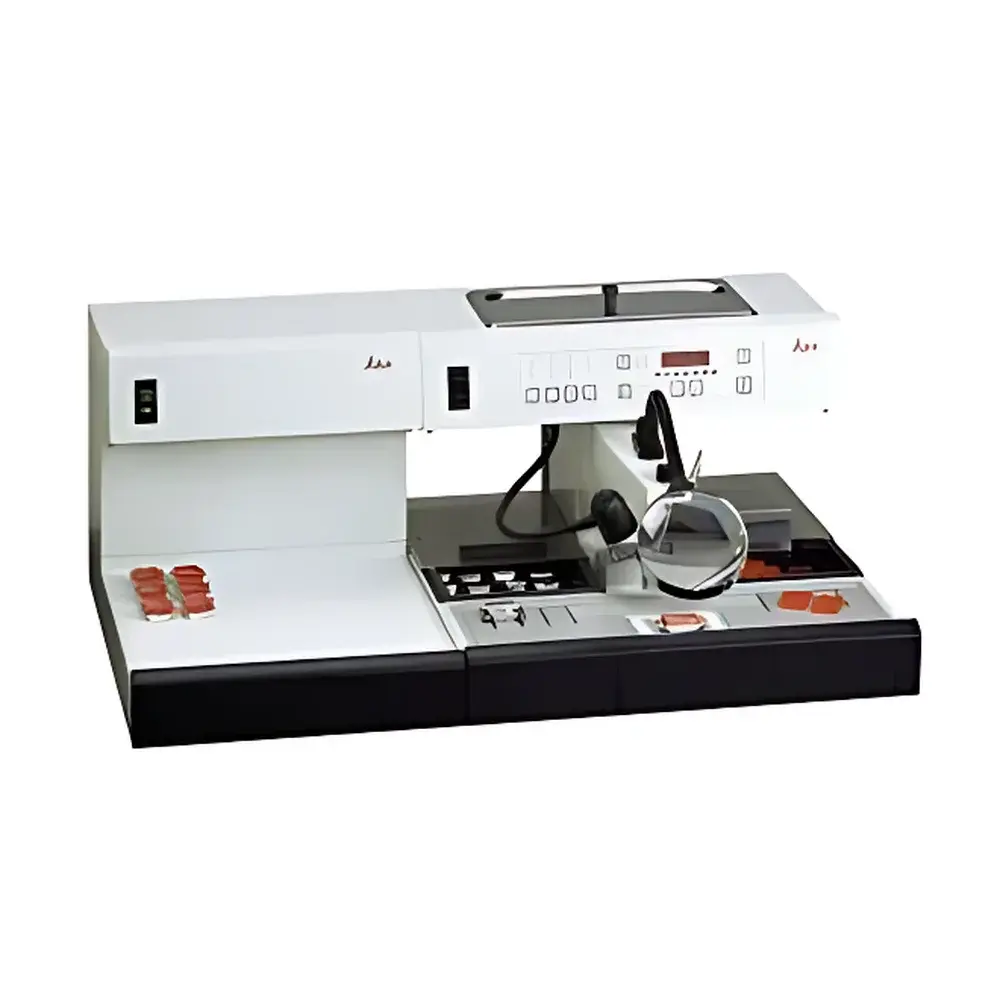
Leica EG1150H+C Modular Tissue Embedding Center
| Brand | Leica |
|---|---|
| Origin | Germany |
| Model | EG1150H+C |
| Configuration | Integrated Cold Plate (EG1150 C) + Heated Paraffin Dispensing Module (EG1150 H) |
| Work Surface | Large, chemically resistant, non-porous finish |
| Illumination | Adjustable halogen task lamp with full-workspace coverage |
| Optional Accessory | Articulating magnifier with variable focus and height adjustment |
| Paraffin Drainage System | Dual heated paraffin collection trays (removable, 2.5 L capacity each) |
| Warming Trays | Interchangeable cassette and mold warming plates (independent temperature control, range: 37–65 °C) |
| Workflow Flexibility | Bidirectional layout compatibility (left-to-right or right-to-left configuration) |
| Compliance | Designed in accordance with IEC 61010-1 (Safety Requirements for Electrical Equipment for Measurement, Control, and Laboratory Use) and ISO 13485:2016 (Medical Devices – Quality Management Systems) |
Overview
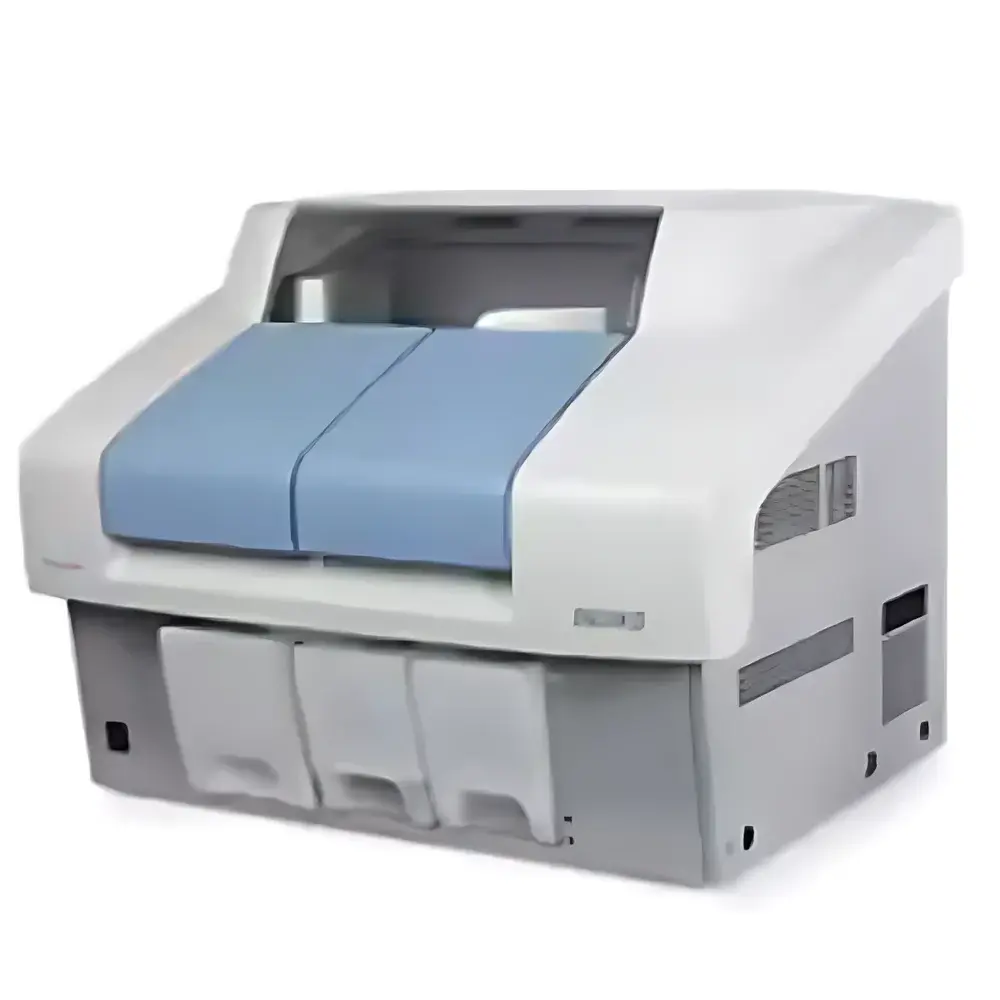
The Leica EG1150H+C Modular Tissue Embedding Center is a CE-marked, laboratory-grade embedding system engineered for precision, reproducibility, and ergonomic efficiency in histopathology laboratories. It operates on a modular architecture comprising two functionally distinct yet interoperable units: the EG1150 C cryogenic cold plate (operating range: –8 °C to +10 °C) and the EG1150 H heated paraffin dispensing module (paraffin melt temperature range: 55–70 °C, dispensing accuracy ±0.5 °C). This separation enables independent thermal management of tissue orientation and paraffin infiltration—critical for minimizing ice crystal formation during orientation and ensuring optimal viscosity control during embedding. The system adheres to fundamental histotechnological principles defined in CAP (College of American Pathologists) checklists and aligns with pre-analytical requirements outlined in ISO/IEC 17025:2017 for accredited testing laboratories handling human tissue specimens.
Key Features
- Modular dual-unit design allows reconfiguration of workflow direction (left-to-right or right-to-left), supporting lab-specific spatial constraints and technician preference without hardware modification.
- Large working surface (620 × 420 mm) features a reinforced, solvent-resistant polymer coating that withstands repeated exposure to xylene, ethanol, and molten paraffin—reducing surface degradation and facilitating rapid decontamination between batches.
- Integrated paraffin drainage network channels excess molten paraffin away from the active work zone into one of two independently heated (45 °C) collection trays (2.5 L volume each), preventing pooling, thermal bridging, and cross-contamination between specimens.
- Interchangeable warming trays support simultaneous conditioning of tissue cassettes (pre-warmed to 37–42 °C) and metal/mold bases (60–65 °C), reducing thermal shock to tissue blocks and improving paraffin infiltration homogeneity.
- Adjustable halogen illumination system provides uniform luminance (>1,200 lux at surface) across the entire work area, meeting CLSI EP23-A guidelines for visual inspection under standardized lighting conditions.
- Optional articulating magnifier (1.5×–3× zoom, coaxial LED illumination) integrates seamlessly into the rail-mounted accessory track, enabling high-fidelity visualization of biopsy fragments, needle cores, and delicate neural tissues during orientation.
Sample Compatibility & Compliance
The EG1150H+C accommodates standard histology consumables including plastic and metal tissue cassettes (up to 30 × 25 mm footprint), disposable polypropylene molds (size range: 20 × 20 mm to 45 × 35 mm), and custom silicone embedding molds. Its thermal zoning supports embedding of diverse specimen types—from routine surgical resections and bone biopsies (with decalcification pretreatment) to fragile neurosurgical specimens requiring minimal compression. The system complies with IEC 61010-1:2010 for electrical safety in laboratory environments and incorporates design elements aligned with FDA 21 CFR Part 11 expectations for audit-trail-capable instrumentation when integrated with Leica’s certified BOND RX software ecosystem. All materials contacting paraffin or tissue are USP Class VI compliant and free of leachable plasticizers.
Software & Data Management
While the EG1150H+C operates as a standalone benchtop instrument without embedded firmware or touchscreen interface, it is fully compatible with Leica Biosystems’ enterprise-level Lab Management Suite (LMS v4.2+). When paired with optional RFID-enabled cassette readers and digital workflow loggers, the system contributes timestamped, operator-verified embedding event metadata—including ambient temperature, paraffin batch ID, cold plate setpoint, and warming tray activation status—to centralized LIMS databases. All thermal parameters are logged with traceable calibration certificates per ISO/IEC 17025 Annex A.5, supporting GLP-compliant documentation for clinical trial pathology labs.
Applications
- Routine diagnostic histology in high-volume hospital pathology departments requiring >200 blocks/day throughput.
- Research core facilities processing archival FFPE tissue banks where embedding consistency directly impacts downstream RNA/DNA integrity.
- Neuropathology labs embedding small-volume brain biopsies and intraoperative frozen section remnants requiring precise spatial orientation under magnified visualization.
- Academic teaching laboratories where modular layout flexibility supports pedagogical sequencing of embedding steps (orientation → infiltration → molding → cooling).
- Contract research organizations (CROs) performing GLP-compliant toxicologic pathology studies demanding full traceability of embedding conditions per OECD TG 429 and ICH S5(R3).
FAQ
Does the EG1150H+C include integrated temperature logging or data export capability?
No—the system is analog-controlled and does not feature built-in data logging. However, third-party USB thermocouple interfaces (e.g., Omega HH802U) can be deployed alongside calibrated probes to record cold plate and warming tray temperatures in real time.
Can the cold plate and paraffin module operate simultaneously without thermal interference?
Yes. The modules are physically isolated by a thermally insulated partition and employ independent refrigeration and heating circuits. Thermal crosstalk is limited to <0.3 °C under continuous 8-hour operation.
Is the paraffin drainage system compatible with automated paraffin recovery systems?
The dual collection trays interface mechanically with Leica’s optional Paraffin Reclamation Unit (PRU-200), enabling closed-loop recycling of spent paraffin while maintaining ISO 15190:2020 biosafety containment standards.
What maintenance intervals are recommended for the cold plate compressor and paraffin pump?
Leica recommends biannual preventive maintenance (PM) by authorized service engineers, including refrigerant pressure verification, pump diaphragm inspection, and cold plate surface flatness calibration per DIN EN ISO 1101.
Are replacement parts such as warming trays and cold plate inserts available as standalone SKUs?
Yes. All consumable and wear components—including stainless steel cassette trays, aluminum mold plates, and cold plate polymer inserts—are stocked globally under Leica part numbers (e.g., 1404720337, 1404720338) with documented shelf-life and lot traceability.