
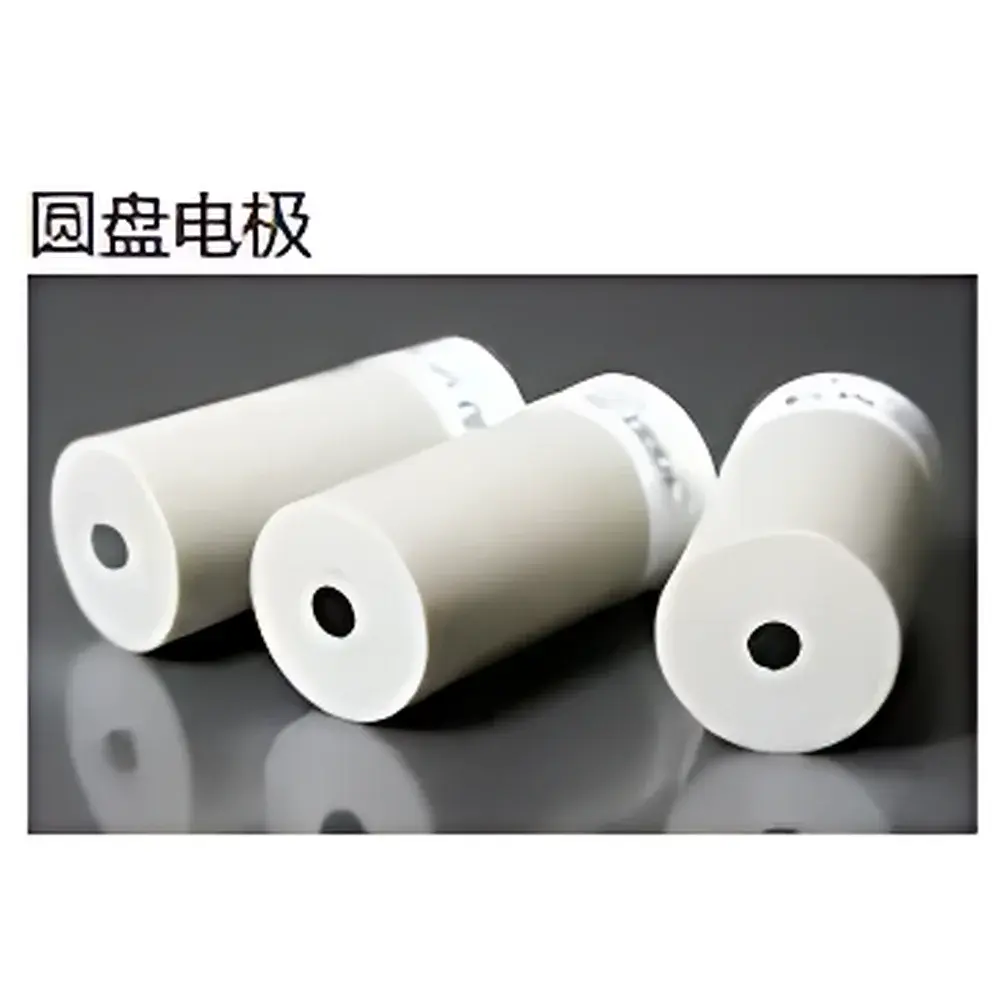
ALS GC3mm Rotating Disk Electrode (RDE) Model 013490
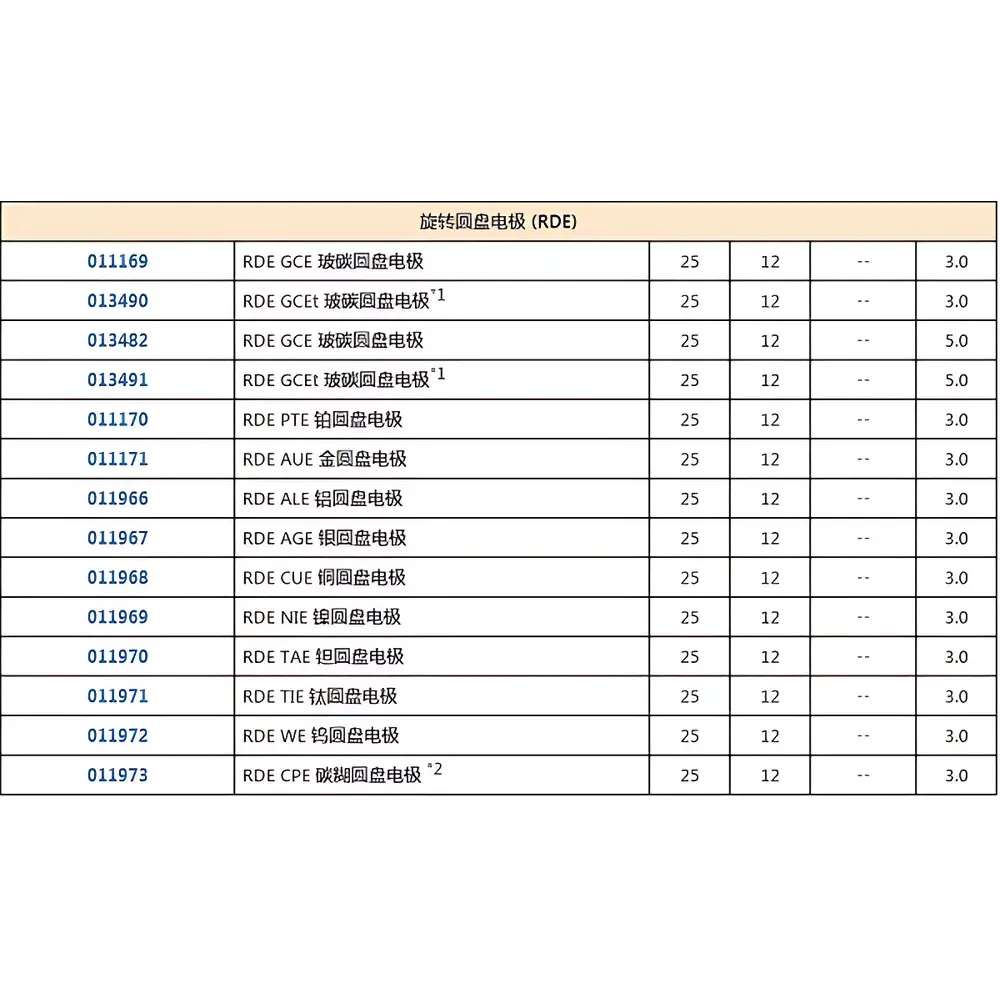
| Brand | ALS |
|---|---|
| Origin | Japan |
| Model | GC3mm / 013490 |
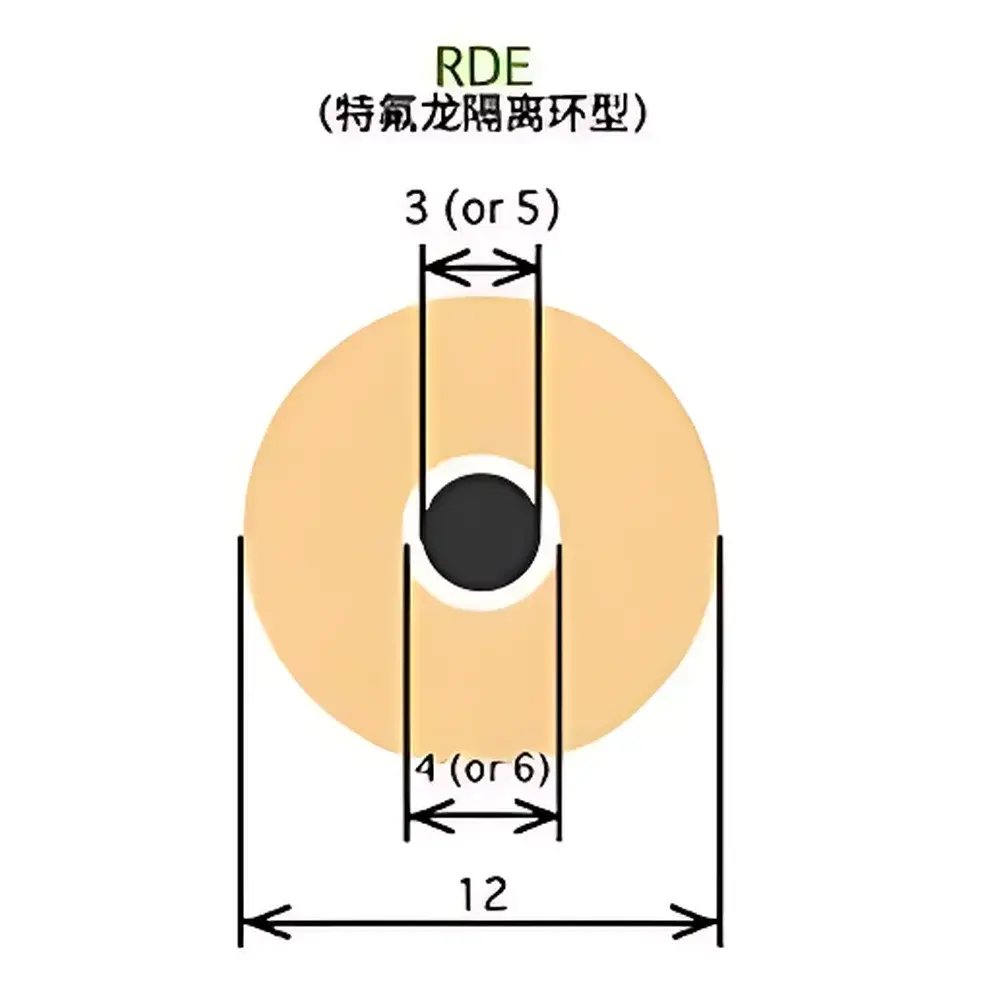
| Disk Diameter | 3 mm |
| Insulator Diameter | 12 mm |
| Total Length | 25 mm |
| Electrode Material | Interchangeable (e.g., Pt, Au, GC, Ni, Cu, Ag, Glassy Carbon) |
Overview
The ALS GC3mm Rotating Disk Electrode (RDE) Model 013490 is a precision-engineered electrochemical working electrode designed for controlled hydrodynamic voltammetry and kinetic studies in fundamental and applied electrochemistry. Based on the Levich equation and rotating disk theory, this RDE enables quantitative mass-transport control by generating a well-defined, laminar flow profile perpendicular to the electrode surface. Rotation induces uniform convective diffusion, allowing precise decoupling of kinetic and diffusion-controlled current components—critical for evaluating electron transfer rates, catalytic mechanisms, oxygen reduction reaction (ORR) activity, and corrosion kinetics. The device is compatible with standard potentiostats and rotational control units (e.g., Pine Research AFMSRX or BAS CV-50W), and operates within typical rotation speed ranges of 100–10,000 rpm, delivering reproducible hydrodynamic boundary layer thicknesses (δ ≈ 0.62 ν1/6 ω−1/2 D1/3) under laminar flow conditions.
Key Features
- High-precision machined geometry: 3 mm active disk diameter with tight tolerance (±0.02 mm), ensuring consistent diffusion-layer modeling and minimal edge effects.
- Robust coaxial construction: Central conductive disk embedded in a chemically inert, electrically insulating sleeve (12 mm outer diameter, 25 mm total length), optimized for mechanical stability during high-speed rotation.
- Modular disk material compatibility: The electrode tip accepts interchangeable disk inserts—including platinum, gold, glassy carbon (GC), nickel, copper, silver, and custom alloys—enabling rapid configuration for diverse redox systems without replacing the entire shaft assembly.
- Low-profile shaft design: Minimizes turbulence and parasitic drag, supporting stable operation up to 10,000 rpm with negligible vibration-induced signal noise.
- Standardized 6 mm OD stainless-steel shaft with threaded connection (M4 × 0.7), facilitating secure mounting in commercial rotator chucks and compatibility with ALS, Pine, and BAS electrochemical cells.
Sample Compatibility & Compliance
The GC3mm RDE supports aqueous, non-aqueous, and ionic liquid electrolytes across pH 0–14 and temperature ranges from 5 °C to 60 °C (when used with thermostatted cells). Its inert insulator body resists chemical degradation from strong acids (e.g., H2SO4, HCl), bases (e.g., KOH), and organic solvents (e.g., acetonitrile, DMF). For regulated environments, the electrode meets general requirements for GLP-compliant electrochemical testing when paired with audit-trail-capable software and calibrated rotation controllers. While not certified to ISO/IEC 17025 as a standalone instrument, its dimensional and material specifications align with ASTM D7382 (standard practice for rotating electrode hydrodynamics) and IUPAC recommendations for RDE-based kinetic analysis.
Software & Data Management
This RDE operates as a hardware component within established electrochemical workstations (e.g., BioLogic SP-300, Metrohm Autolab PGSTAT series, Gamry Interface 5000). Rotation speed is synchronized externally via TTL or analog voltage input, enabling seamless integration into multi-step protocols (e.g., rotating ring-disk electrode (RRDE) sequences or potential-step RDE sweeps). When used with compliant software platforms supporting 21 CFR Part 11 functionality—such as NOVA 2.1.4 (Metrohm) or Framework (Gamry)—full electronic records, user authentication, and audit trails can be maintained for QC/QA documentation. Raw current vs. rotation rate (i vs. ω½) data are exportable in CSV or ASCII formats for Koutecký–Levich analysis, Tafel slope derivation, and diffusion coefficient calculation.
Applications
- Quantitative evaluation of heterogeneous electron transfer kinetics for fuel cell catalysts (e.g., Pt/C ORR onset potential and electron count).
- Electrocatalyst screening in CO2 reduction, hydrogen evolution (HER), and nitrogen reduction (NRR) reactions.
- Corrosion science: Determination of limiting current densities and passivation behavior in chloride-containing media.
- Electroanalytical method development, including calibration of dissolved O2, H2O2, and heavy metal ions (e.g., Cd2+, Pb2+) under controlled mass transport.
- Teaching laboratories: Demonstration of Levich and Koutecký–Levich relationships in undergraduate physical chemistry courses.
FAQ
What materials are available for the disk insert?
Standard options include platinum, gold, glassy carbon, nickel, copper, silver, and custom-sintered alloys—each selected for specific redox stability and overpotential characteristics.
Is the electrode compatible with rotating ring-disk electrochemical cells?
Yes—its standardized dimensions and shaft interface allow direct integration into commercially available RRDE cells (e.g., Pine AFCRRDE-1 or BAS MF-2012) when paired with a matching ring electrode assembly.
How is electrical contact established with the disk?
A spring-loaded or screw-type internal contact ensures low-resistance (<5 Ω), vibration-resistant connection between the disk and the shaft’s rear terminal, minimizing ohmic drop during fast-scan voltammetry.
Can the insulator be replaced if damaged?
No—the insulator is permanently bonded during manufacturing; however, the modular disk design allows full replacement of the active surface without discarding the shaft assembly, reducing long-term operational cost.
Does ALS provide calibration certificates or dimensional verification reports?
ALS supplies traceable dimensional inspection data (disk diameter, concentricity, and shaft straightness) upon request; full electrochemical calibration requires user-performed Levich validation using K3[Fe(CN)6] in 0.1 M KCl.




