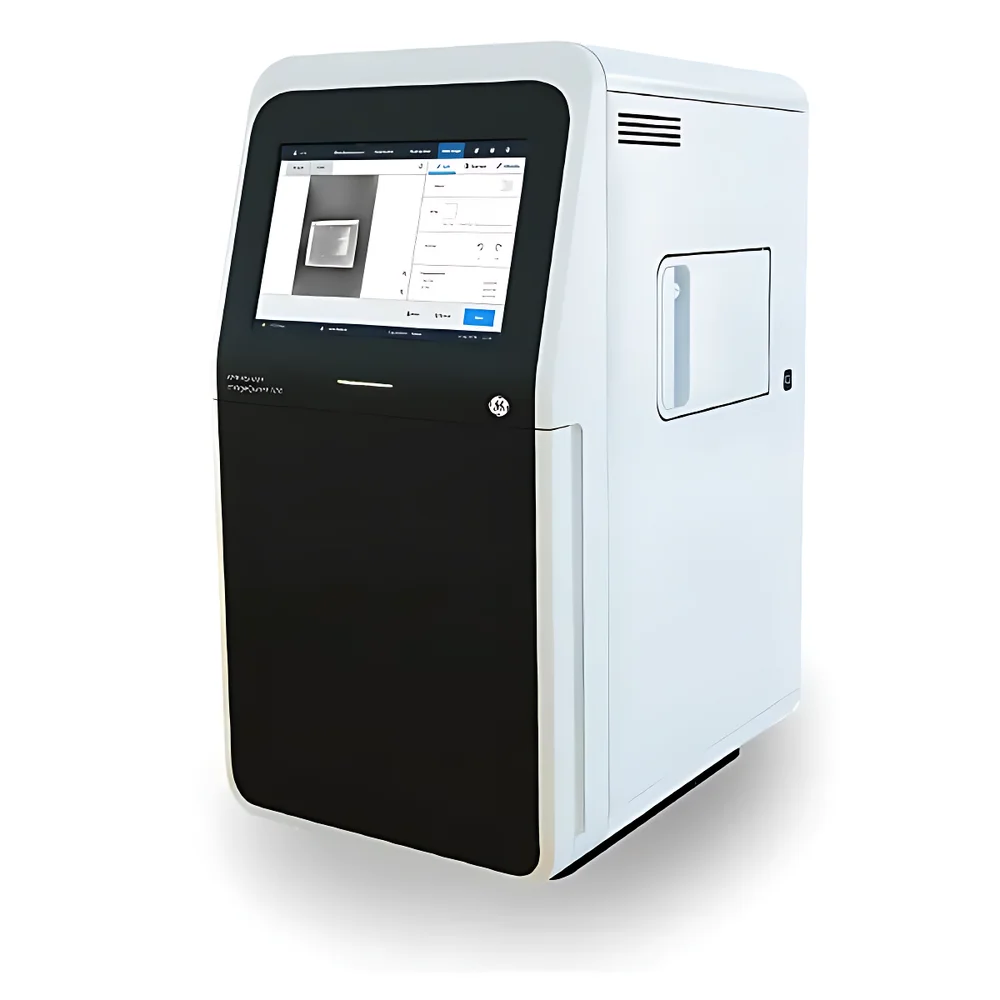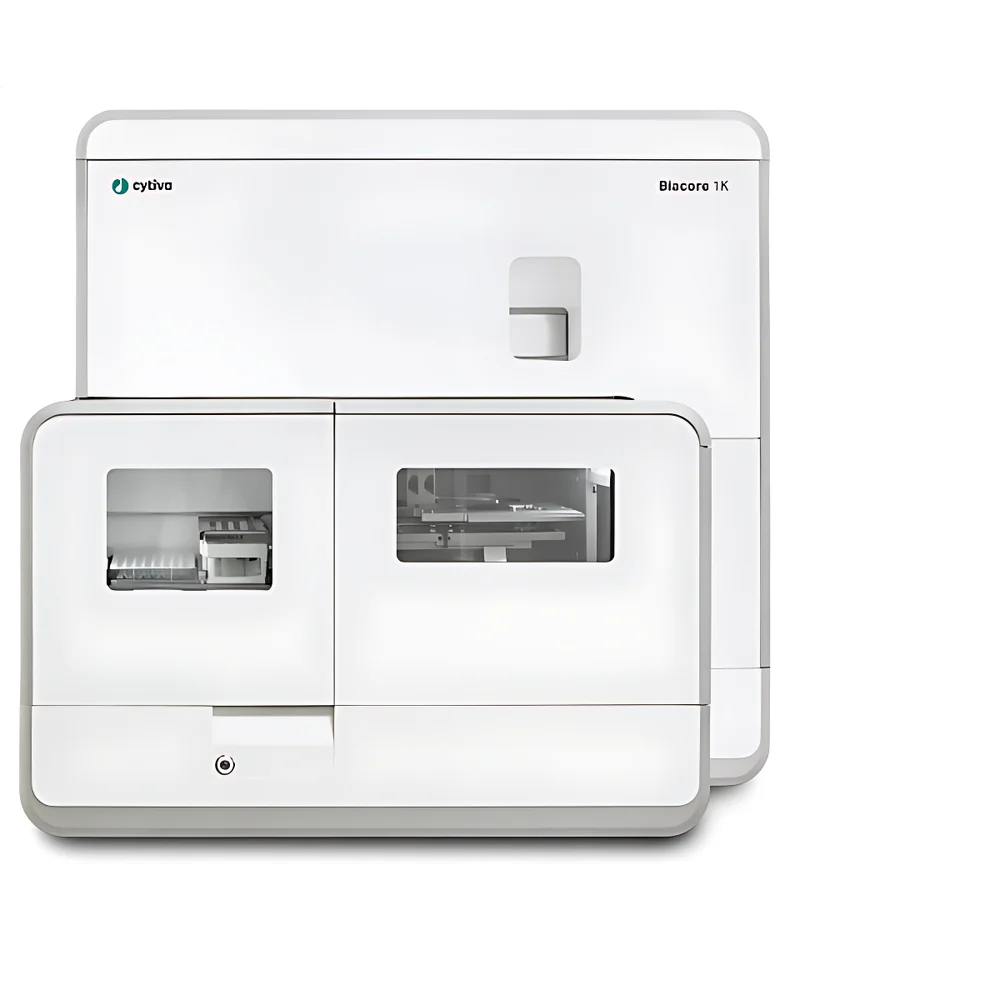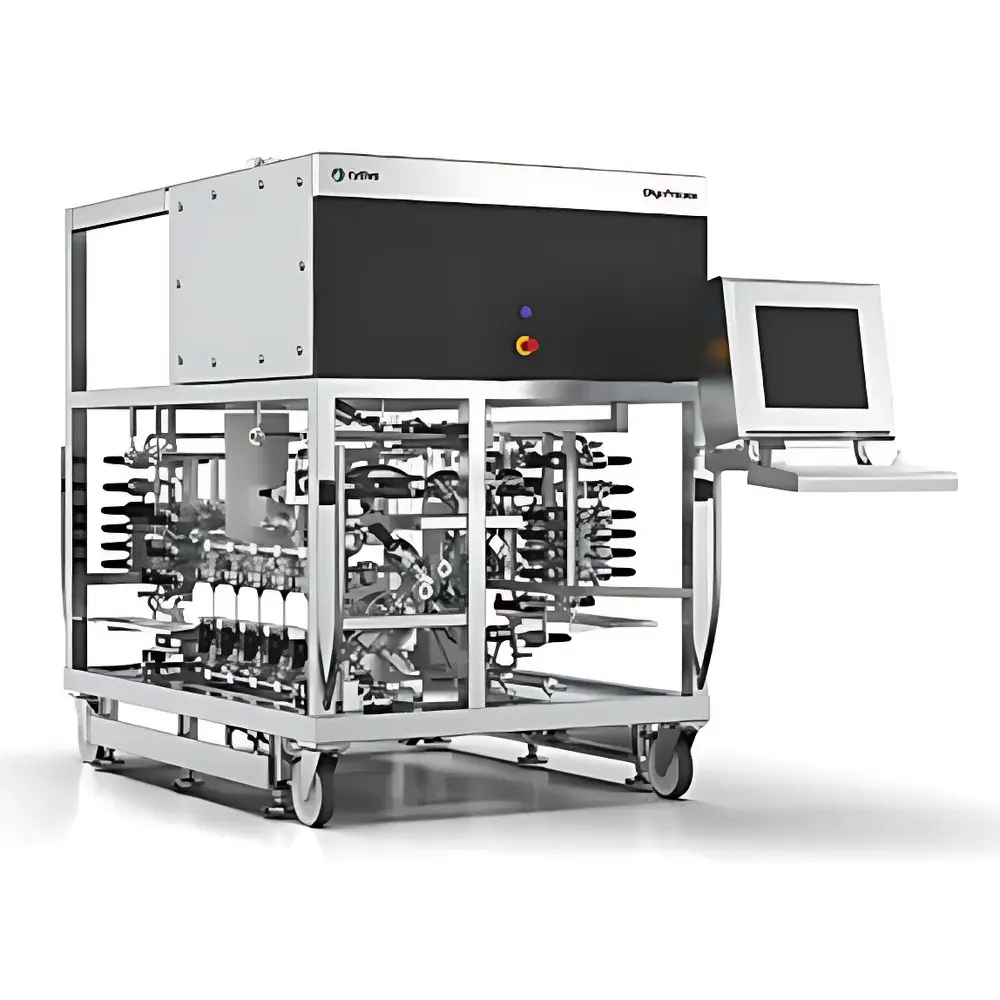
Cytiva OligoProcess™ Oligonucleotide Synthesizer

| Brand | Cytiva |
|---|---|
| Origin | Sweden |
| Model | OligoProcess™ |
| Synthesis Scale | 10–1800 mmol per run |
| Regulatory Compliance | FDA 21 CFR Part 11, GMP-ready architecture |
| Software Platform | UNICORN 7.x or later |
| Column Technology | Flow-through synthesis columns (compatible with ÄKTA oligopilot plus and OligoPilot 400) |
| Construction | Industrial-grade, explosion-proof certified components |
| Application Scope | Clinical-phase development through commercial-scale cGMP manufacturing |
Ask about pricing, availability and specifications.
Overview
The Cytiva OligoProcess™ Oligonucleotide Synthesizer is an industrial-scale, flow-through solid-phase synthesizer engineered for robust, reproducible, and regulatory-compliant production of therapeutic oligonucleotides. Based on the same core column architecture and fluidic principles as the ÄKTA oligopilot plus and OligoPilot 400 platforms, the OligoProcess™ enables linear scale-up from laboratory-validated methods to multi-kilogram annual output—without re-optimization of chemistry or process parameters. It operates on phosphoramidite chemistry under precisely controlled reagent delivery, inert gas purging, and temperature-stabilized reaction environments. Designed for continuous operation in regulated biopharmaceutical facilities, its mechanical architecture integrates explosion-proof enclosures, corrosion-resistant wetted materials (e.g., Hastelloy®, PFA, and sapphire), and redundant safety interlocks compliant with ATEX/IECEx directives. The system supports both standard DNA/RNA monomers and modified nucleoside phosphoramidites—including 2′-O-methyl, LNA, phosphorothioate, and GalNAc-conjugated building blocks—enabling synthesis of antisense oligonucleotides (ASOs), siRNA strands, aptamers, and CRISPR guide RNAs.
Key Features
- Linear scalability across 10–1800 mmol synthesis scales using identical column geometry and reagent stoichiometry as benchtop predecessors
- Explosion-proof Class I, Division 1 (or Zone 1) certified enclosure for safe handling of volatile solvents (acetonitrile, dichloromethane) and activating reagents
- Industrial-grade fluidic system with high-pressure HPLC pumps, solvent-resistant valves, and real-time pressure monitoring at all critical junctions
- Integrated inert gas management (N₂ or Ar) with dynamic purge cycles and oxygen-level sensors to maintain <1 ppm O₂ in synthesis chamber
- Modular design supporting parallel synthesis modules, automated reagent replenishment, and in-line conductivity/pH monitoring for coupling efficiency verification
- UNICORN software-controlled method transfer—ensuring identical sequence fidelity, step timing, and reagent volumes between R&D, pilot, and commercial units
Sample Compatibility & Compliance
The OligoProcess™ accommodates a broad spectrum of oligonucleotide chemistries and lengths (up to 100+ nt), including fully phosphorothioated backbones, base-modified analogs (5-methylcytosine, pseudouridine), and terminal conjugates (cholesterol, PEG, GalNAc). All contact surfaces meet USP Class VI and ISO 10993-5 biocompatibility standards. The system’s hardware and software architecture are designed to support compliance with current Good Manufacturing Practice (cGMP) requirements per ICH Q5A(R2), Q5B, and Q7. Full audit trail, electronic signatures, and role-based access control are implemented in accordance with FDA 21 CFR Part 11 and EU Annex 11. Installation Qualification (IQ), Operational Qualification (OQ), and Performance Qualification (PQ) documentation packages are provided as part of commissioning.
Software & Data Management
UNICORN software (v7.4 or higher) serves as the central control and data governance platform. It provides deterministic method execution, real-time deviation alerts, and synchronized logging of all process parameters—including reagent lot numbers, column batch IDs, environmental conditions, and operator actions. All data are stored in encrypted, tamper-evident SQLite or SQL Server databases with configurable retention policies. UNICORN supports CSV/PDF export for regulatory submissions and integrates with enterprise LIMS and MES systems via OPC UA and RESTful APIs. Electronic signature workflows comply with ALCOA+ principles (Attributable, Legible, Contemporaneous, Original, Accurate, Complete, Consistent, Enduring, Available), ensuring full traceability from synthesis initiation to final release testing.
Applications
- cGMP manufacturing of clinical trial materials (Phase I–III) and commercial drug substance for antisense therapeutics and RNAi modalities
- Multi-product facility deployment with rapid method switching and cleaning-in-place (CIP) protocols validated per ASTM E2656
- Technology transfer between contract development and manufacturing organizations (CDMOs) and sponsor sites
- Process validation studies including worst-case challenge runs, bracketing strategies, and lifecycle-based continuous improvement
- Integration with downstream purification (e.g., Cytiva BioProcess chromatography systems) and tangential flow filtration (TFF) for buffer exchange and concentration
FAQ
What synthesis scale ranges does the OligoProcess™ support?
It delivers consistent performance across 10 mmol (early-phase clinical batches) to 1800 mmol (commercial launch quantities), with linear yield and purity profiles verified per ICH Q5A.
Is the system compatible with existing ÄKTA oligopilot plus methods?
Yes—UNICORN method files are directly importable; column dimensions, flow rates, and reagent volumes scale proportionally without manual recalibration.
Does Cytiva provide qualification support for GMP validation?
Yes—comprehensive IQ/OQ/PQ protocols, risk assessments (ICH Q9), and change control templates are included with each system.
Can the OligoProcess™ synthesize modified oligonucleotides such as GalNAc-siRNA duplexes?
Yes—customizable coupling protocols, extended deprotection cycles, and dual-column configurations accommodate complex conjugation chemistries.
What maintenance intervals are recommended for uninterrupted operation?
Preventive maintenance is scheduled every 6 months; critical components (pumps, valves, sensors) include predictive health monitoring via UNICORN diagnostics.