
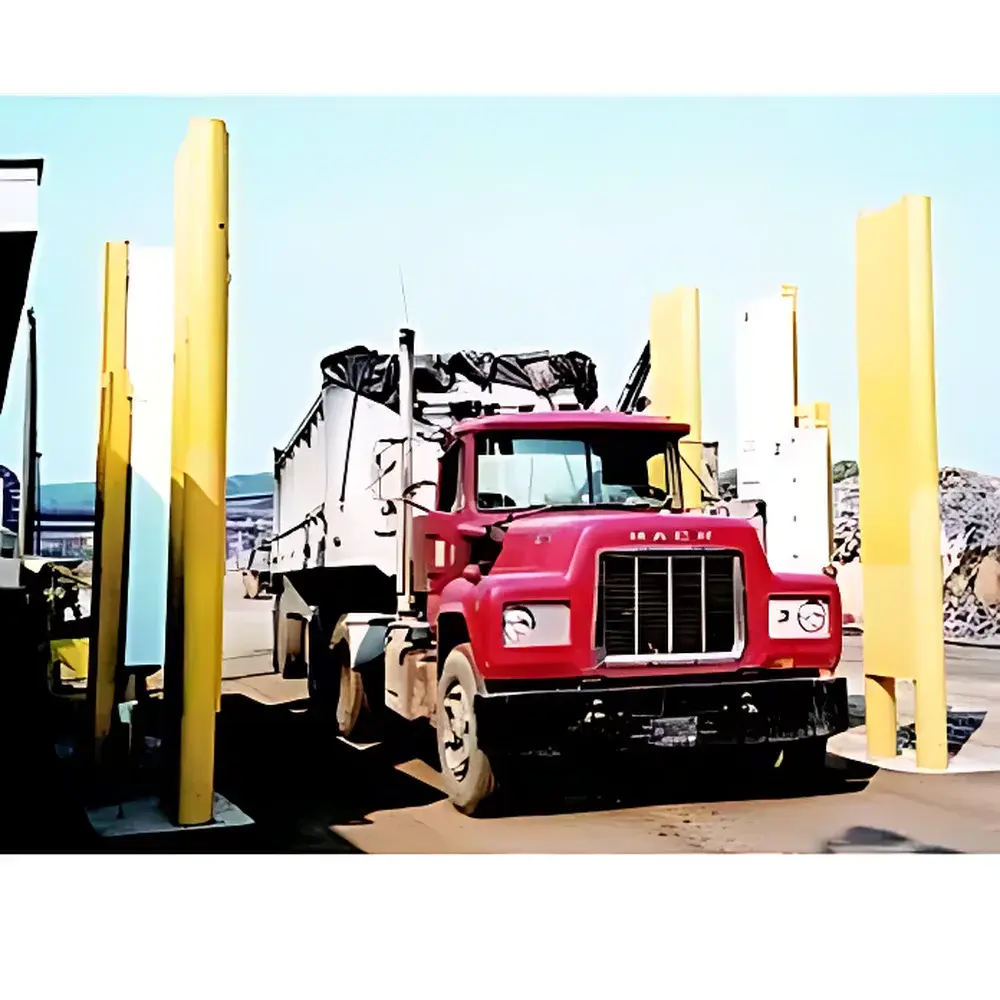
ASM IV Series Radiation Monitoring System for Packages, Cargo, Vehicles, and Personnel
| Origin | USA |
|---|---|
| Manufacturer Type | Distributor |
| Origin Category | Imported |
| Model | ASM IV Series |
| Instrument Type | Portable Dose Rate Meter |
| Measurement Target | Nuclear Radiation |
| Detector Type | Plastic Scintillator |
| Application Scope | Radiological Contamination Incidents |
| Sensitivity | High |
Overview
The ASM IV Series Radiation Monitoring System is an engineered solution for rapid, high-sensitivity detection of ionizing radiation emitted by illicit or accidental radioactive sources in operational security and environmental safety contexts. Designed around the principles of scintillation spectroscopy, the system utilizes plastic scintillator detectors—optimized for fast neutron and gamma-ray response—with low-noise pulse processing electronics to deliver reliable real-time dose rate estimation (µSv/h) and gross count rate analysis. Unlike passive dosimeters or single-point survey meters, the ASM IV Series implements a distributed detector array architecture, enabling volumetric screening of heterogeneous objects including postal parcels, air cargo containers, passenger vehicles, railcars, and personnel walk-through zones. Its deployment aligns with IAEA Nuclear Security Guidance (NSS No. 13) and supports national radiological emergency response frameworks under ANSI N42.34 and IEC 62244 standards for radiation portal monitors.
Key Features
- Modular detector configuration: Scalable from single-panel pedestrian arches to multi-panel vehicle inspection portals (up to 4 m height × 5 m width), with plug-and-play interconnectivity between detector modules and the SCU control unit.
- Industrial-grade embedded control system: Integrated fanless PC with 10.1-inch capacitive touchscreen display, running a deterministic real-time OS for sub-100 ms alarm latency and uninterrupted data logging during continuous operation.
- Optimized radiation shielding: Lead-lined detector housings (≥2 mm Pb equivalent) minimize background interference while preserving geometric efficiency; all enclosures meet IP65 ingress protection for outdoor deployment.
- Portable and relocatable design: Compact SCU chassis (W400 × D320 × H180 mm, <12 kg) enables rapid repositioning across checkpoints without permanent infrastructure; battery backup supports ≥4 hours of standalone operation.
- Networked operability: Ethernet (RJ45) and optional Wi-Fi 5 (802.11ac) interfaces support remote monitoring, centralized alarm management via SNMP v3, and integration into existing CBRN command-and-control platforms.
- Self-diagnostics and calibration traceability: Onboard spectral stability monitoring, automatic gain stabilization, and NIST-traceable calibration certificate included with each system shipment.
Sample Compatibility & Compliance
The ASM IV Series accommodates diverse screening geometries without sample preparation: non-intrusive external scanning of sealed packages, palletized freight, passenger automobiles, buses, and railcars. It detects gamma-emitting radionuclides (e.g., 137Cs, 60Co, 241Am) and fast neutrons from spontaneous fission sources (e.g., 252Cf). The system complies with ANSI N42.35 (Radiation Detection Instrumentation for Homeland Security), meets electromagnetic compatibility per EN 61326-1, and satisfies mechanical safety requirements per EN 60950-1. Data integrity protocols conform to ALARA principles and support audit-ready reporting for GLP-aligned radiation safety programs.
Software & Data Management
The proprietary ASM Control Suite provides intuitive operator interface with three-tier access levels (Operator, Supervisor, Administrator). All measurement data—including time-stamped dose rate profiles, alarm triggers (with configurable thresholds), event logs, and detector health metrics—are stored locally on encrypted SSD storage (32 GB) and synchronized to network servers via TLS 1.2–secured HTTP(S) push. Software features include spectral trending over 30-day rolling windows, geotagged incident mapping, customizable PDF report generation (per ISO/IEC 17025 Annex A.3), and optional FDA 21 CFR Part 11–compliant electronic signature modules for regulated environments.
Applications
- Border and port-of-entry radiation screening for customs and immigration authorities
- Logistics hub monitoring at air cargo terminals, seaports, and intermodal rail yards
- Emergency response triage during radiological dispersal device (RDD) incidents
- Decommissioning site perimeter surveillance for nuclear facility operators
- Mobile deployment by civil defense units conducting urban radiological surveys
- Regulatory compliance verification for transport of radioactive materials (IAEA SSR-6)
FAQ
What radiation types does the ASM IV Series detect?
It detects gamma radiation (50 keV – 3 MeV) and fast neutrons (0.5 – 10 MeV) using pulse shape discrimination-capable plastic scintillators.
Is the system suitable for outdoor all-weather operation?
Yes—detector modules are rated IP65; the SCU operates within –10 °C to +50 °C ambient temperature range with condensation-resistant thermal management.
Can historical alarm data be exported for regulatory reporting?
Yes—CSV and XML exports include full metadata (timestamp, GPS coordinates if enabled, detector ID, dose rate, alarm status), compliant with IAEA INFCIRC/225/Rev.5 documentation requirements.
Does the system require annual recalibration?
Factory calibration is valid for 12 months; field verification using check sources (e.g., 137Cs) is recommended quarterly per ANSI N42.22 guidelines.
How is cybersecurity addressed in network-connected deployments?
Firmware employs secure boot, disabled default credentials, role-based access control, and TLS-encrypted data transmission; vulnerability assessments follow NIST SP 800-82 Rev. 2 for industrial control systems.
Related Products







