
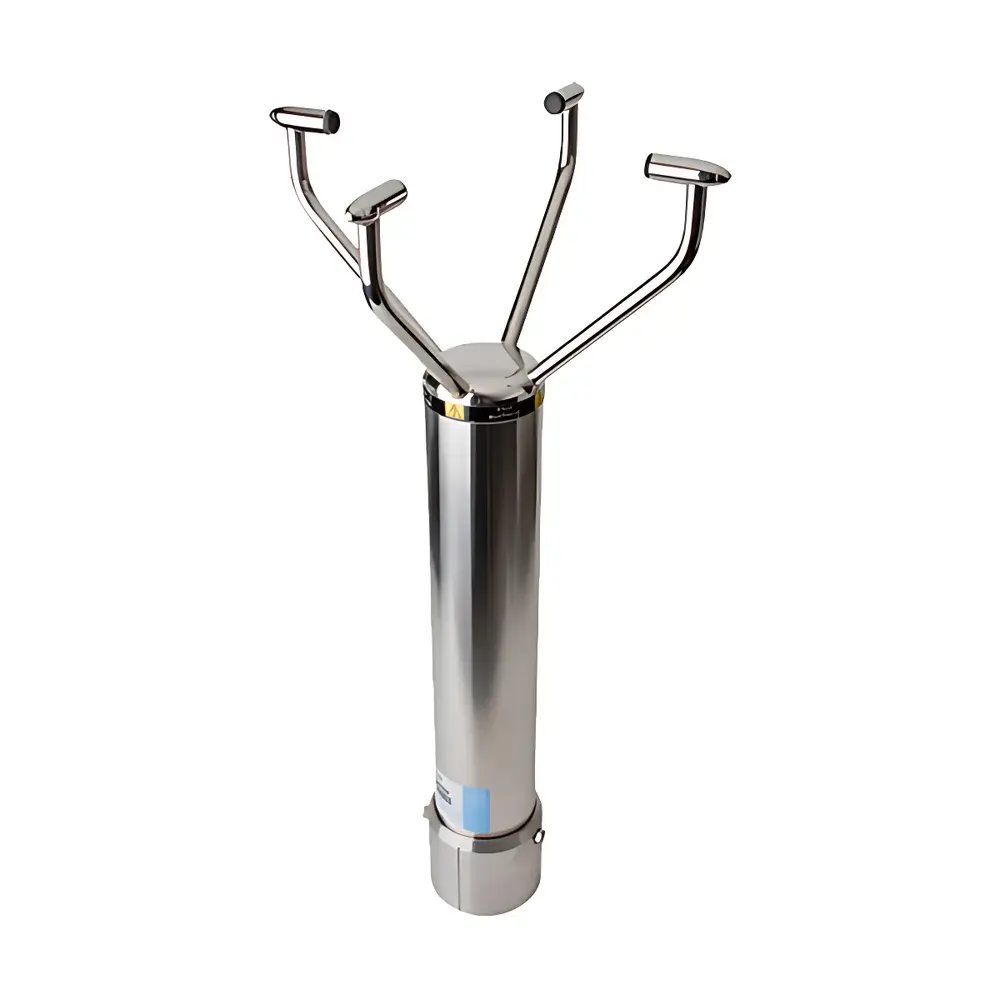
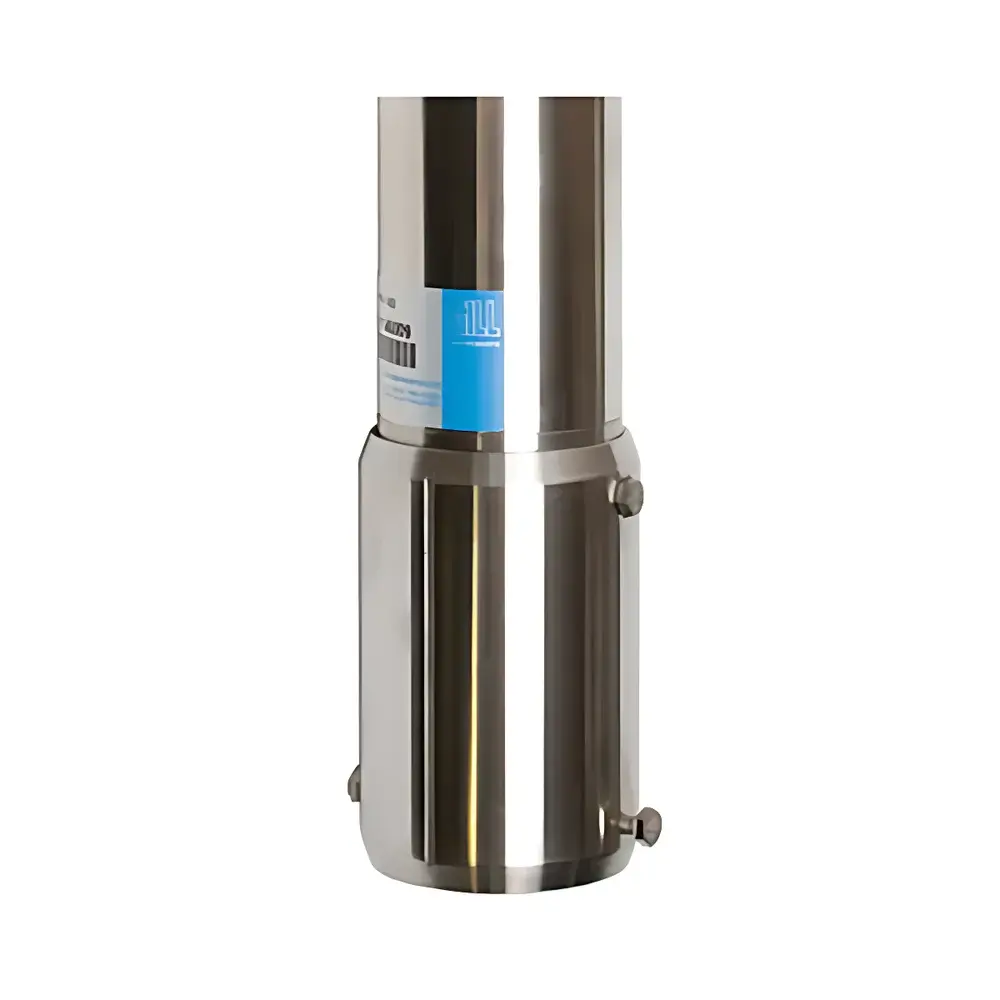
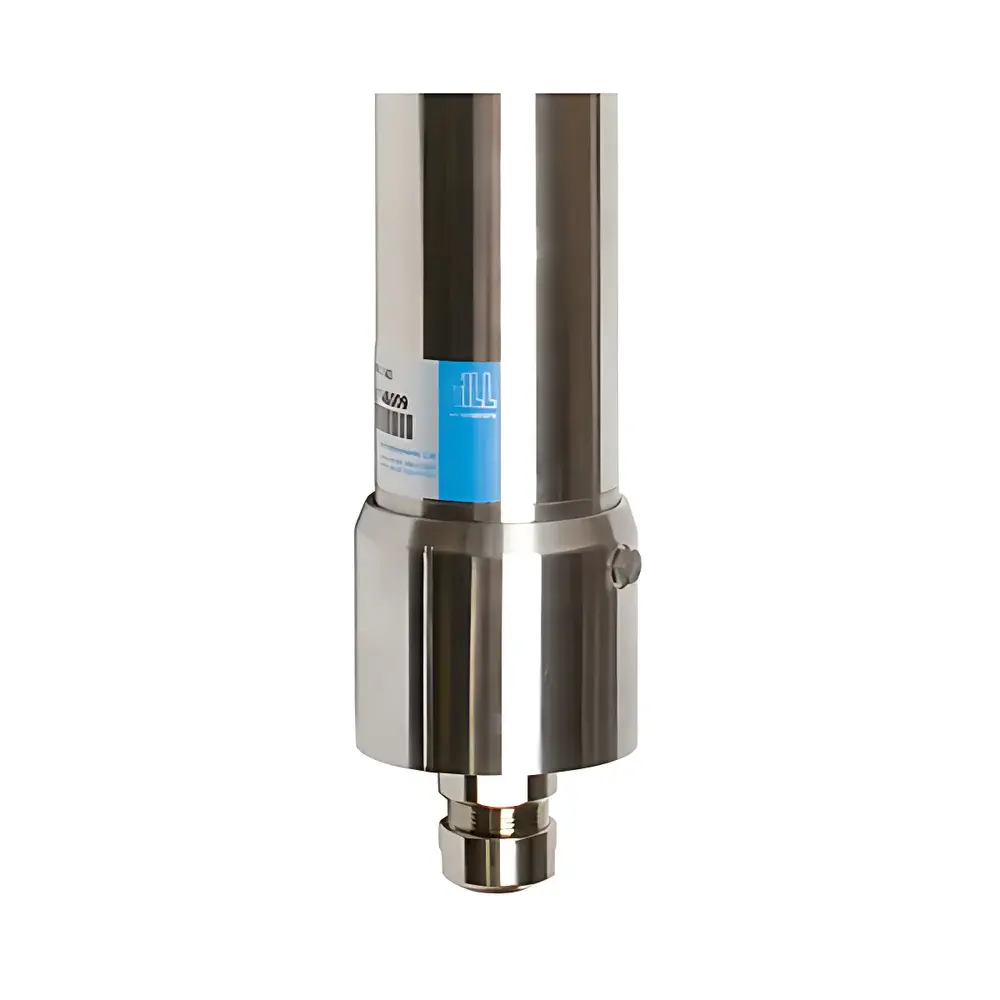
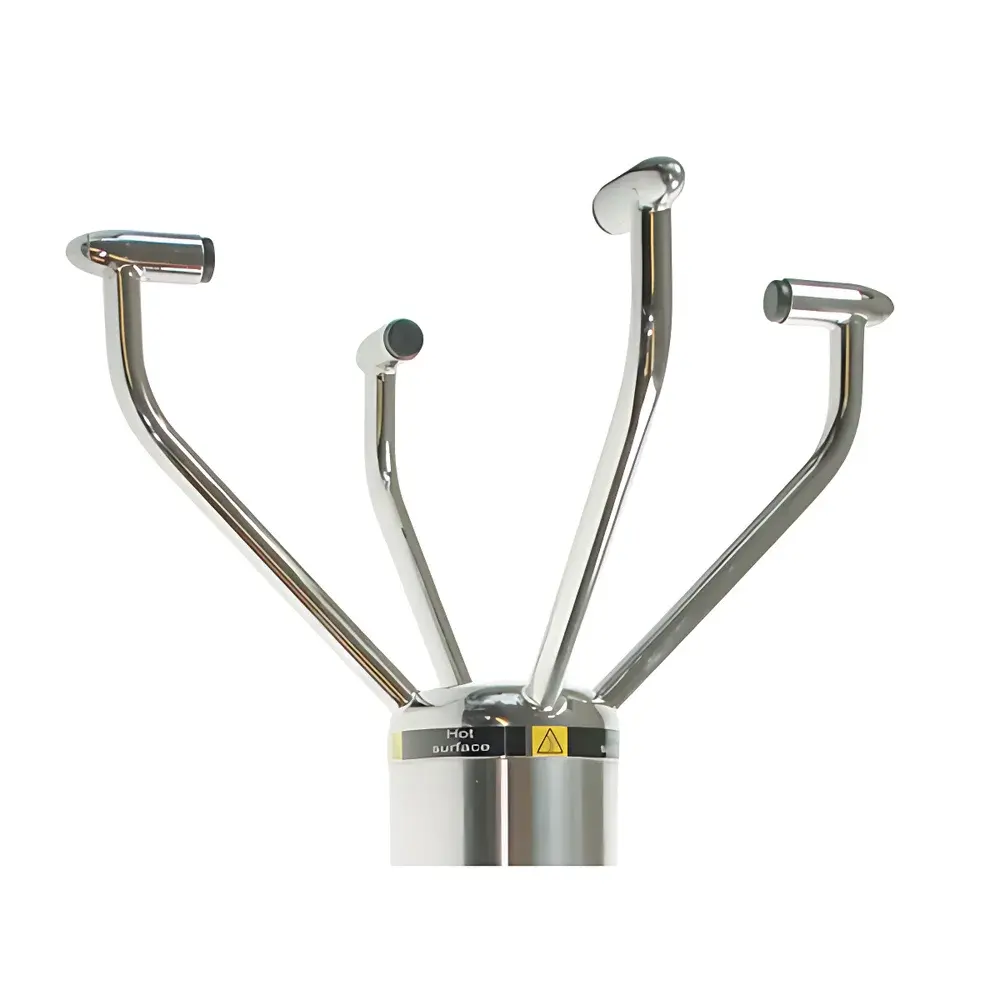
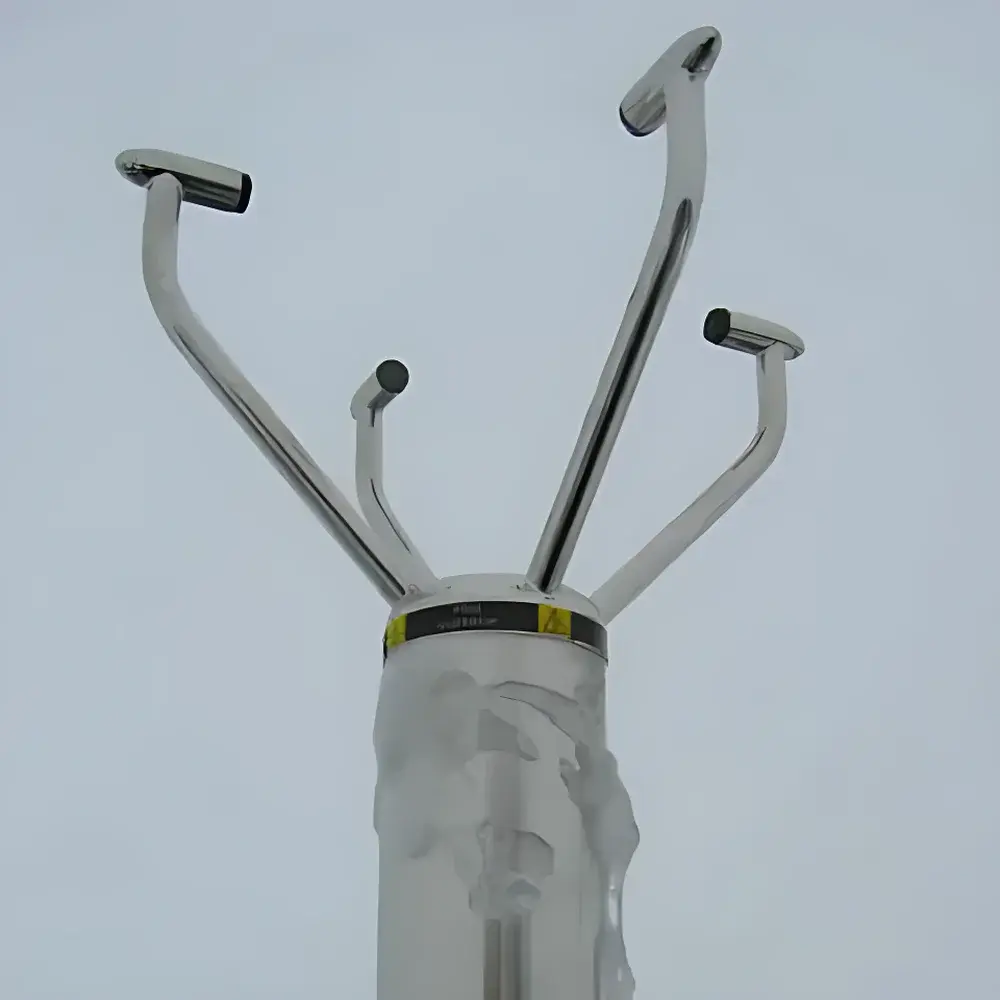
Gill WindObserver 65 Ultrasonic Anemometer
| Brand | Gill |
|---|---|
| Origin | United Kingdom |
| Model | WindObserver 65 |
| Instrument Type | Ultrasonic Anemometer |
| Resolution | 0.01 m/s |
| Measurement Range | 0–65 m/s |
| Accuracy | ±2% |
| Operating Temperature | −55 °C to +70 °C |
| Operating Humidity | 0–100% RH |
| Ingress Protection | IP66 |
| Material | Stainless Steel |
| Compliance | WMO Guide to Meteorological Instruments and Methods of Observation (WMO-No. 8, 7th Ed., 2008) |
| Output | Digital (RS-232/RS-485, SDI-12, or optional Modbus RTU) |
Overview
The Gill WindObserver 65 is a solid-state, ultrasonic anemometer engineered for continuous, high-reliability measurement of horizontal wind speed and direction in demanding environmental and industrial applications. Unlike mechanical cup-and-vane sensors, it employs time-of-flight ultrasonic transit-time differential measurement across three orthogonal acoustic paths. This principle eliminates moving parts, ensuring long-term stability, minimal maintenance, and immunity to mechanical wear—even under sustained exposure to salt-laden marine air, icing conditions, or extreme thermal cycling. Its measurement architecture delivers vector-averaged wind velocity and directional data at user-configurable sampling intervals (e.g., 1 Hz), with real-time calculation of 3-second gusts and sliding-vector averages aligned to the World Meteorological Organization (WMO) standards specified in Guide to Meteorological Instruments and Methods of Observation (WMO-No. 8, 7th Edition, 2008).
Key Features
- Solid-state design with no rotating components—eliminates bearing wear, inertia lag, and threshold velocity limitations.
- Stainless steel housing rated to IP66, providing full protection against powerful water jets and dust ingress—validated for offshore, coastal, and arctic deployments.
- Extended operational envelope: functional from −55 °C to +70 °C ambient temperature and 0–100% relative humidity, including condensing environments.
- High-resolution output: wind speed resolution of 0.01 m/s and directional resolution of 1°, with calibrated accuracy of ±2% across the full 0–65 m/s range.
- Optional integrated heating system for de-icing and anti-condensation—critical for high-altitude meteorological stations, offshore platforms, and polar research sites.
- Digital communication interfaces include RS-232, RS-485, SDI-12, and configurable Modbus RTU—enabling seamless integration into SCADA, DAQ, and OEM control systems.
- Configurable averaging algorithms: supports both fixed-interval (e.g., 10-minute mean) and sliding-vector averaging per WMO requirements, plus real-time 3-second gust detection.
Sample Compatibility & Compliance
The WindObserver 65 is designed for unobstructed atmospheric sampling in open-air installations where representative horizontal wind characterization is required. Its compact, low-profile geometry minimizes flow distortion and complies with WMO siting recommendations for Class I and II observation sites. The sensor meets the mechanical and environmental robustness criteria outlined in IEC 61000-6-2 (immunity) and IEC 61000-6-4 (emissions). While not certified to aviation-specific DO-160 or marine classification society standards (e.g., DNV GL, ABS), its construction and validation history support use in safety-critical subsystems—including aircraft approach lighting control, dynamic positioning (DP) reference systems on vessels, and turbine yaw control logic—when deployed within broader certified architectures. Data traceability supports GLP-aligned logging when paired with compliant host systems.
Software & Data Management
Gill provides free, Windows-compatible data logging and configuration software (WindCom) for local setup, firmware updates, and real-time visualization of wind vectors, gust statistics, and diagnostic status. Raw output is delivered as ASCII-formatted serial strings or Modbus registers, enabling direct ingestion into third-party platforms such as Campbell Scientific LoggerNet, LabVIEW, MATLAB, or cloud-based IoT middleware (e.g., AWS IoT Core, Azure IoT Hub). All timestamped measurements include embedded quality flags (e.g., signal-to-noise ratio, transducer fault indicators), supporting automated QA/QC workflows. For regulated environments, external data acquisition systems may be configured to meet FDA 21 CFR Part 11 requirements—including electronic signatures, audit trails, and data integrity controls—though the anemometer itself does not embed cryptographic signing or user-role management.
Applications
- Airport meteorological systems (AWOS/ASOS), particularly for runway-end wind shear detection and Category III instrument landing support.
- Marine dynamic positioning reference units on survey vessels, FPSOs, and offshore wind installation vessels.
- Port authority operations—crane safety interlocks, berth occupancy monitoring, and emission dispersion modeling inputs.
- Railway and highway intelligent transport systems (ITS) for crosswind warning and speed restriction triggers on elevated or exposed corridors.
- Renewable energy: turbine yaw control feedback, wake steering validation, and site assessment campaigns requiring long-term, low-maintenance wind profiling.
- Civil infrastructure monitoring: wind loading assessment on bridges, tall buildings, and suspension structures under service and extreme load conditions.
- Upper-air and mountain-top observatories where low-power, frost-resistant sensing is essential for boundary-layer turbulence studies.
FAQ
Does the WindObserver 65 require routine calibration in the field?
No scheduled recalibration is required under normal operating conditions. Gill performs NIST-traceable factory calibration prior to shipment; drift is typically less than 0.5% per year. Field verification using known wind tunnel or co-located reference sensor data is recommended annually for mission-critical deployments.
Can it operate reliably in freezing fog or rime ice conditions?
Yes—when equipped with the optional heater kit, the unit maintains transducer surface temperature above freezing during active icing events, preserving acoustic coupling and measurement continuity per IEC 60068-2-30 test protocols.
Is analog output (e.g., 4–20 mA) available?
No. The WindObserver 65 is a digitally native sensor. Analog conversion must be performed externally via compatible signal conditioners or PLC modules.
What mounting options are supported?
Standard configurations include a 1.5-inch NPT threaded base and adjustable U-bolt clamps. Custom mounting brackets and cable gland kits (for armored conduit entry) are available upon request.
How is firmware updated?
Via RS-232 connection using WindCom software; no hardware modification or disassembly is required.
Related Products







