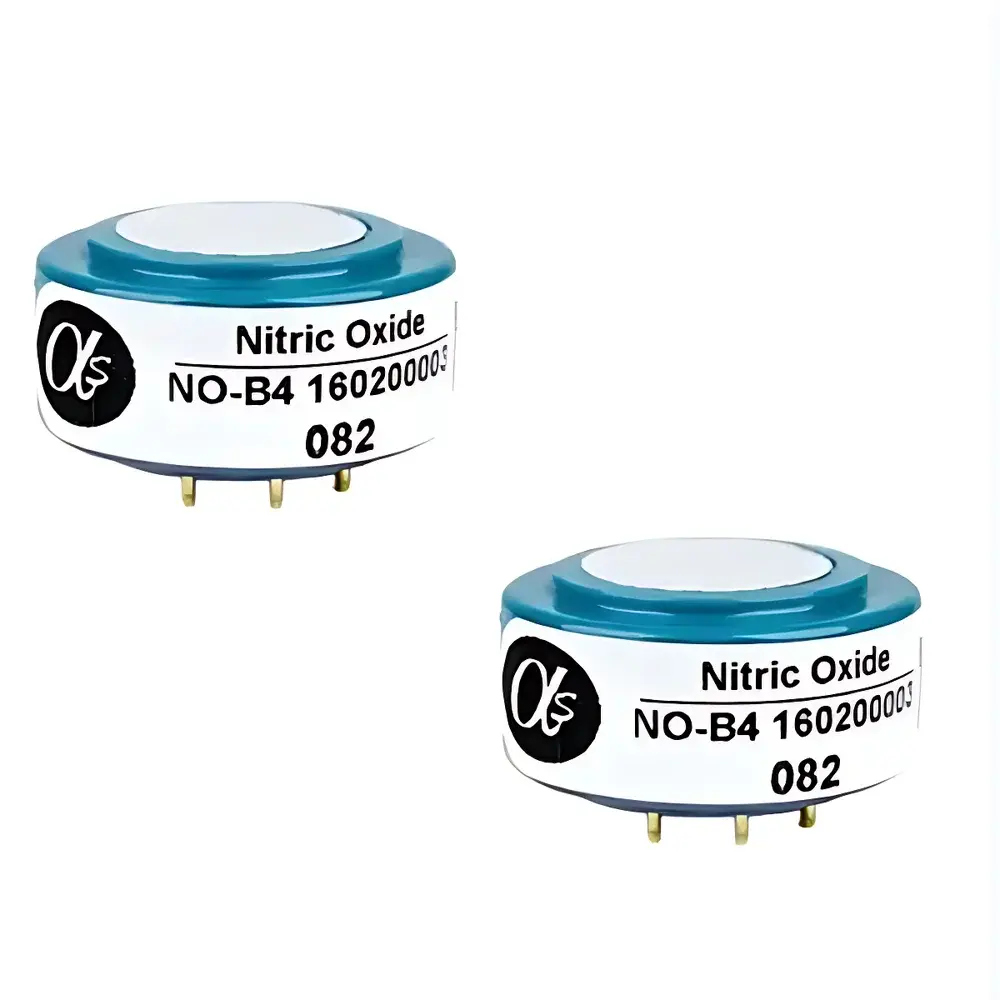
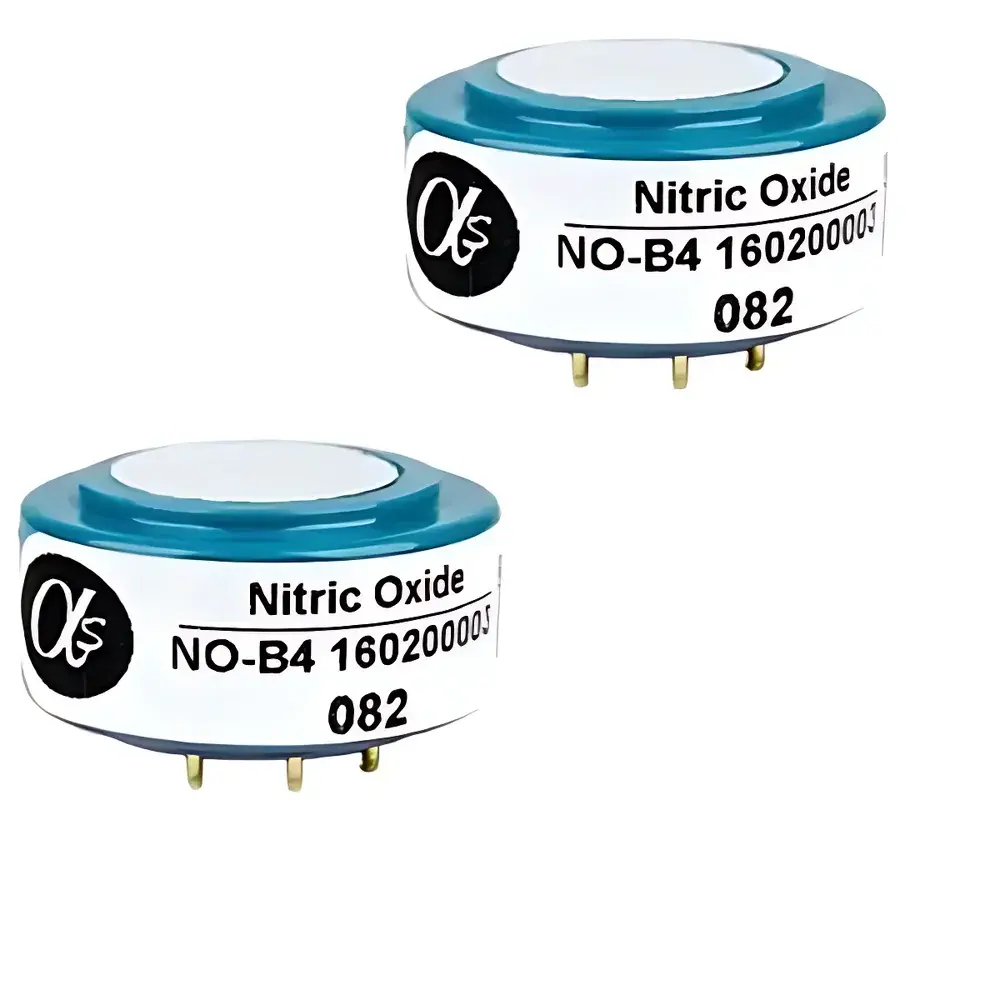
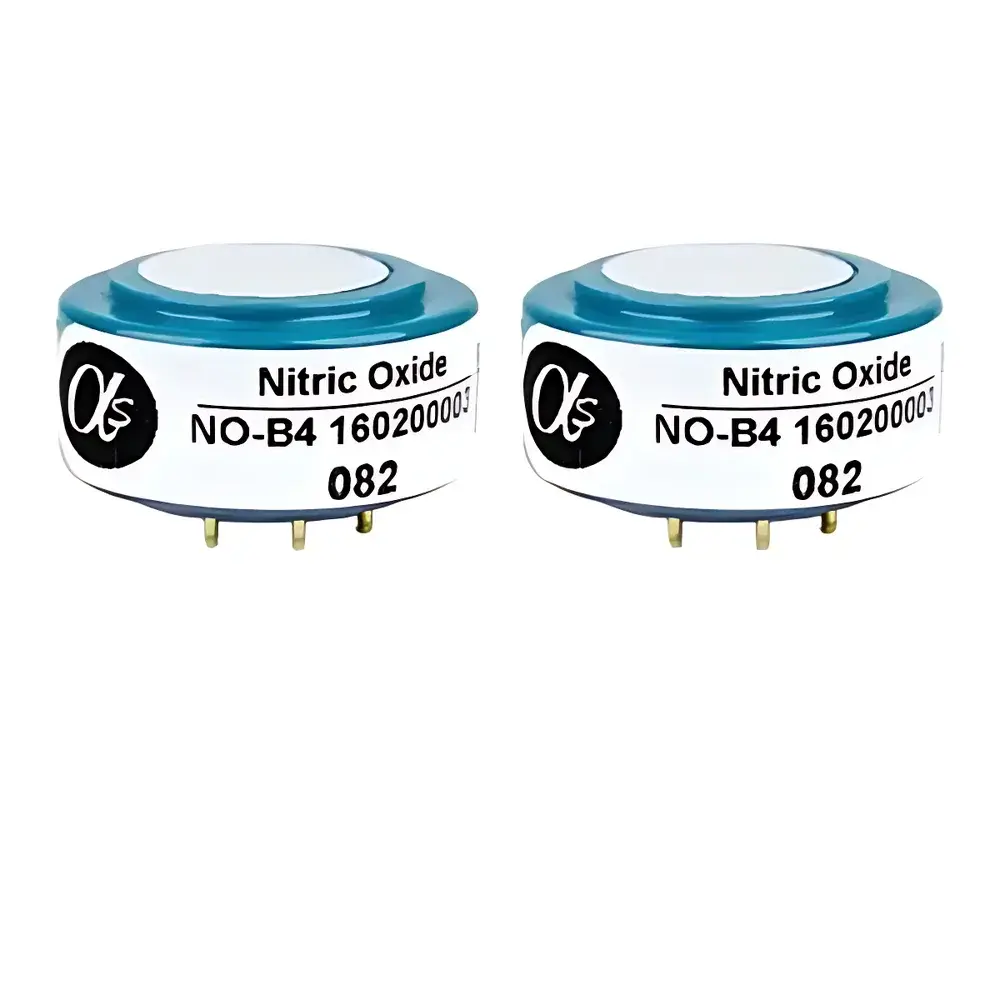
Alphasense NO-B4 Electrochemical Nitric Oxide (NO) Gas Sensor
| Brand | Alphasense (UK) |
|---|---|
| Origin | United Kingdom |
| Model | NO-B4 |
| Sensitivity | 500–850 nA/ppm |
| Response Time (t₉₀) | <45 s |
| Zero Current | 30–200 nA |
| Measurement Range | 0–20 ppm |
| Overload Capacity | 50 ppm |
| Operating Temperature | −20 to +50 °C |
| Operating Humidity | 15–90 % RH (non-condensing) |
| Expected Lifetime | ≥24 months (in clean air) |
| Bias Voltage | −200 mV |
| Load Resistance | 10 Ω |
| Output Signal | Current (nA) proportional to NO concentration |
Overview
The Alphasense NO-B4 is a high-performance, three-electrode electrochemical gas sensor engineered for the selective and stable detection of nitric oxide (NO) in ambient air and industrial process streams. Based on amperometric sensing principles, the NO-B4 operates via catalytic oxidation of NO at a working electrode under a fixed bias voltage (−200 mV), generating a diffusion-limited current linearly proportional to NO concentration. Its robust Teflon-bonded hydrophobic membrane ensures consistent permeability while rejecting interferents such as NO₂, CO, SO₂, and humidity-induced baseline drift—critical for long-term deployment in uncontrolled environments. Designed and manufactured in the UK to ISO 9001-certified processes, the NO-B4 meets stringent performance benchmarks for low-concentration monitoring applications where reproducibility, temperature stability, and cross-sensitivity suppression are essential.
Key Features
- Optimized three-electrode architecture with gold counter electrode and reference electrode for enhanced signal stability and reduced zero-current drift
- Linear output response across full 0–20 ppm range, with sensitivity of 500–850 nA/ppm (typical 650 nA/ppm at 20 °C/60 % RH)
- Rapid t₉₀ response time <45 seconds—enabling real-time tracking of transient NO events in urban air or combustion exhaust
- Low zero-current specification (30–200 nA) minimizes calibration frequency and improves baseline integrity over extended operation
- Integrated hydrophobic PTFE membrane provides consistent gas diffusion characteristics and resistance to condensation and particulate fouling
- Rated operational lifetime ≥24 months in clean air; performance validated per Alphasense’s accelerated aging protocols (IEC 60068-2 series)
- Compatible with standard analog signal conditioning circuits (e.g., transimpedance amplifiers) and digital gas detection platforms supporting 4–20 mA or RS-485 Modbus outputs
Sample Compatibility & Compliance
The NO-B4 is validated for continuous measurement of NO in non-corrosive, non-explosive gaseous matrices including ambient air, indoor air, flue gas dilutions, and laboratory calibration gas mixtures. It is not intended for direct exposure to high-humidity saturated streams (>90 % RH), acidic vapors (e.g., HCl, HF), or reducing atmospheres containing >100 ppm H₂S or Cl₂. The sensor complies with key international standards governing electrochemical gas detection, including EN 45544-1:2019 (selection, use and maintenance of electrochemical sensors), and supports traceable calibration against NIST-traceable NO standards (e.g., certified gas cylinders per ISO 6141). When integrated into certified analyzers, the NO-B4 contributes to system-level compliance with EPA Method 7E (for stationary source NO monitoring) and EU Directive 2008/50/EC (ambient air quality assessment).
Software & Data Management
While the NO-B4 itself is an analog current-output sensor, it is routinely deployed within OEM gas analyzers and data acquisition systems that support full audit trail functionality. Compatible host platforms typically implement automated baseline correction algorithms, temperature and humidity compensation (using onboard thermistor and capacitive RH sensors), and real-time linearization per factory calibration coefficients. For regulated environments—including environmental monitoring networks operating under ISO/IEC 17025 or pharmaceutical cleanroom QA/QC—integration must ensure full 21 CFR Part 11 compliance: electronic signatures, user access control, immutable calibration logs, and change history for all configuration parameters. Alphasense provides full calibration certificates (including sensitivity, zero offset, and temperature coefficient data) with each batch, traceable to UKAS-accredited reference standards.
Applications
- Ambient air quality monitoring networks measuring urban NO concentrations per EU Air Quality Directive requirements
- Indoor air quality (IAQ) systems in hospitals, schools, and office buildings tracking NO from cooking, heating, and traffic infiltration
- Portable and wearable NO monitors for occupational health assessments in welding, semiconductor fabrication, and chemical synthesis facilities
- Research-grade instrumentation for atmospheric chemistry studies, including NO/NO₂ interconversion kinetics and ozone titration experiments
- OEM integration into multi-gas analyzers for emissions testing (e.g., vehicle exhaust, boiler stack monitoring) and smart city environmental nodes
- Calibration verification and span-checking in fixed-site NOx analyzers using dynamic dilution systems
FAQ
What is the recommended operating temperature range for the NO-B4?
The sensor is specified for continuous operation between −20 °C and +50 °C. Performance outside this range may result in altered sensitivity, increased zero drift, or irreversible electrolyte freezing/drying.
Does the NO-B4 require external temperature or humidity compensation?
Yes—optimal accuracy requires concurrent measurement of ambient temperature and relative humidity. Compensation algorithms must be implemented in the host electronics using the sensor’s published temperature coefficient (±0.15 %/°C) and humidity dependence (±0.05 %/10 % RH).
Can the NO-B4 be used for NO₂ detection?
No. The NO-B4 is specifically engineered for NO selectivity. For NO₂ measurement, Alphasense recommends the NO₂-B4 sensor, which employs a different catalytic formulation and bias voltage.
How often should the NO-B4 be calibrated in field deployment?
Initial calibration is required before first use. Subsequent calibration intervals depend on application severity: every 3–6 months for ambient air monitoring; every 1–3 months for industrial or high-dynamic-range environments. Zero and span checks should be performed weekly where regulatory compliance applies.
Is the NO-B4 compatible with printed circuit board (PCB) mounting?
Yes—the sensor features a standard 12.7 mm diameter metal can with solderable pins and is designed for reflow-compatible assembly. Full mechanical and thermal mounting guidelines are provided in Alphasense Application Note AN-210.