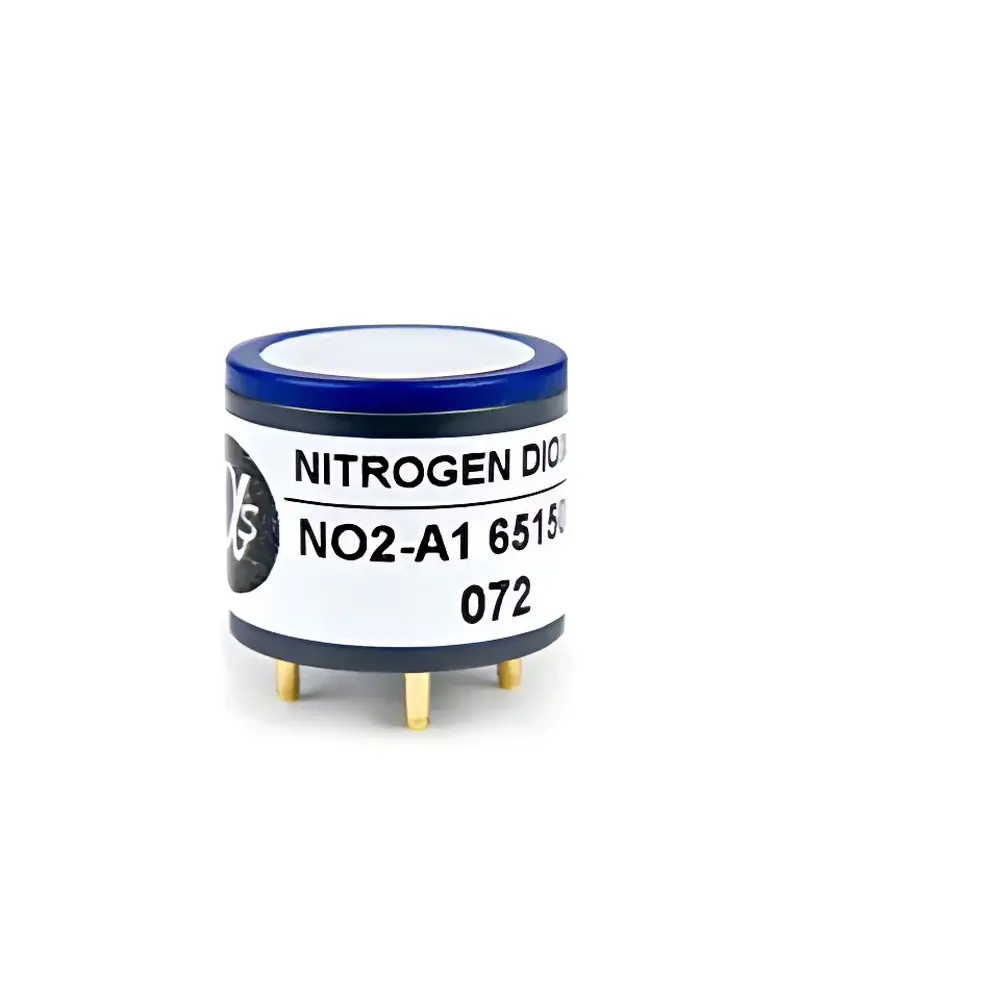
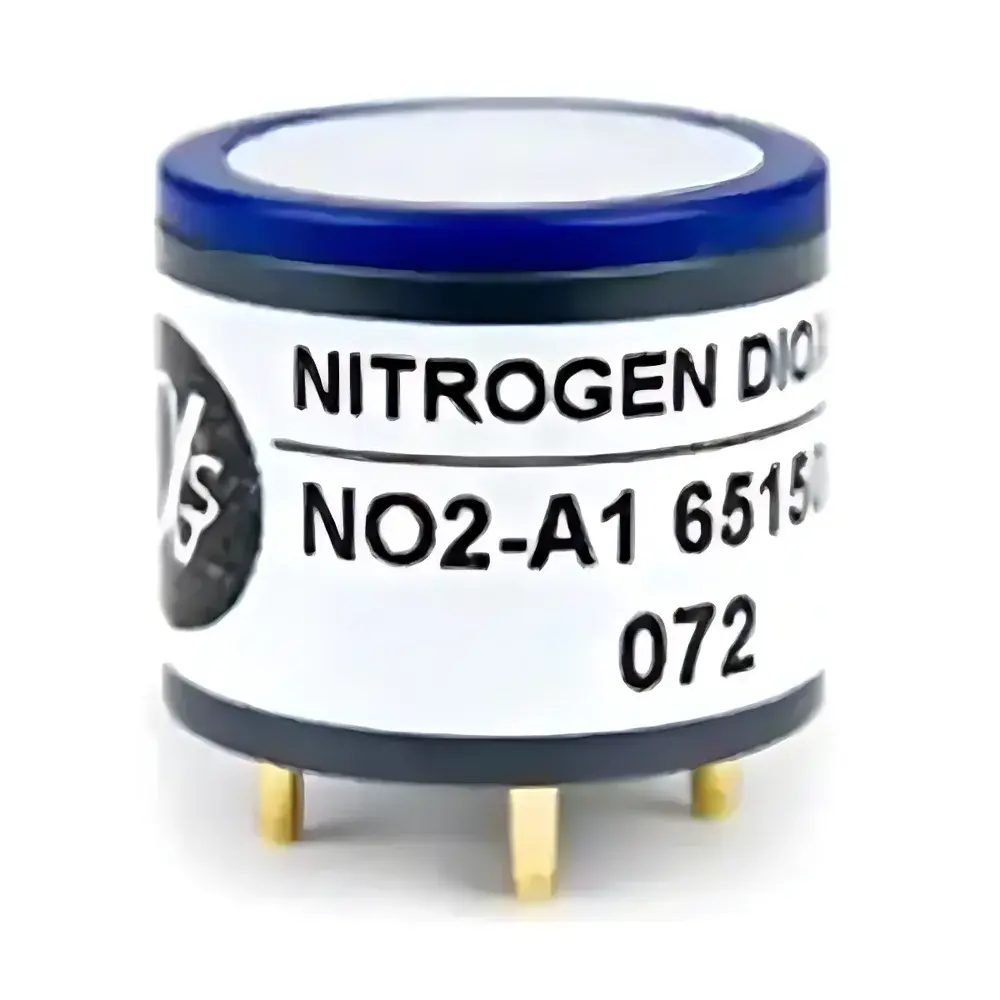
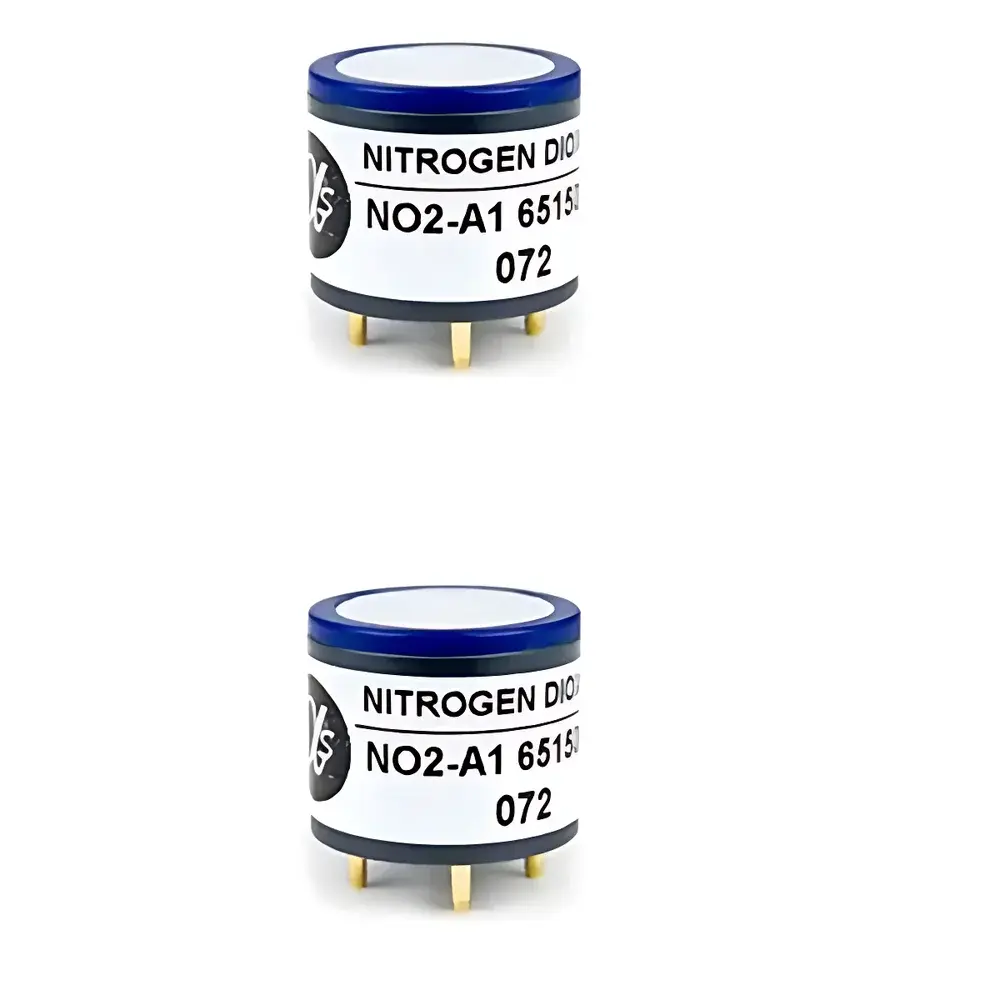
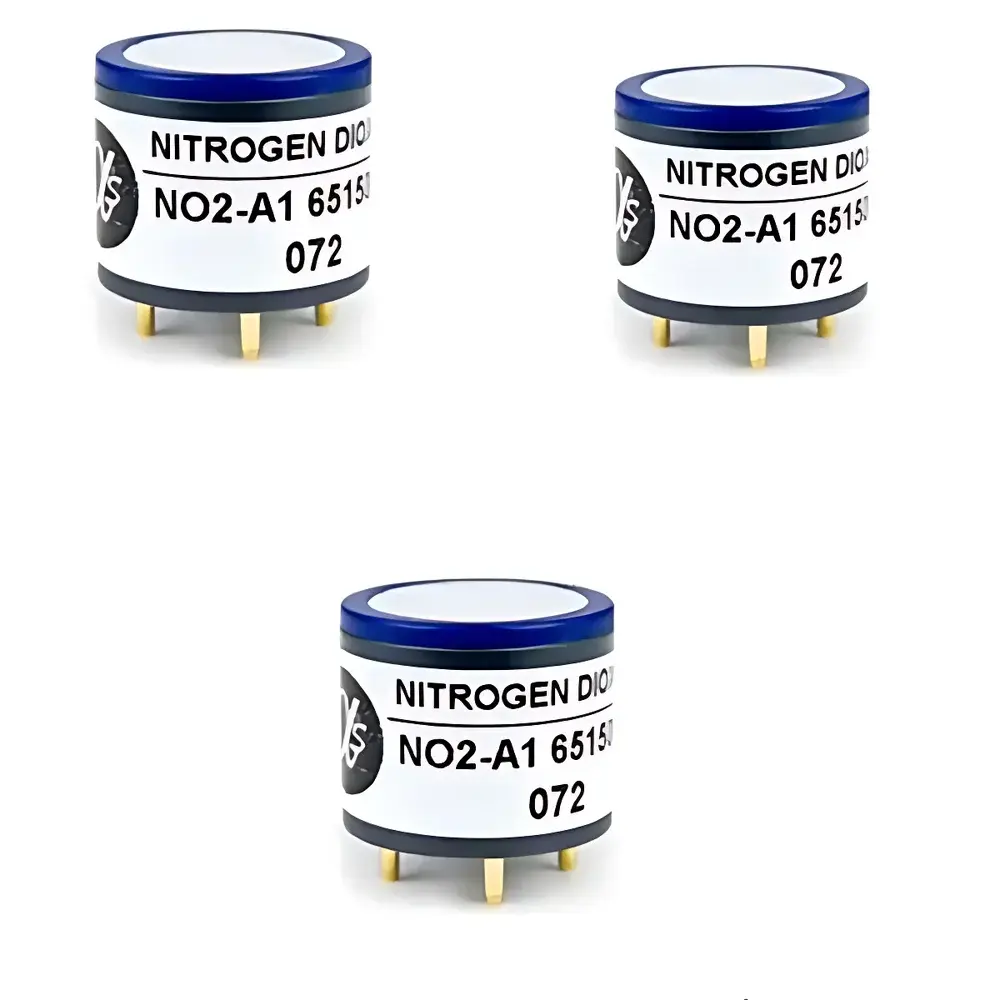
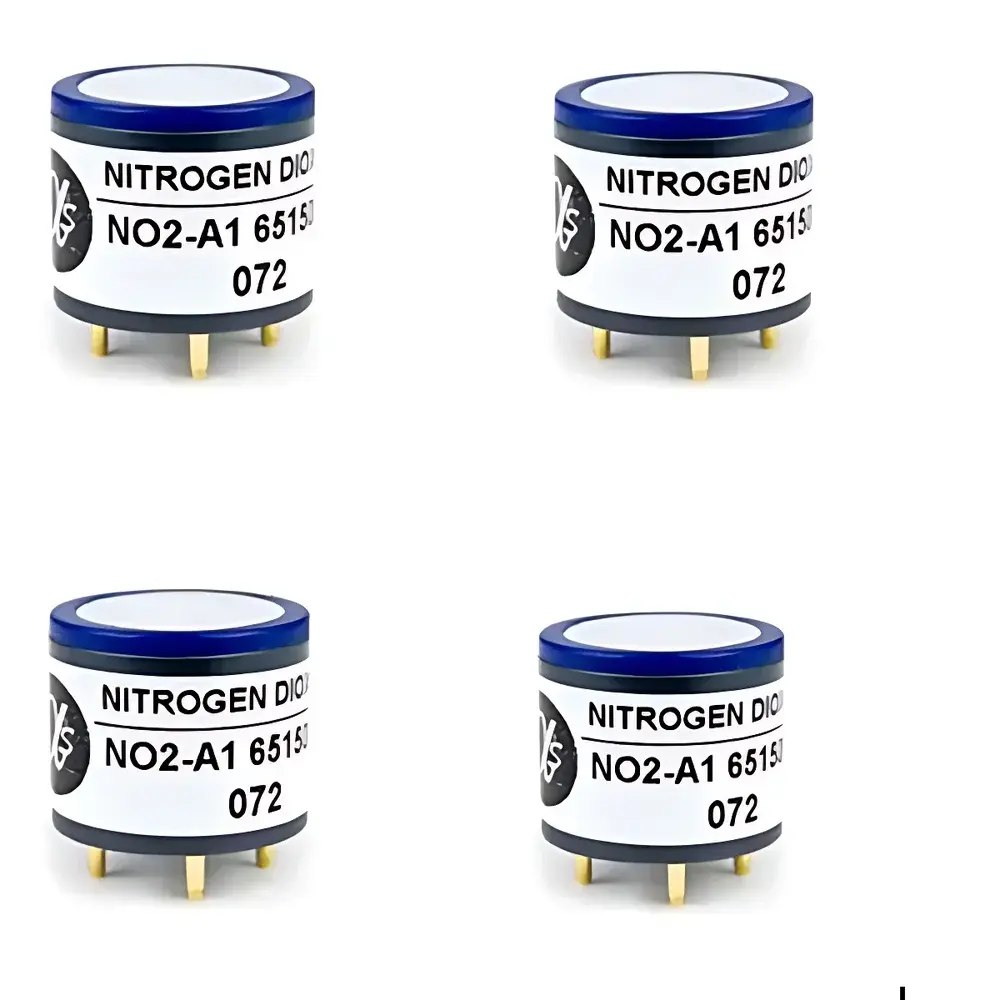
Alphasense NO2-A1 Electrochemical Nitrogen Dioxide Sensor (Portable)
| Brand | Alphasense (UK) |
|---|---|
| Origin | United Kingdom |
| Model | NO2-A1 |
| Measurement Range | 0–20 ppm |
| Sensitivity | −400 to −750 nA/ppm |
| Response Time (t₉₀) | <50 s |
| Linearity Error | <±1.5 ppm |
| Overload Capacity | 100 ppm |
| Resolution | 0.02 ppm |
| Dimensions | Ø20.2 × 16.5 mm |
| Operating Temperature | −20 to +50 °C |
| Operating Humidity | 15–90 %RH (non-condensing) |
| Load Resistance | 33 Ω |
| Expected Operational Life | 24 months |
| Storage Stability | 6 months (unpowered, sealed) |
Overview
The Alphasense NO2-A1 is a compact, high-stability electrochemical sensor engineered for selective and reliable detection of nitrogen dioxide (NO₂) in ambient air and industrial environments. Based on three-electrode amperometric technology, the sensor operates via diffusion-controlled oxidation of NO₂ at the working electrode, generating a current proportional to gas concentration. Its robust design eliminates the need for external filter membranes—reducing maintenance overhead while maintaining consistent sensitivity across variable particulate and humidity conditions. The NO2-A1 is optimized for integration into portable, battery-powered gas monitors, fixed-site controllers, and multi-gas detection platforms requiring trace-level NO₂ quantification with field-deployable ruggedness.
Key Features
- Filterless architecture: Eliminates clogging risk and extends calibration interval stability in dusty or high-humidity settings
- Two-year operational lifetime under typical environmental conditions (23 °C, 50 %RH), validated per IEC 60068-2 accelerated aging protocols
- Low-power consumption (<80 µA quiescent current), compatible with low-voltage (1.8–3.3 V) microcontroller interfaces
- High signal-to-noise ratio enabled by integrated reference and counter electrodes, minimizing drift from temperature fluctuations
- Hermetically sealed metal-can housing with integrated PTFE hydrophobic membrane for controlled gas diffusion and moisture exclusion
- Factory-calibrated with NIST-traceable NO₂ standards; supports two-point field calibration using certified span and zero gases
Sample Compatibility & Compliance
The NO2-A1 exhibits minimal cross-sensitivity to common interferents including CO (±2 % of reading), SO₂ (±5 % at ≤5 ppm), O₃ (±3 % at ≤1 ppm), and NO (±1 % at ≤10 ppm), as verified per EN 45544-2:2018 test methodology. It complies with CE marking requirements under the EU ATEX Directive 2014/34/EU for use in non-explosive atmospheres (Category 3 equipment). While not intrinsically safe for Zone 0/1, it is suitable for Zone 2 and general-purpose industrial monitoring. The sensor meets RoHS 2011/65/EU and REACH SVHC criteria, and its performance data aligns with ISO 16000-25:2016 for indoor air quality (IAQ) sensor validation.
Software & Data Management
When interfaced with Alphasense’s ASC-1 evaluation board or third-party ADC modules (e.g., ADS1256, MAX11270), the NO2-A1 outputs analog current signals that are digitized and linearized using built-in temperature-compensated algorithms. Firmware libraries (C/C++ and Python) are provided for Arduino, Raspberry Pi, and STM32 platforms, supporting real-time offset correction, baseline drift compensation, and auto-zero routines. Raw output data can be logged with timestamped metadata compliant with ISO/IEC 17025 audit trails. For regulatory deployments, the sensor supports GLP-compliant data integrity when paired with systems implementing FDA 21 CFR Part 11–compliant electronic signatures and audit logging.
Applications
- Personal exposure monitoring for occupational health compliance (OSHA PEL: 5 ppm TWA; NIOSH REL: 1 ppm STEL)
- Urban and roadside NO₂ mapping using drone-mounted or bicycle-based sensor networks
- Indoor air quality (IAQ) assessment in schools, hospitals, and office buildings per WHO Air Quality Guidelines (AQG) 2021
- Stack emission verification in low-temperature combustion processes (e.g., diesel generators, biomass heaters)
- Calibration transfer standard in laboratory reference gas systems for secondary sensor validation
- Integration into smart city environmental nodes compliant with EU CEN/TS 16614-1:2015 for ambient air monitoring networks
FAQ
What is the recommended operating temperature range for stable NO₂ measurement?
The sensor delivers specified performance between −20 °C and +50 °C. Below −10 °C, response time increases by ~15 % per 10 °C decrement; above +40 °C, zero-current drift may exceed ±0.1 ppm/°C without active thermal compensation.
Can the NO2-A1 be used in high-humidity environments without condensation?
Yes—the integrated hydrophobic PTFE membrane permits operation up to 90 %RH non-condensing. Condensation must be avoided, as liquid water ingress permanently degrades the electrolyte and electrode interface.
Is factory calibration traceable to national standards?
Yes—each batch undergoes calibration against UKAS-accredited NO₂ permeation tubes (NPL traceable), with individual calibration certificates available upon request.
How often should field recalibration be performed?
Under stable environmental conditions and moderate exposure (<5 ppm average), biannual zero-and-span calibration is recommended; in high-pollution or variable-temperature deployments, quarterly calibration is advised per ISO 14644-1 guidance.
Does the sensor require a warm-up period before accurate readings?
A 30-minute stabilization period is recommended after power-on to ensure electrolyte equilibration and thermal homogeneity across internal electrodes.