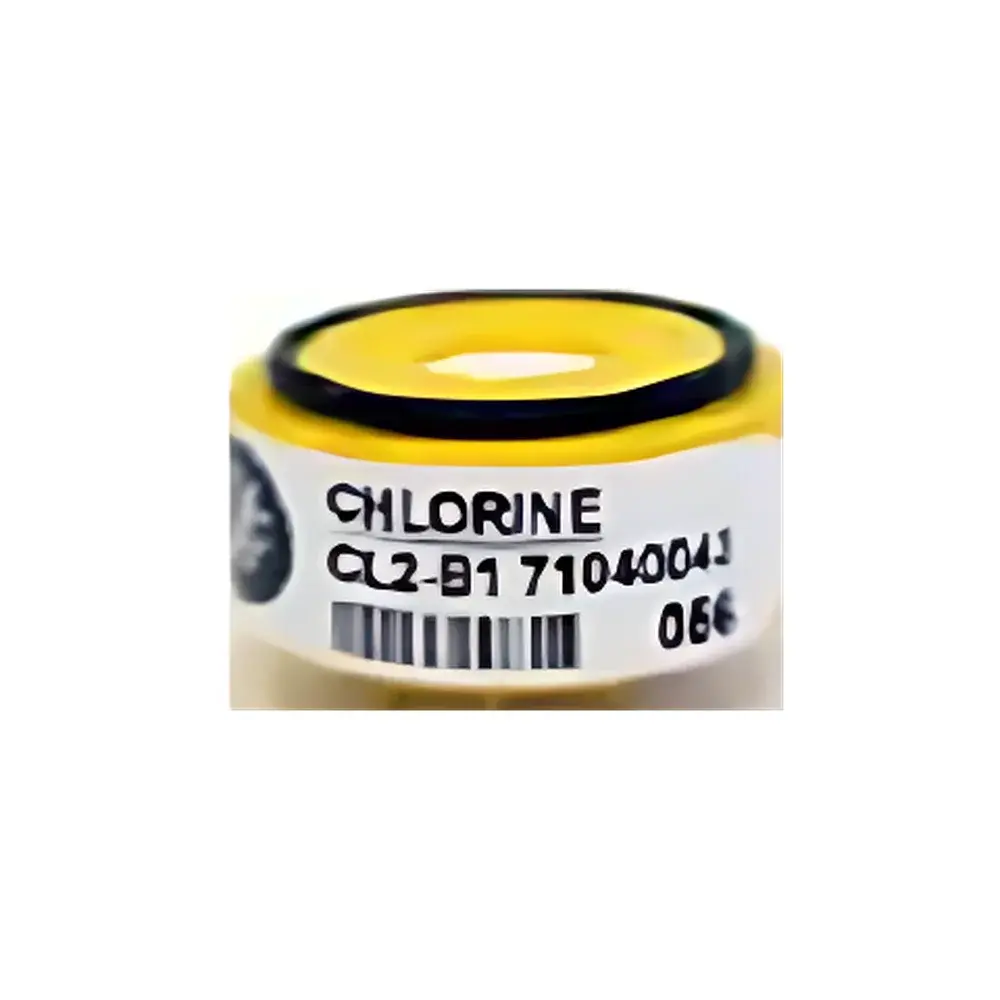
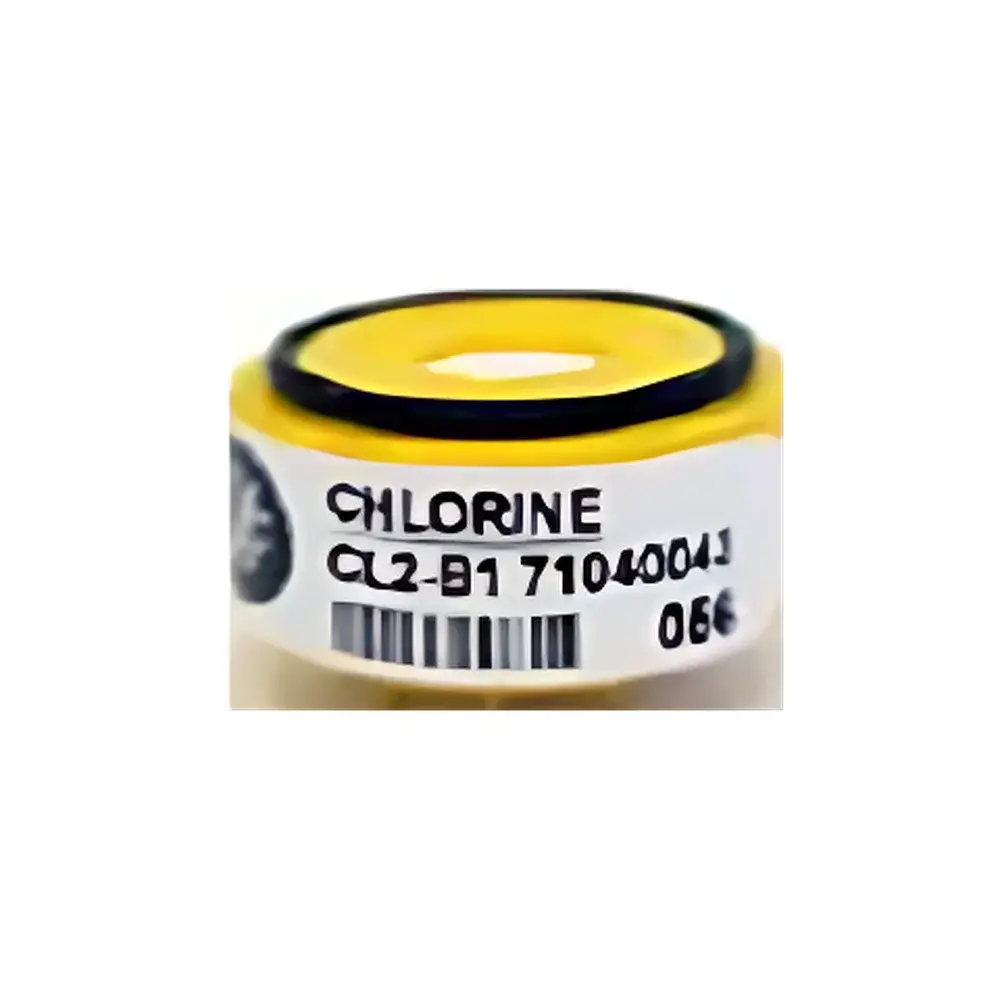
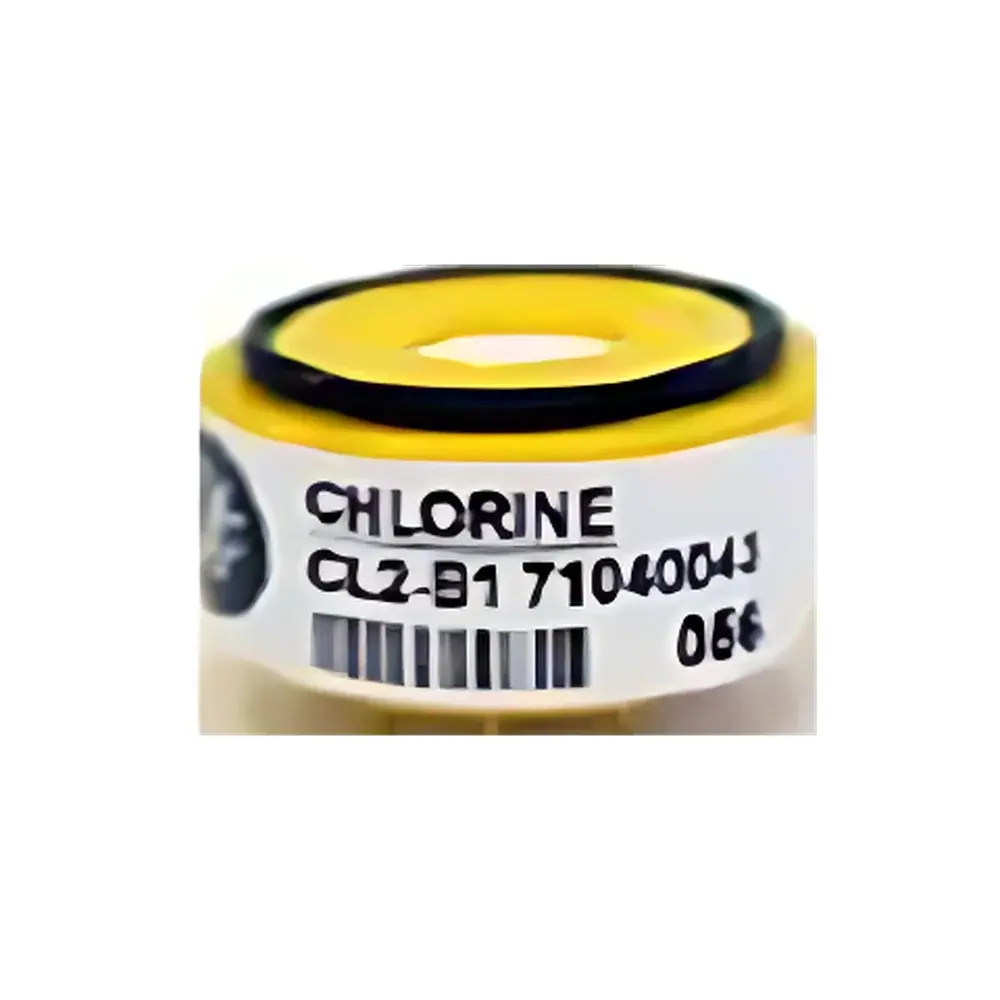
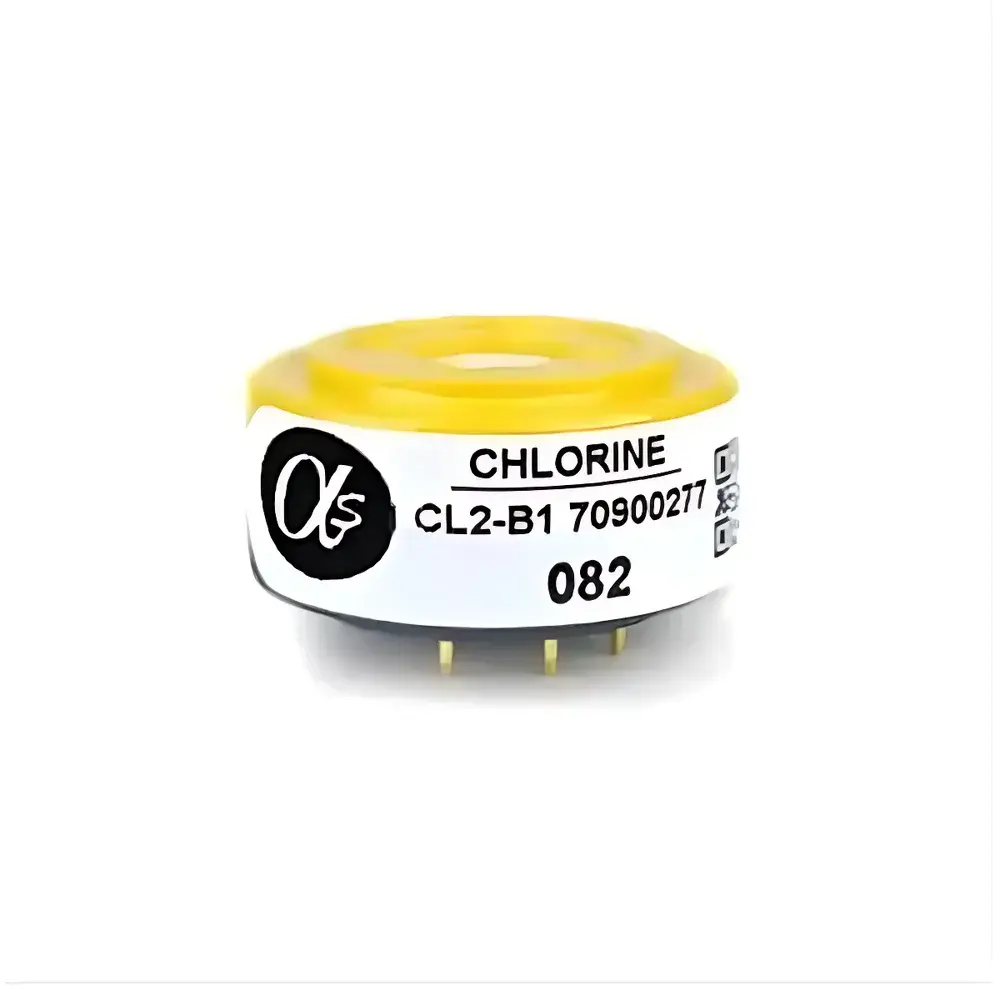
Alphasense CL2-B1 Fixed Electrochemical Chlorine Gas Sensor
| Brand | Alphasense |
|---|---|
| Origin | United Kingdom |
| Model | CL2-B1 |
| Sensitivity | −600 to −1150 nA/ppm |
| Response Time (t₉₀) | <60 s |
| Linear Range | 0–20 ppm |
| Overload Capacity | 60 ppm |
| Resolution | <0.02 ppm |
| Dimensions | Ø32.3 × 16.5 mm |
| Operating Temperature | −20 to +50 °C |
| Operating Humidity | 15–90 %RH (non-condensing) |
| Load Resistance | 33 Ω |
| Expected Service Life | 24 months |
| Storage Shelf Life | 6 months |
Overview
The Alphasense CL2-B1 is a fixed electrochemical chlorine (Cl₂) gas sensor engineered for continuous, reliable detection in industrial and environmental monitoring applications. Based on three-electrode amperometric electrochemistry, the CL2-B1 generates a current proportional to the partial pressure of gaseous chlorine diffusing through a selective hydrophobic membrane into the electrolyte-filled sensing cell. This principle ensures high selectivity against common interferents—including ozone, nitrogen dioxide, and hydrogen sulfide—while maintaining stable baseline output and low zero drift under varying ambient conditions. Designed for integration into fixed gas detection systems, the CL2-B1 operates without external power supply to the sensing element itself (passive operation), drawing only minimal current from the host controller during signal readout. Its compact cylindrical form factor (Ø32.3 × 16.5 mm) enables seamless mounting in OEM analyzers, wall-mounted controllers, or distributed I/O modules compliant with IP54 or higher enclosures.
Key Features
- Three-electrode electrochemical architecture for enhanced stability, reduced poisoning susceptibility, and improved long-term baseline reproducibility
- Factory-calibrated sensitivity range of −600 to −1150 nA/ppm Cl₂, enabling system-level gain optimization across diverse measurement ranges
- Fast t₉₀ response time of less than 60 seconds—critical for early warning in leak detection and process safety interlocks
- Linear measurement range up to 20 ppm with overload tolerance to 60 ppm, supporting both occupational exposure limit (OEL) monitoring and emergency threshold detection
- Resolution better than 0.02 ppm—sufficient for compliance with OSHA PEL (0.5 ppm TWA) and ACGIH TLV (0.1 ppm STEL) requirements
- Robust operating envelope: functional across −20 °C to +50 °C and 15–90 %RH (non-condensing), validated per IEC 60068-2 environmental test standards
- 24-month nominal service life under typical continuous operation; 6-month shelf life when stored at 20 °C in original sealed packaging
Sample Compatibility & Compliance
The CL2-B1 is intended for use in ambient air sampling environments where chlorine gas concentrations fall within its specified linear range. It is not suitable for direct immersion, high-particulate airstreams, or corrosive carrier gases containing >10 ppm HCl or SO₂ without upstream filtration. The sensor complies with RoHS Directive 2011/65/EU and REACH Regulation (EC) No. 1907/2006. While the sensor itself does not carry CE marking, it is designed to support final equipment compliance with EN 45544-1 (electrochemical gas detectors) and EN 61000-6-2/-6-3 (EMC immunity/emission). When integrated into certified gas detection systems, it contributes to adherence with OSHA 1910.120, ISO 10156, and IEC 61508 SIL 2 functional safety requirements for toxic gas monitoring loops.
Software & Data Management
The CL2-B1 outputs a raw analog current signal (typically 0–20 mA or 4–20 mA via external transimpedance amplifier) compatible with standard PLCs, DCS I/O modules, and dedicated gas controller platforms. Alphasense provides comprehensive technical documentation—including cross-sensitivity matrices, temperature compensation coefficients, and aging rate data—for integration into calibration management software compliant with ISO/IEC 17025 and FDA 21 CFR Part 11. Optional digital interface variants (e.g., UART-enabled versions) support Modbus RTU or ASCII protocols for traceable calibration logging, real-time diagnostics (e.g., electrode impedance monitoring), and automated drift correction algorithms. All firmware and configuration tools are validated under GLP/GMP-aligned development practices.
Applications
- Continuous chlorine monitoring in municipal and industrial wastewater treatment plants—particularly at chlorination contact tanks, dosing stations, and dechlorination units
- Leak detection and area monitoring in chemical manufacturing facilities handling chlorine gas cylinders, liquid Cl₂ storage, or sodium hypochlorite generation systems
- Process safety instrumentation for chlorine-based disinfection in pharmaceutical water systems (PW/WFI), aligned with USP and EU GMP Annex 1
- Fixed-point ambient air quality monitoring near industrial perimeters or transport corridors where chlorine transport risk exists
- OEM integration into portable multi-gas detectors, fixed-area monitors, and smart building HVAC safety subsystems
FAQ
What is the recommended calibration frequency for the CL2-B1 in continuous operation?
For critical safety applications, Alphasense recommends bump testing before each shift and full span calibration every 3–6 months, depending on exposure history and regulatory requirements (e.g., OSHA 1910.120(q)(3)(ii)).
Can the CL2-B1 be used in oxygen-deficient environments?
Yes—the sensor contains an internal auxiliary electrode that maintains stable reference potential even at O₂ concentrations as low as 5 %v/v; however, readings below 10 %v/v O₂ should be validated per application-specific risk assessment.
Is temperature compensation required for accurate measurements?
Yes—Alphasense supplies factory-characterized temperature coefficients (±0.15 %/°C typical sensitivity drift); host system firmware must apply linear or polynomial compensation using onboard thermistor input.
Does the CL2-B1 require periodic electrolyte replenishment?
No—it is a sealed, maintenance-free electrochemical cell with immobilized aqueous electrolyte; no user-serviceable parts exist.
How does humidity affect CL2-B1 performance?
Operation between 15–90 %RH is supported; prolonged exposure above 90 %RH may cause condensation ingress and irreversible signal drift—use of hydrophobic particulate filters and thermal management is advised in high-humidity installations.