
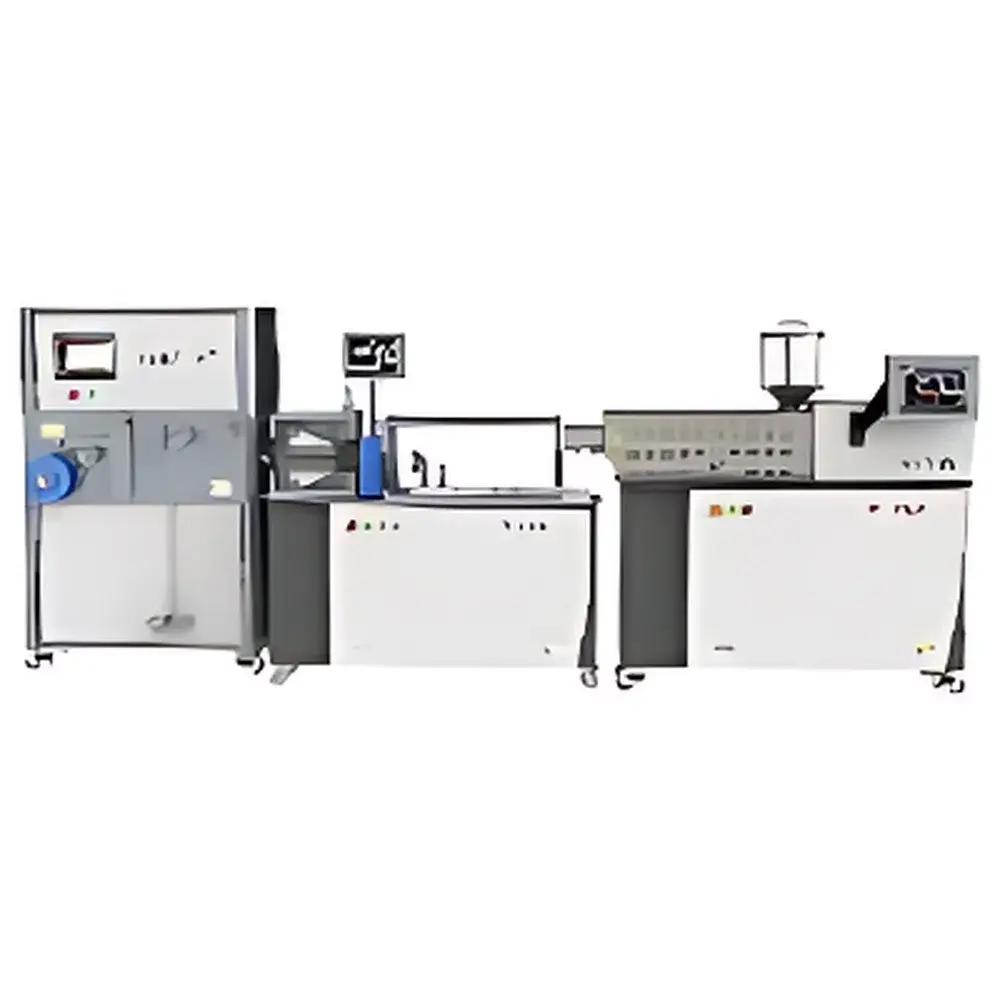
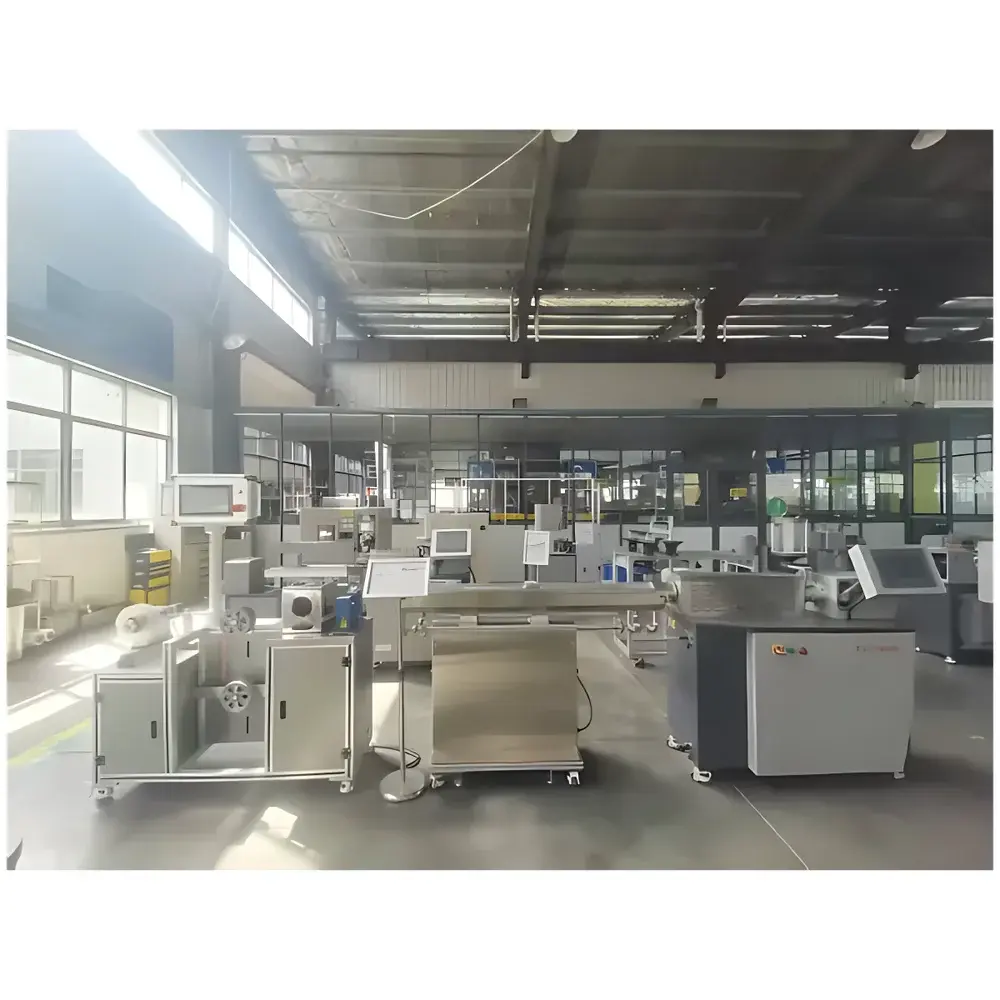
Lishumei TY-7008DP Laboratory-Scale Twin-Screw Extruder for 3D Printing Filament Production
| Brand | Lishumei |
|---|---|
| Origin | Jiangsu, China |
| Manufacturer Type | Authorized Distributor |
| Country of Origin | China |
| Model | TY-7008DP |
| Price Range | USD 24,000 – 36,000 (FOB China) |
| Screw Diameter | 25 mm |
| Overall Dimensions | 600 × 4800 mm |
| L/D Ratio | 32:1 |
| Drive Type | Servo Motor (Direct Drive) |
| Main Motor Power | 1.5 kW |
| Gearbox Reduction Ratio | 15:1 |
| Screw Speed Range | 1–150 rpm |
| Heating Zones | 4 |
| Total Heater Power | 5 kW |
| Temperature Range | Ambient to 380 °C |
| Temperature Control Accuracy | ±0.5 °C |
| Pressure Measurement Range | 0.1–100 MPa |
| Compression Ratio | 2.5:1 |
| Cooling Method | KAKU Ball-Bearing Insert Fan Assembly |
Overview
The Lishumei TY-7008DP is a precision-engineered, laboratory-scale twin-screw extruder specifically designed for R&D and pilot-scale production of thermoplastic filaments used in fused deposition modeling (FDM) 3D printing. It implements a modular, closed-loop control architecture integrating melt extrusion, inline diameter monitoring, and synchronized traction—enabling reproducible fabrication of standard filament diameters (φ1.75 mm and φ3.00 mm) with tight dimensional tolerances. The system operates on the principle of controlled polymer melt flow under defined thermal, shear, and pressure conditions; screw geometry (L/D = 32:1, compression ratio = 2.5:1) ensures homogeneous melting, devolatilization, and dispersion—critical for eliminating voids, minimizing diameter variation, and achieving ASTM D999-compliant filament roundness and surface finish. Its maximum operating temperature of 380 °C supports high-performance engineering resins including PEEK, PEI, and high-temperature nylons, while its ±0.5 °C zone-wise temperature stability meets ISO 1133-1 requirements for melt flow index consistency during process development.
Key Features
- Four-zone independent heating system with total 5 kW capacity and PID-controlled thermal regulation (ambient to 380 °C), ensuring precise thermal profiling across the barrel length
- High-resolution pressure transducer (0.1–100 MPa range) mounted at die exit for real-time melt pressure feedback—essential for detecting resin degradation, filter clogging, or feed inconsistency
- Optical laser micrometer-based diameter measurement unit providing continuous, non-contact monitoring with sub-micron resolution; integrated into closed-loop traction speed control
- Servo-driven direct-coupled main drive delivering 1–150 rpm screw rotation with <0.2% speed repeatability—critical for shear-sensitive polymers and multi-material co-extrusion trials
- KAKU ball-bearing insert cooling fans for rapid, uniform barrel cooling between zones—minimizing thermal lag and enabling fast material changeover
- Industrial-grade 7-inch HMI touchscreen interface supporting data logging (temperature, pressure, RPM, traction speed), recipe storage, and alarm history with timestamped event capture
Sample Compatibility & Compliance
The TY-7008DP accommodates a broad spectrum of thermoplastic feedstocks—including PLA, ABS, PETG, TPU, PC, PA6/66, POM, and high-performance semi-crystalline and amorphous polymers—provided they exhibit melt-processability within the 180–380 °C window. Its design conforms to CE machinery safety directives (2006/42/EC) and incorporates grounding, emergency stop circuitry, and overtemperature cut-off per IEC 60204-1. For regulated environments, the HMI supports audit trail configuration and user-level access control—aligning with GLP documentation practices and FDA 21 CFR Part 11 principles when paired with validated data export protocols. All mechanical interfaces comply with ISO 2768-mK general tolerances for machined components.
Software & Data Management
The embedded control firmware records all operational parameters at 100 ms intervals and stores them in CSV format on internal SD card or via USB export. No proprietary software installation is required: raw logs are compatible with MATLAB, Python (pandas), or JMP for statistical process control (SPC) analysis—including Cp/Cpk calculation for filament diameter deviation. Optional Ethernet module enables Modbus TCP integration into existing MES or SCADA platforms for centralized monitoring. Calibration certificates for temperature sensors and pressure transducers are provided with each unit, traceable to NIM (National Institute of Metrology, China) standards.
Applications
- Formulation screening of novel filament blends (e.g., carbon fiber–reinforced PLA, conductive TPU composites)
- Process parameter mapping for DOE studies targeting tensile strength, layer adhesion, and warpage reduction
- Validation of drying protocols and moisture sensitivity thresholds prior to full-scale production
- Development of medical-grade filaments compliant with ISO 10993 biocompatibility testing prerequisites
- Teaching laboratories for polymer processing fundamentals: residence time distribution, melt fracture onset, and viscosity–shear rate relationships
FAQ
What materials can be processed on the TY-7008DP?
Thermoplastics with melt temperatures ≤380 °C—including commodity, engineering, and high-performance grades—as long as they are supplied in pellet or granule form with consistent bulk density.
Is the system suitable for abrasive fillers such as glass fiber or metal powders?
Yes; optional hardened alloy screw barrels (HRC ≥58) and nitrided screws are available for extended service life with filled compounds.
Can the extruder be integrated with downstream spooling or winding systems?
The traction unit features analog 0–10 V and pulse output interfaces compatible with third-party servo winders and tension controllers.
Does the system support vacuum venting for moisture or volatiles removal?
A dedicated vent port is located at the third heating zone; vacuum connection (KF25 flange) and optional condensate trap are available as add-ons.
What maintenance intervals are recommended for optimal performance?
Screw/barrel alignment verification every 500 operational hours; gearbox oil replacement every 2,000 hours; thermocouple calibration annually or per ISO/IEC 17025 internal QA schedule.





