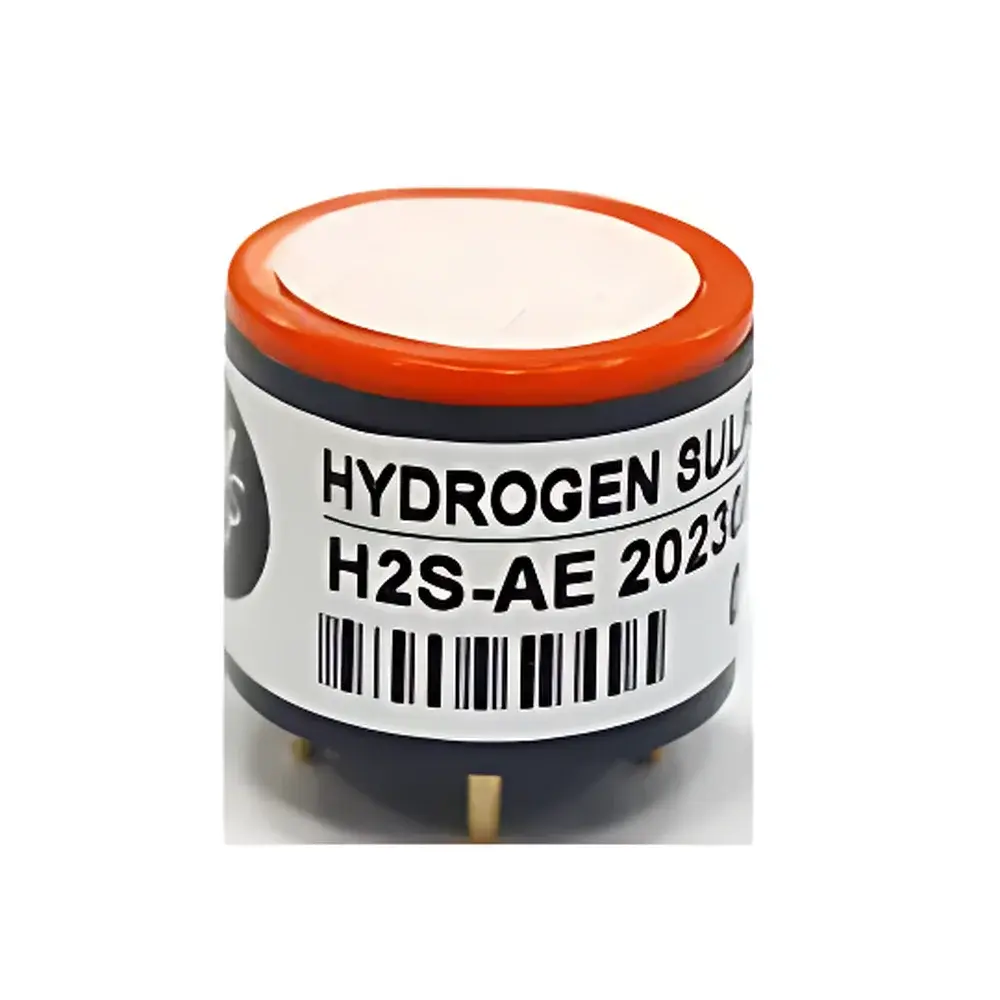
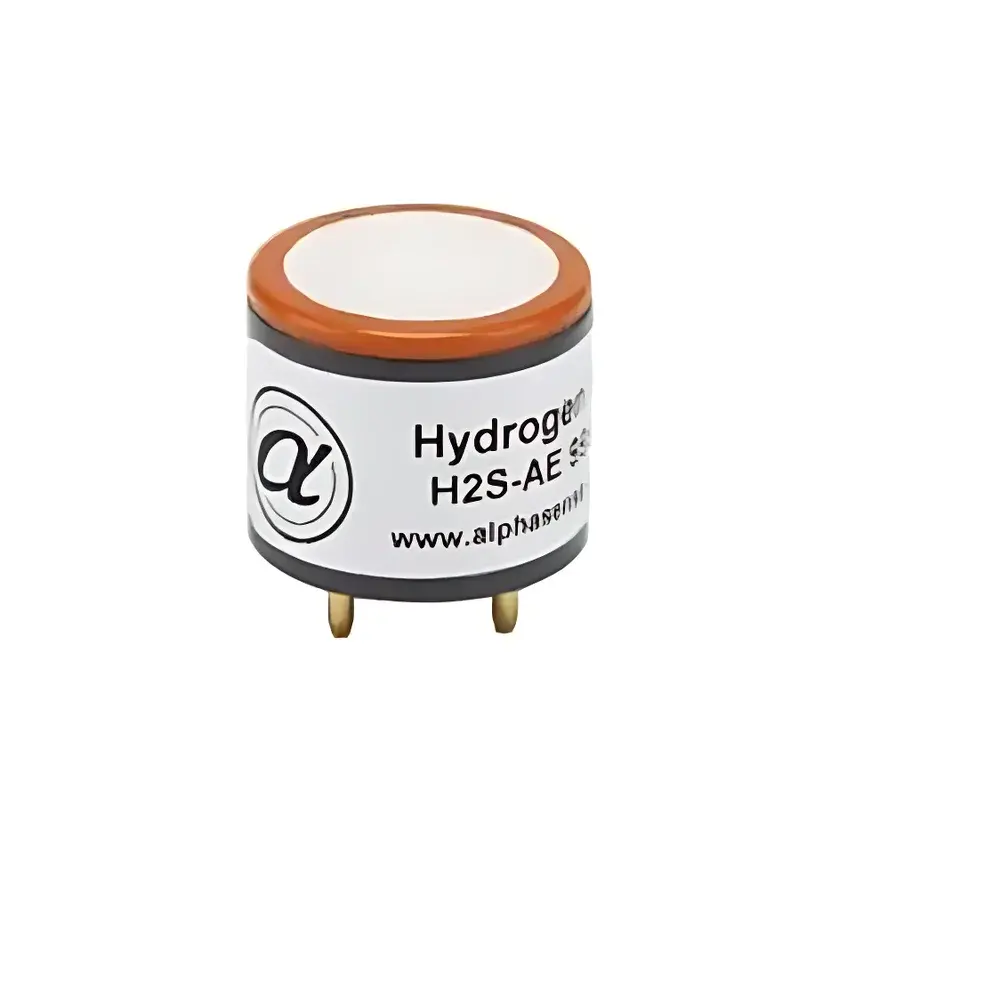
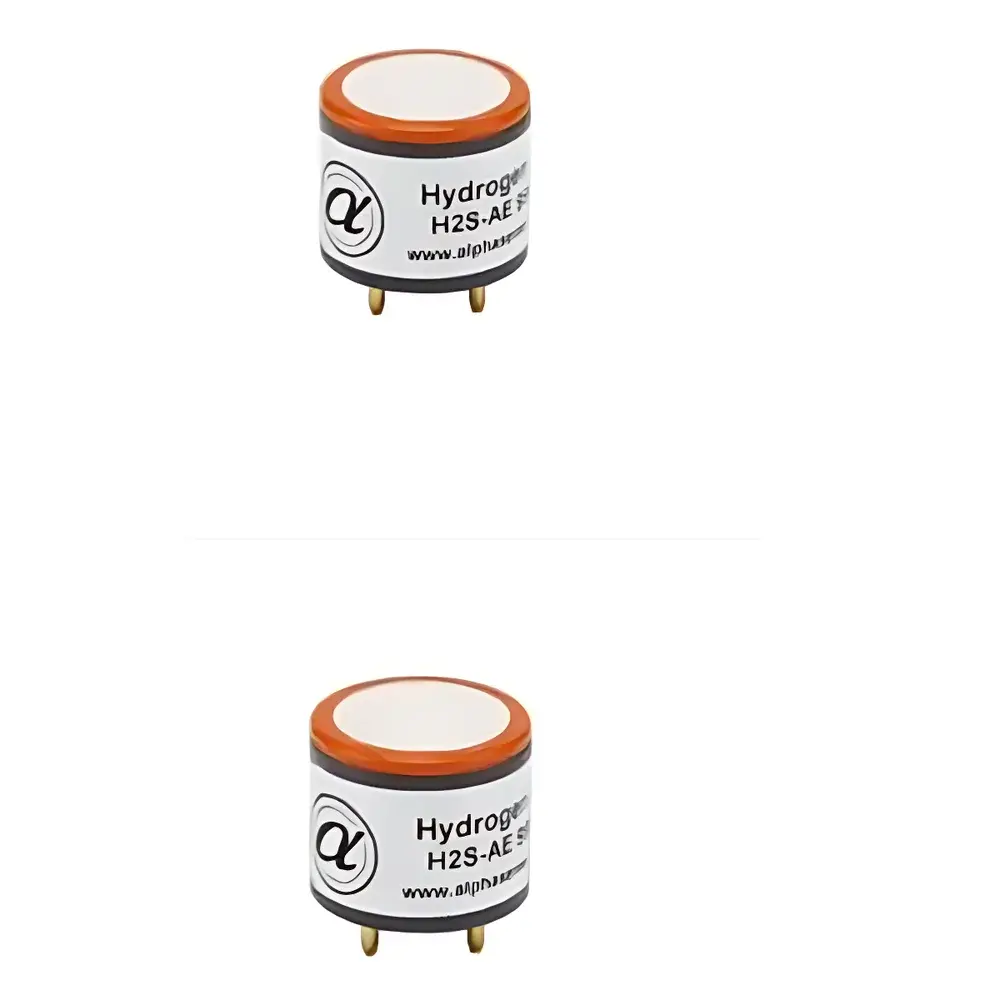
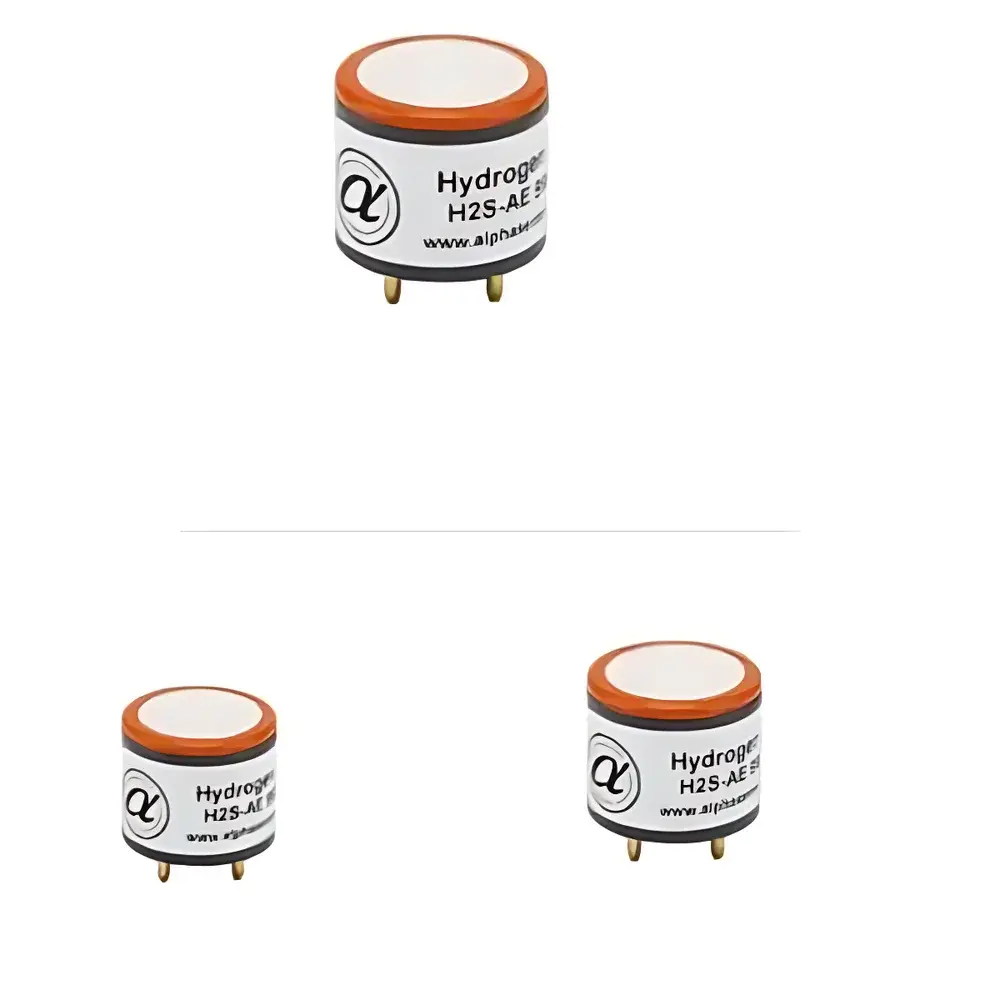
Alphasense H2S-AE Electrochemical Hydrogen Sulfide Gas Sensor
| Brand | Alphasense |
|---|---|
| Origin | United Kingdom |
| Model | H2S-AE |
| Measurement Range | 0–2000 ppm |
| Sensitivity | 65–125 nA/ppm |
| Response Time (t₉₀) | <25 s |
| Linear Range | 0–400 ppm |
| Linearity Error | ±0–40 ppm |
| Overload Capacity | 10,000 ppm |
| Resolution | <0.5 ppm |
| Dimensions | Ø20.2 × 16.5 mm |
| Operating Temperature | −30 to +50 °C |
| Operating Humidity | 15–90 %RH (non-condensing) |
| Load Resistance | 10–47 Ω |
| Expected Service Life | 24 months |
| Storage Shelf Life | 6 months |
Overview
The Alphasense H2S-AE is a precision-engineered electrochemical gas sensor designed for the selective and stable detection of hydrogen sulfide (H₂S) in ambient air and industrial process streams. Based on a three-electrode amperometric cell architecture, the sensor operates via controlled electrochemical oxidation of H₂S at the working electrode, generating a current proportional to gas concentration. This principle ensures high specificity to H₂S with minimal cross-sensitivity to common interferents such as CO, NO₂, SO₂, and H₂—critical for reliable operation in complex environments including wastewater treatment plants, biogas facilities, oil & gas refineries, and confined-space safety monitoring systems. The H2S-AE is optimized for continuous, low-power deployment in fixed or portable instrumentation platforms where long-term baseline stability and repeatable calibration performance are required under variable temperature and humidity conditions.
Key Features
- Three-electrode electrochemical cell design for enhanced signal stability and reduced zero drift
- No integrated particulate filter—minimizes flow resistance and enables direct integration into compact sampling manifolds
- Extended operational lifetime of up to 24 months under typical environmental conditions (23 °C, 50 %RH)
- Fast response kinetics: t₉₀ < 25 seconds across the full 0–2000 ppm range
- High-resolution detection capability with inherent resolution < 0.5 ppm
- Robust mechanical construction: stainless-steel housing with PTFE membrane and gold-plated contacts
- Wide operating temperature range (−30 to +50 °C) and humidity tolerance (15–90 %RH, non-condensing)
- Compatible with standard 10–47 Ω load resistors for analog voltage output interfacing
Sample Compatibility & Compliance
The H2S-AE is validated for use in ambient air, indoor air quality (IAQ) monitoring, and low-flow industrial sample streams. It exhibits negligible interference from CO (≤1 % signal equivalent), NO₂ (≤3 %), SO₂ (≤2 %), and H₂ (≤1 %) within their respective typical concentration ranges. The sensor complies with IEC 60079-29-1:2016 for flammable gas detection system components and meets the essential requirements of the EU ATEX Directive 2014/34/EU when integrated into certified host equipment. While not intrinsically safe as a standalone component, it is routinely deployed in Zone 1 and Zone 2 hazardous area applications when housed in appropriately rated enclosures. Calibration traceability follows NIST-traceable standards, and sensor performance data support compliance with OSHA PEL (10 ppm TWA), NIOSH REL (10 ppm ceiling), and EU OELV (5 ppm 8-hr TWA) occupational exposure limits.
Software & Data Management
The H2S-AE outputs a linear analog current signal (nA), enabling seamless integration with industry-standard gas detection controllers, PLCs, and data acquisition systems. When paired with Alphasense’s recommended evaluation boards (e.g., B4C or B4D interface modules), the sensor supports digital compensation for temperature and humidity using onboard thermistor and RH sensor inputs. Firmware-level linearization algorithms correct for nonlinearity beyond 400 ppm, maintaining accuracy across the full 0–2000 ppm span. Raw sensor data logs can be archived in CSV format with timestamped metadata, supporting audit-ready records compliant with GLP and ISO/IEC 17025 documentation requirements. Optional firmware upgrades enable configurable alarm thresholds and diagnostic self-test routines aligned with SIL-2 functional safety principles.
Applications
- Fixed-site H₂S monitoring in municipal wastewater lift stations and sludge digestion units
- Portable personal safety monitors for upstream oilfield personnel and pipeline maintenance crews
- Biogas composition analysis in anaerobic digesters and landfill gas recovery systems
- Real-time emission monitoring at sulfur recovery units (SRUs) and Claus plant tail-gas streams
- Indoor air quality verification in laboratories handling sulfide reagents or biological samples
- Calibration reference sensors in multi-gas analyzers used for environmental compliance reporting (e.g., EPA Method 20.1)
FAQ
What is the recommended calibration frequency for the H2S-AE sensor?
Calibration is advised every 3–6 months under continuous operation, or prior to each critical measurement campaign. Span calibration using certified 50 ppm or 100 ppm H₂S standard gas is preferred over zero-air-only adjustment.
Can the H2S-AE be exposed to high humidity or condensation?
Operation is permitted at up to 90 %RH non-condensing; prolonged exposure to condensate will degrade the electrolyte and accelerate end-of-life failure.
Does the sensor require external temperature compensation?
Yes—optimal accuracy requires real-time temperature input (via integrated thermistor or external probe) for firmware-based compensation, especially below 0 °C or above 40 °C.
Is the H2S-AE compatible with PID or MOS-based instrument platforms?
No—it is strictly an electrochemical transducer and must be interfaced via current-to-voltage conversion circuits designed for low-noise nA-level signal conditioning.
What is the shelf life before first use?
Unopened sensors retain full performance for up to 6 months when stored at 20–25 °C and <60 %RH in original packaging.