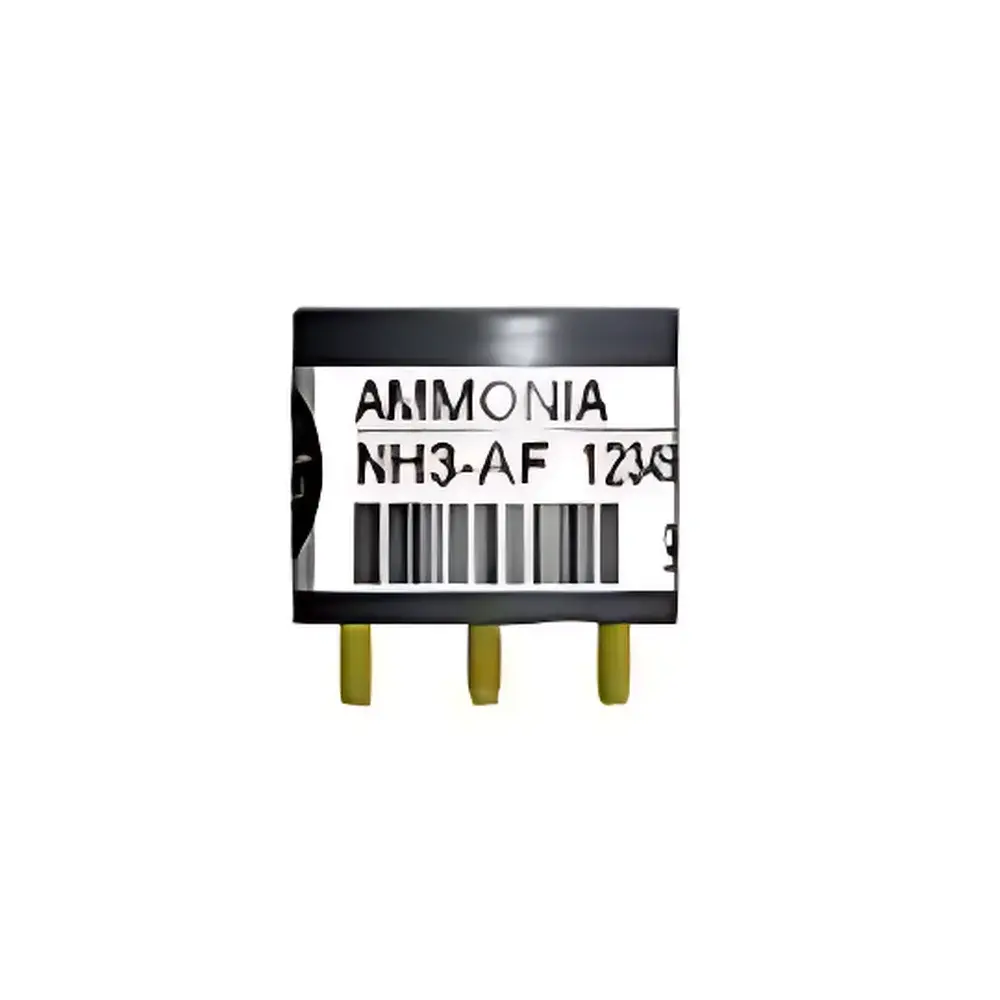
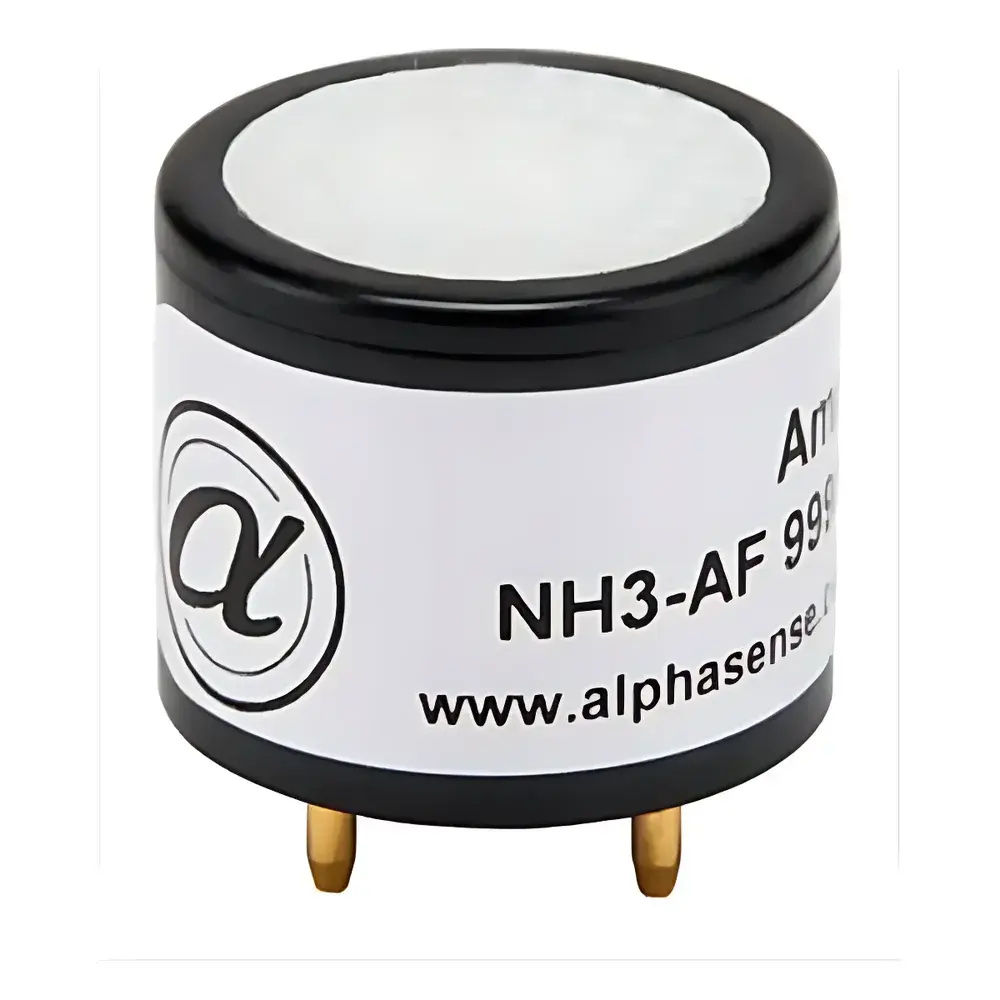
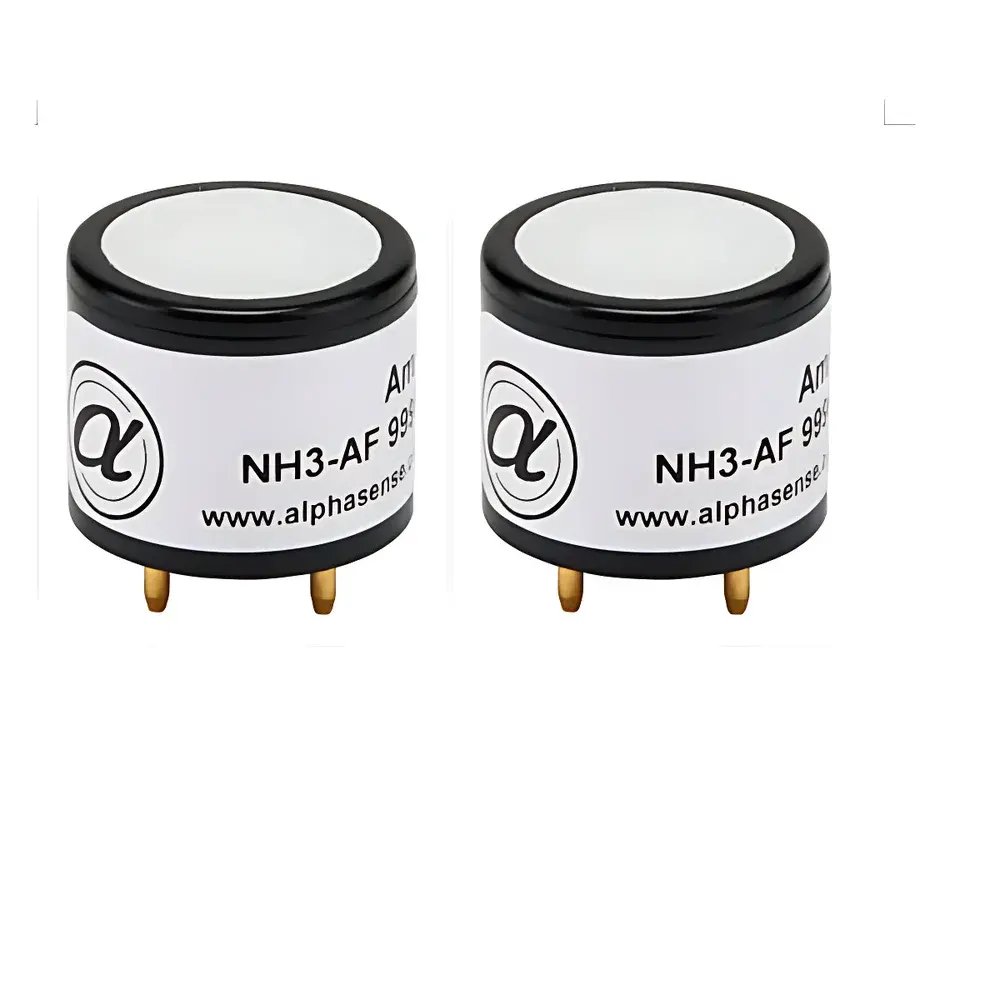
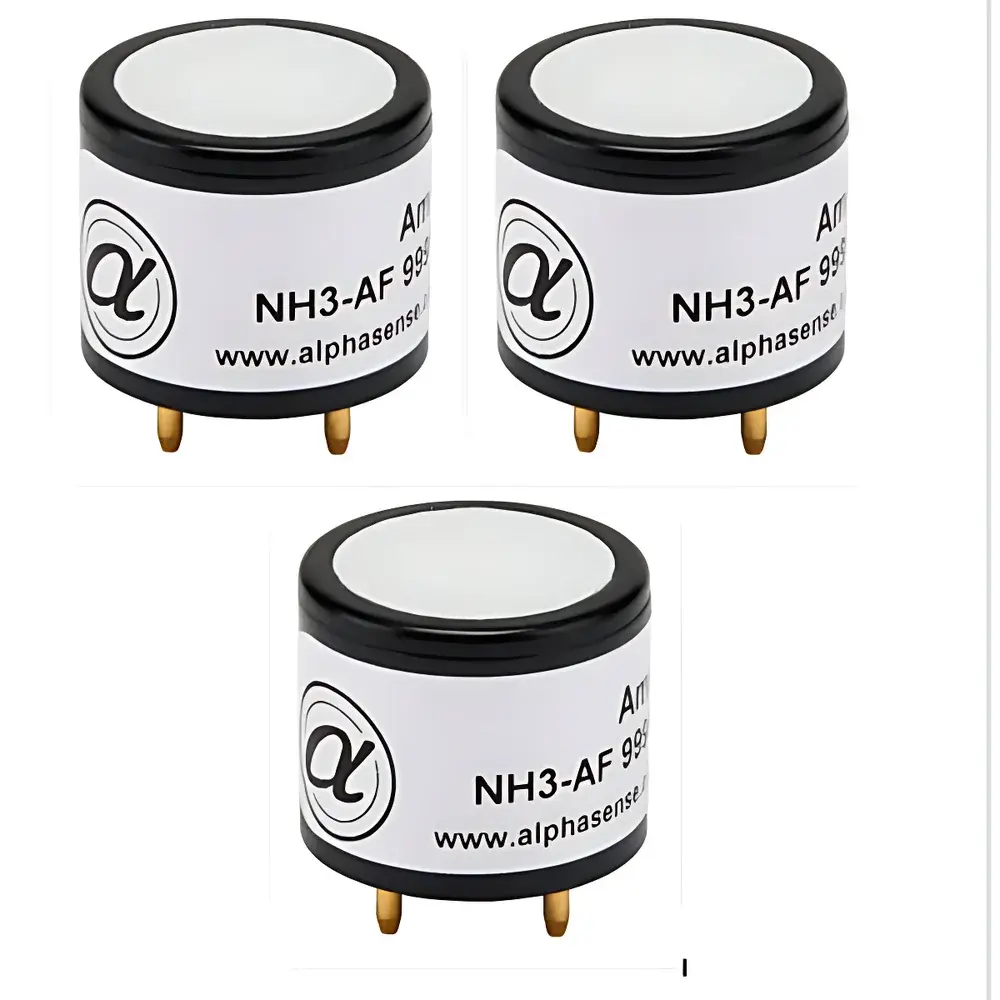
Alphasense NH3-AF Ammonia Electrochemical Gas Sensor
| Brand | Alphasense (UK) |
|---|---|
| Origin | United Kingdom |
| Model | NH3-AF |
| Overload | 200 ppm |
| Response Time (T90) | <60 s |
| Dimensions | Ø20.2 × 16.5 mm |
| Detection Range | 0–100 ppm NH₃ |
| Sensitivity | 20–40 nA/ppm |
| Operating Temperature | −20 to +50 °C |
| Operating Humidity | 15–90 % RH (non-condensing) |
| Zero Current | <±20 nA |
| Load Resistance | 10 Ω |
| Expected Lifetime | >24 months (in air) |
| Storage Life | 6 months (refrigerated, unopened) |
Overview
The Alphasense NH3-AF is a high-stability, three-electrode electrochemical gas sensor engineered for selective and reliable detection of ammonia (NH₃) in ambient air and industrial process environments. Based on amperometric measurement principles, the sensor operates via diffusion-controlled oxidation of NH₃ at the working electrode, generating a current proportional to gas concentration. Its robust Teflon membrane and proprietary electrolyte formulation ensure consistent performance across variable humidity and temperature conditions—critical for continuous monitoring applications where drift minimization and long-term baseline stability are essential. Designed and manufactured in the UK under ISO 9001-certified production controls, the NH3-AF complies with international design standards for electrochemical sensors (IEC 60079-29-1, EN 45544-1), and is suitable for integration into fixed gas detection systems, portable analyzers, and environmental monitoring networks requiring CE-marked, RoHS-compliant components.
Key Features
- Three-electrode architecture with integrated reference and counter electrodes for enhanced signal stability and reduced zero drift
- Optimized hydrophobic membrane for consistent response across 15–90 % RH (non-condensing), eliminating condensation-induced signal artifacts
- Low-power operation compatible with battery-powered instruments (typical operating current <100 µA)
- Fast T90 response time of <60 seconds ensures timely detection of transient NH₃ releases in safety-critical zones
- Compact cylindrical form factor (Ø20.2 × 16.5 mm) enables seamless integration into space-constrained OEM modules
- Factory-calibrated with traceable NIST-traceable gas standards; optional pre-conditioning and baseline verification available
- Rated for continuous operation over 24 months in typical indoor/industrial environments (performance validated per Alphasense longevity testing protocol)
Sample Compatibility & Compliance
The NH3-AF exhibits high selectivity for NH₃ in the presence of common interferents including CO, NO₂, SO₂, H₂S, and VOCs—cross-sensitivity to Cl₂ and NO is present but quantified and documented in the manufacturer’s interference matrix. It is not recommended for use in atmospheres containing >10 ppm hydrogen or >50 ppm chlorine without supplemental filtration. The sensor meets EMC requirements per EN 61326-1 for laboratory and industrial measurement equipment, and its construction adheres to ATEX Directive 2014/34/EU Category 3G (for use in Zone 2 gas hazardous areas when installed within certified host equipment). All units are supplied with full Declaration of Conformity, RoHS compliance documentation, and batch-specific calibration reports.
Software & Data Management
While the NH3-AF is an analog-output sensor (current mode, typically interfaced via precision transimpedance amplifier), it is fully compatible with industry-standard gas sensor signal conditioning platforms—including Alphasense’s own B4 and B5 evaluation boards—and supports integration into data acquisition systems compliant with IEC 61511 (functional safety) and FDA 21 CFR Part 11 (when deployed in regulated pharmaceutical or food processing environments). When embedded in validated instrumentation, the sensor supports audit-trail-capable calibration logging, automatic zero/span verification cycles, and real-time temperature-compensated concentration output. Firmware-level linearization coefficients and temperature compensation parameters are provided in the Alphasense Sensor Configuration Database (SCD), enabling reproducible OEM firmware implementation.
Applications
- Fixed-site ammonia leak detection in refrigeration plants, fertilizer production facilities, and wastewater treatment centers
- OEM integration into portable multi-gas detectors for occupational health and safety (compliant with OSHA PEL and ACGIH TLV guidelines)
- Real-time emissions monitoring at agricultural confinement facilities (e.g., swine barns, poultry houses)
- Indoor air quality (IAQ) monitoring in laboratories, cleanrooms, and pharmaceutical manufacturing suites
- Process control feedback loops in chemical synthesis reactors where NH₃ is a reactant or byproduct
- Environmental research networks measuring atmospheric NH₃ fluxes using gradient or eddy-covariance methodologies
FAQ
What is the recommended operating temperature range for the NH3-AF?
The sensor is specified for continuous operation between −20 °C and +50 °C. Performance outside this range may result in reduced sensitivity or increased zero drift.
Does the NH3-AF require external temperature compensation?
Yes—while the sensor includes an integrated thermistor, accurate concentration output requires application-level compensation using the provided polynomial coefficients or lookup tables from the SCD.
Can the NH3-AF be used in high-humidity environments such as livestock barns?
Yes, provided relative humidity remains below 90 % RH and condensation is prevented. Use of a hydrophobic particulate filter (e.g., Alphasense PTFE filter cap) is strongly recommended in dusty or mist-laden settings.
Is the NH3-AF suitable for use in SIL2-certified safety systems?
When integrated into a certified host system with appropriate diagnostics (e.g., end-of-life detection, open-circuit monitoring), the NH3-AF supports SIL2 per IEC 61508, subject to full system-level validation.
How often should the sensor be calibrated in routine operation?
Field calibration is recommended every 3–6 months depending on exposure history; more frequent calibration is advised in high-concentration or corrosive environments. Zero checks should be performed weekly where regulatory or QA protocols apply.