
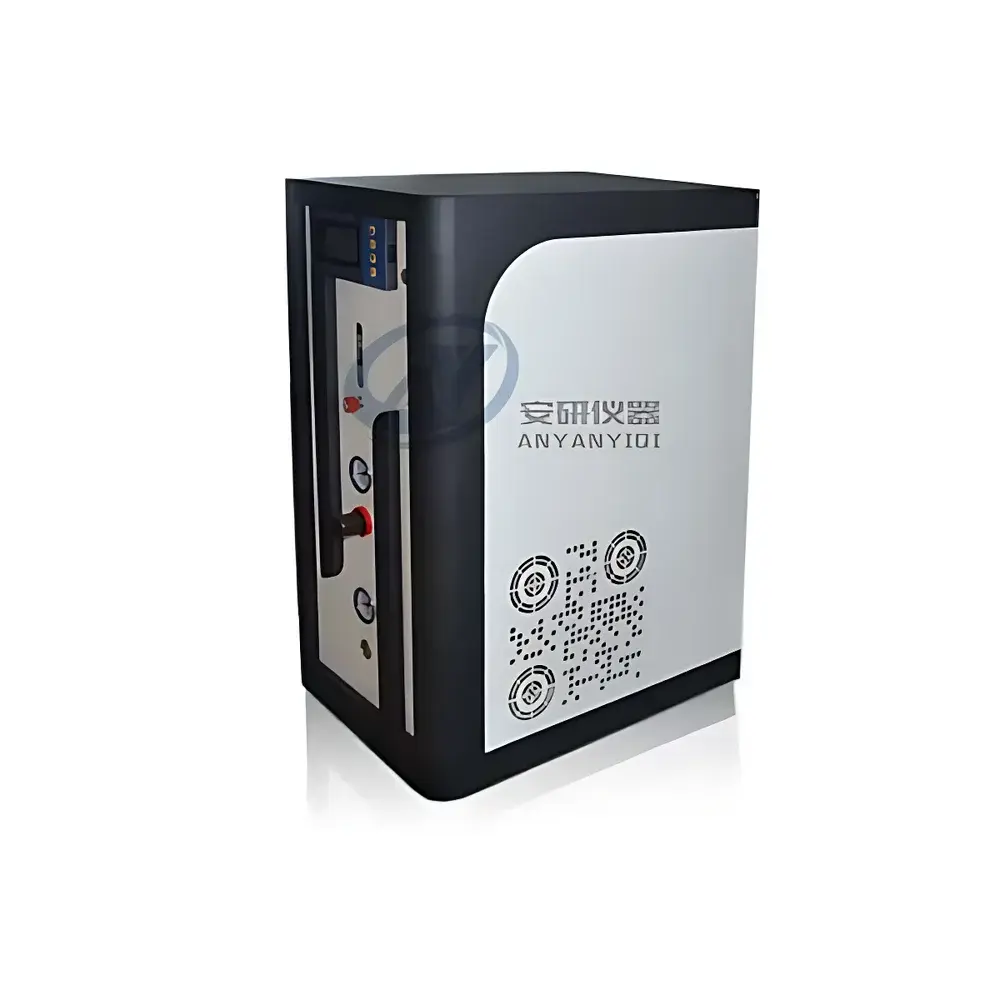
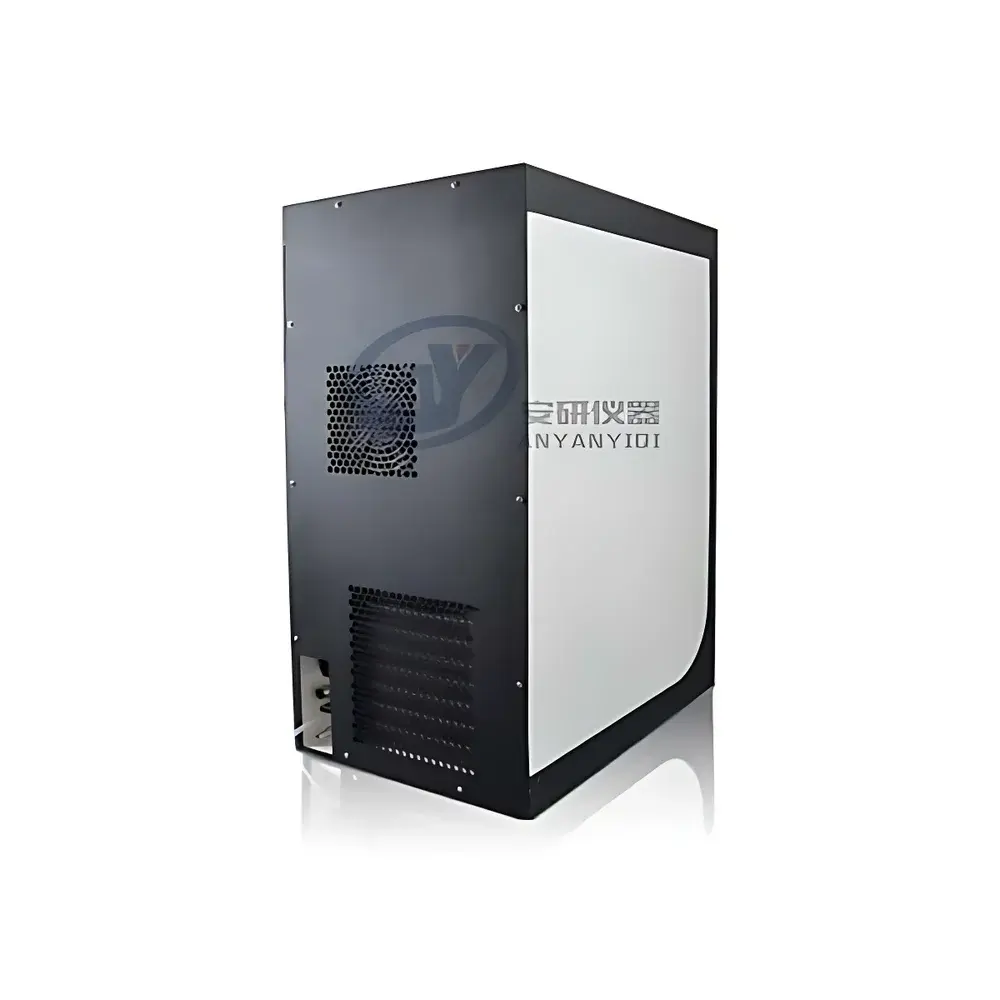
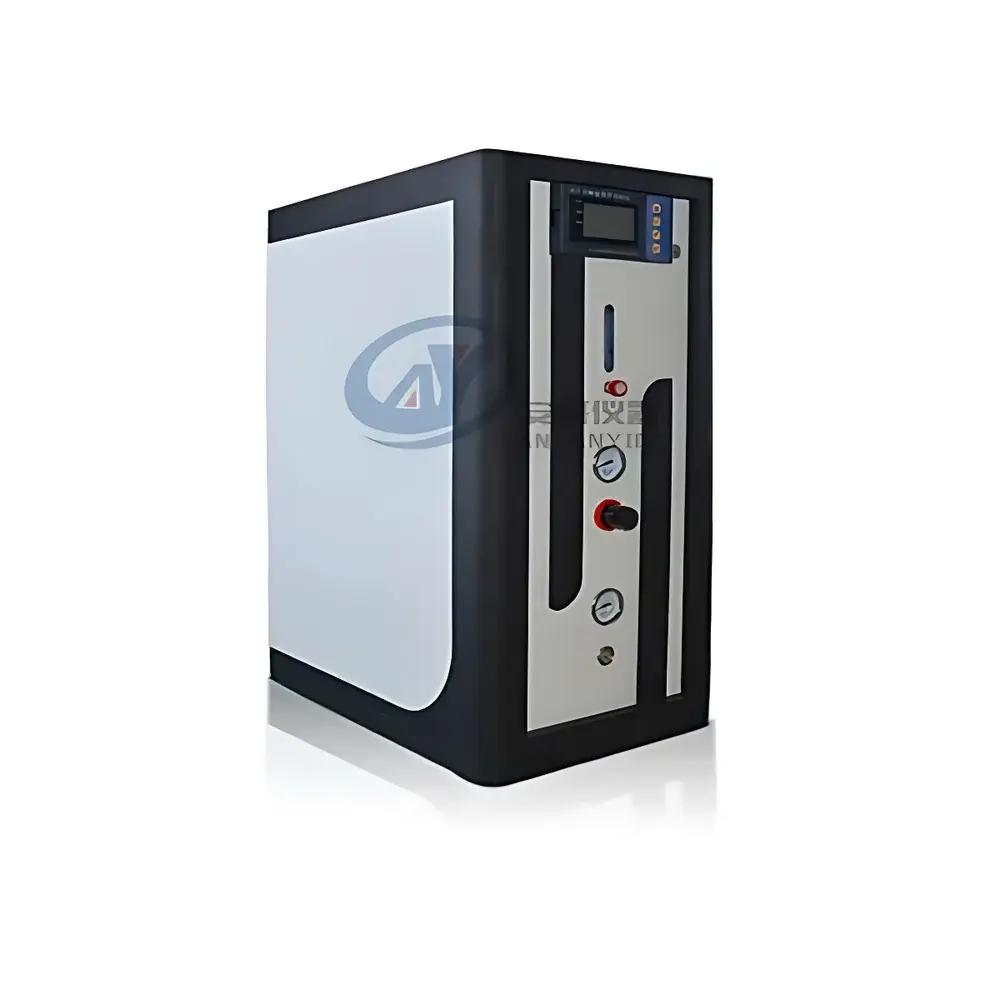
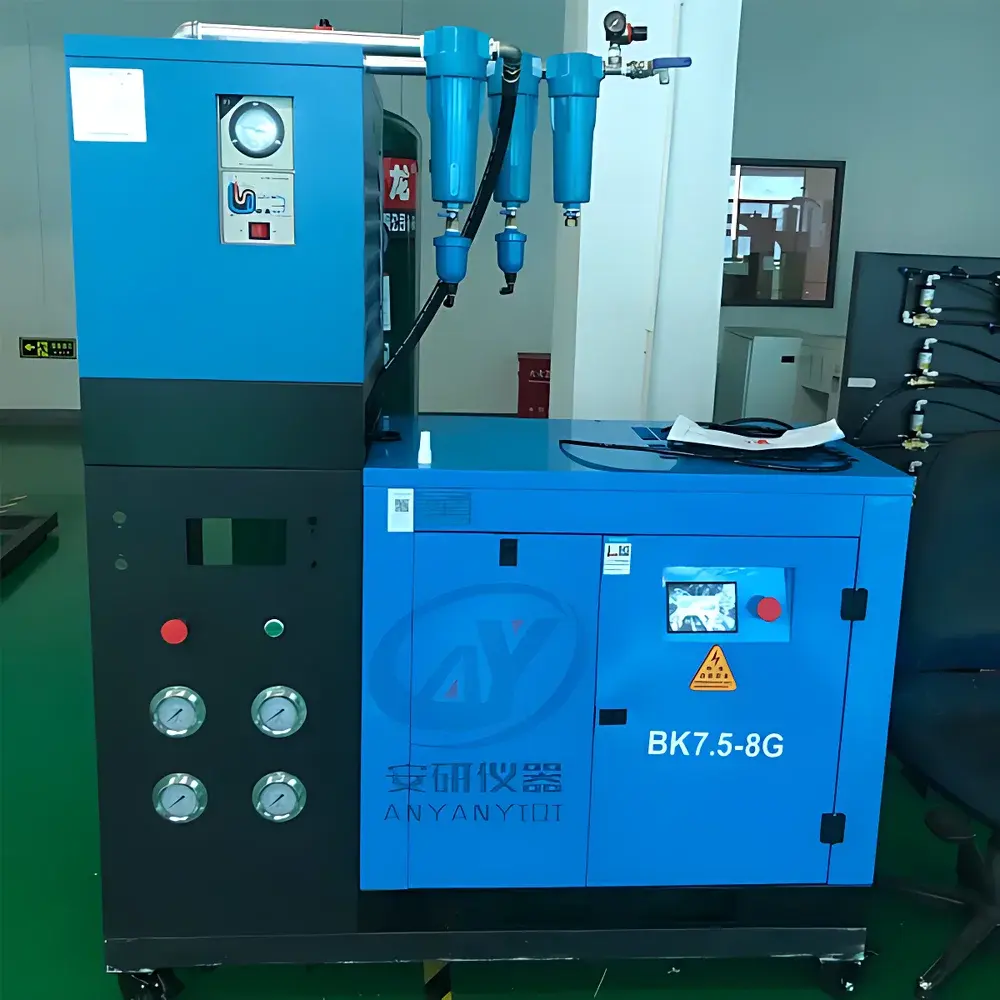
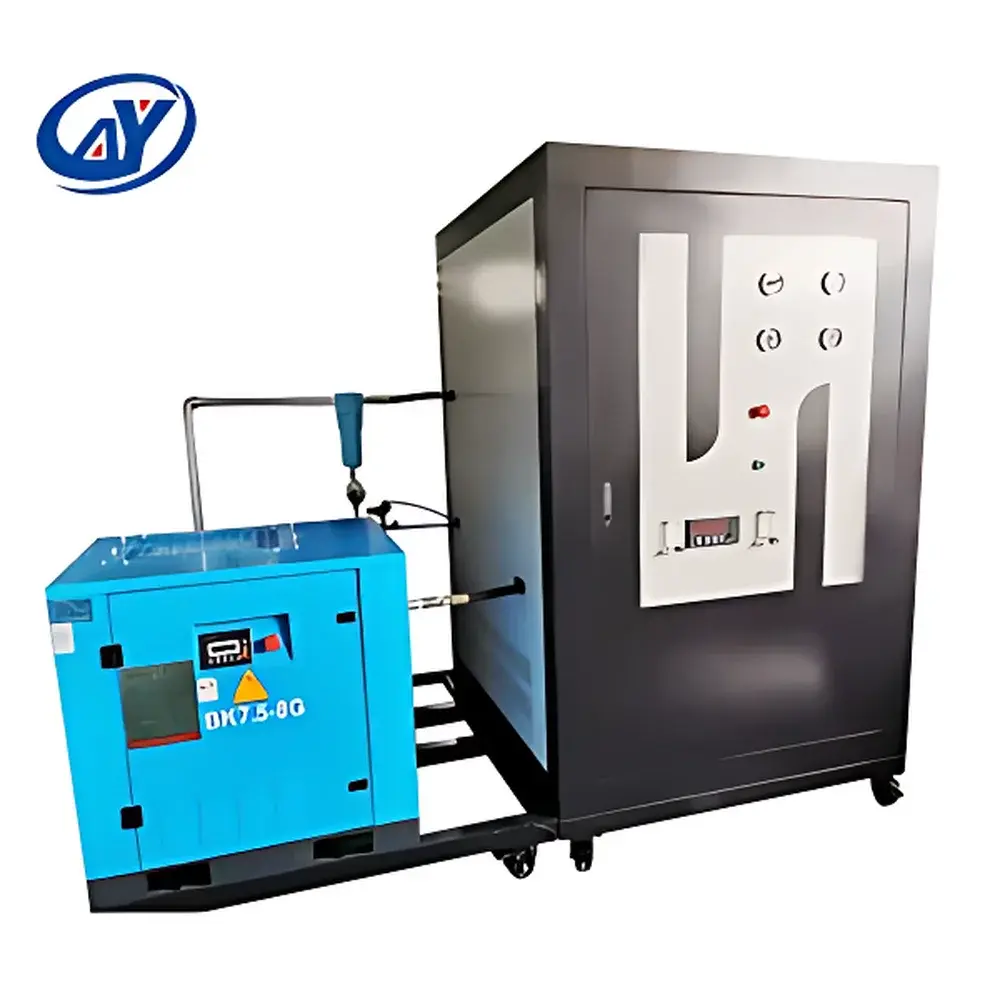
Anyan AYAN-60LG High-Flow Nitrogen Generator for Resin Synthesis and Reactor Blanketing
| Brand | Anyan |
|---|---|
| Origin | Jiangsu, China |
| Manufacturer Type | Authorized Distributor |
| Category | Domestic |
| Model | AYAN-60LG |
| Instrument Type | Membrane-Based Nitrogen Generator |
| Nitrogen Production Principle | Imported Korean Hollow-Fiber Membrane Separation |
| Output Flow Rate | 60 L/min |
| Output Pressure | 1 MPa |
| Nitrogen Purity | 99.9% |
| Dew Point | −40 °C (at 1 MPa) |
Overview
The Anyan AYAN-60LG is a high-flow, membrane-based nitrogen generator engineered for continuous, on-demand supply of high-purity nitrogen (99.9%) in demanding laboratory and pilot-scale chemical synthesis environments. It employs advanced hollow-fiber membrane separation technology—sourced from Korea—to selectively permeate oxygen, CO₂, water vapor, and other trace gases from compressed ambient air, retaining nitrogen with high selectivity and consistent purity. Unlike pressure swing adsorption (PSA) systems, the AYAN-60LG operates without switching valves, cyclic regeneration, or carbon molecular sieves, delivering stable output within ≤3 minutes of startup. Its design prioritizes operational continuity, low maintenance burden, and compact footprint—making it especially suitable for inerting synthesis reactors, blanketing resin polymerization vessels, purging glove boxes, and supplying carrier gas to GC systems requiring steady, high-volume nitrogen flow.
Key Features
- Imported Korean high-selectivity hollow-fiber membrane modules ensuring long service life (>15,000 operating hours) and zero consumable replacement under normal conditions
- Integrated oil-free, air-cooled scroll compressor with suspended acoustic insulation housing—reducing operational noise to <62 dB(A) at 1 m
- Three-stage filtration system: pre-filter (particulates <5 µm), coalescing filter (oil aerosols <0.003 mg/m³), and ultra-fine particulate filter (particles <0.01 µm)
- Dual independent pressure regulation: primary stage for membrane feed pressure control; secondary stage for precise user-side outlet pressure adjustment (0–1.0 MPa)
- Real-time digital nitrogen purity display (electrochemical sensor-based, calibrated per ISO 8573-1 Class 2:2010) with ±0.1% accuracy across 99.0–99.9% range
- Integrated desiccant drying module with color-indicating silica gel (red-to-blue transition), accessible via quick-release housing for field replacement
- Self-contained deionized water reservoir for membrane humidification management—refill interval determined by ambient RH and duty cycle
Sample Compatibility & Compliance
The AYAN-60LG is compatible with all standard laboratory gas interfaces (CGA-580, BS4365, DIN 477-1) and integrates seamlessly into nitrogen-dependent workflows including catalytic hydrogenation, Grignard reactions, epoxy curing, polyurethane synthesis, and solvent-sensitive lithiation processes. Its output meets ISO 8573-1:2010 Class 2 (solid particles), Class 2 (water), and Class 2 (oil) specifications. While not certified to FDA 21 CFR Part 11 out-of-the-box, its analog pressure and purity monitoring outputs support integration into validated GLP/GMP environments when paired with compliant data acquisition systems. The unit complies with CE marking requirements (EMC Directive 2014/30/EU, Low Voltage Directive 2014/35/EU) and conforms to IEC 61000-6-2/6-4 immunity/emission standards.
Software & Data Management
The AYAN-60LG operates as a standalone hardware platform with no embedded firmware or cloud connectivity. All operational parameters—including inlet pressure, outlet pressure, flow rate (via calibrated rotameter), and real-time purity—are displayed locally on a backlit LCD panel. Analog 4–20 mA outputs are provided for external logging of purity and pressure signals, enabling traceability in regulated settings when connected to compliant SCADA or LIMS platforms. Optional RS-485 Modbus RTU interface (add-on module) supports remote status polling and alarm relay triggering—compatible with third-party PLCs and lab automation systems adhering to ASTM E1382-95 (Standard Guide for Laboratory Automation).
Applications
- Inert atmosphere maintenance during exothermic polymerization of unsaturated polyester resins and vinyl ester matrices
- Blanketing of stainless-steel or glass-lined reaction kettles to prevent oxidative degradation of sensitive intermediates (e.g., organolithium reagents, dienes, phosphines)
- Continuous purge gas for Schlenk lines and nitrogen gloveboxes used in air-sensitive catalyst preparation
- Carrier and makeup gas for high-throughput GC-FID/TCD systems requiring >40 L/min total flow
- Pressure-transfer medium in closed-loop solvent recovery systems where oxygen exclusion prevents peroxide formation
- Pre-treatment purge for FTIR sample chambers and XRD sample stages prior to vacuum evacuation
FAQ
What is the recommended maintenance schedule for the AYAN-60LG?
Routine checks include weekly visual inspection of silica gel color, monthly verification of inlet filter condition, and biannual calibration of the purity sensor using certified 99.9% N₂ reference gas per ISO 6142.
Can the unit be integrated into an existing plant-wide nitrogen distribution network?
Yes—provided the network’s static pressure remains ≥0.8 MPa and dew point is maintained below −20 °C upstream of the generator’s inlet; optional inlet air dryer integration is recommended for humid climates.
Is the 99.9% purity specification guaranteed at full 60 L/min flow?
Yes—the membrane stack is thermally stabilized and pressure-compensated to maintain ≥99.9% purity across the entire 0–60 L/min operating range at 1.0 MPa outlet pressure.
Does the generator require external cooling water or compressed air?
No—it is fully self-contained: internal air-cooled compressor, passive heat dissipation, and no external utilities beyond single-phase 380 V AC power.
How does the AYAN-60LG compare to PSA-based generators in terms of long-term stability?
Membrane systems exhibit superior long-term consistency in purity and flow due to absence of adsorbent aging, valve wear, or pressure cycling fatigue—validated by accelerated life testing per ISO 10101-2 Annex B.



