
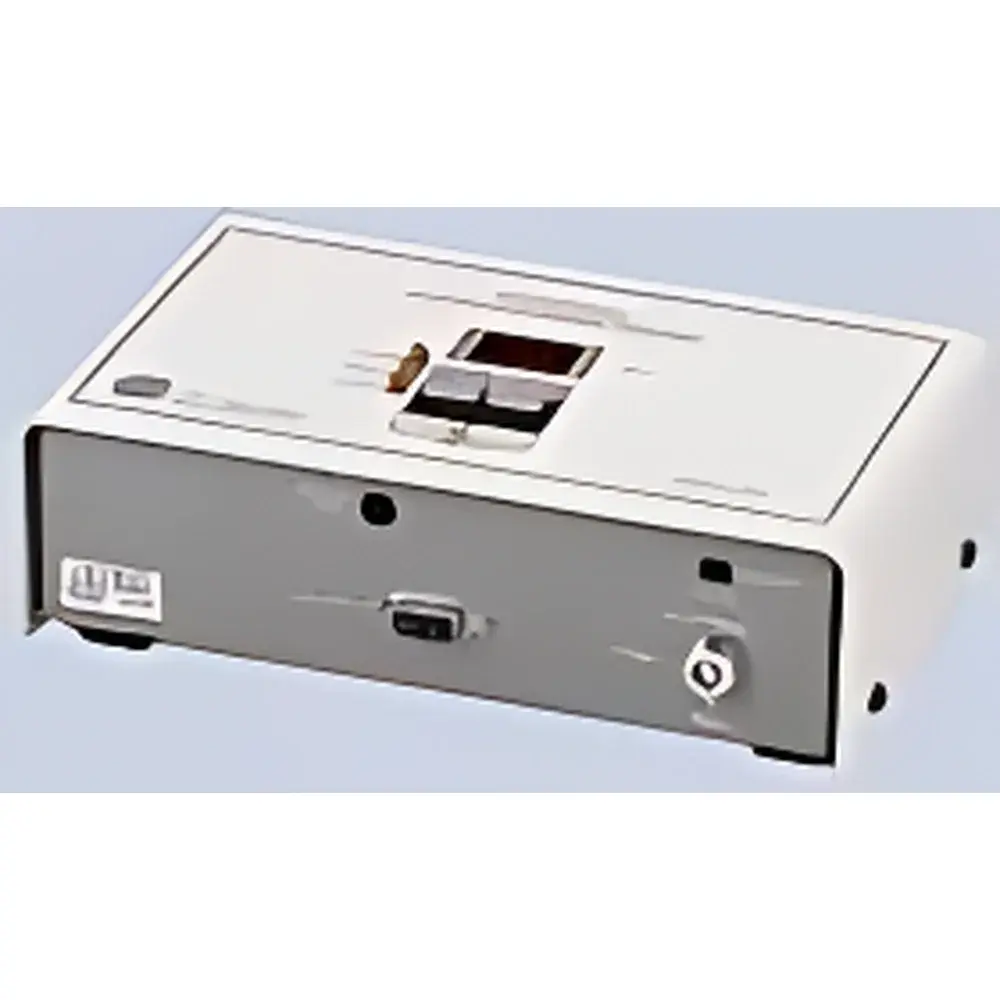
Alpha Energy Sciences Model 1027 Continuous Radon Monitor
| Origin | USA |
|---|---|
| Manufacturer Type | Authorized Distributor |
| Origin Category | Imported |
| Model | 1027 |
| Sampling Method | Active (Pump-Driven) |
| Measurement Range | 0.1–999 pCi/L (3.7–37,000 Bq/m³) |
| Minimum Detectable Concentration | 0.1 pCi/L |
| Sensitivity | 2.5 counts per hour per pCi/L (cph/pCi/L) |
| Accuracy | ±25% or ±1 pCi/L (whichever is greater) |
| Display | 3-digit LCD |
| Power Supply | 220 VAC / 9 VDC adapter |
| Dimensions | 200 × 120 × 65 mm |
| Weight | 0.9 kg |
Overview
The Alpha Energy Sciences Model 1027 Continuous Radon Monitor is a field-deployable, pump-assisted alpha spectrometric instrument engineered for long-term, real-time quantification of radon-222 (222Rn) gas concentration in indoor air and environmental monitoring applications. It operates on the principle of electrostatic collection of radon progeny—specifically 218Po (polonium-218)—onto a silicon alpha detector, followed by energy-resolved pulse counting in a calibrated chamber. This method enables direct, traceable measurement of radon activity without reliance on passive diffusion or charcoal adsorption kinetics. Designed for compliance with EPA Protocol for Radon Measurement Devices (EPA 402-R-92-002) and aligned with ISO 11665-2:2021 (Measurement of radioactivity in air — Part 2: Radon-222 — Requirements for continuous measurement), the Model 1027 delivers stable performance across variable temperature (10–35 °C) and relative humidity (20–80% RH, non-condensing) conditions typical of residential, commercial, and institutional buildings.
Key Features
- Active sampling system with integrated diaphragm pump ensures consistent airflow (0.5 L/min nominal) and minimizes boundary-layer effects at the detection surface
- Real-time digital readout with 3-digit LCD display updated every 10 minutes; configurable averaging intervals (1 hr, 24 hr, or rolling 7-day)
- Onboard data logging capacity for up to 2,048 time-stamped records (timestamp resolution: ±1 minute), stored with date/time and concentration value
- RS-232 serial interface (DB9 female) compliant with EIA/TIA-232-F standard for direct connection to PCs, thermal printers, or data acquisition systems
- Robust mechanical design: ABS housing rated IP42 for dust resistance and incidental moisture protection; operational weight of 0.9 kg facilitates portable deployment
- Calibration traceable to NIST-traceable radon reference sources; factory calibration certificate included with each unit
Sample Compatibility & Compliance
The Model 1027 is validated for use in undisturbed indoor air environments—including basements, crawlspaces, ground-floor living areas, and HVAC ducts—where representative sampling of ambient 222Rn is required. It is not intended for outdoor atmospheric monitoring, high-radon mine environments (>10,000 pCi/L), or aerosol-laden industrial exhaust streams without pre-filtration. The instrument meets key regulatory benchmarks: it satisfies U.S. EPA requirements for Class A continuous monitors used in real estate transaction testing (40 CFR Part 148), conforms to ASTM E1495-22 Standard Practice for Calibration and Verification of Radon Measurement Devices, and supports GLP-compliant documentation when paired with validated data export software. Its 0.1 pCi/L minimum detectable concentration (MDC) aligns with WHO-recommended action levels (100 Bq/m³ ≈ 2.7 pCi/L) and exceeds sensitivity thresholds for routine screening per ANSI/AARST MS-PC-2021.
Software & Data Management
Data retrieval is performed via ASCII-based serial protocol using terminal emulation (e.g., PuTTY, Tera Term) or proprietary Windows-compatible utility software (included on USB drive). Exported datasets include UTC timestamps, raw count rates, background-subtracted net counts, and calculated concentrations in both pCi/L and Bq/m³ units. All data files are structured as comma-separated values (CSV) with header rows enabling direct import into Excel, MATLAB, or LIMS platforms. Audit trail functionality is supported through timestamped log entries and optional password-protected configuration locking—critical for laboratories operating under FDA 21 CFR Part 11 or ISO/IEC 17025 frameworks. Firmware updates are delivered via serial command set and preserve user-defined settings including averaging mode and alarm thresholds.
Applications
- Residential radon risk assessment prior to real estate transactions and post-mitigation verification
- Long-term trend analysis in schools, hospitals, and government facilities for IAQ compliance reporting
- Field validation of passive alpha-track detectors (e.g., CR-39) and electret ion chambers
- Research-grade exposure studies investigating diurnal variation, seasonal dependence, and ventilation rate correlations
- Quality assurance in radon mitigation contractor certification programs (e.g., NRPP, NRSB)
FAQ
What is the recommended calibration interval for the Model 1027?
Annual calibration against a NIST-traceable radon source is recommended; field verification with a check source (e.g., 241Am) may be performed quarterly.
Can the instrument operate on battery power?
No—the Model 1027 requires continuous 9 VDC input from the supplied AC/DC adapter; no internal battery option is available.
Is the RS-232 interface optically isolated?
No—it is electrically isolated via on-board transient voltage suppression but does not incorporate optical isolation; use of a grounded serial hub is advised in electrically noisy environments.
Does the device measure thoron (220Rn)?
No—the chamber geometry and counting window energy threshold (4–7 MeV) are optimized exclusively for 218Po alpha emissions; thoron progeny (212Po) are excluded by pulse-height discrimination.
How is background correction handled?
Background is measured during a dedicated 10-minute cycle every 24 hours and subtracted automatically from subsequent gross counts; users may also perform manual background acquisition before deployment.
Related Products







