
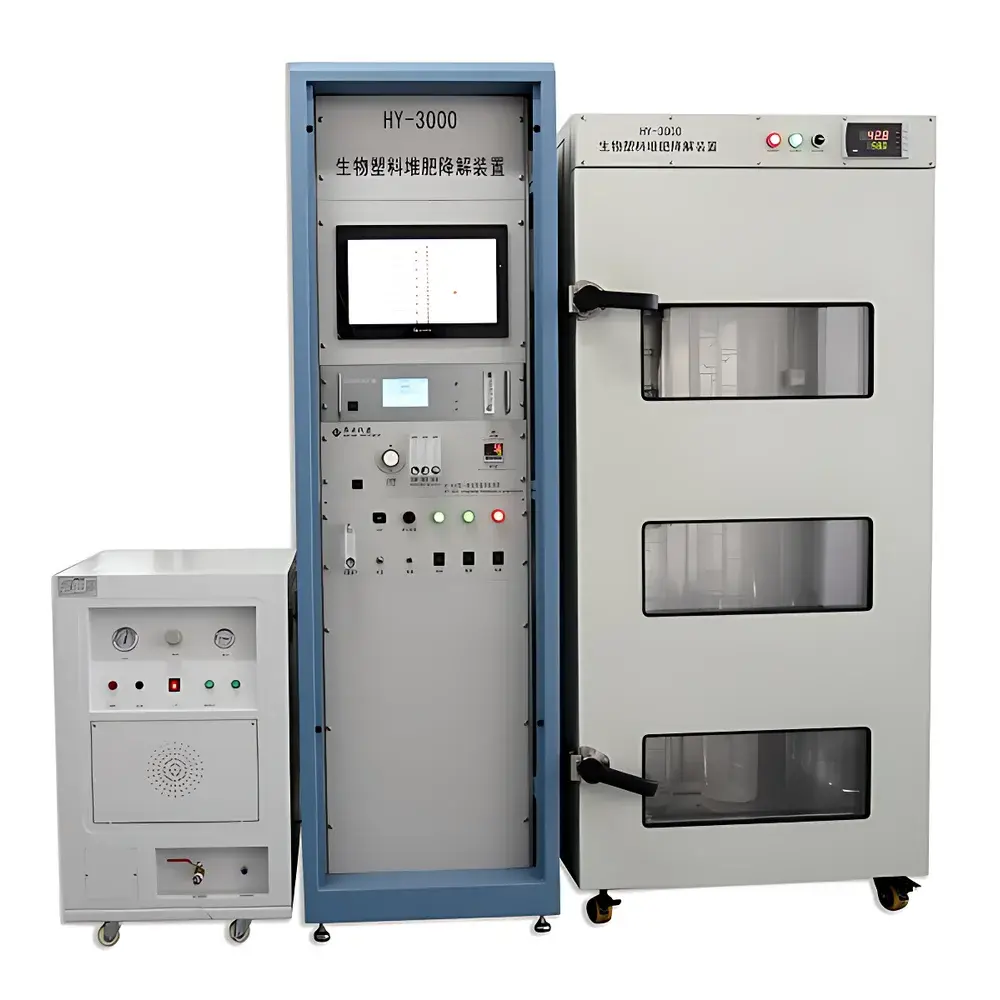
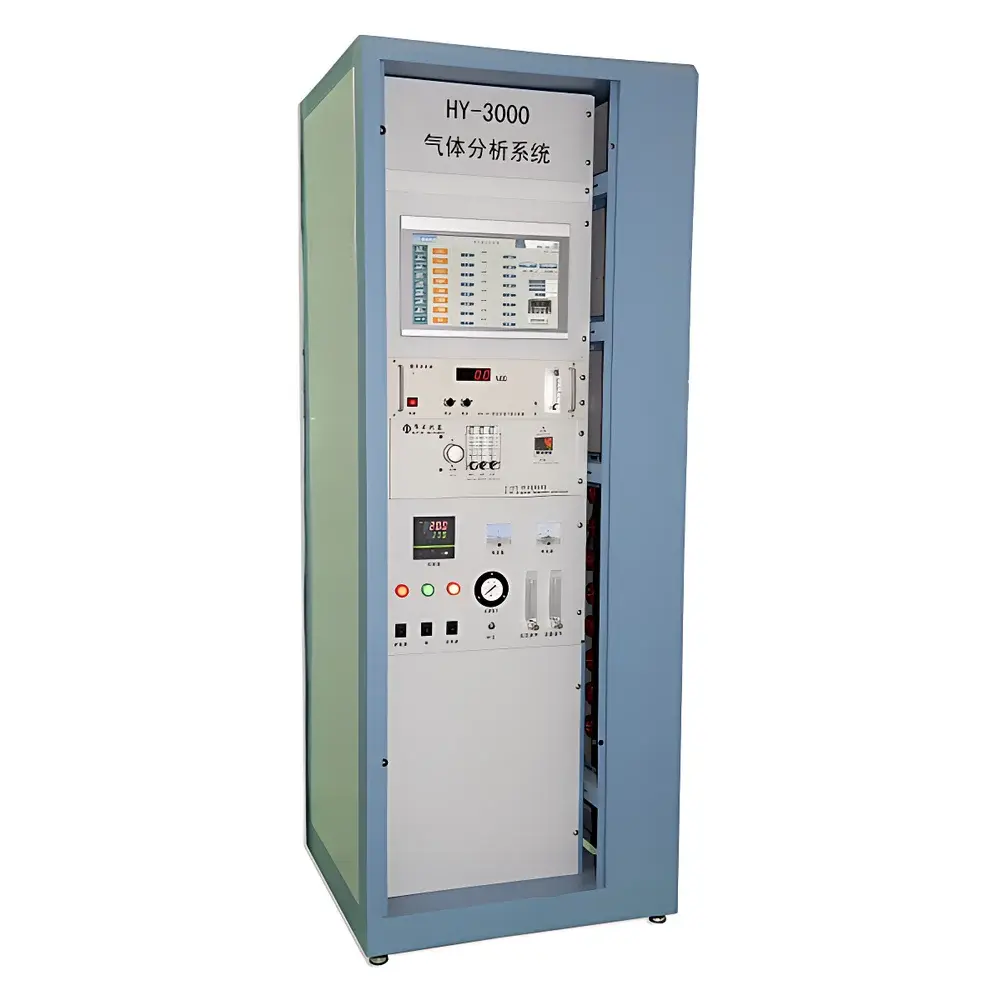
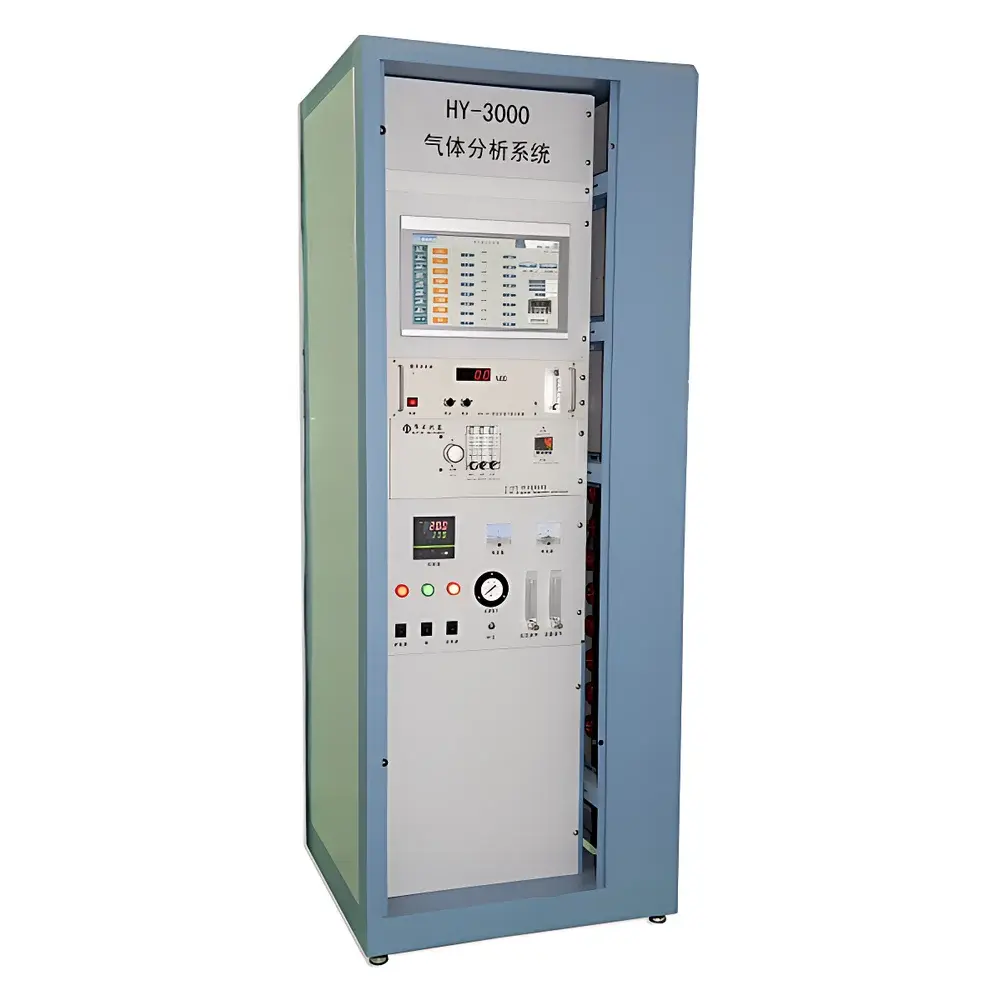
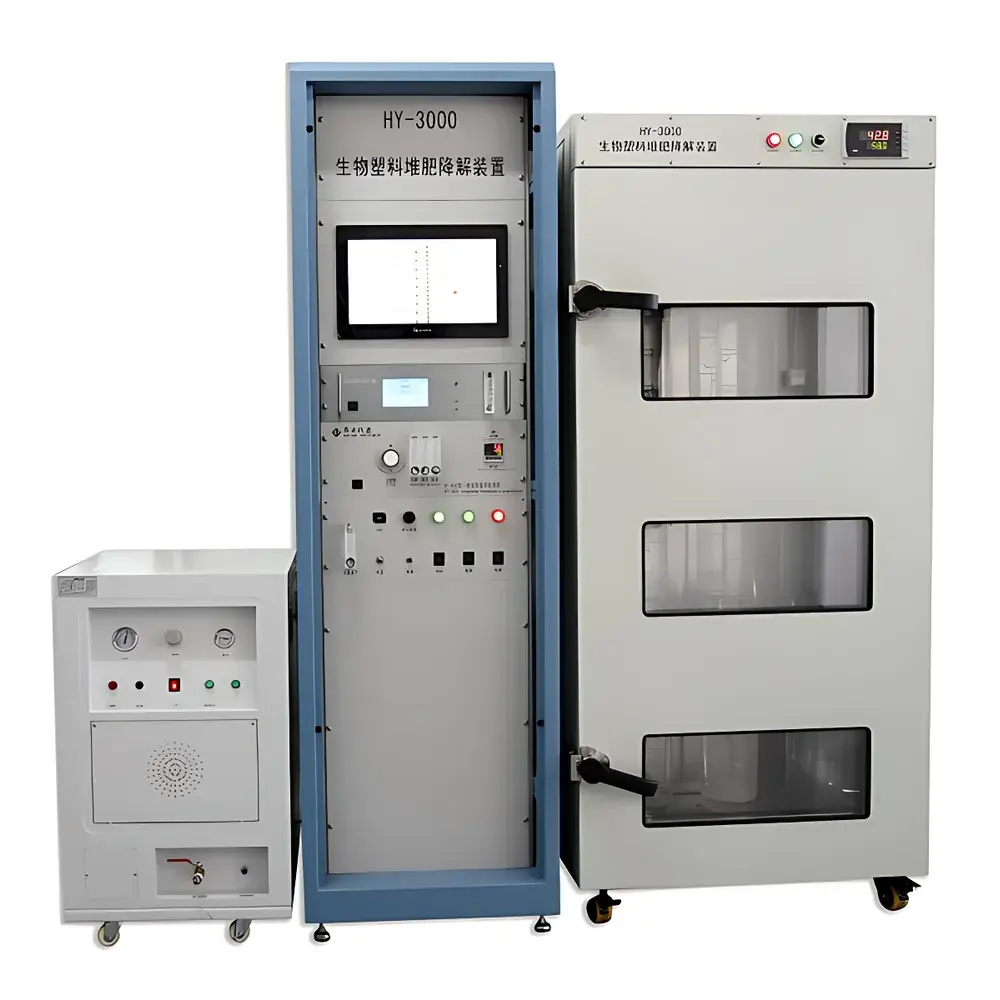
HY-3000 Gas Analysis System
| Brand | Huayun Instruments |
|---|---|
| Origin | Beijing, China |
| Manufacturer Type | OEM Manufacturer |
| Country of Origin | China |
| Model | HY-3000 |
| Instrument Type | Online Fixed-Mount System |
| Target Analyte | Single-Component Gas |
| Measurement Range (Minimum) | 0–50 ppm |
| Repeatability | ≤1% F.S. |
| Resolution | 0.1 ppm |
| Response Time | ≤60 s |
| Zero Drift | ≤±5% F.S. |
| Span Drift | ≤±1% F.S. |
| Linearity Error | ≤±2% F.S. |
Overview
The HY-3000 Gas Analysis System is an online, extractive-type continuous emission monitoring system engineered for industrial process control and environmental compliance applications. It employs multiple detection principles optimized for specific gas species: non-dispersive infrared (NDIR) spectroscopy for CO, CO₂, NO, SO₂, CH₄, and NH₃; electrochemical sensing for O₂; and thermal conductivity detection for H₂. This multi-principle architecture ensures high selectivity, long-term stability, and minimal cross-sensitivity under real-world flue gas and process stream conditions. Designed for integration into demanding environments—including cement kilns, steel sintering plants, petrochemical crackers, waste incinerators, and coal-fired boiler stacks—the HY-3000 incorporates a fully integrated sample conditioning subsystem featuring active cooling, particulate filtration, moisture removal, and programmable purge-air backflushing to protect optical and sensor components from fouling, corrosion, or condensation. Its modular hardware layout allows configuration for single-gas or multi-gas monitoring, with all electronics housed in an IP54-rated enclosure suitable for indoor or sheltered outdoor deployment.
Key Features
- Extractive sampling architecture with heated probe and PTFE-lined sample line to prevent adsorption and condensation loss
- Integrated sample conditioning unit: thermoelectric cooler (−5 °C dew point), cyclonic particulate separator, hydrophobic membrane filter, and automatic zero-air purge valve
- NDIR detectors calibrated for CO (0–50 ppm range), CO₂ (0–25% v/v), NO (0–200 ppm), SO₂ (0–500 ppm), CH₄ (0–5% v/v), and NH₃ (0–100 ppm)
- Electrochemical O₂ sensor with 0–25% v/v range and thermal compensation for ambient temperature variation
- Thermal conductivity detector for H₂ with 0–10% v/v range and built-in reference cell for drift correction
- Real-time diagnostics including flow rate monitoring, pressure drop across filters, detector signal-to-noise ratio, and heater status logging
- Self-calibration capability via solenoid-valve-switched zero and span gases (optional external calibration cabinet support)
Sample Compatibility & Compliance
The HY-3000 accommodates sample gas temperatures up to 200 °C (with optional high-temp probe), particulate loadings <50 mg/Nm³, and moisture content up to 20% v/v (post-conditioning). It meets the mechanical and electrical requirements of IEC 61000-6-2 (EMC immunity) and IEC 61000-6-4 (EMC emissions). For regulatory reporting, the system supports data acquisition and storage compliant with China’s HJ 75-2017 and HJ 76-2017 standards for CEMS performance verification. When configured with audit-trail-enabled firmware and secure user authentication, it satisfies GLP/GMP data integrity expectations per ISO/IEC 17025:2017 Annex A.2. Optional 21 CFR Part 11-compliant software modules provide electronic signatures, role-based access control, and immutable event logs for pharmaceutical or biodegradation testing applications—such as those referenced in GB/T 19277.1–2011 (aerobic biodegradation via CO₂ evolution) and GB/T 39951–2021 (disintegration assessment of disposable paper products).
Software & Data Management
The HY-3000 operates with Huayun’s proprietary HYSOFT v4.2 control and visualization platform, accessible via Ethernet (TCP/IP) or RS-485 Modbus RTU. The interface provides real-time trend plots, alarm management (configurable thresholds, hysteresis, and latching), and automated report generation (daily, weekly, or event-triggered). All measurement data—including raw detector voltages, temperature-compensated concentrations, diagnostic flags, and calibration timestamps—are stored locally on a 16 GB industrial-grade SD card with cyclic overwrite protection. Export formats include CSV, PDF, and XML for integration into SCADA systems or third-party LIMS platforms. Firmware updates are performed over HTTPS with SHA-256 signature verification. Remote maintenance is supported through TLS-encrypted VNC sessions with two-factor authentication.
Applications
- Continuous stack emission monitoring in thermal power plants and municipal solid waste incinerators
- Process gas analysis in rotary kilns (cement), blast furnaces (steel), and fluid catalytic cracking units (refineries)
- Combustion optimization and safety interlock signaling in industrial boilers and fired heaters
- Biodegradation testing in controlled composting chambers per GB/T 19277.1–2011 and ISO 14855–1
- Off-gas composition monitoring during anaerobic digestion and landfill gas recovery
- Multi-point CO surveillance in continuous casting and hot-rolling production lines with auto-ratio blending simulation
FAQ
What gases can the HY-3000 analyze simultaneously?
The system is configurable for up to seven gases (CO, CO₂, NO, SO₂, CH₄, NH₃, O₂, H₂), though typical installations prioritize 3–5 analytes based on application-specific regulatory or process requirements.
Is the HY-3000 certified for use in hazardous areas?
Standard configurations are rated for Zone 2/Class I Division 2 environments. Explosion-proof variants (ATEX II 2G Ex db IIB T4 Gb or UL/cUL Class I Div 1) are available upon request with modified housing and intrinsically safe barriers.
How often does the system require calibration?
Per HJ 76-2017, full calibration verification is recommended every 7 days; however, the built-in zero/span check function enables daily automated verification without manual gas cylinder intervention.
Can the HY-3000 be integrated with existing DCS or PLC systems?
Yes—Modbus TCP, Modbus RTU, and 4–20 mA analog outputs (isolated, HART-enabled) are standard; Profibus DP and OPC UA interfaces are optional.
What maintenance is required beyond filter replacement?
Annual inspection of NDIR optical windows, electrochemical sensor lifetime validation (typically 24 months), and thermoelectric cooler performance validation constitute the primary scheduled maintenance tasks.
Related Products







