
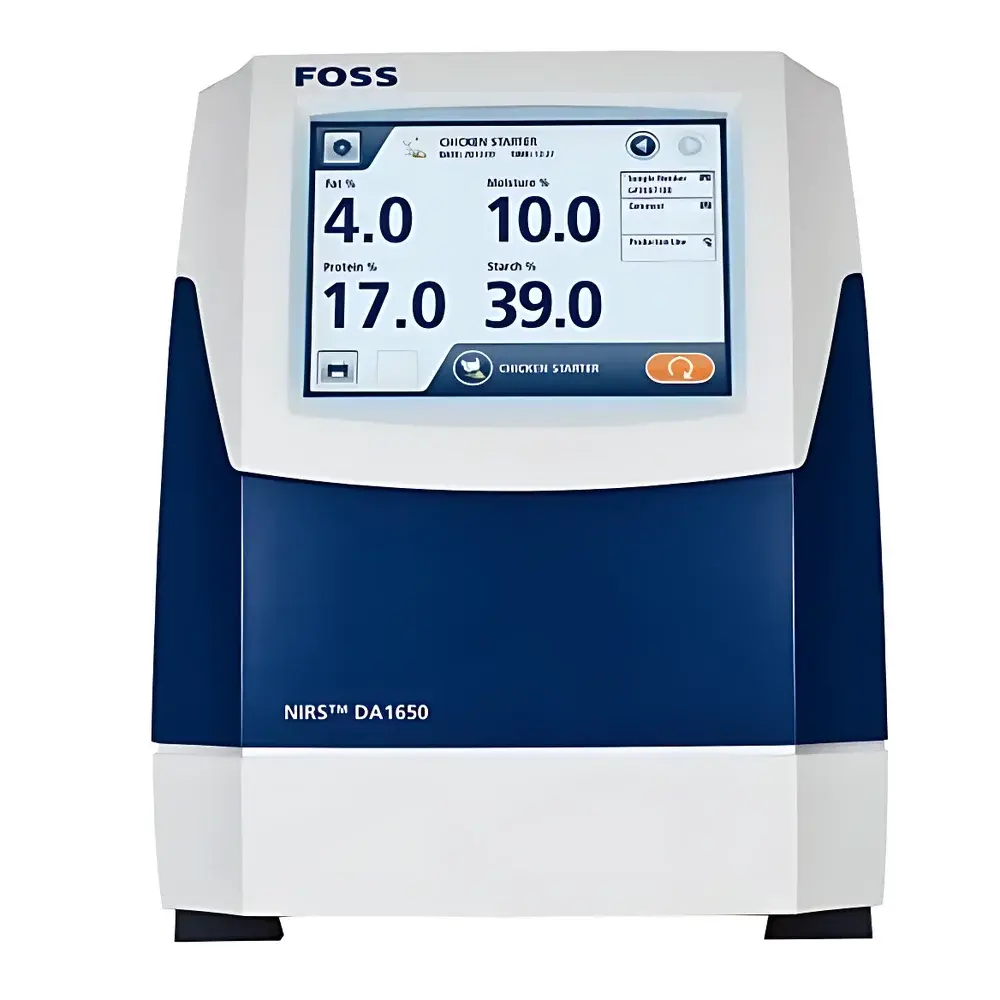
FOSS NIRS DA1650 Benchtop Near-Infrared Spectrometer
| Brand | FOSS |
|---|---|
| Origin | Denmark |
| Model | NIRS DA1650 |
| Instrument Type | Laboratory Benchtop |
| Optical Principle | Grating-based Diode Array Scanning |
| Wavelength Range | 1100–1650 nm |
| Scan Time | 1 minute per spectrum |
| Data Sampling Interval | 0.5 nm |
| Measurement Modes | Diffuse Reflectance, Transmission (for liquids) |
| Chemometrics Software | WinISI |
Overview
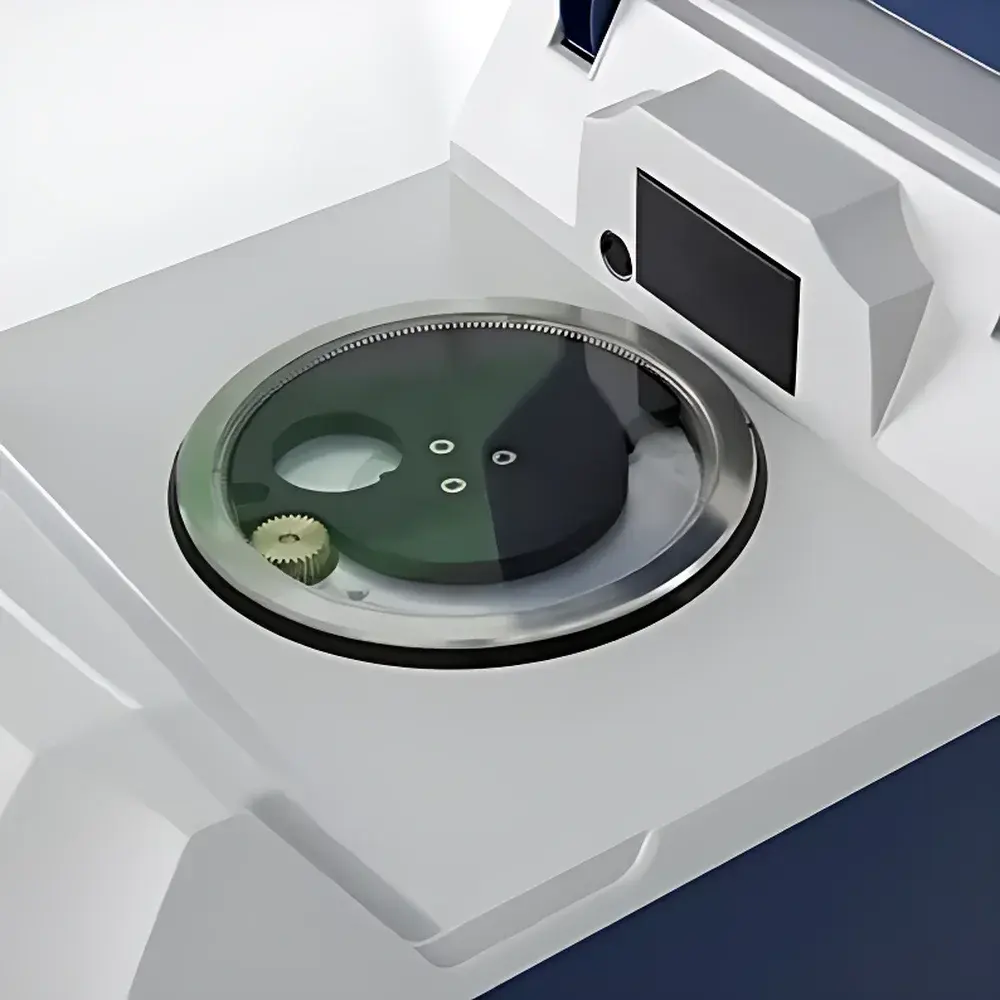
The FOSS NIRS DA1650 is a robust, benchtop near-infrared (NIR) spectrometer engineered for high-reproducibility quantitative and qualitative analysis across academic, research, and industrial laboratory environments. It operates on a fixed grating diode array optical architecture—eliminating moving parts to ensure long-term mechanical stability and minimal maintenance. The instrument captures spectra across the 1100–1650 nm spectral window, a region rich in overtone and combination bands of C–H, N–H, and O–H functional groups, enabling accurate prediction of key compositional parameters including moisture, protein, fat, lactose, ash, fiber, and ash-related minerals. Its optical design conforms to established NIR measurement principles defined in ASTM E1655 and ISO 12099, supporting method transferability and regulatory traceability. Unlike scanning monochromator systems, the DA1650’s diode array detector acquires full-spectrum data simultaneously, delivering inherent signal-to-noise advantages and immunity to mechanical drift during acquisition.
Key Features
- Fixed-optics diode array platform with no moving parts—ensures operational reliability and consistent spectral fidelity over extended service life
- Factory-calibrated and pre-standardized at manufacture; eliminates routine user-performed instrument standardization procedures
- Full spectral compatibility with legacy FOSS NIR platforms—including NIRSystem II, InfraXact, and XDS series—enabling seamless calibration model migration and cross-instrument validation
- Integrated industrial-grade computing module with capacitive touchscreen interface (optional external PC, keyboard, and thermal printer support)
- IP65-rated enclosure—designed for stable performance in non-ideal laboratory conditions, including elevated ambient dust or humidity
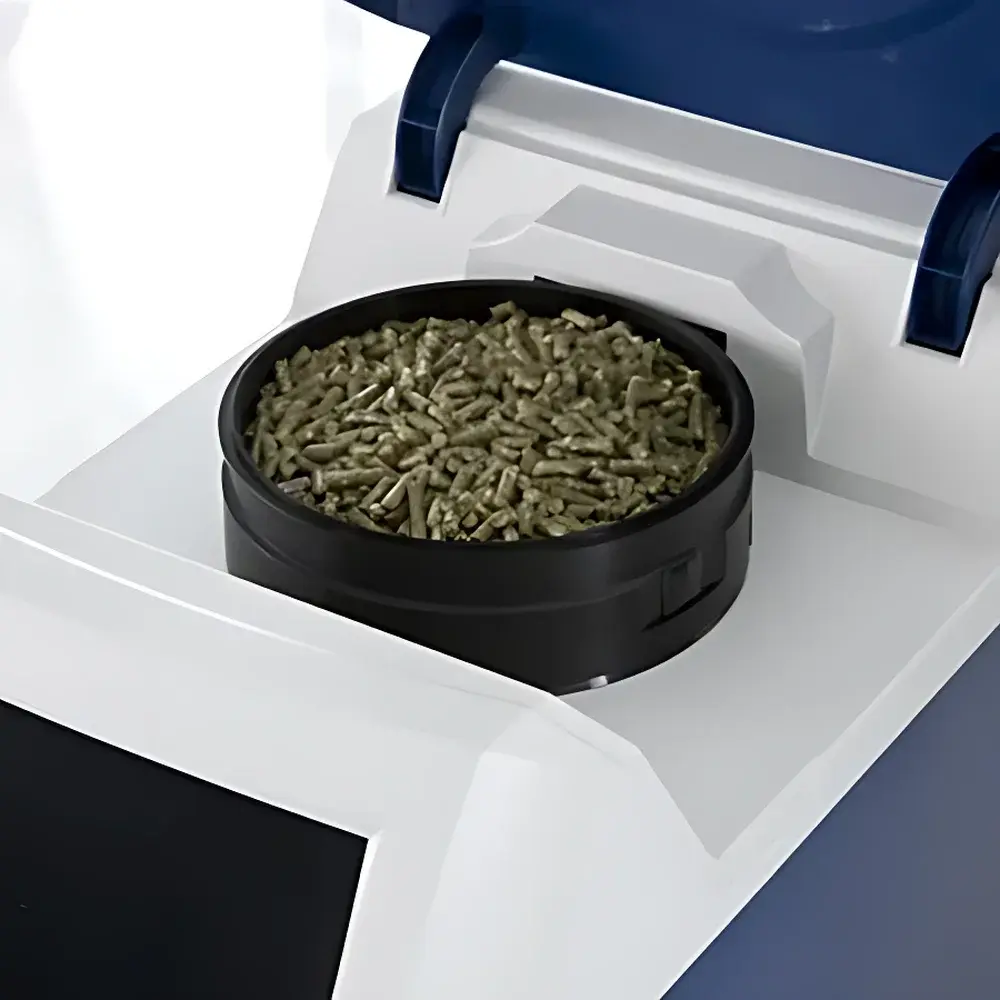
- Modular sampling accessories: interchangeable cups, transmission flow cells, and diffuse reflectance holders for solids, slurries, and liquids
- Support for multilingual user interfaces (English and Chinese) and network-enabled remote monitoring via standard Ethernet protocols
Sample Compatibility & Compliance
The NIRS DA1650 accommodates heterogeneous sample forms without requiring homogenization or solvent extraction. Solid samples (e.g., oilseed meals, dairy powders, feed pellets) are analyzed in standard 30-mm or 50-mm diameter cups using diffuse reflectance geometry. Liquid samples—including milk, whey, edible oils, and syrups—are measured in temperature-stabilized quartz cuvettes via transmission mode. Slurries and semi-solids (e.g., yogurt, batter, wet distillers grains) are compatible with custom-height sample holders to maintain optical path consistency. All measurement protocols align with AOAC Official Method 971.20 (NIR for moisture in grain), ISO 12099 (animal feeding stuffs), and USP (Near-Infrared Spectroscopy). The system supports audit-ready operation under GLP and GMP frameworks when deployed with WinISI software configured for 21 CFR Part 11 compliance (electronic signatures, secure audit trails, and user access controls).
Software & Data Management
WinISI III (v4.x or later) serves as the primary chemometrics environment for the DA1650. It provides full workflow support—from raw spectral preprocessing (Savitzky-Golay smoothing, multiplicative scatter correction, standard normal variate) to PLS, PCR, and PCA modeling. Calibration development adheres to ISO 21542 guidelines for model validation, including internal cross-validation, external test set verification, and bias assessment. The software enables centralized calibration library management across multi-site deployments and integrates with LIMS via ODBC-compliant database exports (.csv, .xls, SQL). Raw spectral files (.spc) and model archives (.cal) are stored with embedded metadata (instrument ID, operator, timestamp, sample ID), ensuring full data lineage for regulatory submissions.
Applications
The DA1650 delivers validated performance across diverse sectors requiring rapid, non-destructive compositional screening. In oilseed processing, it quantifies crude protein, oil content, moisture, and fiber in soybean, rapeseed, peanut, and cottonseed meals—supporting QC release against ISO 6540 and EN ISO 9696. Within dairy R&D labs, it monitors batch-to-batch variation in infant formula, whey protein isolates, and fermented products for fat, lactose, and titratable acidity. Feed formulation laboratories use its built-in amino acid prediction models (lysine, methionine, threonine) to optimize nutrient profiles in compound feeds per EU Regulation No. 1831/2003. Additional validated use cases include flour quality grading (falling number correlation), grain storage moisture tracking (per ISO 712), and meat product authentication (species identification via spectral fingerprinting).
FAQ
Does the NIRS DA1650 require daily recalibration?
No. The instrument is factory-standardized and thermally stabilized; routine user recalibration is not required. Periodic performance verification using certified reference materials (e.g., NIST SRM 1921b) is recommended every 6 months.
Can existing calibrations from older FOSS instruments be directly loaded?
Yes. Calibrations developed for NIRSystem II, InfraXact, or XDS instruments are fully portable and require no conversion or retraining.
Is WinISI software included with the instrument purchase?
A licensed copy of WinISI III is supplied with the DA1650. Annual maintenance includes software updates, technical support, and access to FOSS’s global calibration model repository.
What level of technical support is available outside Denmark?
FOSS maintains certified service centers in North America, Europe, Asia-Pacific, and Latin America. Remote diagnostics and on-site engineering support are available under extended service agreements.
Can the DA1650 be integrated into an automated lab workflow?
Yes. The instrument supports RS-232, USB, and Ethernet communication protocols. It is compatible with third-party automation middleware (e.g., LabVantage, STARLIMS) via ASCII command sets and OPC UA drivers.




