
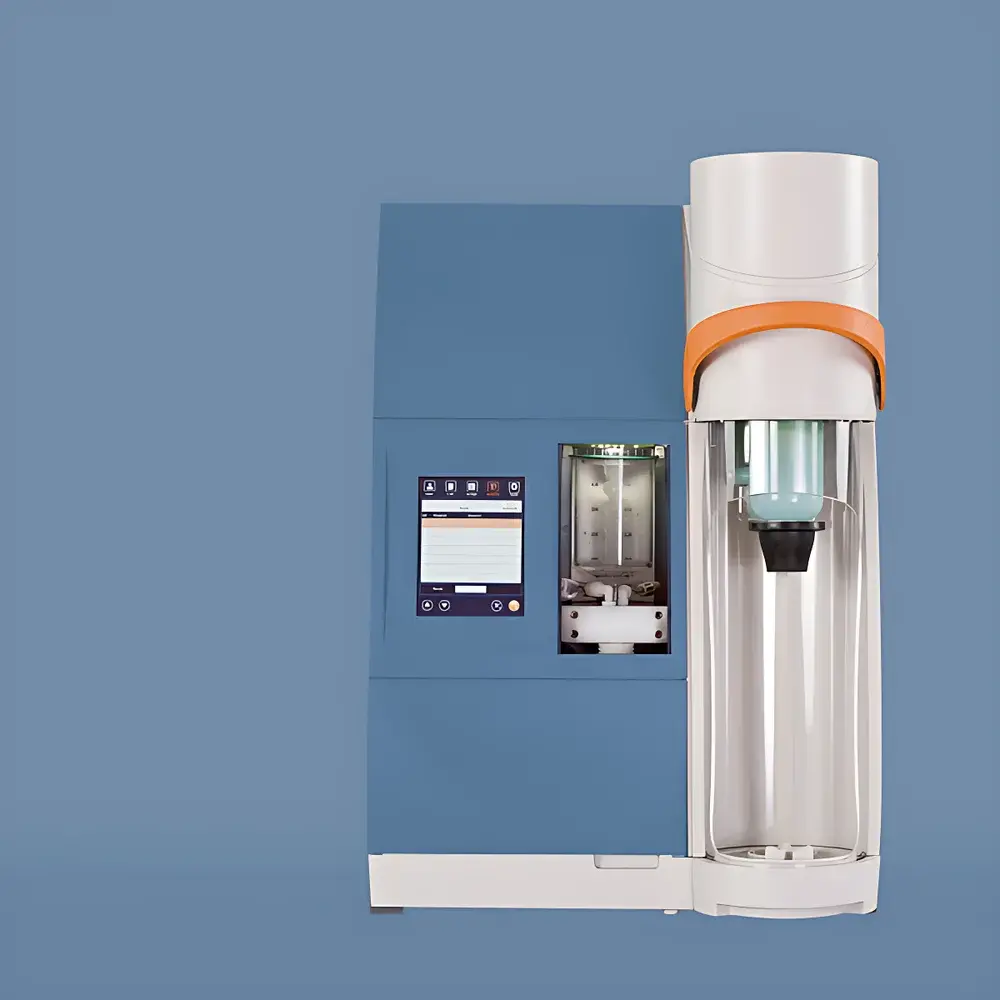
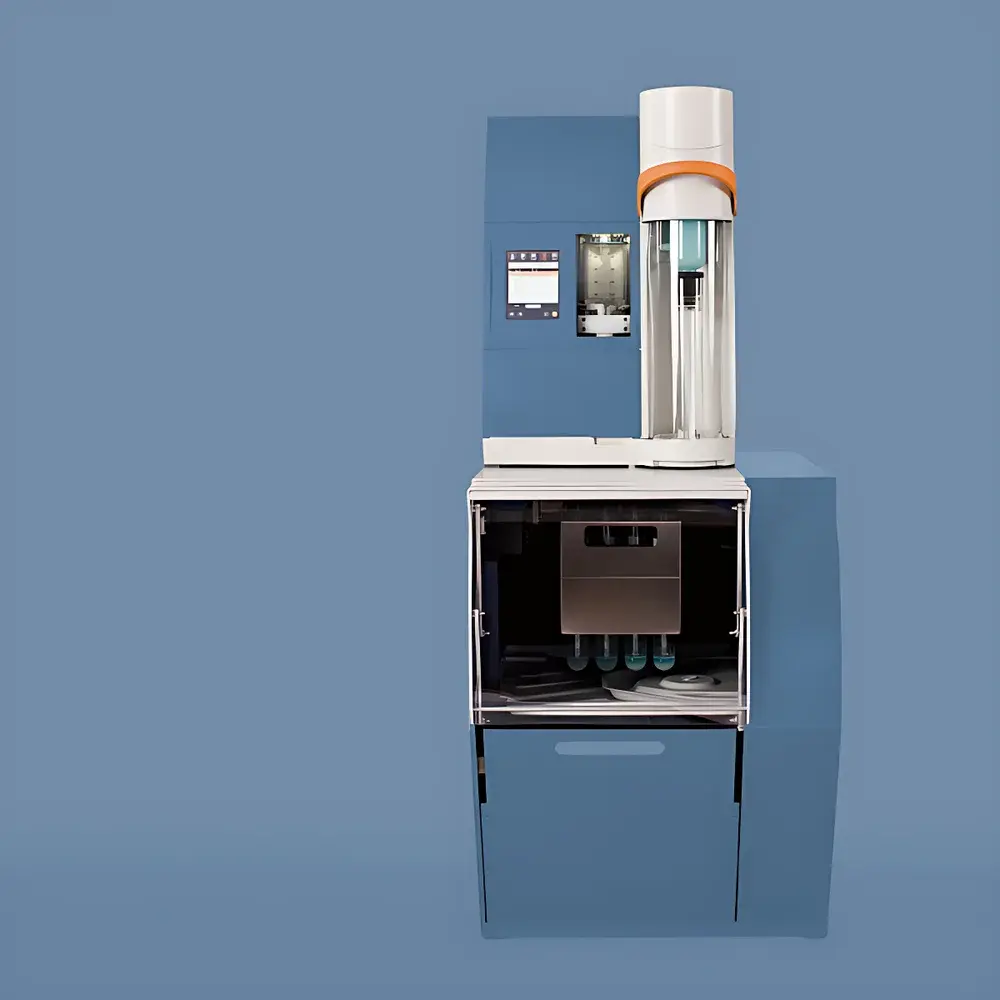
FOSS SINO KT8400 Automated Kjeldahl Nitrogen Analyzer
| Brand | FOSS |
|---|---|
| Origin | Jiangsu, China |
| Instrument Type | Automated Kjeldahl Nitrogen Determinator |
| Automation Level | Fully Automated |
| Model | SINO KT8400 |
| Compliance Standards | AOAC, EPA, DIN, ISO |
| Sample Throughput | Compatible with 20-position autosamplers (e.g., FOSS 8420/8460) |
| Safety Features | SAFE™ steam-controlled distillation, interlocked transparent safety door, integrated temperature-controlled distillate cooling |
| Software Options | FOSS Compass LIMS-ready software with GLP-compliant audit trail, network printer/tare balance integration |
Overview
The FOSS SINO KT8400 Automated Kjeldahl Nitrogen Analyzer is a fully integrated, benchtop system engineered for precise, traceable, and high-throughput determination of nitrogen content via classical Kjeldahl digestion and distillation methodology. Designed in alignment with internationally recognized wet-chemistry protocols—including AOAC Official Method 984.13, EPA Method 351.2, ISO 5983-1:2009, and DIN EN ISO 1871—the instrument delivers reproducible quantification of Total Kjeldahl Nitrogen (TKN), ammoniacal nitrogen, crude protein (calculated as N × 6.25 or user-defined factor), volatile acids/bases, and related nitrogenous parameters. Its core architecture implements a dual-mode steam distillation principle: Steam Addition Equilibration (SAE) ensures consistent reagent vapor pressure across variable sample matrices, while Delayed Distillation (DD) mode accommodates heterogeneous or high-fat samples requiring extended pre-heating. All distillation events occur under dynamically regulated condensate temperature control—critical for minimizing ammonia loss and ensuring stoichiometric recovery. The system operates as a standalone unit or integrates seamlessly into laboratory networks via Ethernet or RS-232 interfaces.
Key Features
- Fully automated workflow covering sample dilution, alkalization, boric acid absorption, steam distillation, photometric titration, calculation, and report generation—no manual intervention required post-loading.
- Patented SAFE™ (Safe Automatic Flow Execution) technology actively monitors steam line integrity and crystallization risk in acidic/saline environments; automatically adjusts steam pressure and purge cycles to prevent blockage and ensure uninterrupted operation.
- Optical endpoint detection system employs factory-calibrated, pressure-stabilized colorimetric titration with self-zeroing photodiodes and anti-aging optical filters—delivering sub-0.01 mL titrant resolution and long-term signal stability without recalibration.
- Integrated mechanical bellows pump delivers reagents with ±0.2% volumetric accuracy across ambient temperature fluctuations (15–30°C), eliminating dependence on peristaltic tubing elasticity or pneumatic pressure variance.
- Motor-driven, interlocked transparent safety door remains mechanically locked during active distillation and cooling phases; release requires full thermal equilibration and system confirmation—meeting IEC 61010-1 Class II electrical safety requirements.
- Universal digestion tube interface supports standard borosilicate glass vessels (100 mL, 250 mL, 400 mL, and 750 mL), enabling method flexibility across feed, soil, fertilizer, dairy, and environmental matrices.
- Intelligent water management module modulates tap water flow rate in real time based on ambient inlet temperature and distillate load—reducing coolant consumption by up to 40% versus fixed-flow systems.
Sample Compatibility & Compliance
The SINO KT8400 is validated for use with solid, semi-solid, and liquid samples across agricultural, food, environmental, and industrial quality control laboratories. It accommodates complex matrices including cereal grains, oilseeds, composted soils, urea-based fertilizers, wastewater sludge, and dairy powders. All analytical sequences adhere to Good Laboratory Practice (GLP) requirements: full electronic audit trail logs operator ID, timestamp, method version, raw titration curves, calibration history, and manual overrides. Data integrity complies with FDA 21 CFR Part 11 when used with FOSS Compass software (optional), supporting electronic signatures, role-based access control, and immutable record retention. Regulatory alignment extends to ISO/IEC 17025 accreditation frameworks for testing laboratories.
Software & Data Management
The instrument supports two operational modes: embedded firmware control (standalone) and computer-based supervision via FOSS Compass software. Compass provides full LIMS interoperability through ASTM E1384-compliant data export (CSV, XML, PDF), direct integration with analytical balances (METTLER TOLEDO, SARTORIUS, OHAUS), and network-enabled printing. It enforces method versioning, user permission tiers (admin/operator/auditor), and automatic backup to NAS or cloud storage. All raw absorbance vs. titrant volume datasets are retained with metadata—enabling retrospective reprocessing, uncertainty budgeting per GUM guidelines, and trend analysis over extended calibration intervals.
Applications
Primary applications include routine TKN screening in grain procurement labs (ISO 20483), protein certification in dairy processing (IDF Standard 20B), regulatory compliance testing for nitrogen discharge limits in municipal wastewater (EPA 351.2), and nutrient labeling verification in pet food manufacturing (AAFCO protocols). Secondary use cases encompass ammonium quantification in pharmaceutical excipients, volatile base nitrogen (VBN) assessment in seafood freshness evaluation, and method development for alternative nitrogen conversion factors in leguminous crops.
FAQ
Does the SINO KT8400 require external digestion equipment?
No—it is a dedicated distillation and titration module; digestion must be performed separately using a compatible block digester or microwave system prior to sample loading.
Can the instrument be validated for 21 CFR Part 11 compliance?
Yes—when deployed with FOSS Compass software, configured user roles, electronic signatures, and enabled audit trail logging, it meets all technical and procedural requirements for regulated environments.
What maintenance routines are recommended for long-term reliability?
Daily: rinse steam lines and titration cell with deionized water; weekly: inspect digestion tube seals and clean optical windows with lint-free ethanol swabs; quarterly: verify pump displacement accuracy using gravimetric check standards.
Is method transfer from legacy Kjeldahl systems supported?
Yes—Compass allows import of existing method templates, including custom digestion times, alkali concentrations, and protein conversion factors, ensuring continuity during instrument migration.
How does the system handle high-salt or viscous samples that may cause carryover?
The SAE distillation mode incorporates programmable steam flush cycles between samples, and the condensate temperature controller maintains ≤15°C output—minimizing aerosol formation and cross-contamination risk across sequential runs.
Related Products



