
NCS NC-C-SC-AN Phased Array Ultrasonic Testing System for Steel Plates
| Brand | NCS (China Iron and Steel Research Institute Group) |
|---|---|
| Origin | Beijing, China |
| Manufacturer | Yes |
| Country of Origin | China |
| Model | NC-C-SC-AN Series for Steel Plate Inspection |
| Ultrasound Channels | 16 (expandable to 64 via cascading) |
| Probe Configuration | Up to 4 probes, 128 total elements |
| Phased Array Beamforming Capacity | 1024 delay laws |
| Data Throughput | 40 MB/s via Gigabit Ethernet |
| Network Interface | Industrial Power + Dual-Mode Fiber Optic |
| Encoder Input | 2-channel quadrature (A/B phase) |
| Trigger Mode | Internal or External (software-selectable) |
| Power Supply | AC 220 V ±10%, 50/60 Hz |
| TCG (Time-Corrected Gain) | Integrated |
| Minimum Detectable Flaw | Ø3 mm flat-bottom hole (FBH) at full material thickness |
| Scanning Coverage | Adjustable multi-probe array with 15 mm overlap per 120 mm probe |
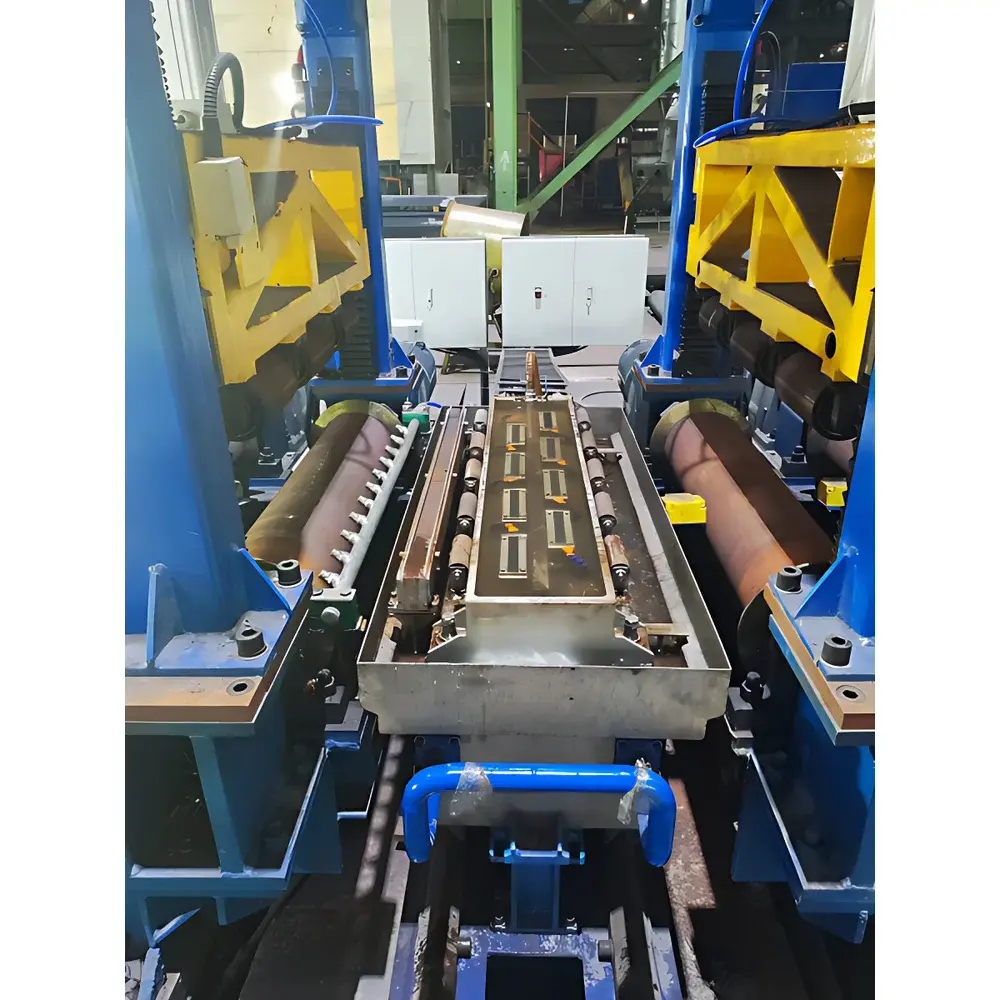
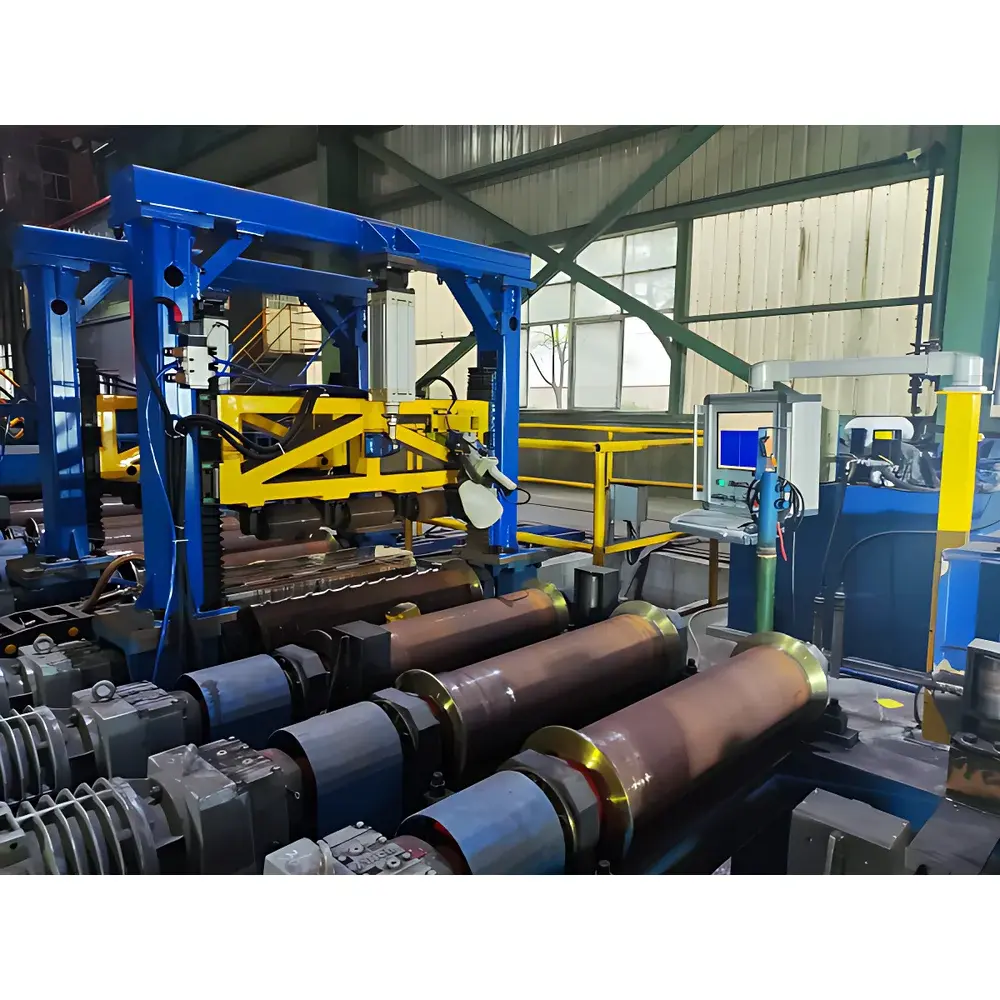
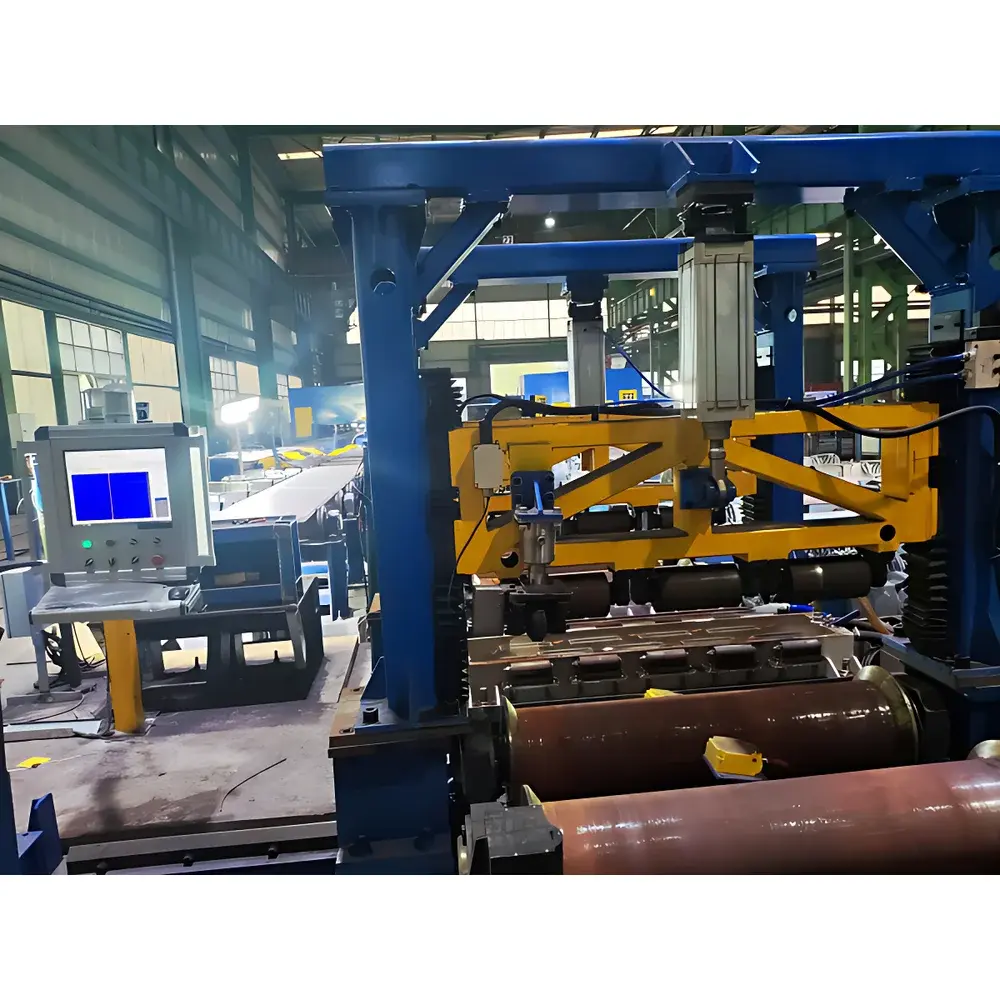
| Mechanical Architecture | Immersion-type water bath with dual staggered probe carriage assemblies |
| Compliance Standards | ISO 3183, GB/T 2970, ASTM A435, ASTM A578, ISO 10893-11 |
Overview
The NCS NC-C-SC-AN Phased Array Ultrasonic Testing (PAUT) System is an industrial-grade, fully automated immersion ultrasonic inspection platform engineered for 100% volumetric scanning of hot-rolled and cold-rolled steel plates. It operates on the principle of phased array beam steering and dynamic focusing—where precise time delays applied across individual piezoelectric elements (up to 128 elements across four transducers) enable electronic control of beam angle, focal depth, and lateral position without mechanical movement. This architecture eliminates the need for manual probe manipulation while maintaining high-resolution detection capability across variable plate thicknesses (typically 6–200 mm). The system employs a dual-row, staggered transducer carriage submerged in a temperature-stabilized water bath, ensuring consistent acoustic coupling and minimizing signal attenuation. Each transducer is mounted in a motorized probe shoe with pneumatic lift control, maintaining a fixed standoff distance (typically 10–25 mm) relative to the plate surface—critical for repeatable near-surface resolution and TCG-compliant sensitivity calibration.
Key Features
- Modular PAUT architecture supporting up to 64 total channels via cascaded instrument units, enabling scalable coverage for wide-format plates (up to 4,000 mm width)
- Real-time dynamic depth focusing (DDF) and sectorial scanning (S-scan) synchronized with encoder-driven motion for accurate axial defect localization
- Integrated Time-Corrected Gain (TCG) curve generation per probe group, compensating for acoustic attenuation across depth and ensuring uniform sensitivity from surface to backwall
- Simultaneous multi-probe excitation (up to 16 active channels per acquisition cycle), delivering full volumetric coverage with minimal scan overlap
- Industrial PLC-based motion control coordinated with Windows-based HMI software for deterministic sequencing of lift/lower, scan initiation, and data logging
- Gigabit Ethernet interface with 40 MB/s sustained throughput, supporting real-time A-scan streaming, C-scan reconstruction, and synchronized event tagging
- Dual quadrature encoder inputs (A/B phase) for traceable positional metrology compliant with ISO 10893-11 Annex B requirements for length measurement uncertainty
Sample Compatibility & Compliance
The NC-C-SC-AN system is validated for carbon steel, low-alloy steel, and stainless steel plates conforming to ASTM A6/A6M, EN 10025, and GB/T 700 specifications. It meets mandatory inspection criteria defined in ISO 3183 (petroleum and natural gas industries), GB/T 2970 (ultrasonic testing of steel plates for pressure equipment), ASTM A435 (straight-beam ultrasonic examination of steel plates), ASTM A578 (straight-beam ultrasonic examination of forged steel bars and billets), and ISO 10893-11 (non-destructive testing of steel tubes — part 11: automated ultrasonic testing of seamless and welded steel tubes for laminar imperfections). All calibration procedures follow ASME BPVC Section V, Article 4 protocols. System validation includes linearity checks per ASTM E1158, sensitivity verification using Ø3 mm flat-bottom hole reference standards per ASTM E273, and repeatability assessment under GLP-aligned documentation practices.
Software & Data Management
The proprietary NCS-PAUT Control Suite runs on Windows 10 IoT Enterprise with deterministic real-time kernel extensions. It provides synchronized acquisition of A-scan waveforms, B-scan cross-sections, and C-scan plan views—all time-stamped and georeferenced to plate coordinates. Defect annotations are stored in XML-based inspection records compliant with ASTM E2375 and ISO/IEC 17025 metadata schemas. The software supports automated report generation in PDF and Excel formats, including pass/fail status per ASTM E2375 Table 1 acceptance criteria, statistical summaries by batch or plate ID, and trend analysis of flaw density over production shifts. Audit trails record all user actions, parameter modifications, and calibration events in accordance with FDA 21 CFR Part 11 requirements for electronic records and signatures. Data export supports OPC UA and RESTful API endpoints for integration into MES or QMS platforms.
Applications
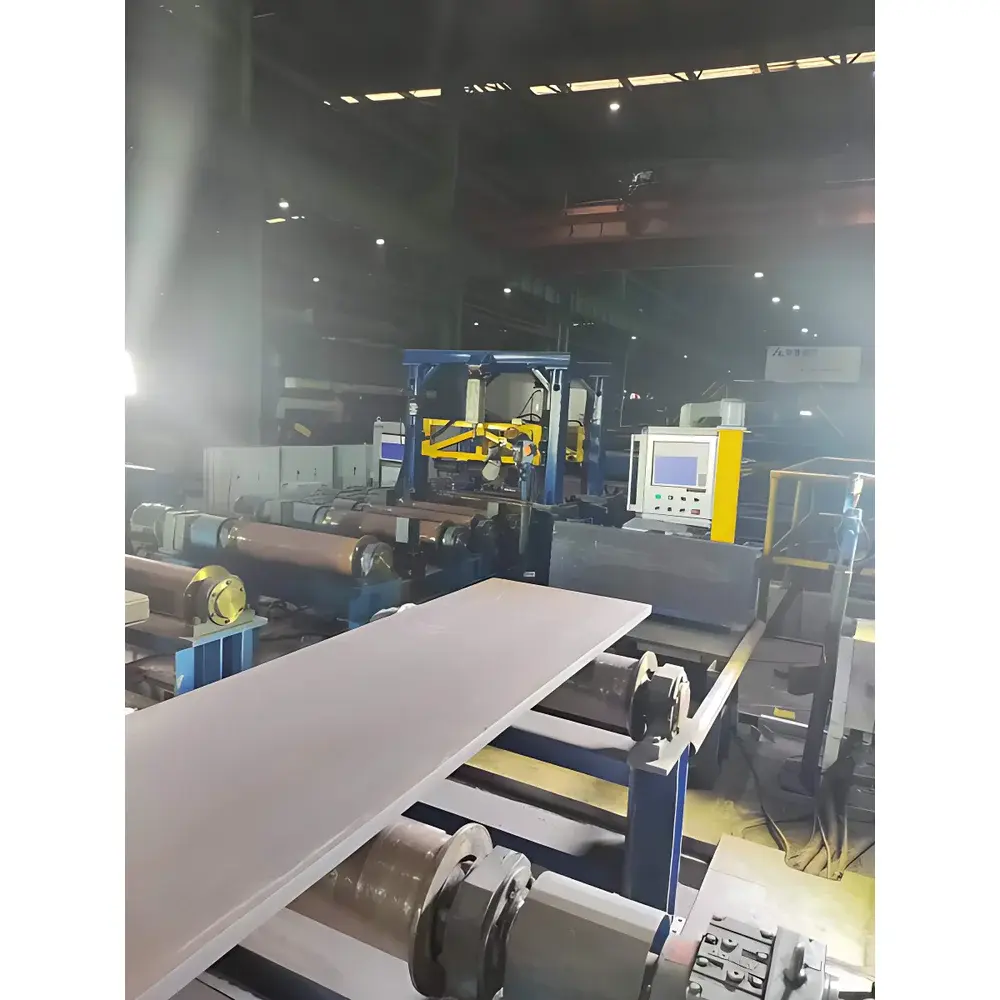
This system is deployed in primary steel mills, plate service centers, and third-party certification laboratories for final quality release of structural plates used in offshore platforms, pressure vessels, shipbuilding, bridge construction, and nuclear containment applications. Typical use cases include detection and characterization of laminations, inclusions, delaminations, and subsurface cracks; thickness mapping for corrosion monitoring; and weld seam evaluation adjacent to plate edges. Its ability to resolve Ø3 mm FBH reflectors at full plate thickness—combined with <1.5 mm axial positioning accuracy—ensures compliance with Class B inspection requirements per ISO 10893-11 and stringent customer-specific technical specifications (e.g., DNVGL-OS-F101, API RP 2X).
FAQ
What standards does the NC-C-SC-AN system comply with for plate inspection?
It complies with ISO 3183, GB/T 2970, ASTM A435, ASTM A578, and ISO 10893-11 for automated ultrasonic testing of steel plates.
Can the system be integrated into an existing factory automation network?
Yes—it features dual-network capability (industrial power-line communication + fiber-optic Ethernet) and supports OPC UA, Modbus TCP, and custom REST APIs for MES/QMS interoperability.
Is TCG calibration performed automatically during scanning?
Yes—TCG curves are generated during setup using reference reflectors and applied in real time during acquisition to maintain uniform sensitivity across depth.
What is the minimum detectable flaw size under standard operating conditions?
The system reliably detects Ø3 mm flat-bottom holes at full material thickness, meeting Class B sensitivity requirements per ISO 10893-11.
Does the software support audit trail and electronic signature functionality?
Yes—the NCS-PAUT Control Suite implements full 21 CFR Part 11 compliance, including user authentication, immutable audit logs, and digital signature workflows for report approval.



