
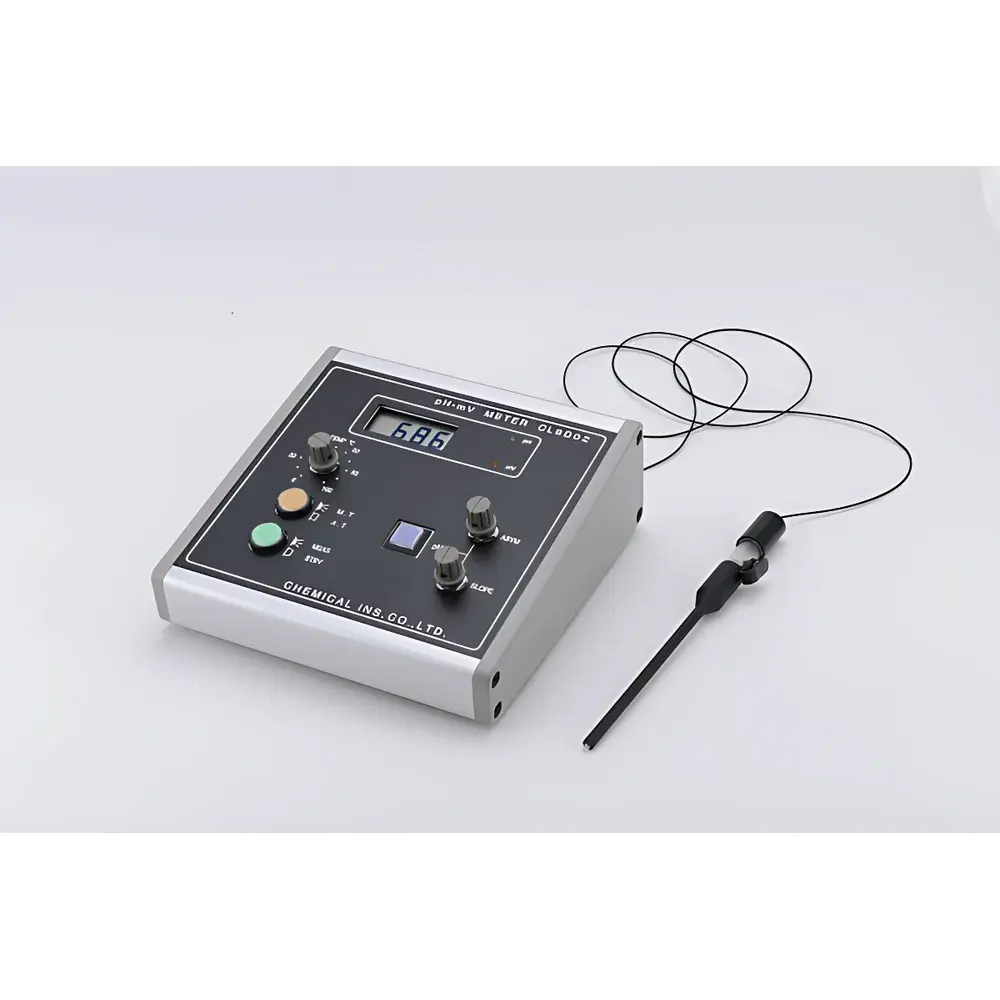
ASCH CL-9D02 Ultra-Micro Volume pH Meter
| Brand | ASCH |
|---|---|
| Origin | Japan |
| Model | CL-9D02 |
| Instrument Type | Benchtop |
| Parameters Measured | pH and Temperature |
| pH Accuracy | ±0.01 pH |
| pH Range (Glass Electrode) | 0.00–14.00 |
| pH Range (Antimony Electrode) | 4.00–9.00 |
| Resolution | 0.01 pH |
| Temperature Compensation | Automatic & Manual (0–100 °C) |
| Input Impedance | >10¹³ Ω |
| Output Signal | 0–1.4 V / ±1999 mV |
| Power Supply | 220 V, 50/60 Hz |
| Power Consumption | ~1.0 VA |
| Dimensions | 165(W) × 180(D) × 70(H) mm |
| Weight | ~1000 g |
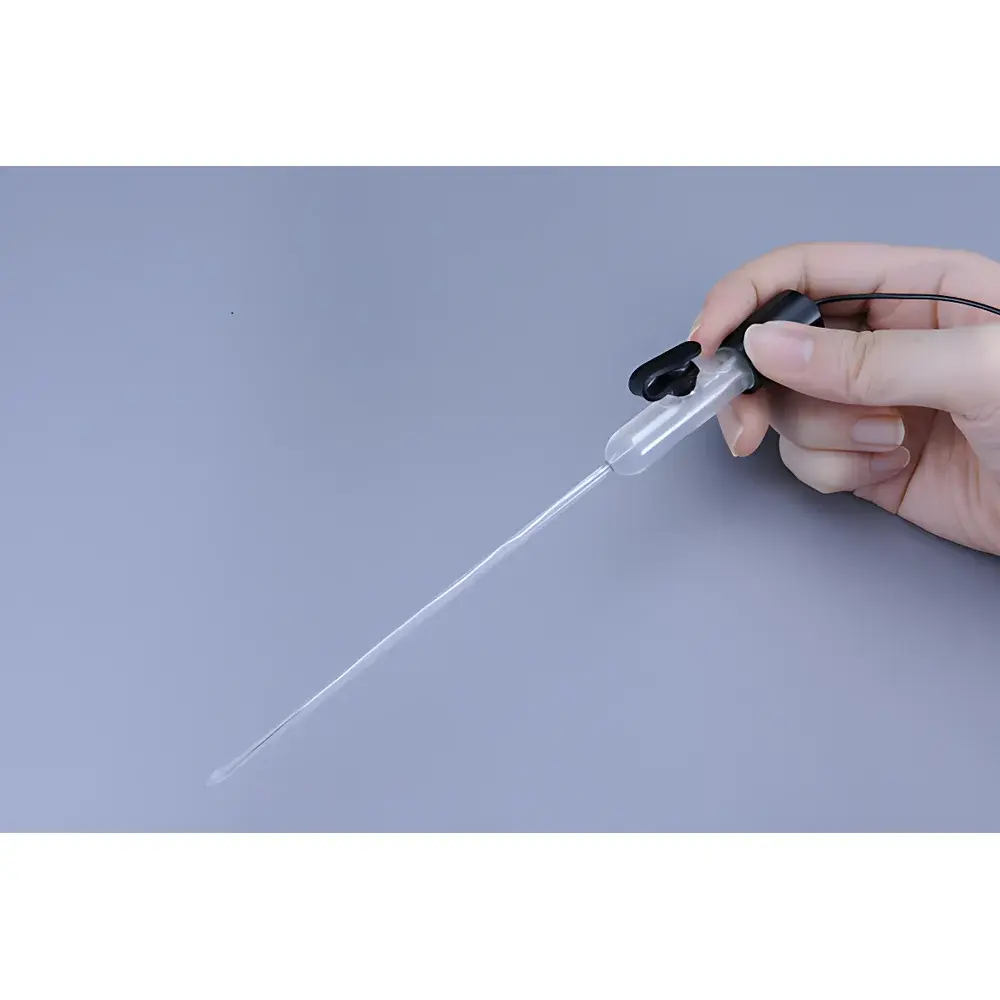
| Compatible Electrode | MCS-30S Antimony Composite Electrode |
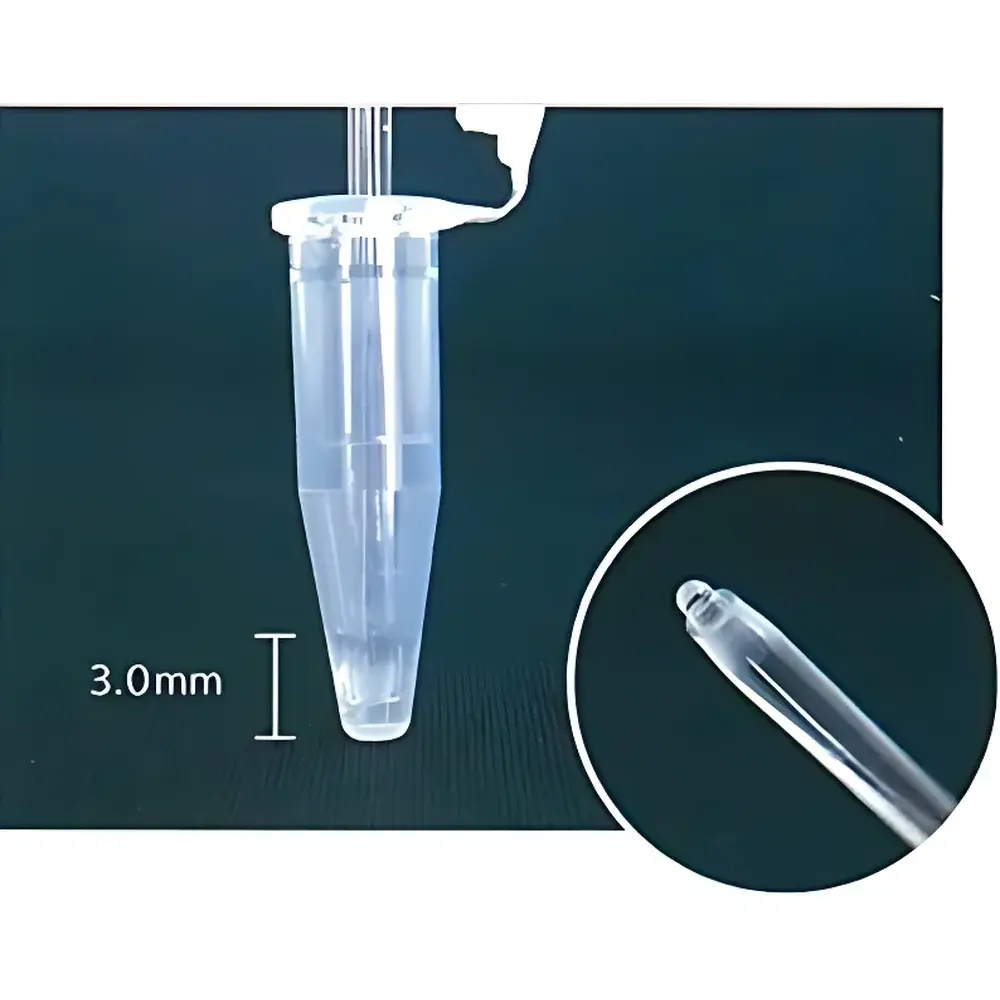
| Minimum Sample Volume | 50–1000 µL |
| Calibration Buffers | pH 4.01 and 6.86 |
Overview
The ASCH CL-9D02 Ultra-Micro Volume pH Meter is a precision benchtop electrochemical instrument engineered for high-accuracy pH measurement in extremely limited sample volumes—down to 50 µL. Designed specifically for applications where conventional pH electrodes fail due to insufficient liquid volume or geometric constraints, the CL-9D02 integrates a dual-sensor antimony-glass composite electrode architecture that eliminates the need for separate reference and measuring elements. Its operating principle relies on potentiometric measurement of hydrogen ion activity via a solid-state antimony sensing surface combined with a built-in temperature-compensated reference junction. This configuration enables stable, reproducible readings in microplate formats (e.g., 96-well and 384-well plates), microcentrifuge tubes, capillary vessels, and other low-volume biological or pharmaceutical samples. The instrument complies with fundamental electrochemical measurement standards under ISO 3696 (Grade 3 water for calibration) and supports traceable calibration protocols aligned with GLP requirements.
Key Features
- Ultra-low sample volume capability: Reliable pH measurement from 50 µL to 1000 µL without dilution or transfer artifacts
- Integrated MCS-30S sleeve-type antimony composite electrode: Features a 3-mm immersion depth design optimized for microplate wells and narrow-bore containers
- Dual-parameter measurement: Simultaneous pH and temperature readout with automatic or manual temperature compensation (0–100 °C)
- High-input-impedance circuitry (>10¹³ Ω): Minimizes loading error and ensures signal stability with high-resistance antimony electrodes
- Benchtop form factor with compact footprint (165 × 180 × 70 mm) and low power consumption (~1.0 VA)
- Calibration support for standard NIST-traceable buffers (pH 4.01 and 6.86), enabling two-point calibration per ISO 7027 and ASTM E70
Sample Compatibility & Compliance
The CL-9D02 is validated for use with aqueous and mildly buffered biological matrices including cell culture supernatants, enzymatic reaction mixtures, protein formulations, and nucleic acid solutions. Its antimony-based sensing element avoids glass membrane fragility and sodium error at low ionic strength, making it suitable for low-conductivity samples where traditional glass electrodes exhibit drift. The instrument meets essential electrical safety requirements per IEC 61010-1 and electromagnetic compatibility per IEC 61326-1. While not certified for IVD or clinical diagnostics, its measurement performance aligns with QC/QA workflows governed by USP , EP 2.2.3, and JP 2.05 for non-clinical pH verification in R&D and manufacturing environments.
Software & Data Management
The CL-9D02 operates as a standalone instrument with no embedded software or digital connectivity. All measurements are displayed on a high-contrast digital LCD screen with 0.01 pH resolution. Data recording requires external documentation; however, analog output (0–1.4 V) and mV mode (±1999 mV) allow integration with data acquisition systems compliant with FDA 21 CFR Part 11 when paired with validated third-party hardware and electronic lab notebook (ELN) platforms. Audit trails, user access control, and electronic signature functionality must be implemented externally per GMP Annex 11 guidelines.
Applications
- Biopharmaceutical process development: Monitoring pH shifts during small-scale bioreactor runs and purification step eluates
- Genomics and proteomics: Validating buffer pH in PCR master mixes, electrophoresis gels, and mass spectrometry sample prep
- Academic life science research: Quantifying extracellular pH changes in 3D spheroid cultures and microfluidic organ-on-chip models
- Quality control of excipients and lyophilized formulations: Verifying reconstitution medium pH prior to analytical testing
- Environmental microbiology: Assessing pH gradients in microcosm sediment cores and biofilm reactors
FAQ
What is the minimum immersion depth required for accurate measurement?
The MCS-30S electrode achieves stable potential at a minimum immersion depth of 3 mm, enabling reliable readings in shallow wells of standard microplates.
Can the CL-9D02 be used with non-aqueous solvents?
No—this instrument is calibrated and validated exclusively for aqueous-phase measurements. Antimony electrodes exhibit unpredictable response in organic solvents or high-alcohol content media.
Is the electrode compatible with autoclaving or steam sterilization?
The MCS-30S electrode is not autoclavable. Sterilization should be performed using 70% ethanol wipe-down or UV exposure only.
Does the device support single-point calibration?
Yes—manual single-point calibration is supported using either pH 4.01 or 6.86 buffer, though two-point calibration is recommended for full-range accuracy.
How often should the electrode be recalibrated during extended use?
Recalibration is advised before each measurement session and after every 2–3 hours of continuous operation, particularly when ambient temperature fluctuates beyond ±2 °C.




