
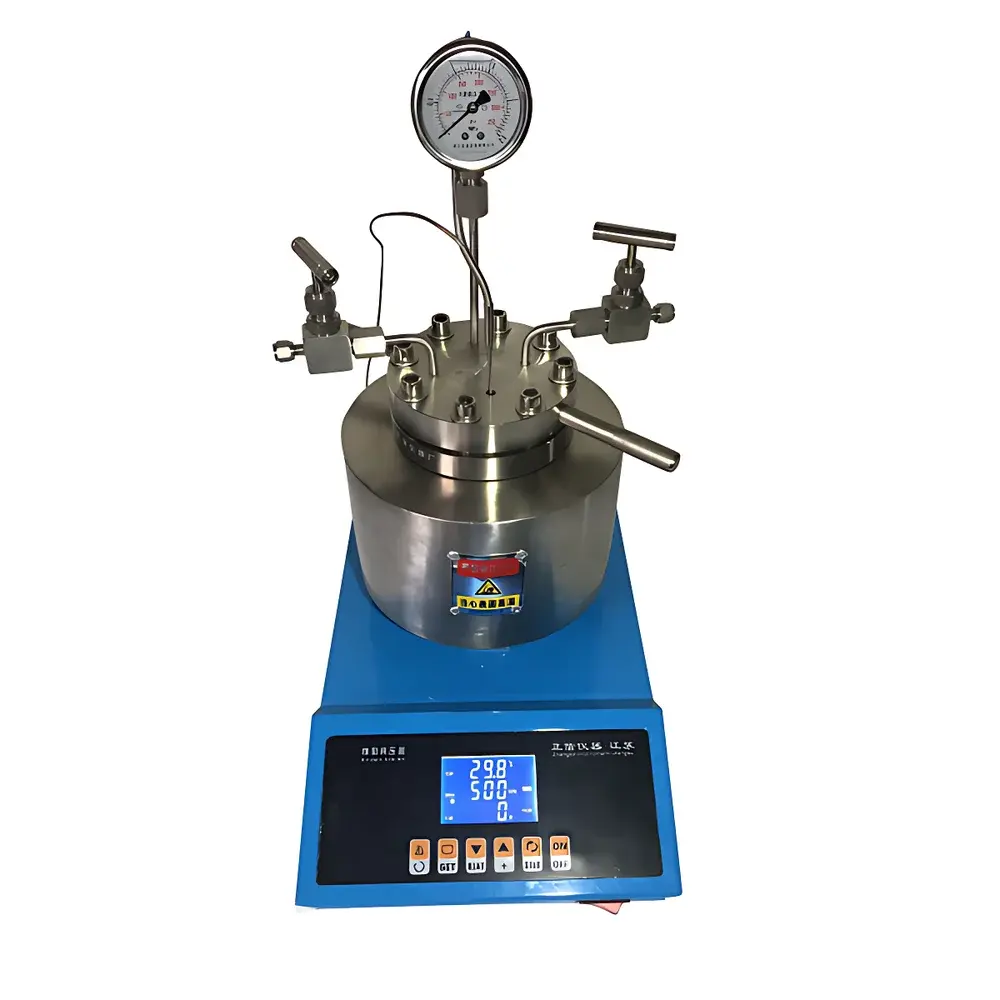
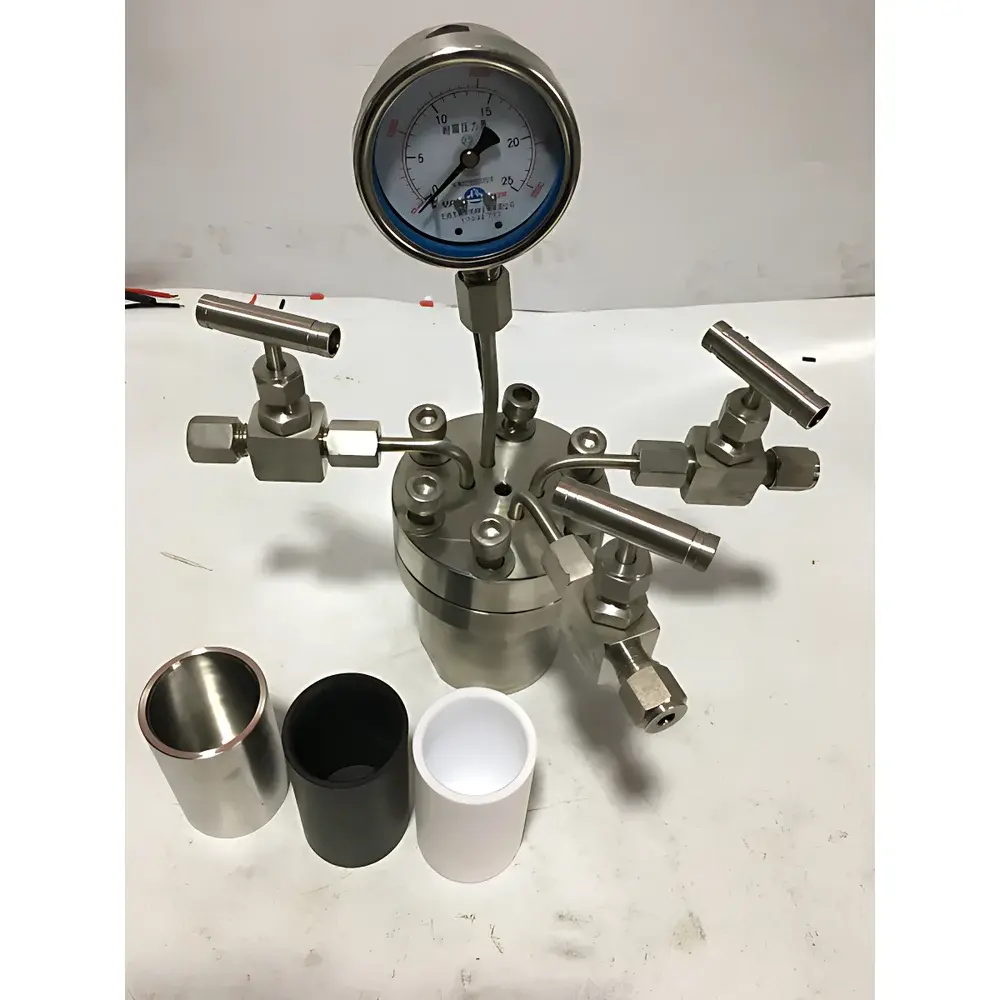
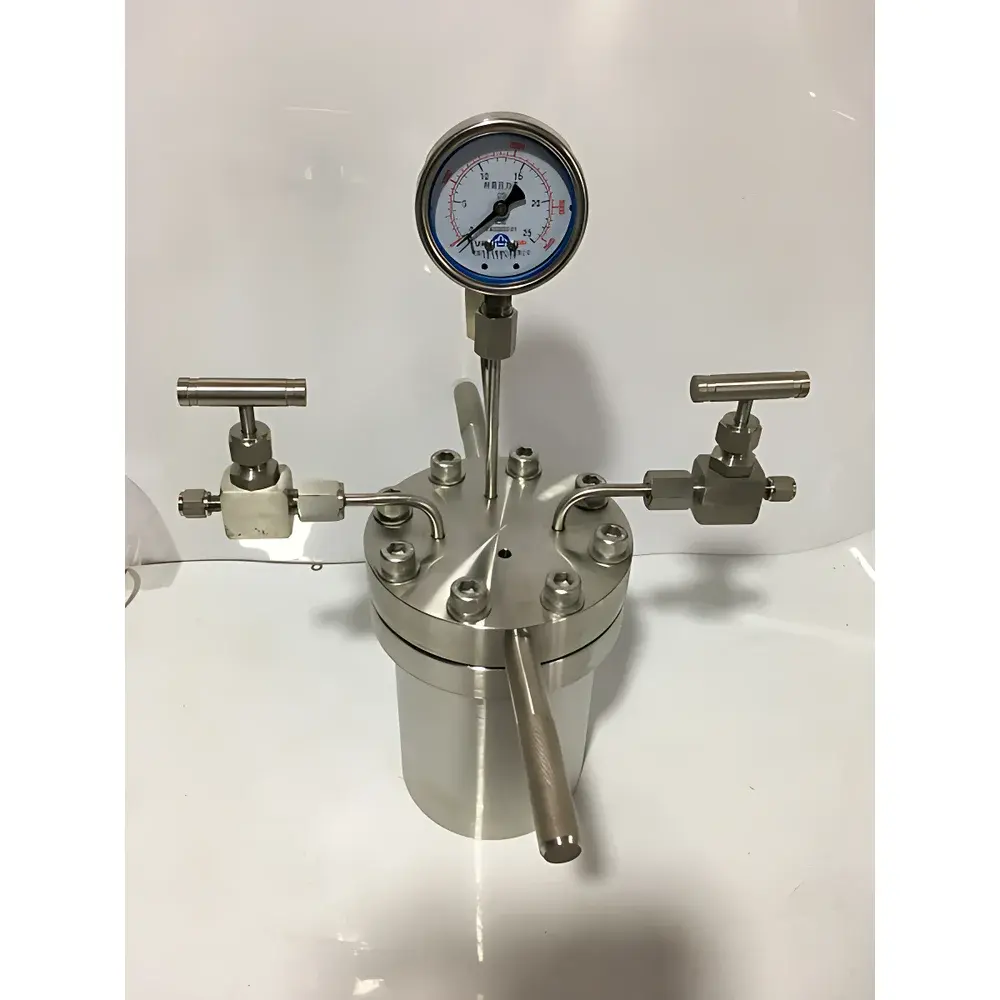
Zhengxin PSK Series High-Temperature & High-Pressure Hydrogenation Autoclave
| Brand | Zhengxin Instrument Factory |
|---|---|
| Origin | Jiangsu, China |
| Model | PSK-100 mL |
| Working Pressure Range | –0.1 to 70 MPa |
| Temperature Range | 0–1000 °C |
| Vessel Material Options | ASTM A182 F304 / F316L stainless steel, Hastelloy C-276, titanium (Grade 2/7), zirconium (R60702), or custom-lined configurations (PTFE, PPL, quartz, or metallic liners) |
| Sealing Type | Conical seal with dual-stage metal gasket (Inconel 718 or nickel alloy) |
| Gas Inlet/Outlet Valves | SS316L needle valves with 1/8″ and 1/4″ VCR fittings |
| Pressure Monitoring | Bourdon-tube stainless steel pressure gauge (0–100 MPa full scale, Class 1.6 accuracy) |
| Vacuum Capability | ≤5 × 10⁻² mbar (with external vacuum pump) |
| Heating Compatibility | External heating mantles, oil baths, sand baths, or electric cartridge heaters (max. 1000 °C surface temp) |
| Stirring Interface | Top-entry magnetic or mechanical drive (optional, up to 1200 rpm) |
| Filtration Option | Internal sintered metal frit (3–40 µm pore size, SS316L or Hastelloy) |
| Compliance | Designed per ASME BPVC Section VIII Div. 1 (2023 Ed.) with optional PED 2014/68/EU CE marking documentation |
| Customization | Fully configurable vessel geometry, port layout, sensor integration (RTD, thermocouple, H₂ sensor), and automation-ready I/O interfaces |
Overview
The Zhengxin PSK Series High-Temperature & High-Pressure Hydrogenation Autoclave is a rigorously engineered laboratory-scale reaction system designed for catalytic hydrogenation, hydrothermal synthesis, supercritical fluid reactions, and other demanding heterogeneous or homogeneous processes under extreme thermal and pressure conditions. Built upon the principles of thick-walled pressure vessel mechanics and leak-tight static sealing, the PSK reactor operates on a conical metal-to-metal sealing architecture—eliminating elastomeric components that degrade under sustained high-temperature H₂ exposure. Its core design adheres to ASME Boiler and Pressure Vessel Code Section VIII Division 1 requirements for design, fabrication, and non-destructive examination (including 100% ultrasonic testing of forged vessel bodies). The standard PSK-100 mL configuration features a monolithic 304 stainless steel body forged from ASTM A182 material, heat-treated to solution-annealed condition, and precision-machined to ensure dimensional stability across repeated thermal cycles from ambient to 1000 °C.
Key Features
- Forged vessel construction using ASTM A182 F304 or F316L stainless steel—providing superior grain structure integrity versus cast or welded alternatives under cyclic thermal stress.
- Dual-stage conical metal gasket sealing system (Inconel 718 or nickel alloy) rated for continuous operation up to 70 MPa and 1000 °C—validated via helium leak testing to ≤1 × 10⁻⁹ mbar·L/s.
- Modular gas handling interface with SS316L needle valves (1/8″ and 1/4″ VCR connections) enabling precise inert gas purging, vacuum evacuation, H₂ dosing, and controlled venting.
- Integrated Class 1.6 stainless steel Bourdon-tube pressure gauge (0–100 MPa range) with direct process connection—calibration traceable to NIST standards.
- Optional internal sintered metal filter (3–40 µm pore size, SS316L or Hastelloy C-276) for in-situ catalyst retention during liquid-phase hydrogenation.
- Standardized flanged ports accommodate RTD (Pt100), K-type thermocouples, H₂ concentration sensors, and pressure transducers with 1/4″ NPT or M20 × 1.5 threads.
- Configurable heating compatibility—including external electric heating mantles (with PID temperature controllers), silicone oil baths, molten salt baths, or radiant furnace inserts—ensuring uniform thermal profiles across the reaction zone.
Sample Compatibility & Compliance
The PSK autoclave supports a broad spectrum of reactive chemistries involving hydrogen, ammonia, CO, CO₂, H₂S, and halogenated gases. Its material options extend beyond standard stainless steels to corrosion-resistant alloys—including Hastelloy C-276 (for chloride-containing media), Grade 2 titanium (for reducing acidic environments), and R60702 zirconium (for hot alkali resistance)—enabling compliance with ASTM G31 immersion corrosion testing protocols. All vessels are supplied with full material test reports (MTRs) per EN 10204 3.1. Optional third-party certification includes ASME U-stamp documentation, PED 2014/68/EU conformity assessment files, and ISO 9001 manufacturing audit records. For regulated pharmaceutical or fine chemical applications, the system can be configured with 21 CFR Part 11–compliant data logging hardware and electronic signature-capable software.
Software & Data Management
While the base PSK model operates as a manually controlled unit, it is fully compatible with industry-standard automation platforms including LabVIEW, DeltaV, and Siemens PCS7 via analog (4–20 mA) and digital (RS485 Modbus RTU) I/O modules. Optional integrated controllers feature programmable ramp-soak profiles, real-time pressure/temperature trending, alarm thresholds with relay outputs, and audit-trail-enabled event logging meeting GLP and GMP requirements. Data export formats include CSV, PDF reports, and OPC UA server integration for enterprise-level LIMS or MES connectivity.
Applications
- Catalytic hydrogenation of unsaturated organic compounds (e.g., alkenes, alkynes, nitroarenes) using Pd/C, PtO₂, or Raney Ni catalysts under 1–10 MPa H₂.
- Hydrothermal synthesis of metal oxides, perovskites, and MOFs at temperatures up to 300 °C and pressures up to 20 MPa.
- Supercritical water oxidation (SCWO) studies requiring stable operation above 374 °C and 22.1 MPa.
- High-pressure polymerization of ethylene or propylene with Ziegler–Natta or metallocene catalysts.
- Corrosion testing of candidate alloys in simulated geothermal brines or sour gas environments (H₂S/CO₂ mixtures).
- In-situ XRD or Raman spectroscopy cells (with quartz or sapphire windows) for time-resolved structural analysis under reaction conditions.
FAQ
What pressure and temperature ratings apply to the standard PSK-100 mL configuration?
The standard PSK-100 mL unit is rated for continuous operation up to 70 MPa and 1000 °C when constructed from ASTM A182 F316L or higher-grade alloys; actual service limits depend on selected materials, liner type, and safety factor per ASME design calculations.
Can the PSK reactor be integrated into an automated reaction station?
Yes—standardized electrical and pneumatic interfaces support seamless integration with third-party control systems. Optional OEM controller modules provide full PID regulation, data logging, and 21 CFR Part 11 audit trails.
Is vacuum capability built-in or dependent on external equipment?
Vacuum evacuation requires an external high-vacuum pump (e.g., turbomolecular or dual-stage rotary vane); the reactor itself is rated for service down to ≤5 × 10⁻² mbar when coupled to appropriate pumping infrastructure.
How is catalyst separation handled during liquid-phase hydrogenation?
An optional sintered metal frit (3–40 µm pore size) can be installed inside the vessel bottom to retain solid catalysts while permitting liquid product withdrawal via the dip tube port.
Are material certifications and ASME documentation available?
Yes—each unit ships with EN 10204 3.1 Material Test Reports; ASME U-stamp certification and PED documentation are available upon request with additional lead time and engineering review.



