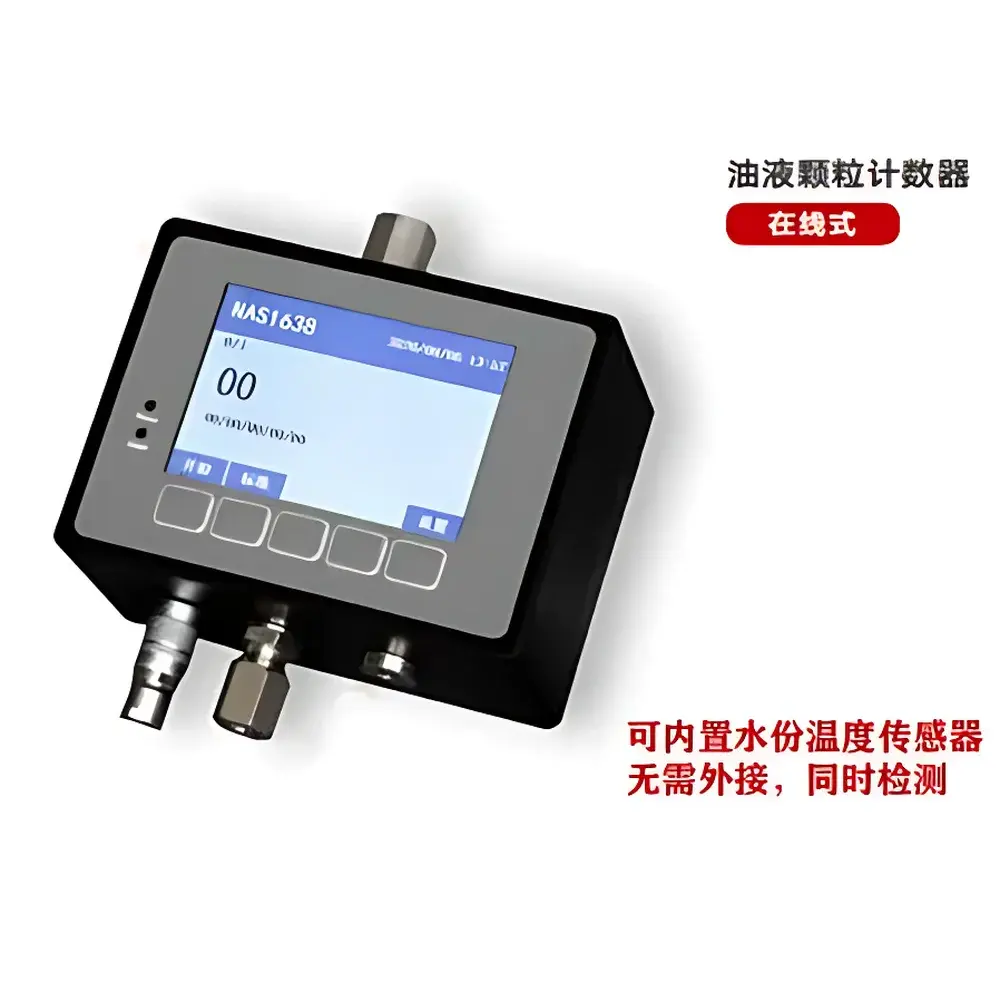
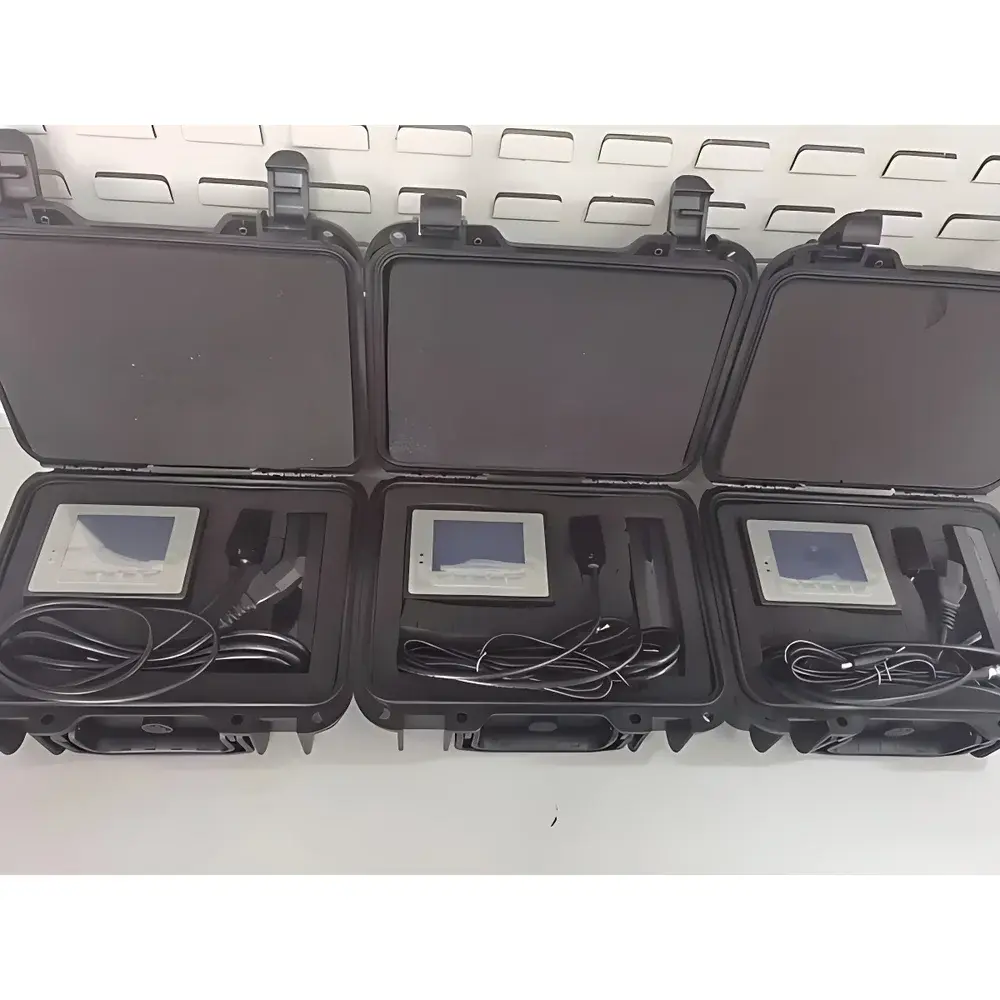
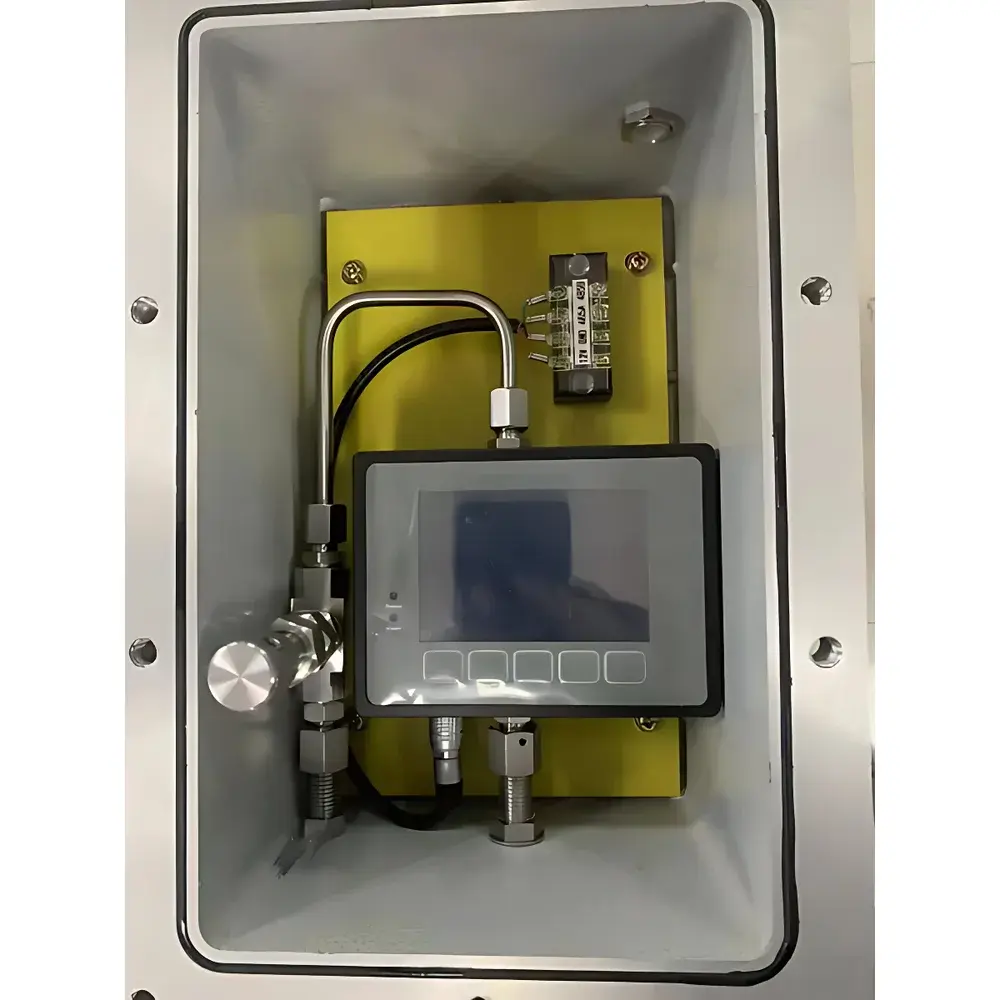
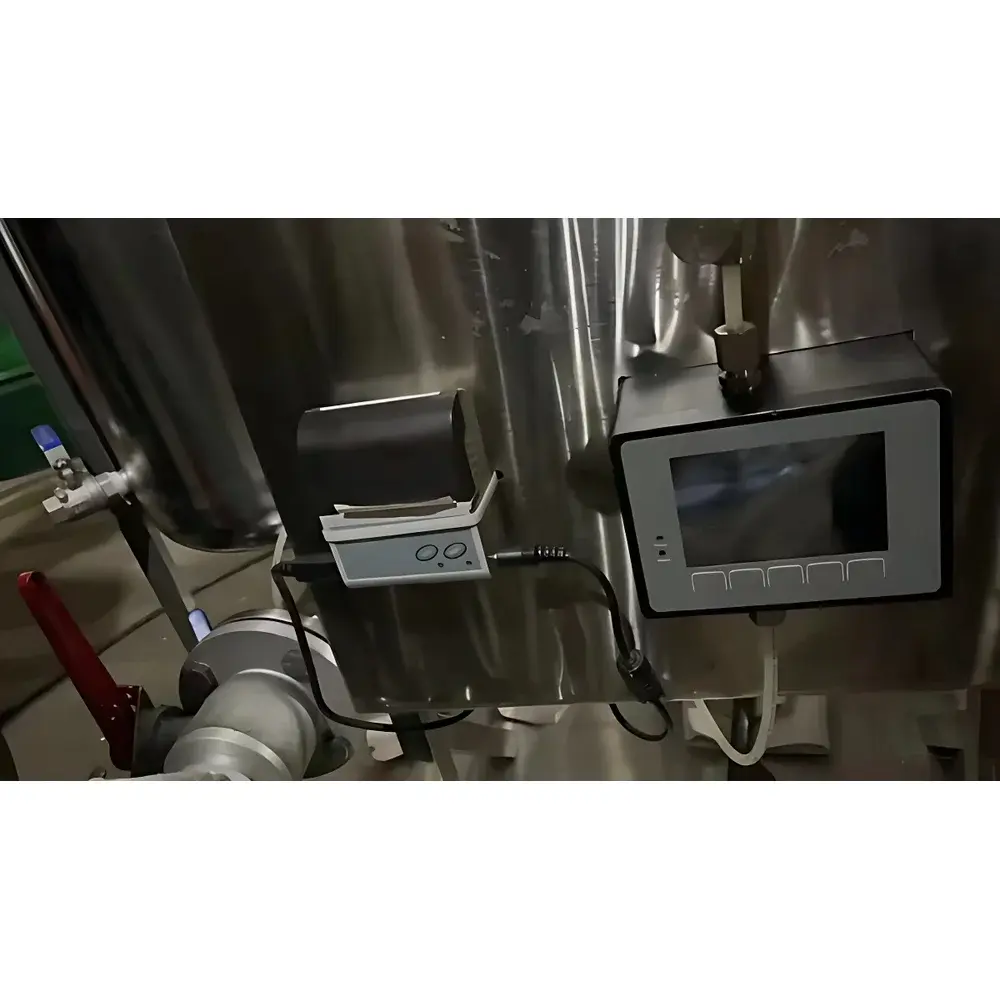
Starwood SDW-922 Online Oil Particle Counter

| Brand | Starwood |
|---|---|
| Model | SDW-922 |
| Measurement Principle | Light Obscuration (LO) |
| Particle Size Range | 1–600 µm |
| Sensitivity | 1 µm(c) or 4 µm(c) |
| Flow Rate | 5–500 mL/min |
| Operating Pressure | 0.1–10 MPa (up to 42 MPa with optional pressure reducer) |
| Viscosity Limit | ≤650 cSt |
| Counting Accuracy | ±0.5 ISO cleanliness code |
| Coincidence Limit | 40,000 particles/mL |
| Sample Temperature Range | 0–80 °C |
| Ambient Operating Temperature | −20–60 °C |
| Storage Temperature | −30–100 °C |
| Power Supply | AC 220 V ±10%, 50/60 Hz or DC 12–40 V |
| IP Rating | IP56 |
| Dimensions | 115 × 85 × 60 mm |
| Weight | 1 kg |
| Data Storage | 1,000 internal test records + USB external storage |
| Communication Interfaces | RS232, RS485 (Modbus RTU), USB |
| Optional Modules | Integrated temperature sensor (1–100 °C, ±1 °C), water activity sensor (1–100 %RH, ±1 %RH), absolute humidity sensor (1–360 ppm, ±1 ppm), 4G/5G remote monitoring |
Ask about pricing, availability and specifications.
Overview
The Starwood SDW-922 Online Oil Particle Counter is an industrial-grade, real-time contamination monitoring instrument engineered for continuous in-line measurement of particulate contamination in hydraulic and lubricating fluids. It operates on the internationally standardized light obscuration (LO) principle—recognized by ISO 11171, ISO 4402, and ASTM D2276—as defined by the International Hydraulic Organization (ISO TC 131/SC 6). In this method, particles suspended in a flowing fluid stream pass through a focused laser beam; each particle generates a transient reduction in detected light intensity proportional to its cross-sectional area. The system converts these pulses into calibrated particle counts per size channel, enabling quantitative assessment of fluid cleanliness according to multiple global contamination standards.
Designed for integration into active circulation loops—including high-pressure hydraulic systems, turbine lube oil circuits, transformer insulation oil lines, and gear oil reservoirs—the SDW-922 delivers robust performance under demanding operational conditions: ambient temperatures from −20 °C to 60 °C, fluid pressures up to 10 MPa (42 MPa with optional pressure-reduction assembly), and viscosities up to 650 cSt. Its compact form factor (115 × 85 × 60 mm), lightweight construction (1 kg), and IP56-rated enclosure ensure reliable deployment in confined, vibration-prone, or chemically aggressive environments common in aerospace ground support equipment, marine propulsion systems, steel mill rolling stands, and wind turbine nacelles.
Key Features
- High-fidelity semiconductor laser optical detection system with dual sensitivity options (1 µm(c) or 4 µm(c)) for broad applicability across mineral oils, synthetics, water-glycol fluids, and polar solvents.
- Real-time multi-standard compliance reporting: simultaneous output of ISO 4406, NAS 1638, SAE AS4059, GJB 420A/B, ГOCT 17216, and GB/T 14039 cleanliness codes from a single measurement cycle.
- Configurable counting volume (1–999 mL) and programmable sampling intervals (1 s to 24 h), supporting both continuous surveillance and scheduled diagnostic checks.
- Onboard calibration verification per ISO 11171 and GB/T 21540, with user-accessible calibration routines traceable to NIST-traceable reference materials.
- Dual flushing modes—volumetric and timed—facilitate rapid system priming and post-test cleaning without disassembly.
- Flexible human-machine interface: capacitive touchscreen or membrane keypad operation, with seamless switching between English and Chinese language firmware.
- Integrated Modbus RTU protocol over RS232/RS485 enables direct PLC interfacing, SCADA integration, and centralized fleet-level condition monitoring.
Sample Compatibility & Compliance
The SDW-922 is validated for use with all optically transparent fluids having refractive indices compatible with LO detection, including but not limited to: petroleum-based engine oils, turbine oils, hydraulic oils (mineral and synthetic), gear oils, transformer insulating oils, water-glycol fire-resistant fluids, polyalkylene glycols (PAG), phosphate esters, and low-viscosity organic solvents (e.g., alcohols, ketones). It complies with key regulatory and quality frameworks governing fluid integrity in critical infrastructure: ISO 4406:2017 (fluid contamination classification), ISO 11171:2010 (calibration standard for automatic particle counters), ISO 4402:1991 (reference method for calibration), and GB/T 18854–2015 (Chinese national standard for liquid particle counters). For regulated industries, the device supports audit-ready data logging—including timestamped raw counts, operator ID, and environmental metadata—aligned with GLP and GMP documentation requirements.
Software & Data Management
Data handling is implemented via embedded firmware with non-volatile memory supporting ≥1,000 full test records. Each record includes channel-specific particle counts, calculated cleanliness codes, flow rate, temperature (if equipped), and system status flags. External data export is supported via USB mass-storage mode, enabling direct transfer to laboratory information management systems (LIMS) or statistical process control (SPC) platforms. Optional 4G/5G telemetry modules allow secure cloud upload of time-series trends, alarm notifications, and historical histograms accessible via web dashboard or mobile application. All communication adheres to IEC 61131-3 and ISA-88 conventions for industrial interoperability. Firmware updates are performed over USB or OTA (over-the-air), ensuring long-term compliance with evolving cybersecurity best practices (IEC 62443 Level 1).
Applications
- Aerospace: Real-time monitoring of hydraulic fluid cleanliness in aircraft ground power units (GPU), flight control actuators, and auxiliary power unit (APU) lube systems.
- Power Generation: Condition-based maintenance of turbine lube oil and transformer dielectric oil in fossil, nuclear, and renewable plants.
- Marine & Offshore: In-service tracking of gearbox oil degradation aboard container ships, offshore drilling rigs, and dynamic positioning thrusters.
- Automotive Manufacturing: Closed-loop feedback control of coolant and hydraulic fluid quality during engine and transmission bench testing.
- Steel & Metalworking: Contamination surveillance in high-pressure emulsion systems used in cold rolling mills and forging presses.
FAQ
What particle size standards does the SDW-922 support out-of-the-box?
The instrument includes built-in implementations of ISO 4406, NAS 1638, SAE AS4059, GJB 420A/B, ГOCT 17216, and GB/T 14039—enabling immediate multi-standard reporting without external software.
Can the SDW-922 operate at elevated temperatures typical of turbine sump oil?
Yes. The fluid path is rated for continuous exposure to samples up to 80 °C, and the electronics housing maintains functionality from −20 °C to 60 °C ambient.
Is the device suitable for use in explosion-hazardous areas?
The base SDW-922 is not ATEX or IECEx certified; however, it may be installed outside classified zones with appropriate isolation manifolds and pressure-rated sample conditioning loops.
How is calibration traceability maintained?
Calibration is performed using ISO 11171-compliant latex sphere suspensions; users can execute verification routines internally and log results with digital signatures for audit purposes.
Does the SDW-922 support FDA 21 CFR Part 11 compliant electronic records?
While the core firmware provides audit-trail-capable logging (user ID, timestamps, parameter changes), full Part 11 compliance requires integration with a validated third-party LIMS or MES platform that manages electronic signatures and role-based access control.