
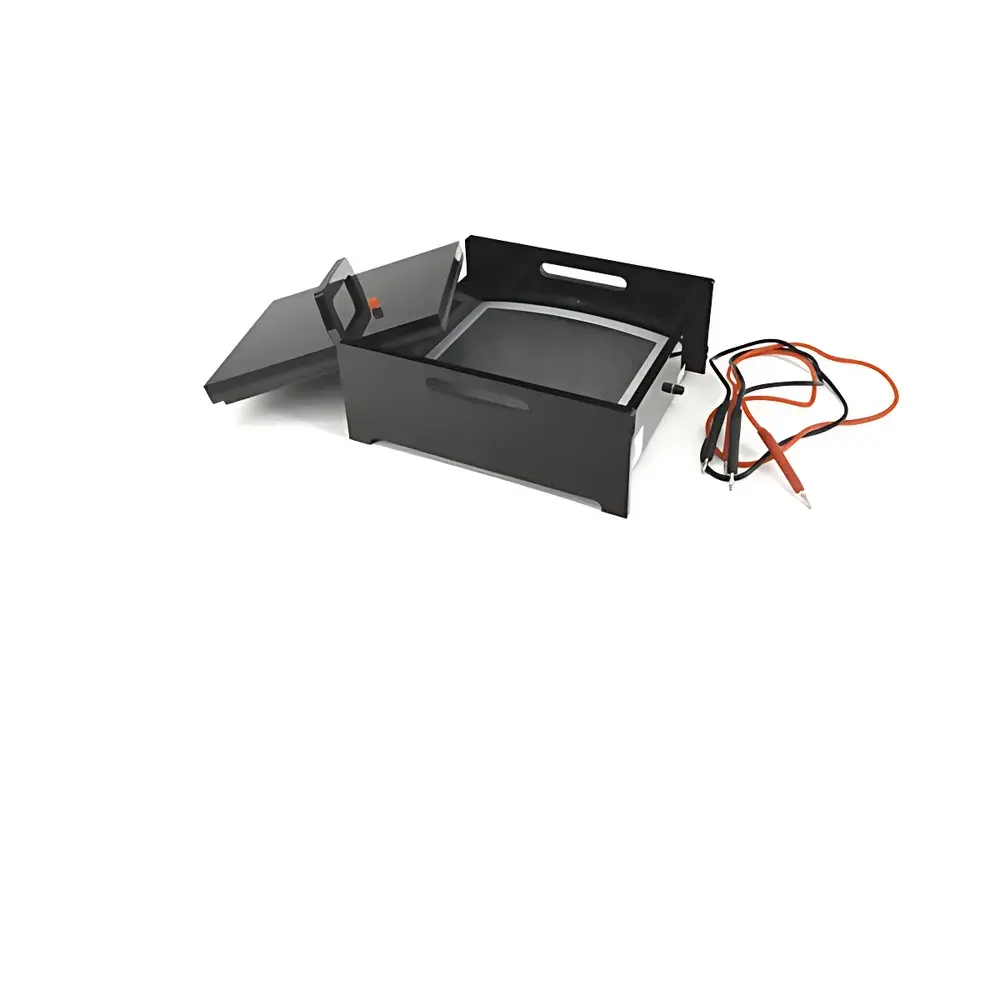
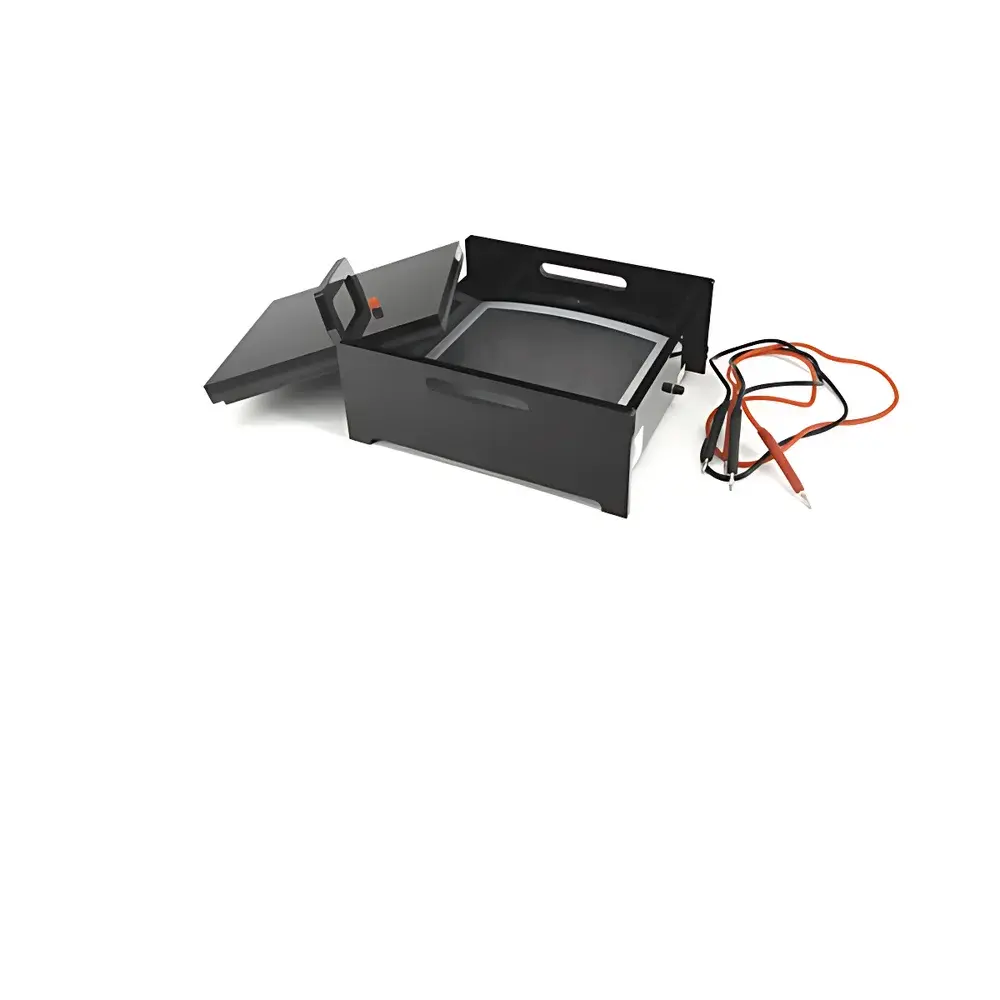
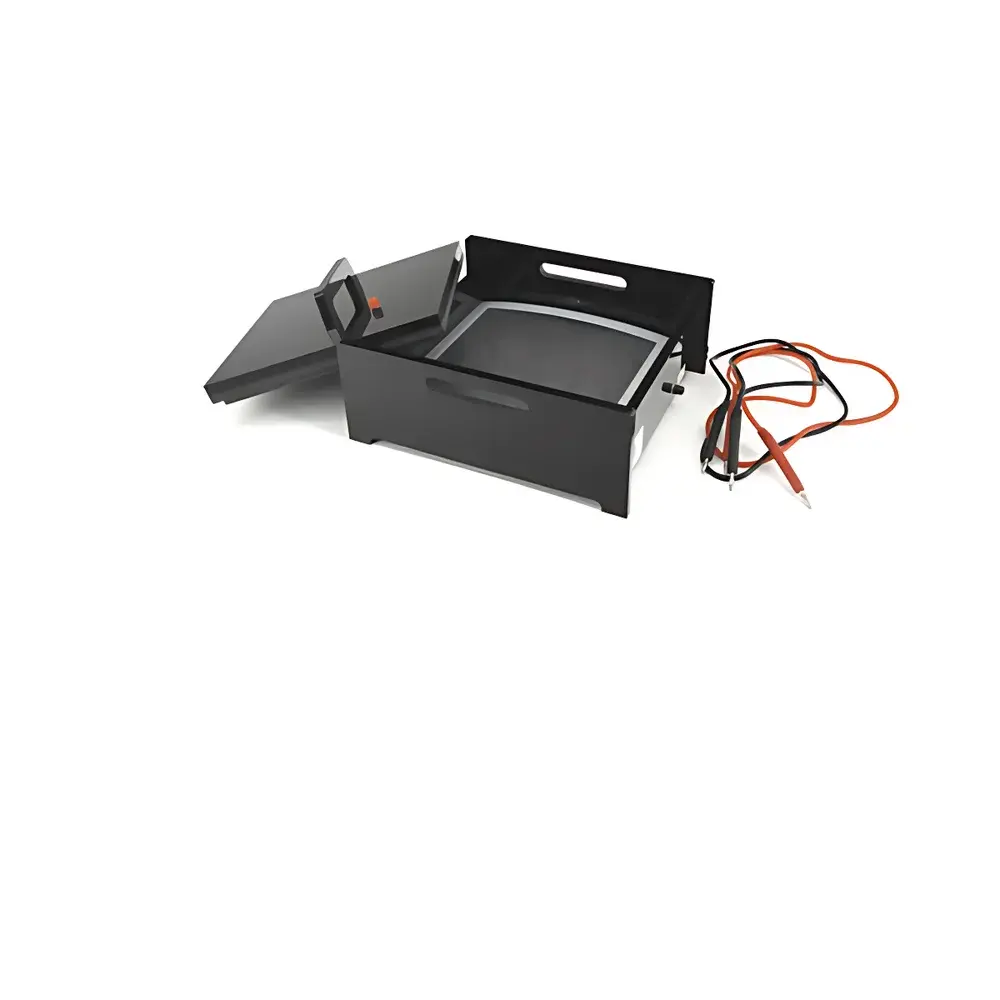
LY DYCP-40E Semi-Dry Carbon Plate Electrophoretic Transfer Apparatus
| Brand | LY |
|---|---|
| Origin | Beijing, China |
| Manufacturer Type | Authorized Distributor |
| Country of Origin | China |
| Model | DYCP-40E |
| Instrument Type | Semi-Dry Electrophoretic Transfer System |
| Main Unit | Electrophoresis Transfer Apparatus with Cassette |
| Transfer Plate Dimensions | 200 × 200 mm |
| External Dimensions (L × W × H) | 270 × 250 × 104 mm |
| Weight | 5 kg |
| Buffer Volume Requirement | Minimal (Semi-Dry Mode) |
Overview
The LY DYCP-40E Semi-Dry Carbon Plate Electrophoretic Transfer Apparatus is an engineered solution for rapid, efficient, and reproducible electroblotting of proteins and nucleic acids from polyacrylamide or agarose gels onto solid-phase membranes. Operating on the principle of semi-dry electrophoretic transfer, the system applies a direct current across a compact sandwich assembly—comprising gel, membrane, and conductive carbon plates—enabling directional migration of charged biomolecules under low-resistance conditions. Unlike traditional wet-tank transfer systems, the DYCP-40E eliminates the need for large-volume buffer reservoirs, significantly reducing transfer time (typically 15–60 min), minimizing Joule heating, and enhancing spatial resolution of transferred bands. Its architecture is optimized for routine Western, Southern, and Northern blotting workflows in academic, clinical, and industrial molecular biology laboratories.
Key Features
- Carbon plate electrode assembly ensures uniform current distribution and long-term conductivity stability—resistant to oxidation and corrosion under repeated use.
- Semi-dry configuration reduces buffer consumption by >90% compared to conventional tank systems, lowering operational cost and waste disposal burden.
- Compact footprint (270 × 250 × 104 mm) and lightweight design (5 kg) support benchtop deployment in space-constrained environments including biosafety cabinets and shared core facilities.
- Modular construction with removable upper lid, insulated spacers, and standardized electrode leads facilitates rapid cleaning, maintenance, and cross-contamination control.
- Compatible with standard 200 × 200 mm transfer plates—supporting full-size mini-gels (e.g., 10 × 10 cm) and dual-gel configurations without alignment drift.
- No integrated power supply; designed for use with external DC power supplies meeting IEC 61010-1 safety standards (output range: 0–100 V, 0–2.0 A recommended).
Sample Compatibility & Compliance
The DYCP-40E supports transfer of proteins (3–200 kDa), DNA (50 bp–20 kb), and RNA (0.5–10 kb) across common electrophoretic matrices, including SDS-PAGE, native PAGE, and denaturing agarose gels. It is compatible with nitrocellulose (NC), PVDF, and nylon membranes following standard methanol/water pre-wetting protocols. The device conforms to general laboratory equipment safety requirements per GB/T 29802–2013 (Chinese national standard for electrophoresis apparatus) and aligns with internationally recognized handling practices described in Current Protocols in Molecular Biology (Unit 10.8). While not FDA-cleared or ISO 13485-certified as a medical device, its mechanical design and material selection (non-leaching polymer housing, carbon composite electrodes) meet GLP-relevant criteria for traceability and reagent compatibility in regulated research settings.
Software & Data Management
The DYCP-40E is a hardware-only platform with no embedded firmware or digital interface. All parameter control—including voltage, current, and run duration—is managed externally via user-selected power supplies equipped with analog or digital output regulation. This architecture ensures full compliance with method validation requirements in QA/QC environments: operators record instrument ID (DYCP-40E), lot-specific carbon plate batch numbers, gel/membrane lot IDs, and power supply settings directly into electronic lab notebooks (ELN) or paper-based SOP logs. Audit trails remain independent of device firmware—supporting 21 CFR Part 11-compliant documentation when paired with validated ELN systems. No proprietary drivers, cloud connectivity, or firmware updates are required or provided.
Applications
- Western Blotting: High-fidelity transfer of denatured proteins for subsequent immunodetection using primary/secondary antibodies—optimized for low-abundance targets through controlled field strength and minimal diffusion.
- Southern Blotting: Efficient DNA immobilization post-alkaline or neutral transfer, preserving restriction fragment integrity for hybridization with radio-labeled or chemiluminescent probes.
- Northern Blotting: RNA transfer under denaturing conditions (e.g., glyoxal/DMSO gels), maintaining transcript size resolution critical for splice variant analysis.
- Two-Dimensional Electrophoresis Follow-up: Compatible with narrow IPG strips and large-format second-dimension gels when used with custom-cut carbon plates or adapter frames.
- Method Development: Serves as a reference platform for optimizing transfer efficiency across varying gel concentrations, membrane types, and buffer compositions (e.g., CAPS, Tris-Glycine-Methanol).
FAQ
Is the DYCP-40E supplied with a power supply?
No. The unit requires an external DC power supply capable of delivering up to 100 V and 2.0 A. Users must select a supply compliant with IEC 61010-1 for laboratory use.
Can it accommodate gels larger than 200 × 200 mm?
No. The carbon plate dimensions define the maximum active transfer area. Gels exceeding 200 × 200 mm require sectioning or alternative wet-transfer systems.
What maintenance is required for the carbon plates?
After each use, rinse plates with deionized water and wipe dry with lint-free cloth. Avoid abrasive cleaners or organic solvents. Inspect for surface pitting or delamination annually.
Does LY provide application support or protocol documentation?
Yes. LY supplies a printed English-language operating manual covering assembly, troubleshooting, and representative transfer protocols for NC/PVDF membranes. Digital copies are available upon request from authorized distributors.
Is the DYCP-40E suitable for high-throughput labs?
It is designed for medium-throughput academic and R&D labs performing ≤10 transfers/day. For >20 daily runs, consider parallelized semi-dry systems with multi-cassette capability.
Related Products





