
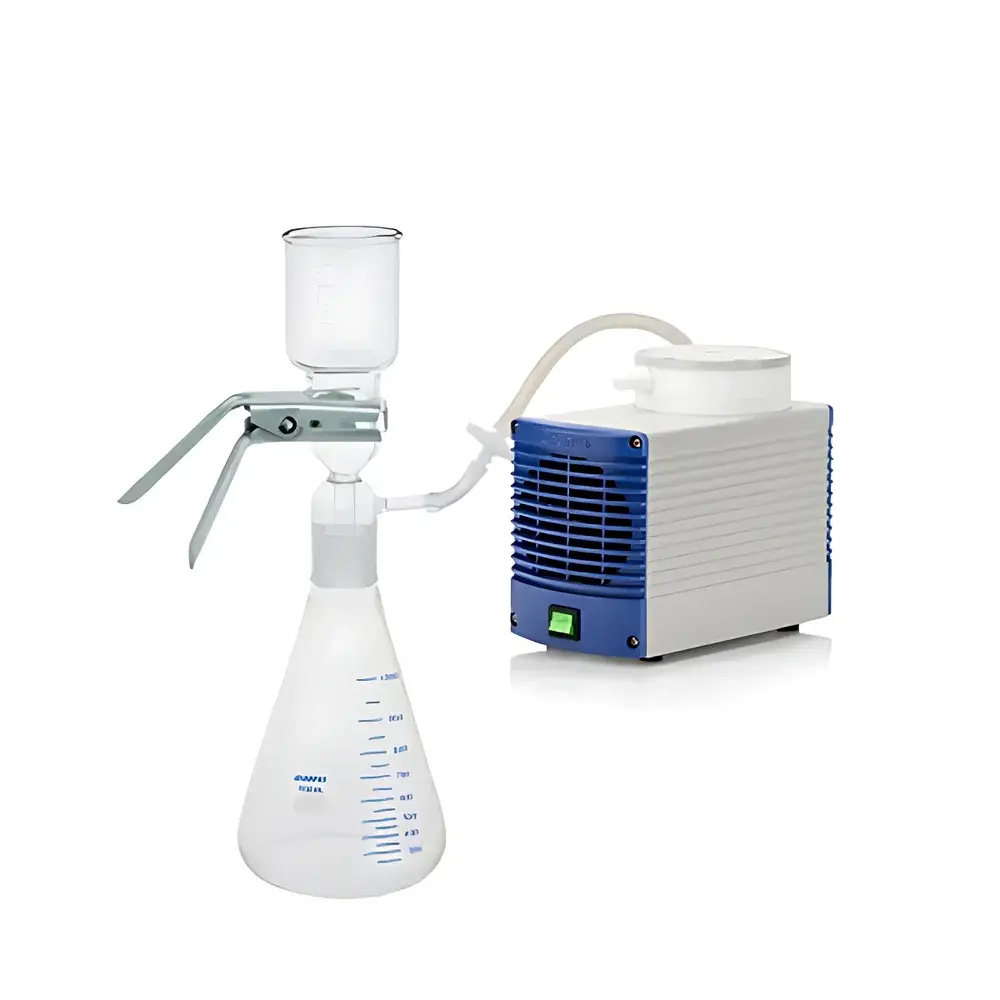
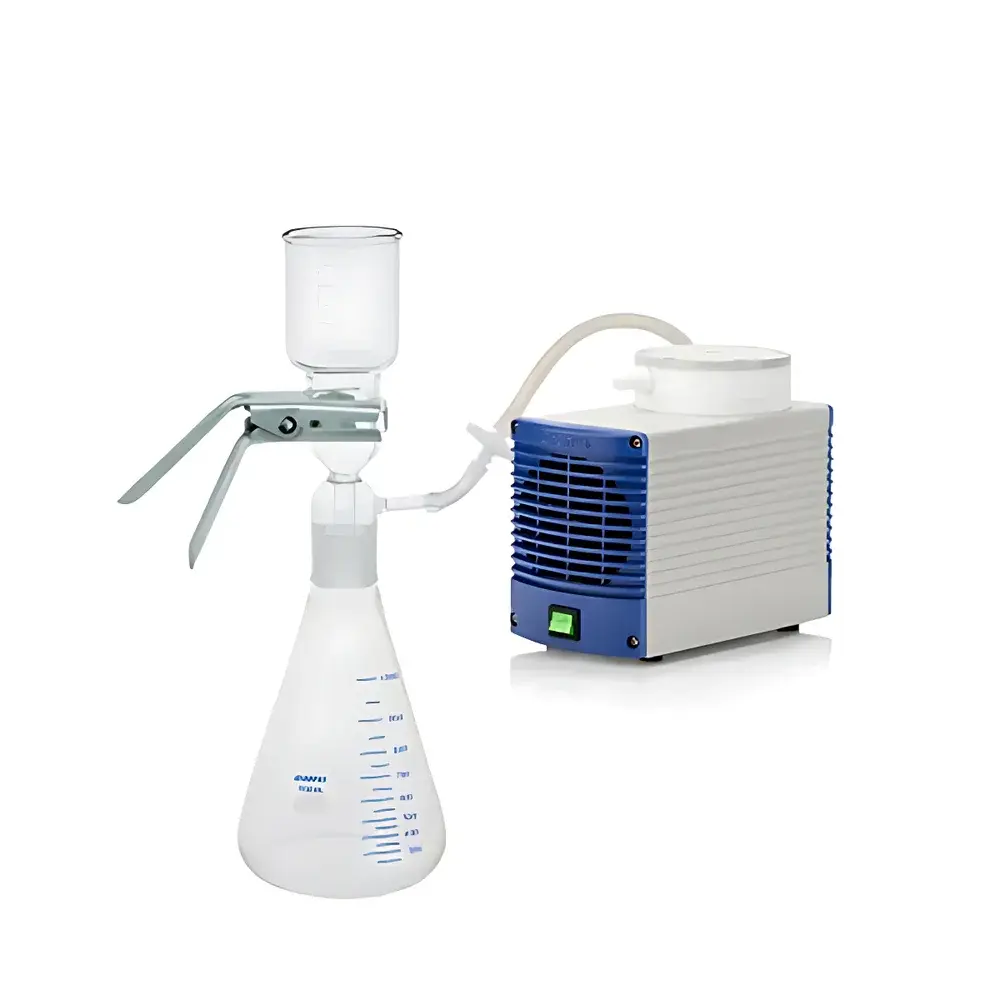
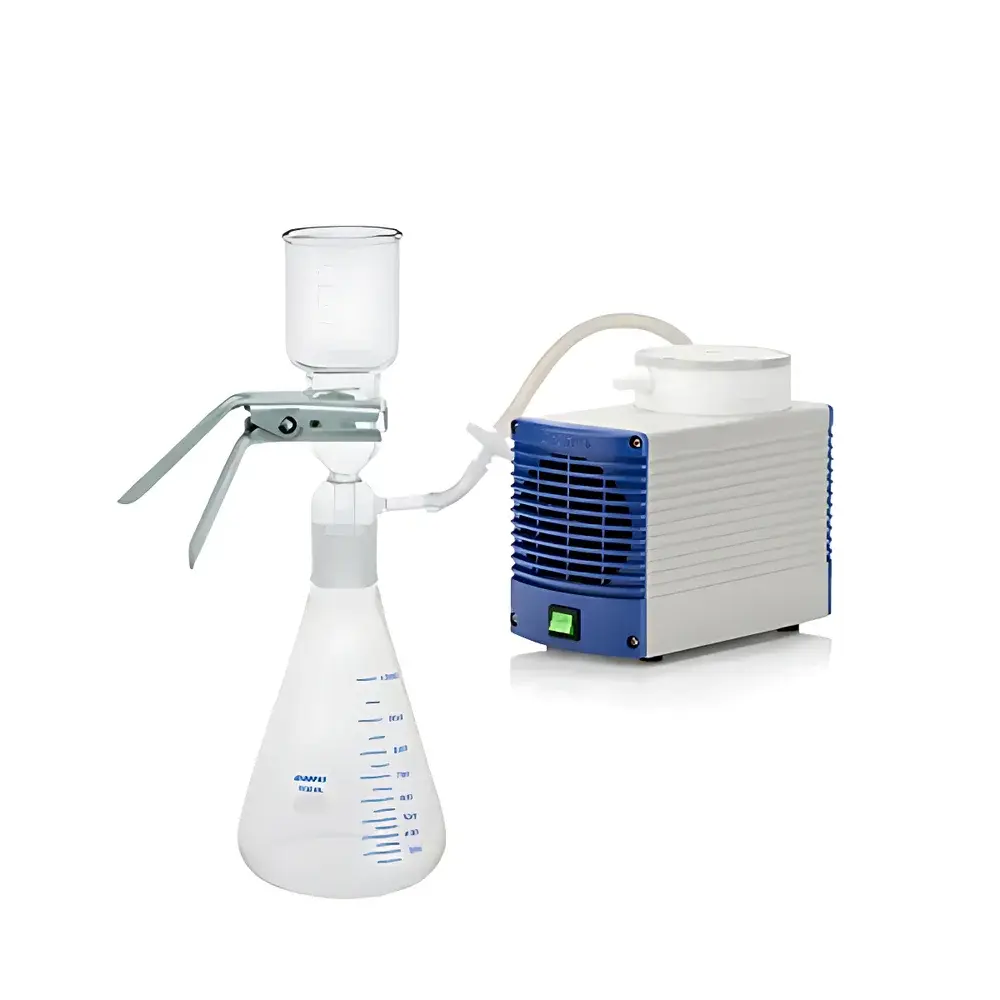
WIGGENS C300A Modular Vacuum Filtration System
| Brand | WIGGENS |
|---|---|
| Origin | Germany |
| Model | C300A |
| Vacuum Level | ≥210 mbar |
| Pumping Speed | ≤22 L/min |
| Collection Bottle Capacity | 1000 mL |
| Filter Membrane Diameter | 47/50 mm |
| Filtration Funnel Capacity | 300 mL |
| Effective Filtration Area | 8 cm² |
| Tubing Inner Diameter | 8 mm |
| Power Supply | 220–240 V / 50 Hz |
| Rated Power | 60 W |
| Includes | C300 Vacuum Pump, VF3 Glass Filtration Kit, Disc Filters, High-Pressure Silicone Tubing |
Overview
The WIGGENS C300A Modular Vacuum Filtration System is an engineered solution for reproducible, low-contamination liquid-phase separation in analytical and quality control laboratories. Designed around the principles of controlled negative-pressure filtration, the system operates by generating a stable vacuum differential across a microporous membrane—enabling selective retention of particulates, microorganisms, or precipitates while permitting clarified filtrate to pass into a dedicated collection vessel. Its modular architecture integrates a diaphragm vacuum pump (C300), a borosilicate glass filtration assembly (VF3), and a magnetically stabilized base station—ensuring mechanical stability during high-throughput operation and minimizing risk of tipping or misalignment during rapid waste drainage. The system meets fundamental operational requirements for gravimetric analysis (e.g., suspended solids determination per ISO 11923), microbiological membrane filtration (per ISO 7704, ASTM D5196), and solvent purification workflows preceding high-resolution chromatographic techniques.
Key Features
- Diaphragm vacuum pump (C300) delivering ≥210 mbar ultimate vacuum and ≤22 L/min free-air pumping speed—optimized for consistent draw-down across variable load conditions without oil contamination or vapor backstreaming.
- VF3 borosilicate glass filtration kit comprising a 300 mL funnel with 8 cm² effective filtration area, calibrated 1000 mL waste bottle with integrated quick-drain valve, and magnetic base mount for vibration-dampened positioning on benchtops.
- Compatibility with standard 47 mm and 50 mm diameter filter membranes—including mixed cellulose ester (MCE), polyethersulfone (PES), nylon, and hydrophilic/hydrophobic PVDF—supporting diverse pore size selections (0.1–5.0 µm).
- High-pressure silicone tubing (ID 8 mm) rated for continuous vacuum service up to –0.9 bar, resistant to common organic solvents (e.g., acetonitrile, methanol, THF) used in HPLC mobile phase preparation.
- No external cooling required; thermally stable pump housing and passive heat dissipation design ensure uninterrupted 8-hour operation under GLP-compliant workflow schedules.
Sample Compatibility & Compliance
The C300A system accommodates aqueous matrices (drinking water, wastewater, food extracts), buffered biological suspensions (bacterial cultures, yeast lysates), and low-viscosity organic solutions (HPLC-grade solvents, GC diluents). It supports standardized methods including ISO 9308-1 (E. coli enumeration), USP (microbial limits testing), EPA Method 160.1 (total suspended solids), and ASTM D3921 (solvent filtration prior to trace metal analysis). All glass components comply with DIN ISO 3585 specifications for borosilicate glass 3.3; pump housing conforms to IEC 61000-6-3 (EMC emissions) and IEC 61000-6-2 (immunity). The system is suitable for use in environments requiring audit-ready documentation under ISO/IEC 17025 and FDA 21 CFR Part 11–aligned data integrity frameworks when paired with validated logging software.
Software & Data Management
While the C300A operates as a stand-alone hardware platform, its vacuum performance parameters are compatible with third-party environmental monitoring systems via analog 0–10 V output (optional accessory module). For full traceability in regulated settings, users may integrate the pump’s runtime logs with laboratory information management systems (LIMS) using RS-232 or USB-to-serial adapters. The system supports GLP-compliant recordkeeping through timestamped usage logs, maintenance intervals (recommended every 500 operating hours), and calibration verification protocols aligned with ISO/IEC 17025 clause 6.4.2.
Applications
- Preparative filtration of HPLC mobile phases and GC carrier gases to remove sub-micron particulates that could clog precision injectors or damage column frits.
- Quantitative determination of total suspended solids (TSS) in environmental water samples per ISO 11923, with gravimetric analysis of retained residue on pre-weighed filters.
- Membrane-based microbial recovery from pharmaceutical water systems (PW, WFI) and bioprocess streams, followed by direct colony enumeration or molecular downstream processing.
- Purification of spectroscopic-grade solvents for UV-Vis and atomic absorption (AA) analysis, eliminating light-scattering contaminants affecting baseline stability.
- Routine cleanup of reaction mixtures in synthetic chemistry labs prior to NMR or mass spectrometry analysis.
FAQ
What filter membrane diameters are supported by the VF3 funnel?
The VF3 glass filtration funnel accepts standard 47 mm and 50 mm diameter membranes, with secure O-ring sealing ensuring leak-free operation at full vacuum.
Is the C300 pump suitable for continuous duty in a 24/7 QC lab environment?
Yes—the C300 diaphragm pump is rated for continuous operation up to 8 hours per session with ≥30-minute cooldown intervals; extended duty cycles require adherence to scheduled maintenance per WIGGENS Technical Bulletin TB-C300-Rev.4.
Can the system be used with aggressive solvents such as chloroform or acetone?
The included high-pressure silicone tubing is chemically resistant to acetone and alcohols; for chlorinated solvents, fluoropolymer-reinforced tubing (e.g., PTFE-lined) is recommended and available as an accessory.
Does the magnetic base accommodate non-ferrous benchtop surfaces?
The base includes adjustable rubber feet and optional adhesive mounting pads for use on stainless steel, epoxy resin, or ceramic work surfaces where magnetic coupling is insufficient.
How often should the vacuum pump’s diaphragm be replaced under normal laboratory use?
Based on 4–6 hours daily operation, diaphragm replacement is advised every 18–24 months or after 1,200 cumulative operating hours—whichever occurs first—as documented in the maintenance logbook provided with shipment.



