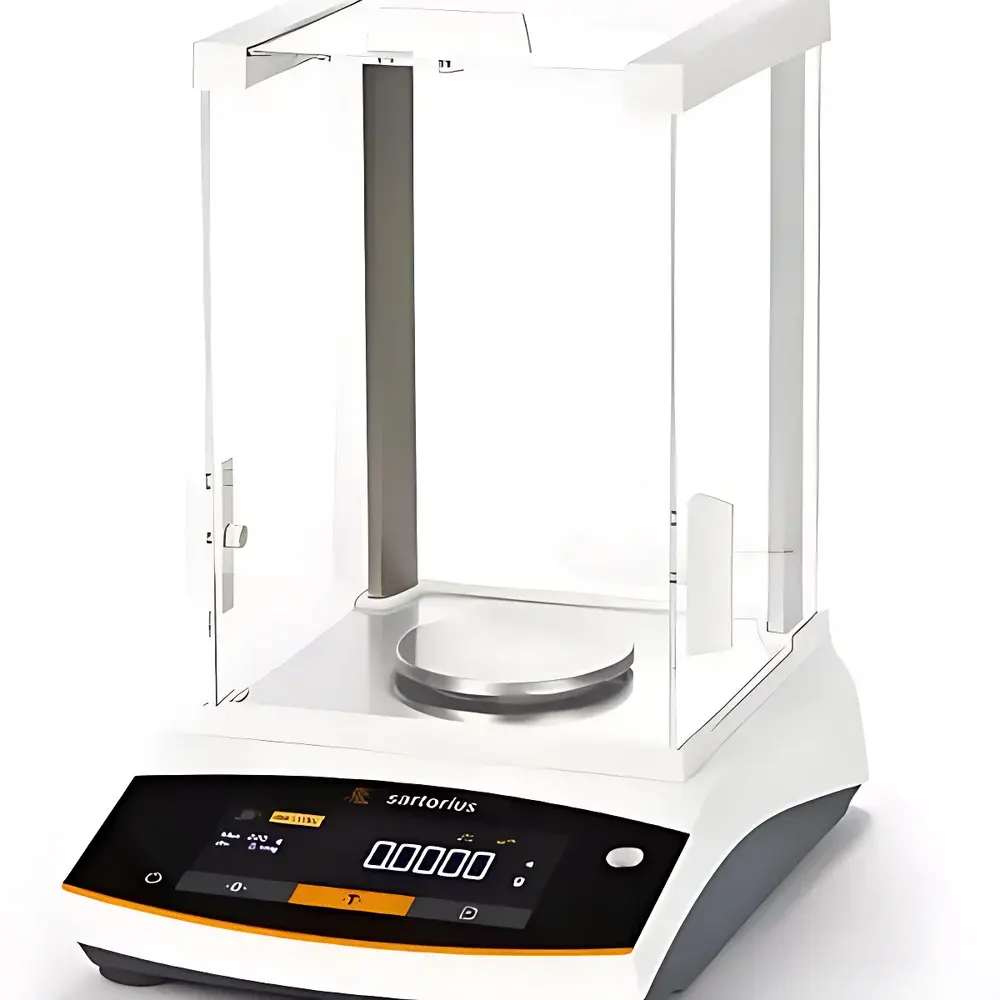
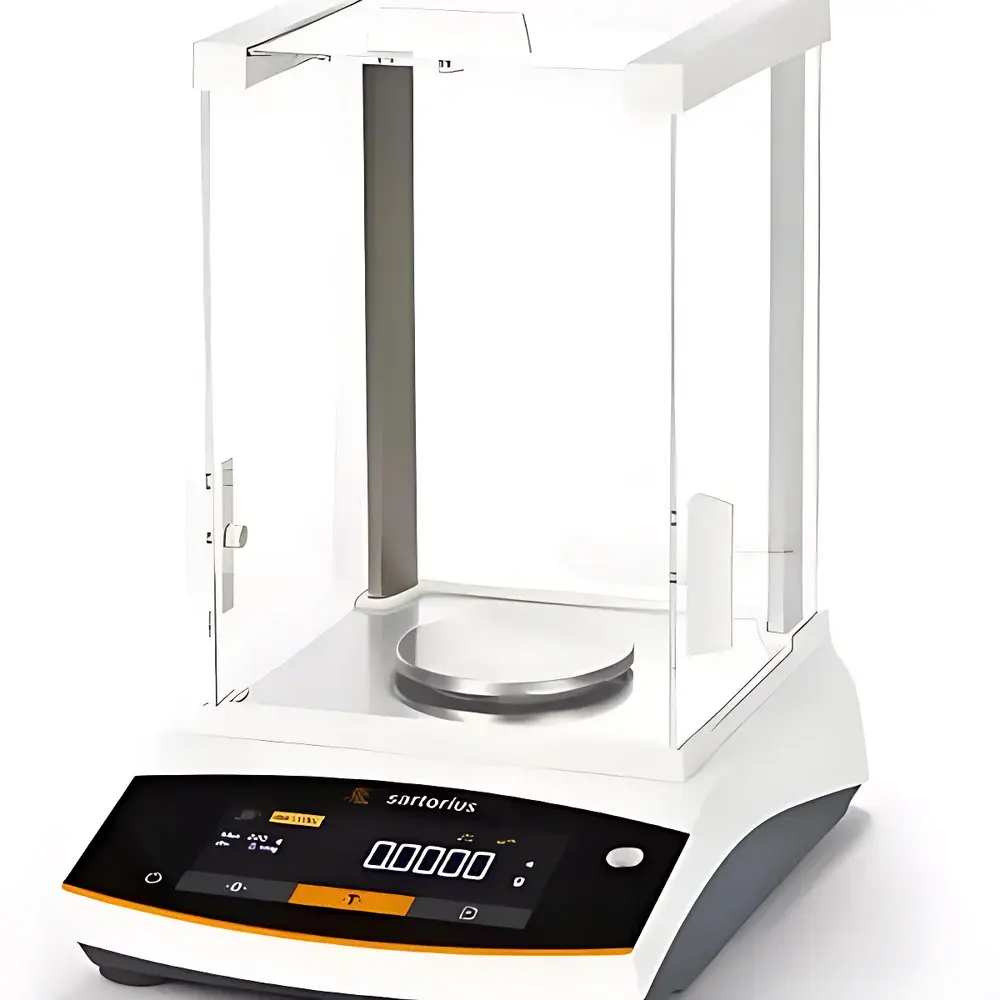
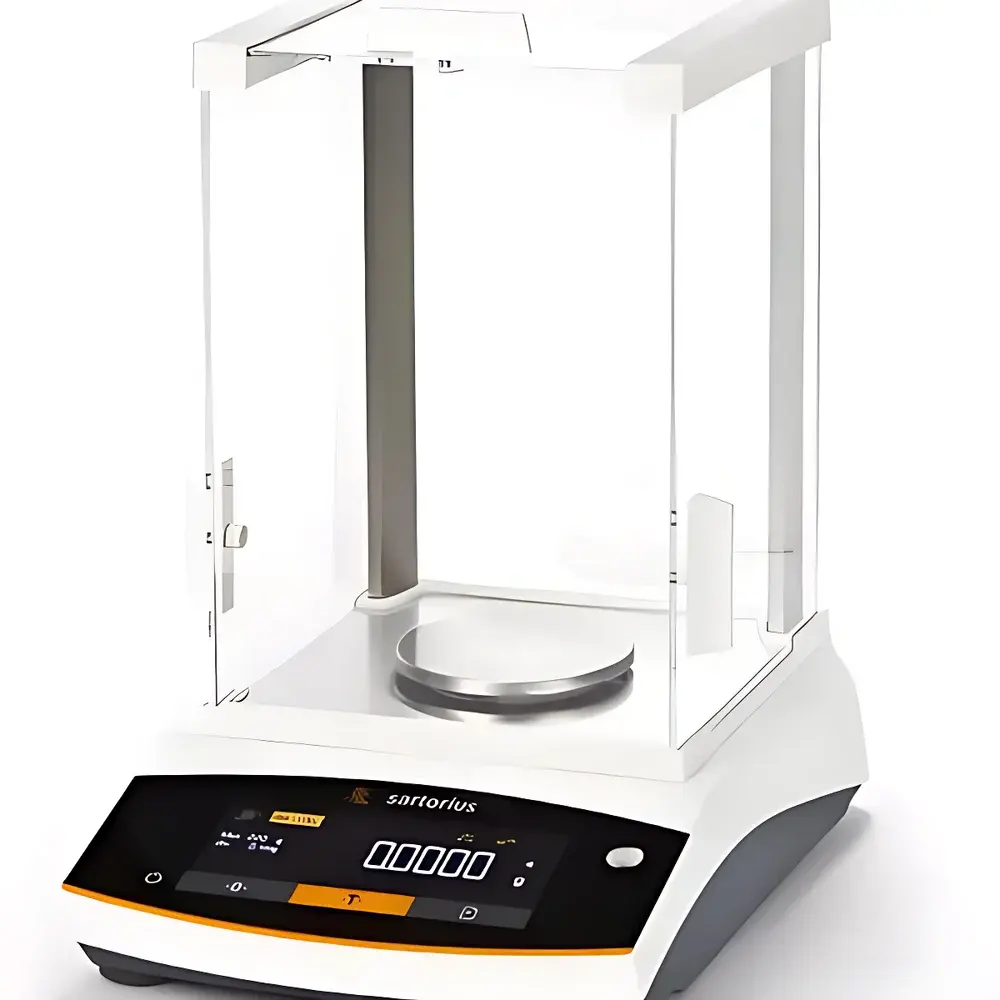
Sartorius BCE224i-1CCN Analytical Balance
| Brand | Sartorius |
|---|---|
| Origin | Germany |
| Model | BCE224i-1CCN |
| Type | Analytical Balance |
| Maximum Capacity | 500 g |
| Readability | 0.1 mg |
| Calibration | External |
| Compliance | GLP/GMP-ready, ISO/IEC 17025-supportive |
| Display | LED touchscreen interface |
| Connectivity | USB-C, RS-232 (9-pin), bidirectional |
| Languages | 8 built-in (English, German, French, Italian, Spanish, Portuguese, Russian, Polish) |
| Applications | Weighing, Counting, Percentage Weighing, Formulation, Density Determination, Statistics, Peak Hold, Checkweighing, Unit Conversion, Below-balance Weighing |
| Environmental Protection | Draft shield with removable sliding doors, ESD-minimized glass coating, PBT/stainless steel/glass construction |
| Self-diagnostics | @start self-test, isoCAL automatic internal calibration (time- and temperature-triggered) |
Overview
The Sartorius BCE224i-1CCN is a high-precision analytical balance engineered for laboratories requiring consistent 0.1 mg readability across a 500 g maximum capacity. Designed and manufactured in Germany, it belongs to the Entris® II series — a product line rooted in over 145 years of metrological expertise and adherence to DIN EN ISO 9001 quality management standards. Its core measurement principle relies on electromagnetic force compensation (EMFC), where the mass-induced displacement of the weighing pan is counterbalanced by a precisely regulated current through a coil within a permanent magnetic field. The resulting current is linearly proportional to mass and digitally converted with high-resolution ADC circuitry. This architecture ensures long-term stability, minimal drift, and traceable accuracy compliant with international calibration frameworks including OIML R76 and ASTM E898. The BCE224i-1CCN is intended for routine QC, formulation, and R&D environments where regulatory documentation, audit readiness, and repeatability are non-negotiable.
Key Features
- SuperMono® single-body sensor technology — monolithic load cell design minimizing mechanical hysteresis and thermal expansion effects
- isoCAL™ fully automated internal calibration system, triggered by time intervals or ambient temperature deviations ≥1.5 °C
- @start self-diagnostic routine executed at power-on to verify sensor integrity, display functionality, and key electronics
- Removable draft shield with top/side sliding doors — optimized for ergonomic access and rapid cleaning; coated glass surfaces reduce electrostatic interference
- Durable housing constructed from chemical-resistant PBT polymer, stainless steel, and tempered glass — suitable for labs handling solvents, acids, or particulates
- LED-backlit capacitive touchscreen with intuitive icon-based navigation — supports glove operation and resists fingerprint smudging
- Overload protection up to 150% of nominal capacity (750 g) without sensor degradation
- Below-balance weighing hook integrated into base structure for density determination and suspended sample applications
Sample Compatibility & Compliance
The BCE224i-1CCN accommodates volumetric vessels up to Ø160 mm × H180 mm within its spacious weighing chamber. Its large rectangular pan (120 × 120 mm) supports standard crucibles, beakers, and multi-well plates. All wetted surfaces meet USP suitability criteria for analytical instrument qualification. The balance supports full GLP and GMP workflows via configurable audit trails, electronic signature support (when integrated with compliant LIMS), and 21 CFR Part 11–ready data export protocols. isoCAL™ calibration logs include timestamp, ambient temperature, deviation values, and operator ID — satisfying ISO/IEC 17025 clause 6.4.10 requirements for calibration evidence. CE marking confirms conformity with EU Directive 2014/30/EU (EMC) and 2014/35/EU (LVD).
Software & Data Management
Data output is configurable via USB-C (mass storage or virtual COM mode) or legacy RS-232 (9-pin DB9, TTL-compatible). Output formats include ASCII tab-delimited, CSV, or Sartorius-specific .sbl files. Each record includes date/time stamp, net/gross/tare weight, application ID, stability flag, and calibration status. Built-in GLP/GMP report templates auto-generate compliant printouts with header metadata (instrument ID, user, location, environmental conditions). Twelve preloaded applications — including statistical analysis (n = 2–99, mean, SD, RSD, min/max), density calculation (with sinker kit), and checkweighing with configurable tolerance bands — store parameter sets per user profile. Firmware updates are delivered via encrypted Sartorius Update Manager (SUM) software.
Applications
This balance serves as a primary weighing platform in pharmaceutical QC labs (USP , ), academic chemistry departments, and contract manufacturing organizations (CMOs). Typical use cases include active pharmaceutical ingredient (API) dispensing under SOP-controlled environments, tablet weight variation testing per Ph. Eur. 2.9.5, gravimetric preparation of reference standards, moisture content determination (paired with halogen moisture analyzer), and raw material identity verification via quantitative comparison. Its counting function supports batch reconciliation of capsules or vials with user-defined piece weights; percentage weighing enables real-time formulation feedback during excipient blending. The density module meets ISO 1183-1 for solid polymers when used with calibrated sinkers and immersion fluid.
FAQ
What does “0.1 mg readability” mean in practice?
It indicates the smallest mass increment the balance can resolve and display — equivalent to 100 µg. This resolution applies across the full 500 g range, though optimal accuracy is maintained between 10%–90% of capacity (50–450 g) per ISO 17025 guidance.
Is internal calibration mandatory for compliance?
No — isoCAL™ is optional but recommended for environments with fluctuating lab temperatures. External calibration using certified Class E2 or F1 weights remains the metrological baseline for audit purposes.
Can the balance interface with LabArchives or Benchling?
Yes — via RS-232 or USB-C serial emulation, provided the ELN supports ASCII-based instrument drivers and configurable delimiter protocols.
How often should external calibration be performed?
Per ISO/IEC 17025:2017, frequency must be risk-assessed; typical intervals range from daily (high-use QC labs) to weekly (R&D settings), documented in a calibration schedule aligned with uncertainty budgets.
Does the BCE224i-1CCN support dynamic weighing (e.g., filling operations)?
Yes — the “Fill” application provides real-time gross weight tracking with adjustable update rates (0.2–2 s), stability thresholds, and auto-hold triggers for continuous process monitoring.