
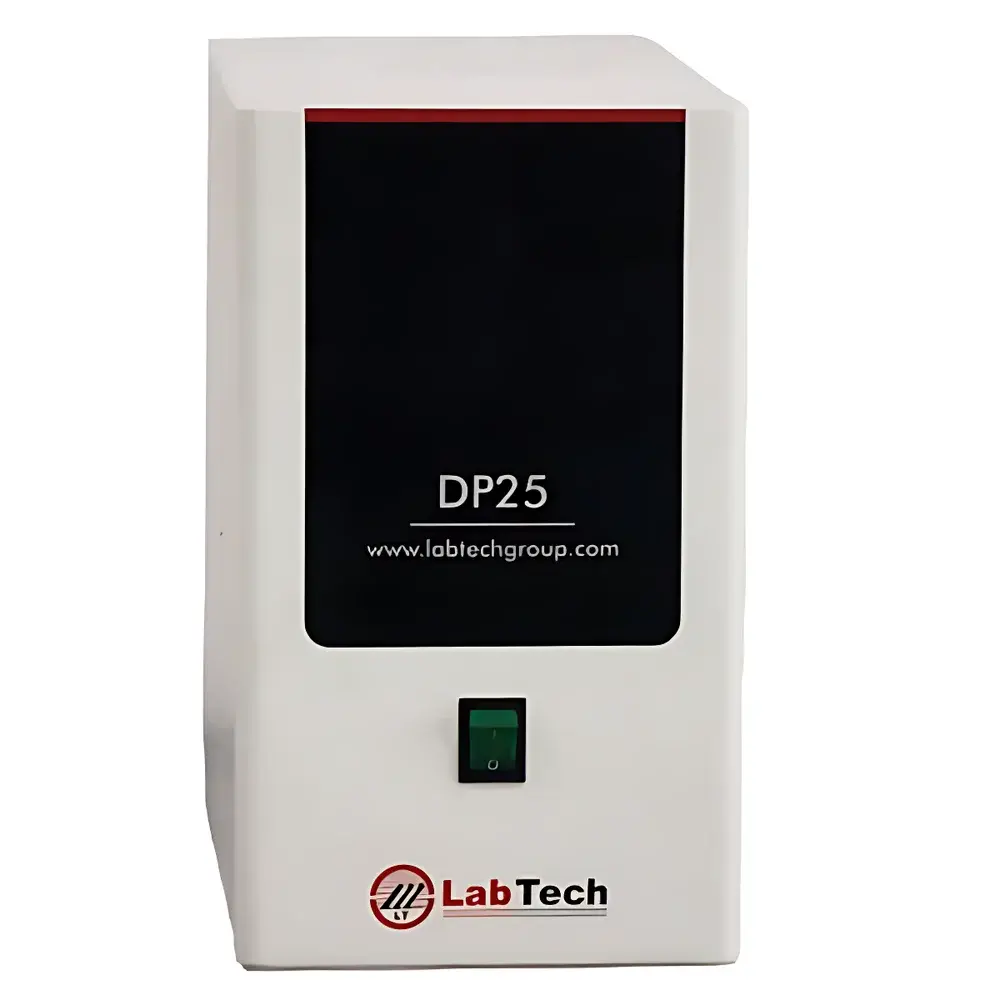
LabTech Corrosion-Resistant Diaphragm Vacuum Pump
| Brand | LabTech |
|---|---|
| Origin | Beijing, China |
| Pump Type | Diaphragm Vacuum Pump |
| Chemical Resistance | PTFE-Coated Components & Fluoropolymer Wetted Parts |
| Compliance | Suitable for GLP/GMP Environments (Audit-Ready Data Logging Optional) |
| Motor Power | Consult Factory |
| Ultimate Vacuum | Consult Factory |
| Pumping Speed | Consult Factory |
| Dimensions & Weight | Consult Factory |
| Certifications | CE, RoHS, ISO 9001 Manufacturing |
Overview
The LabTech Corrosion-Resistant Diaphragm Vacuum Pump is an oil-free, chemically inert mechanical vacuum pump engineered for reliable operation in aggressive laboratory environments. It operates on positive displacement principle via elastomeric diaphragms driven by eccentric cam mechanisms—eliminating the need for lubricating oil and thereby preventing hydrocarbon contamination of samples, vacuum lines, or ambient air. Unlike rotary vane or piston pumps, this dual-stage diaphragm architecture achieves deeper ultimate vacuum levels while maintaining structural integrity when exposed to corrosive vapors, acidic fumes, alkaline mists, or volatile organic solvents. Its design prioritizes operational safety, environmental compliance, and long-term stability in applications where chemical compatibility and vacuum purity are non-negotiable—such as acid digestion workflows, solvent-based extraction, vacuum filtration of aggressive reagents, and controlled-atmosphere sample preparation.
Key Features
- Chemically resistant wetted materials: All gas-contact surfaces—including diaphragms, valves, chamber housings, and inlet/outlet fittings—are constructed from fluoropolymers (PTFE, FFKM, and ETFE), ensuring compatibility with concentrated HCl, HNO₃, H₂SO₄, NaOH, acetone, chloroform, THF, and other halogenated or polar solvents.
- Dual-stage diaphragm configuration: Enhances vacuum depth and pumping efficiency across a broad pressure range (typically 1–100 mbar absolute), supporting both coarse and fine vacuum requirements without intermediate traps or auxiliary stages.
- PTFE-laminated diaphragm assembly: Integrates multi-layer polymer reinforcement to reduce fatigue deformation, extend service life beyond 10,000 operating hours under continuous duty, and maintain consistent volumetric displacement over time.
- Low-noise, low-vibration motor drive: Brushless DC motor with thermal protection and speed regulation ensures stable performance at variable load conditions while meeting ISO 2151 acoustic emission standards (<52 dB(A) at 1 m).
- Modular service design: Field-replaceable diaphragm kits, valve plates, and sealing components enable maintenance in under 15 minutes without specialized tools—minimizing instrument downtime and technician training overhead.
Sample Compatibility & Compliance
This pump is validated for use with corrosive, condensable, and reactive gas streams commonly encountered in analytical sample preparation workflows—including but not limited to: acid vapor from microwave digestion systems; solvent vapors during rotary evaporation of acetonitrile or methanol; chlorine-containing exhaust from halogenated compound synthesis; and caustic aerosols generated during alkaline leaching protocols. It conforms to IEC 61000-6-3 (EMC emissions) and IEC 61000-6-2 (immunity), carries CE marking per Machinery Directive 2006/42/EC, and is manufactured under ISO 9001:2015 quality management systems. When integrated with optional digital controllers supporting audit trail logging, it meets data integrity requirements aligned with FDA 21 CFR Part 11 and EU Annex 11 for regulated laboratories.
Software & Data Management
While the base model operates as a stand-alone analog unit, optional digital variants support RS-485 Modbus RTU or USB-C virtual COM port communication. Compatible LabTech PumpControl™ software (v3.2+) enables real-time monitoring of motor current draw, runtime accumulation, fault diagnostics (e.g., diaphragm rupture detection via pressure decay analysis), and scheduled maintenance alerts. All operational logs—including start/stop timestamps, cumulative run hours, and error codes—are timestamped, digitally signed, and exportable in CSV or PDF formats for GLP audit documentation.
Applications
- Vacuum filtration of corrosive filtrates in environmental water testing (e.g., EPA Method 300.0, ASTM D511)
- Sample concentration under reduced pressure for pharmaceutical impurity profiling (ICH Q5A, USP <621>)
- Gas-phase purging in headspace-GC analysis of sulfur compounds
- Evacuation of gloveboxes handling lithium battery electrolyte precursors
- Supporting solid-phase extraction (SPE) cartridges loaded with acidic or basic sorbents
- Backing high-vacuum systems (e.g., mass spectrometers, freeze dryers) in shared core facilities
FAQ
Is this pump suitable for continuous duty in fume hood environments?
Yes—its sealed motor housing, corrosion-resistant external casing, and absence of oil reservoirs make it ideal for unattended 24/7 operation inside ventilated enclosures.
Can it handle saturated solvent vapors without condensation damage?
It is designed for intermittent exposure to condensable vapors; however, prolonged operation above dew point requires integration with a cold trap or condenser to prevent liquid ingress into the diaphragm chamber.
What maintenance intervals are recommended for routine operation?
Diaphragm replacement is advised every 6,000–8,000 hours depending on chemical exposure severity; valve assemblies should be inspected quarterly in high-throughput labs.
Does LabTech provide calibration certificates traceable to NIST standards?
Vacuum performance verification reports (including ultimate vacuum and pumping speed validation at 23 °C ±2 °C) are available upon request with ISO/IEC 17025-accredited third-party certification options.
How does this pump compare to competing oil-sealed models in terms of ultimate vacuum?
While oil-free diaphragm pumps typically achieve ultimate vacuums in the 1–5 mbar range, their advantage lies not in absolute depth—but in repeatability, cleanliness, and chemical resilience where oil-based alternatives would degrade or contaminate.



