
BBE FluoroProbe FLP Portable In-Situ Chlorophyll a and Algal Class Analyzer
| Brand | BBE Moldaenke |
|---|---|
| Origin | Germany |
| Manufacturer | BBE Moldaenke GmbH |
| Type | Imported |
| Model | TS |
| Application | Field-deployable chlorophyll a and algal class quantification |
| Measurement Principle | Multi-wavelength excitation fluorescence spectroscopy |
| Detection Depth | Up to 1000 m (optional) |
| Key Parameters | Total chlorophyll a (0–500 µg/L, resolution 0.01 µg/L, LOD 0.05 µg/L), yellow substance (CDOM), green algae, cyanobacteria, diatoms/dinoflagellates, cryptophytes, depth (0–100/200/1000 m), temperature (−2 to 40 °C), transmittance (0–100%), pressure sensor integrated |
| Power | 12 V DC, internal rechargeable battery |
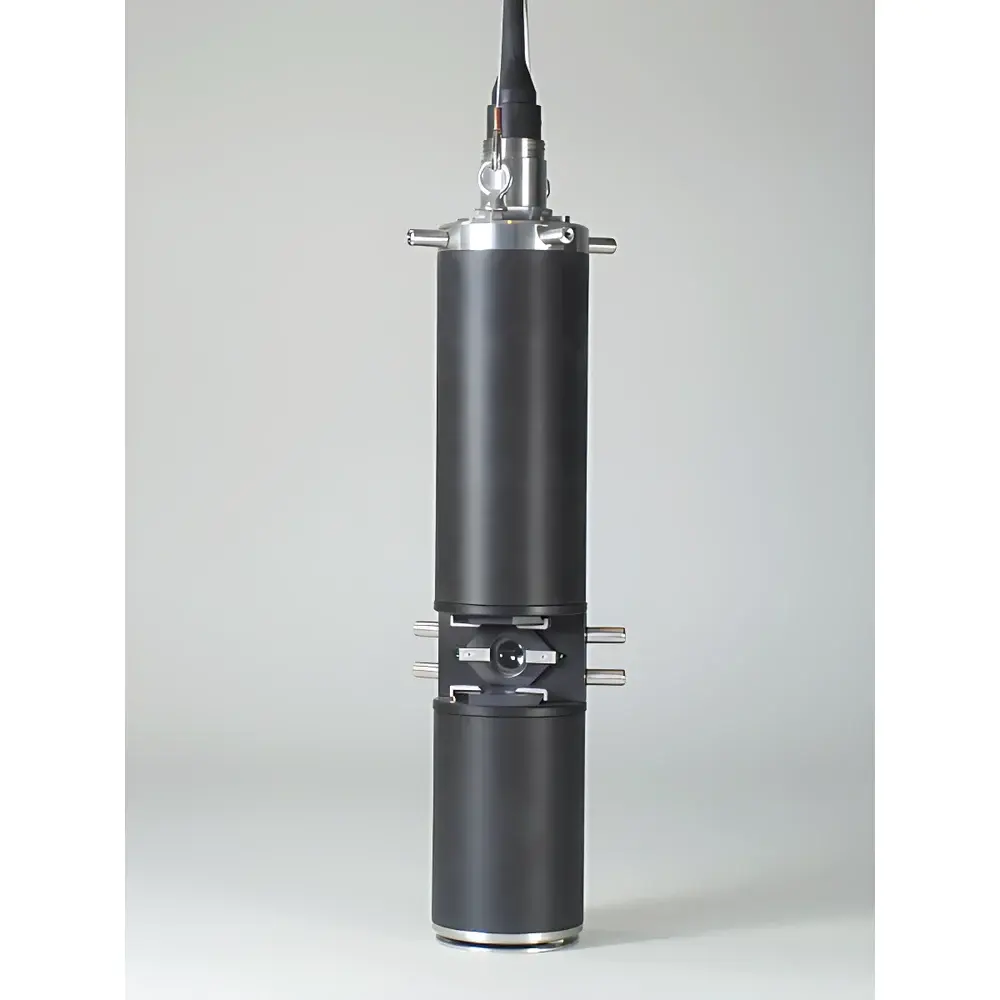
| Housing | Reinforced carbon fiber / V4A stainless steel (6.4 kg standard, 7.2 kg with housing, 5.1 kg titanium option) |
| Dimensions | 450 mm × 140 mm (H × Φ) |
| Memory | 2 GB (≥1000 datasets) |
| Interface | RS485 |
| Maintenance Interval | ≥7 days |
| Optional Accessories | Desktop mount, temperature probe, wiper unit, protective housing, cable reel, auto-start plug, Bluetooth handheld interface, transport case, cables (3/10/20/30/50/100 m) |
Overview
The BBE FluoroProbe FLP Portable In-Situ Chlorophyll a and Algal Class Analyzer is an advanced field-deployable fluorometric instrument engineered for real-time, in-situ quantification of phytoplankton biomass and taxonomic composition in natural aquatic systems. It operates on the principle of multi-wavelength excitation fluorescence spectroscopy: six discrete LED light sources (370, 470, 525, 570, 590, and 610 nm) selectively excite photosynthetic pigments—including chlorophylls, phycobilins, and carotenoids—whose spectral signatures are taxonomically conserved across major algal classes. By deconvolving the resulting emission spectra using proprietary multivariate calibration models, the FLP TS simultaneously resolves concentrations of total chlorophyll a, cyanobacteria, green algae, diatoms/dinoflagellates, and cryptophytes—with detection completed in under 3 seconds per measurement. Designed for rigorous environmental monitoring, it delivers laboratory-grade reproducibility without sample preservation or extraction, eliminating analytical delays inherent to HPLC or spectrophotometric protocols.
Key Features
- Real-time discrimination of ≥5 phytoplankton functional groups based on intrinsic pigment fluorescence fingerprints
- In-situ total chlorophyll a quantification (0–500 µg/L; resolution 0.01 µg/L; limit of detection 0.05 µg/L)
- Integrated CDOM (colored dissolved organic matter) assessment via yellow substance fluorescence response
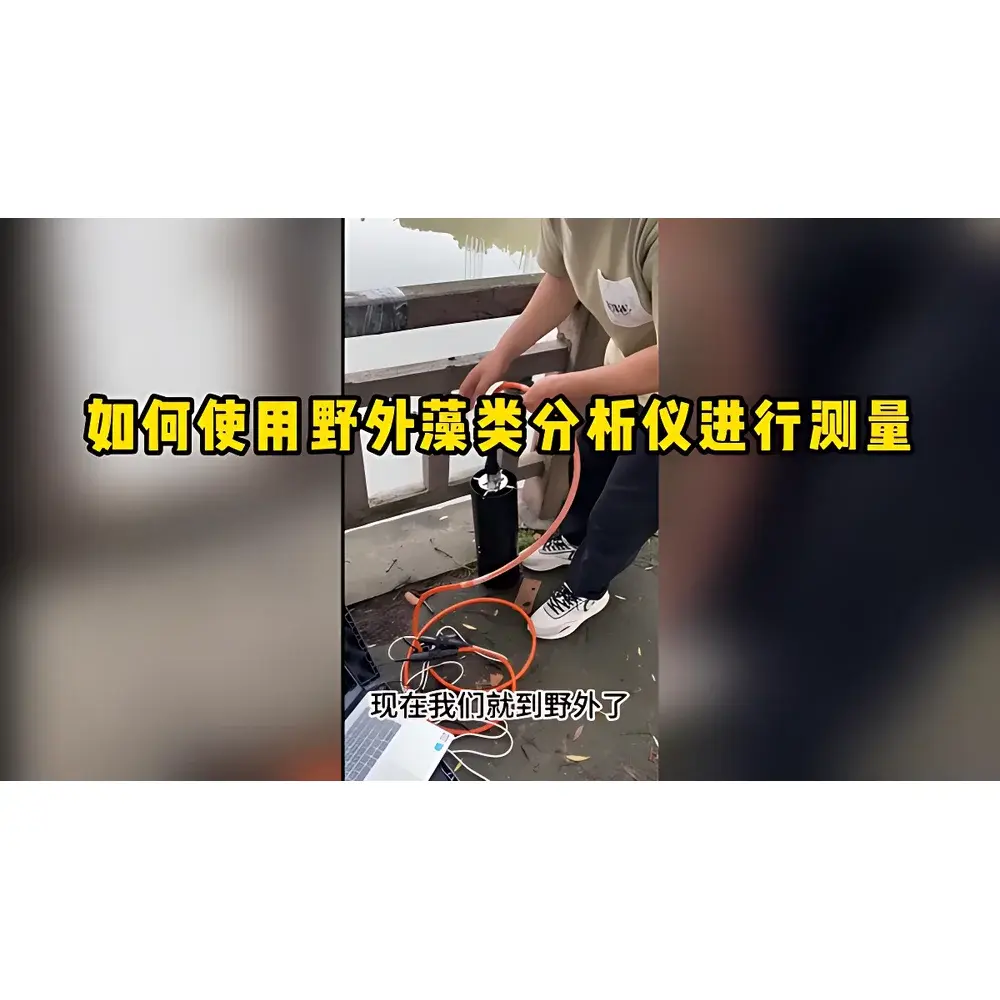
- Depth-rated operation up to 1000 m (with optional pressure housing), enabling vertical profiling from buoys, moorings, or stationary vessels
- Onboard pressure sensor and temperature compensation (−2 to 40 °C operational range) ensure data integrity across thermal and hydrostatic gradients
- Rechargeable 12 V DC power system supports >24 h continuous operation; memory stores ≥1000 full spectral datasets (2 GB internal)
- Ruggedized housing options: reinforced carbon fiber/V4A stainless steel (6.4–7.2 kg) or lightweight titanium (5.1 kg) for extended deployment durability
- RS485 digital interface enables seamless integration into telemetry networks, SCADA systems, or autonomous monitoring platforms
Sample Compatibility & Compliance
The FLP TS is validated for direct immersion in freshwater lakes, reservoirs, drinking water intakes, estuarine environments, and marine waters—including high-turbidity and bloom conditions. Its optical design minimizes interference from suspended solids and scattering artifacts through optimized excitation/emission geometry and real-time transmittance correction (0–100%). The instrument complies with ISO 10260 (water quality — determination of chlorophyll a by fluorescence), supports GLP-aligned data traceability via timestamped spectral records, and meets IEC 60529 IP68 ingress protection standards. Calibration protocols align with ASTM D3731-22 (standard practice for in-situ fluorometric chlorophyll measurements) and support audit-ready documentation for regulatory reporting frameworks including EU WFD (Water Framework Directive) and US EPA Method 445.0.
Software & Data Management
Data acquisition and post-processing are managed via BBE’s FluoroSoft v5.x software suite, compatible with Windows-based control stations and embedded Linux modules. The software provides spectral visualization, automatic peak deconvolution, batch calibration updates, and export to CSV, NetCDF, or SQL formats. All raw fluorescence spectra, metadata (depth, temperature, pressure, transmittance), and derived concentration values are stored with immutable timestamps. Audit trails meet FDA 21 CFR Part 11 requirements for electronic records and signatures when deployed in regulated drinking water or research applications. Remote firmware updates and configuration management are supported over RS485 or Bluetooth (optional handheld interface).
Applications
- Early-warning monitoring of cyanobacterial blooms in drinking water reservoirs and recreational lakes
- Vertical profiling of phytoplankton community structure in stratified lakes and coastal zones
- Long-term ecological research on eutrophication dynamics, seasonal succession, and climate-driven shifts in algal assemblages
- Calibration and validation of satellite ocean color products (e.g., Sentinel-3 OLCI, Landsat 9 OLI-2)
- Operational support for ballast water management systems requiring rapid viability assessment
- Field education and undergraduate limnology laboratories emphasizing hands-on phytoplankton ecology
- Integration into autonomous surface vehicles (ASVs), gliders, and fixed-platform observatories for unattended operation
FAQ
How does the FLP TS differentiate between algal classes without microscopic identification?
It leverages taxon-specific ratios of accessory pigments (e.g., phycocyanin in cyanobacteria, fucoxanthin analogs in diatoms) excited at discrete wavelengths; spectral unmixing algorithms resolve contributions from ≥5 dominant functional groups based on reference libraries validated against HPLC pigment analysis.
Can the instrument be deployed continuously on a buoy?
Yes—its low-power architecture, pressure-rated housing (up to 1000 m), and RS485 telemetry compatibility enable long-term moored deployments; maintenance intervals exceed 7 days under typical freshwater conditions.
Is temperature compensation applied during fluorescence measurement?
Yes—integrated thermistor and pressure sensor inputs feed real-time corrections into the fluorescence yield model, minimizing thermal quenching effects across −2 to 40 °C.
What accessories are required for profiling applications?
For vertical profiling, users select depth-rated cable lengths (3–100 m), a cable reel, auto-start plug for synchronized sampling, and optionally a wiper unit to mitigate biofouling on the optical window.
Does the system support compliance with drinking water safety regulations?
Yes—it is routinely deployed by utilities under German TrinkwV and US EPA guidance for cyanobacteria early warning, with full traceability, calibration logs, and audit-ready data export capabilities.
Related Products







