
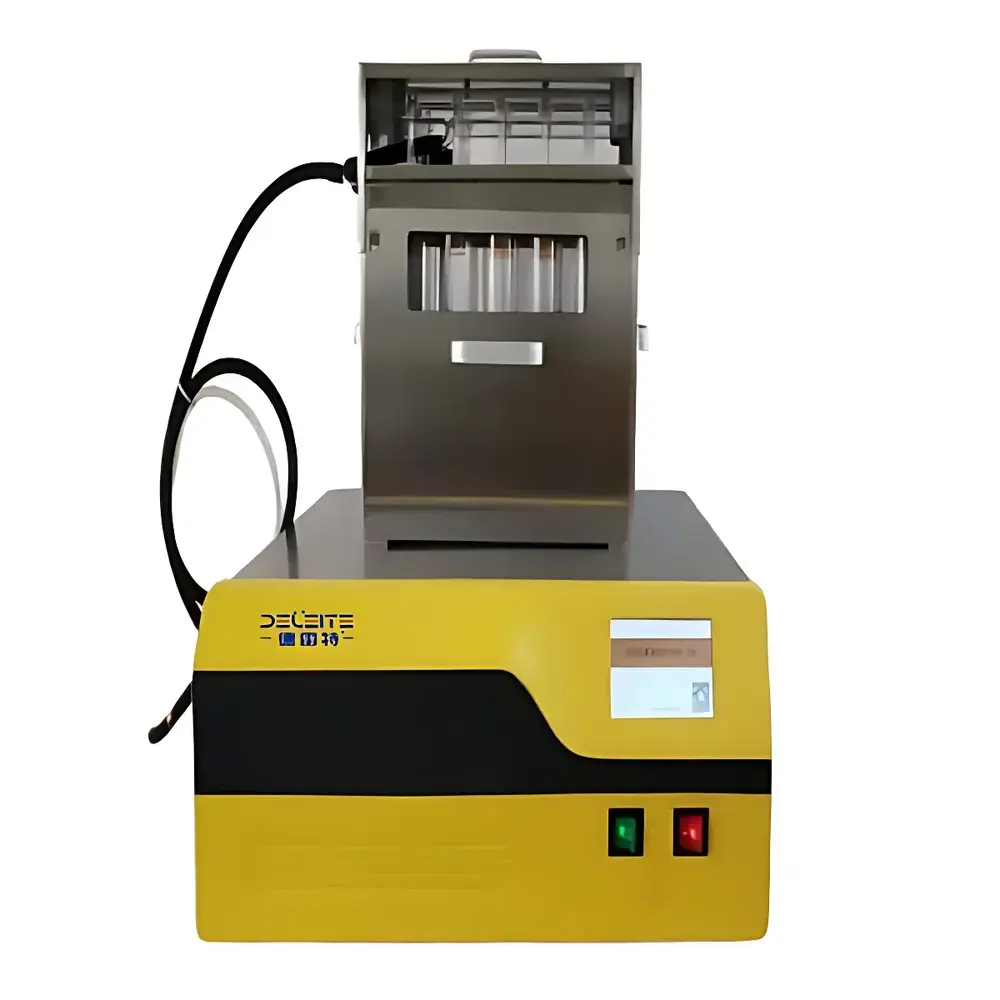
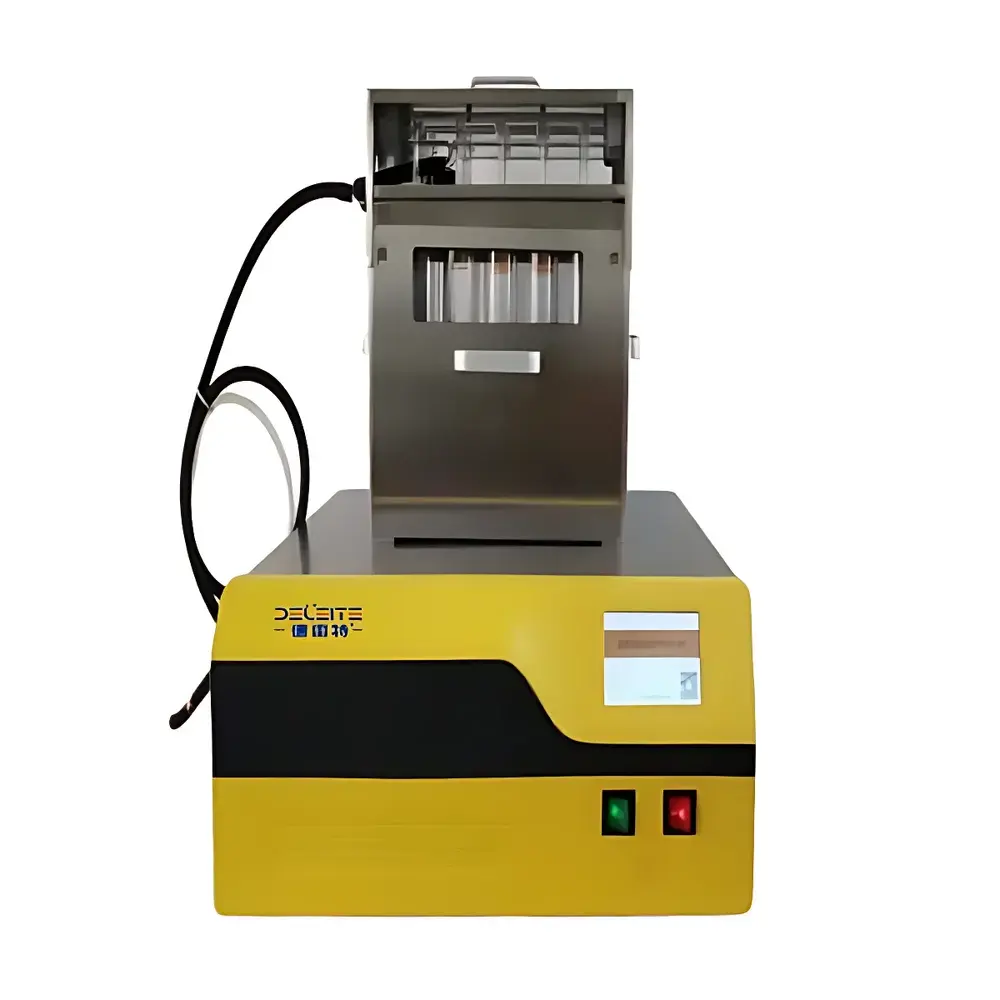
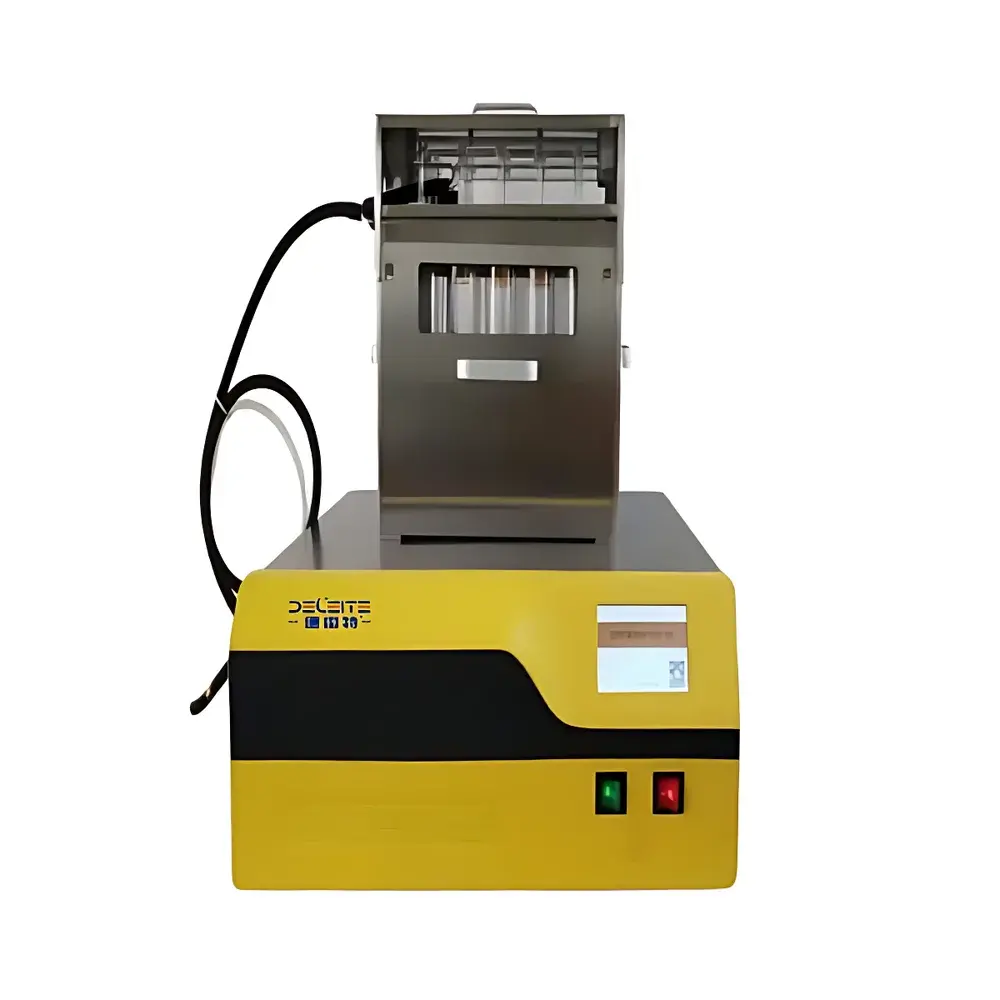
Deleite FID20-450 Far-Infrared Digestion Furnace
| Brand | Deleite |
|---|---|
| Origin | Shanghai, China |
| Model | FID20-450 |
| Capacity | 20 positions |
| Temperature Range | Ambient to 450 °C |
| Temperature Accuracy | ±1 °C |
| Heating Rate | 10–30 min (ambient to 400 °C) |
| Heating Method | Carbon Fiber Heater with Vacuum-Sealed Quartz Tube Radiative Transfer |
| Safety Protections | Overcurrent, Leakage Current, Overtemperature, and Sensor Failure Protection |
| Control Interface | LCD Touchscreen with Multi-Stage Programmable Ramp/Soak Profiles |
| Insulation | Dual-Layer (Ceramic Fiber + Air Gap) |
| Power Supply | AC 220 V ±10%, 2000 W Max |
| Electrical Requirement | Standard 10 A Three-Pin Socket |
| Exhaust System | Stainless Steel Fume Hood with Dedicated SO₂ Extraction Port |
Overview
The Deleite FID20-450 Far-Infrared Digestion Furnace is an engineered solution for high-throughput, thermally stable acid digestion of organic and inorganic samples prior to elemental analysis (e.g., ICP-OES, ICP-MS, AAS). Unlike conventional resistive-heating block digesters, the FID20-450 employs carbon fiber heating elements enclosed within vacuum-sealed quartz tubes to generate far-infrared radiation (wavelengths ~3–15 µm), enabling efficient, uniform, and contactless thermal energy transfer directly to digestion vessels. This radiative mechanism eliminates direct exposure of heating elements to corrosive fumes—particularly sulfuric, nitric, and perchloric acid vapors—thereby extending system longevity and maintaining calibration stability over extended operational cycles. Designed for laboratories performing routine EPA Method 3050B, ISO 11047, or GB/T 5009 series digestions, the furnace delivers precise temperature control across its full 20-position configuration, supporting standardized workflows in environmental, food safety, agricultural, and geochemical testing laboratories.
Key Features
- 20-position digestion capacity with independent thermal uniformity across all wells—validated per ASTM E220 for thermal mapping.
- Far-infrared heating architecture: carbon fiber emitters housed in evacuated quartz tubes ensure zero metallic surface exposure to aggressive acid mists, mitigating corrosion-induced drift and heater degradation.
- Programmable multi-stage temperature profiles: users define ramp rates (°C/min), soak durations (min), and stepwise setpoints via intuitive LCD touchscreen interface; real-time graphical display visualizes current thermal trajectory against programmed profile.
- Dual-layer thermal insulation comprising high-purity ceramic fiber blanket and an engineered air-gap barrier minimizes external surface temperature rise (25% versus single-layer designs.
- Redundant safety architecture includes hardware-based overtemperature cutoff (independent of controller), ground-fault circuit interrupter (GFCI), current-limiting circuitry, and active sensor fault detection—compliant with IEC 61010-1 requirements for laboratory electrical equipment.
- Dedicated fume management system: integrated stainless steel exhaust hood connects directly to lab ventilation or external suction pump, capturing and removing SO₂, NOₓ, and Cl₂ gases at source—reducing operator exposure and preventing condensate formation on instrument surfaces.
- Modular power design: operates at ≤2000 W on standard 10 A / 220 V AC circuits—no dedicated high-amperage line required—facilitating deployment in shared lab environments without electrical infrastructure upgrades.
Sample Compatibility & Compliance
The FID20-450 accommodates standard digestion tubes (e.g., 50 mL borosilicate glass, PTFE, or quartz) up to 300 mm in height. Its non-contact infrared heating ensures compatibility with both open-vessel hot-block digestion and closed-vessel microwave-assisted pre-digestion protocols. The system meets mechanical and electrical safety requirements under IEC 61010-1:2010 and conforms to electromagnetic compatibility standards IEC 61326-1:2020. While not certified for GLP/GMP audit trails out-of-the-box, its programmable profile logging (with timestamped setpoint history) supports traceability when integrated into validated SOPs aligned with ISO/IEC 17025 clause 7.8.2 (equipment management).
Software & Data Management
The embedded firmware records all active thermal profiles—including start time, target temperatures, ramp rates, dwell times, and real-time deviation logs—with automatic timestamping. Profile data are exportable via USB flash drive in CSV format for integration into LIMS or QA/QC documentation systems. Though no PC-based software suite is supplied, the unit’s serial port (RS-232) enables third-party SCADA or LabVIEW interfacing for centralized monitoring in automated analytical platforms. All parameter changes are logged with user ID fields (via optional network authentication module), satisfying basic FDA 21 CFR Part 11 record-keeping prerequisites when deployed with supplementary access controls.
Applications
- Routine total metal determination in soils, sediments, and sludges per EPA 3050B and ISO 11047.
- Preparation of biological tissues and food matrices for Cd, Pb, As, Hg quantification under GB 5009.12–5009.268.
- Acid digestion of polymer composites and catalyst residues prior to XRF or ICP analysis.
- Method development for difficult-to-digest samples (e.g., high-silica plant materials or refractory oxides) leveraging programmable multi-step thermal ramps to prevent bumping and wall deposition.
- Supporting AOAC 999.10 and ISO 6497 feedstuff digestion protocols requiring strict temperature hold reproducibility at 350–420 °C.
FAQ
What types of digestion vessels are compatible with the FID20-450?
Standard 50 mL borosilicate glass, PTFE, or quartz digestion tubes (up to 300 mm height) are supported. Vessels must be rated for continuous exposure to 450 °C and concentrated mineral acids.
Does the furnace support GLP-compliant data integrity?
Profile execution logs include timestamps and setpoint history, exportable as CSV. For full 21 CFR Part 11 compliance, integration with external audit-trail software or networked authentication modules is recommended.
How is temperature uniformity verified across all 20 positions?
Thermal uniformity is characterized per ASTM E220 using calibrated NIST-traceable thermocouples. Typical deviation is ≤±1.5 °C at 400 °C across all wells under steady-state conditions.
Can the unit be operated without active fume extraction?
No. Continuous exhaust is mandatory during operation due to generation of toxic acidic vapors (SO₂, NOₓ). The stainless steel hood must be connected to a lab ventilation system or dedicated suction pump meeting ≥150 m³/h flow rate.
Is calibration certificate included with shipment?
A factory-as-tested temperature verification report (ambient to 450 °C at center well) is provided. Full ISO/IEC 17025-accredited calibration requires third-party service and is not included by default.



