Molybdenum Foil Sheet –合肥科晶 (Hefei Kejing) Standard Grade
No specifications available.
Overview
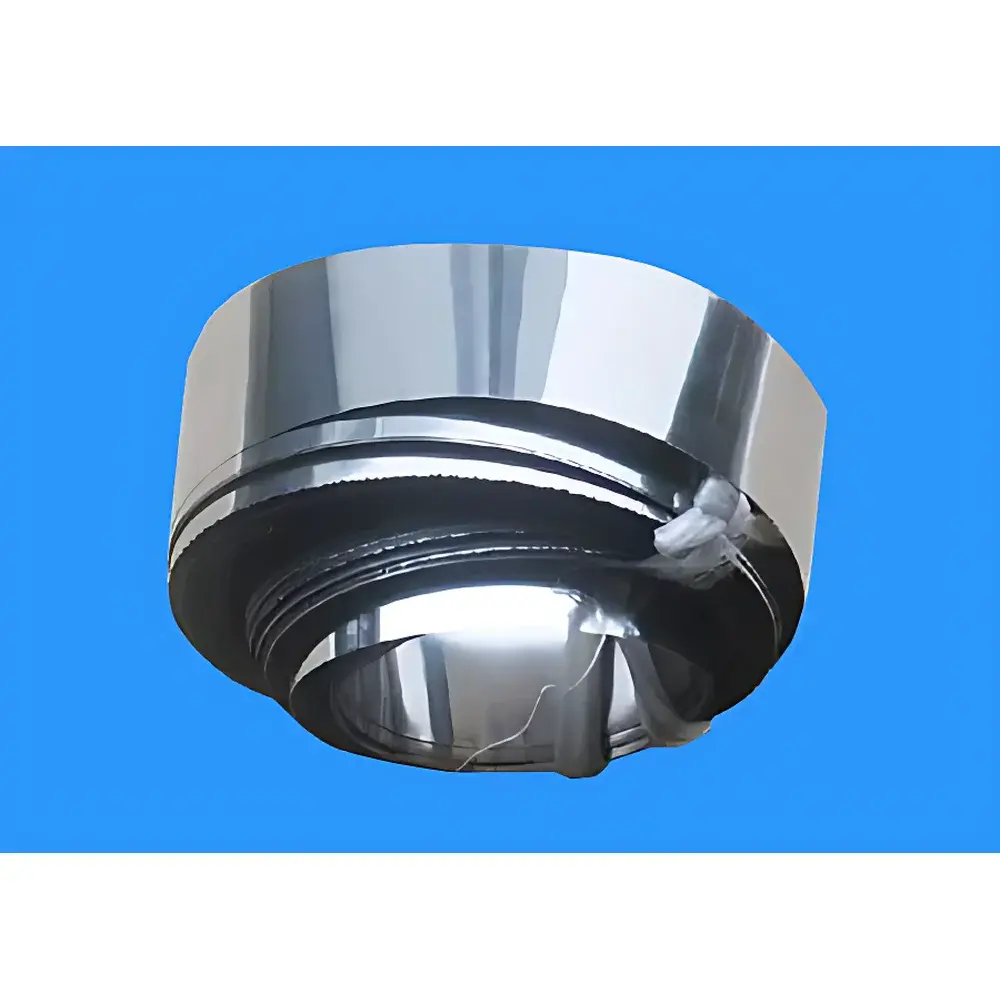
Molybdenum (Mo) foil sheets are high-purity, ductile metallic thin films engineered for demanding applications in vacuum science, thin-film deposition, high-temperature furnace linings, and as substrates or diffusion barriers in advanced materials research. Fabricated from commercially pure molybdenum (≥99.95% Mo), these foils exhibit exceptional thermal stability, low vapor pressure above 1000 °C, and excellent resistance to molten glass and alkaline slags. Their body-centered cubic (BCC) crystal structure imparts anisotropic mechanical behavior and high elastic modulus (~329 GPa), making them suitable for structural support in elevated-temperature environments where dimensional stability is critical. Unlike reactive metals such as titanium or aluminum, molybdenum maintains oxidation resistance up to ~400 °C in air and remains chemically inert under reducing or inert atmospheres—key attributes for use in sputtering targets, crucibles, and thermal shields in semiconductor and photovoltaic R&D.
Key Features
- Precision thickness tolerance: ±5% nominal thickness across standard grades (0.025 mm, 0.05 mm, 0.10 mm)
- High surface flatness: <5 µm peak-to-valley deviation per 100 mm length, verified by optical interferometry
- Controlled grain structure: Annealed condition ensures uniform recrystallized grain size (typically 10–50 µm), optimizing ductility and bendability without cracking
- Ultra-clean packaging: Supplied in Class 100 cleanroom bags within ISO Class 5 (Class 100) laminar flow environment; certified particulate count ≤10 particles ≥0.5 µm per ft³
- Traceable material certification: Includes mill test report (MTR) with elemental analysis (ICP-OES), tensile properties (ASTM E8/E8M), and microhardness (HV10)
Sample Compatibility & Compliance
These molybdenum foils are compatible with standard physical vapor deposition (PVD) techniques including electron-beam evaporation and DC/RF sputtering. They serve as stable substrates for epitaxial growth of transition metal dichalcogenides (TMDs), nitrides, and oxides due to lattice parameter matching (a₀ = 0.315 nm) and thermal expansion coefficient alignment (5.6 × 10⁻⁶ K⁻¹ at 25 °C). All batches comply with ASTM B386-18 (Standard Specification for Molybdenum and Molybdenum Alloy Sheet, Strip, and Plate) and meet RoHS Directive 2011/65/EU requirements. For regulated laboratory workflows, traceability documentation supports GLP-compliant recordkeeping and audit readiness under ISO/IEC 17025:2017-accredited quality systems.
Software & Data Management
As a passive instrumentation component—not an active measurement device—this molybdenum foil does not incorporate embedded firmware, control software, or digital interfaces. However, its material specifications are fully integrated into common laboratory information management systems (LIMS) and electronic lab notebooks (ELN) via standardized UN/CEFACT Core Component Library identifiers. Batch-specific certificates of conformance (CoC) are delivered in PDF/A-1b format, supporting long-term archival integrity and automated metadata extraction (e.g., thickness, lot number, heat treatment history) using OCR-enabled LIMS ingestion modules compliant with FDA 21 CFR Part 11 electronic signature requirements.
Applications
- Substrate for CVD and MBE growth of 2D materials (e.g., MoS₂, WS₂) requiring high-temperature annealing (>700 °C)
- Diffusion barrier layer between copper interconnects and silicon dioxide in prototype microelectronic devices
- Shielding element in synchrotron beamline components exposed to intense X-ray irradiation
- Target backing plate in high-power laser ablation experiments requiring thermal shock resistance
- Reference standard for X-ray fluorescence (XRF) calibration due to well-defined Kα emission energy (17.4 keV) and attenuation coefficients
FAQ
Is this molybdenum foil suitable for ultra-high vacuum (UHV) applications?
Yes—outgassing rate is ≤1×10⁻⁹ mbar·L/s·cm² after 24-hour bakeout at 300 °C, consistent with UHV-compatible metallic foils per ISO 10110-7 specifications.
Can the foil be chemically etched for patterned structures?
Yes—standard wet etchants include HNO₃:HF (3:1 v/v) at room temperature or ammonium persulfate solutions; etch rates are thickness-dependent and require process validation for feature fidelity.
What is the maximum continuous operating temperature in inert atmosphere?
Up to 1800 °C under argon or nitrogen, limited primarily by creep deformation rather than oxidation or phase change.
Are custom dimensions or surface finishes available?
Yes—custom slit widths, rolled edge profiles, and electropolished surfaces (Ra <0.05 µm) are offered upon request with lead times aligned to ASTM B386 production schedules.
Does the product include ISO 17025-accredited test data?
Mill test reports include third-party verified tensile strength, elongation, and hardness values; full ISO/IEC 17025 accreditation applies to the supplier’s in-house metrology lab for dimensional and compositional testing.