
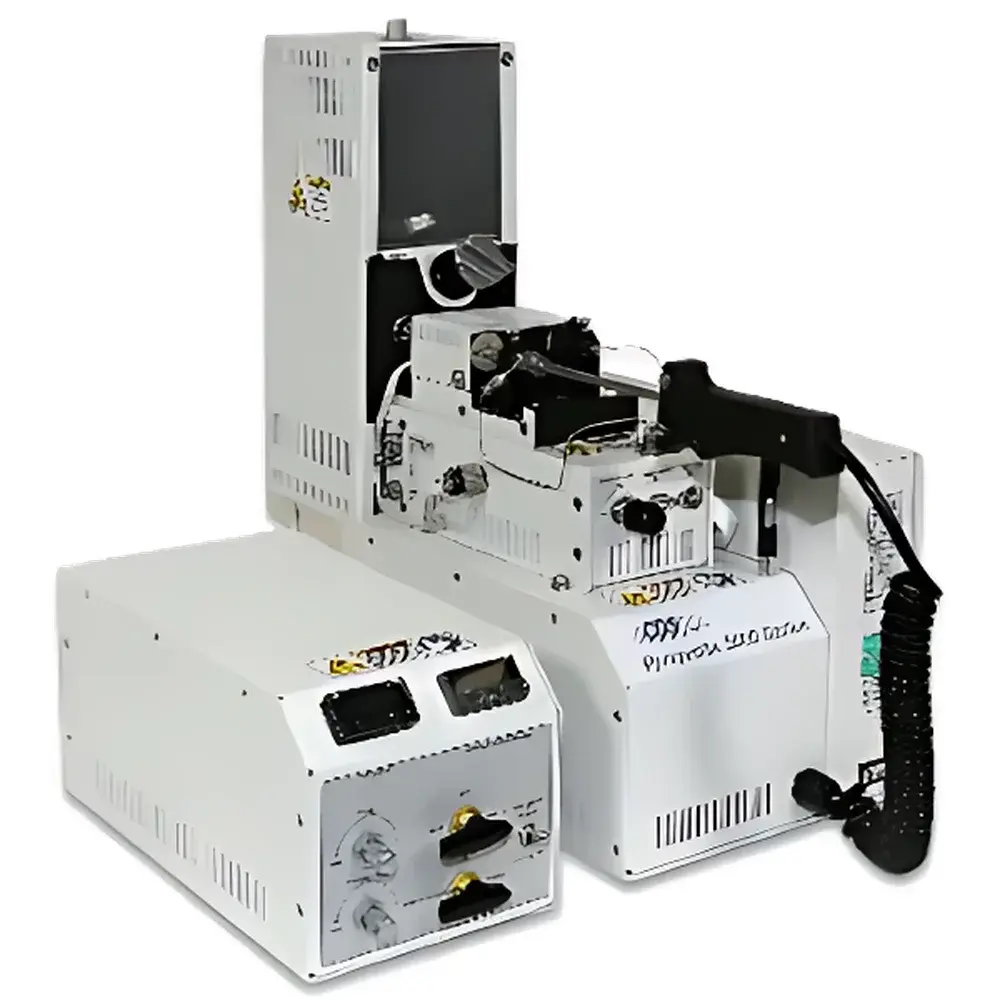
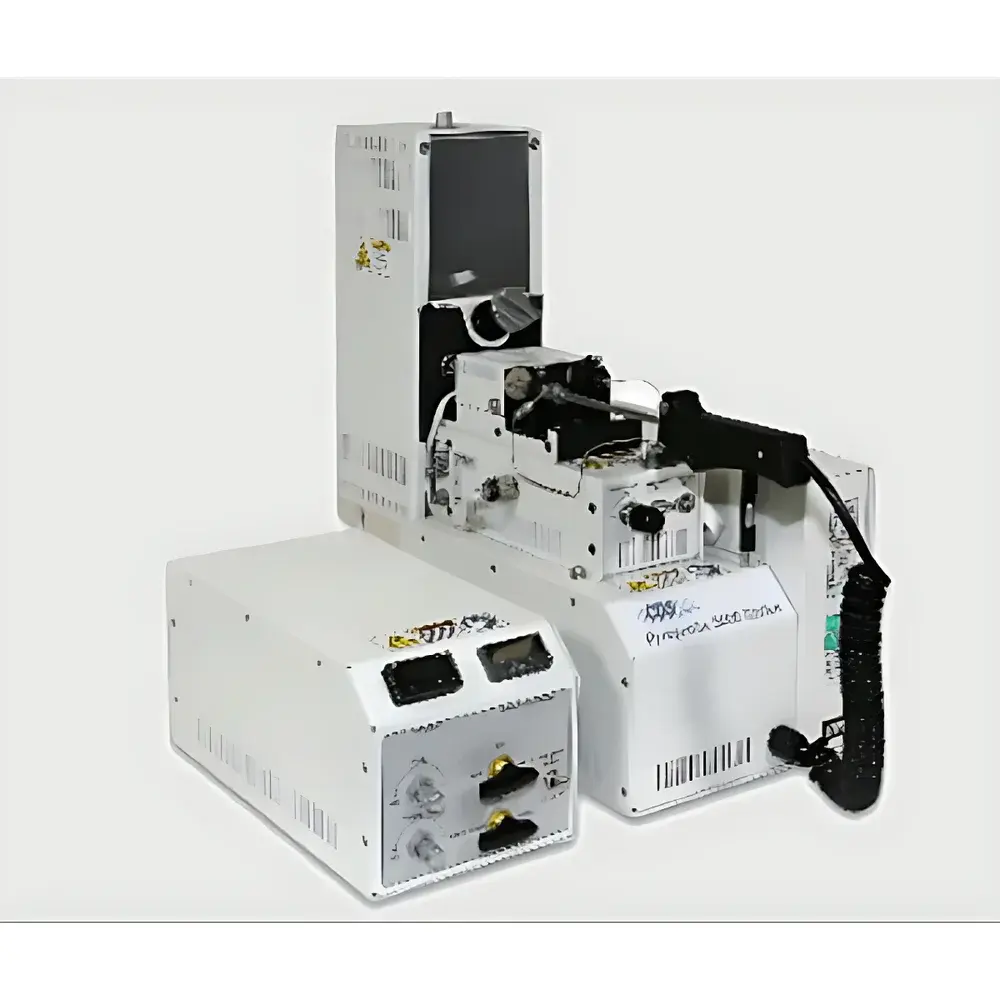
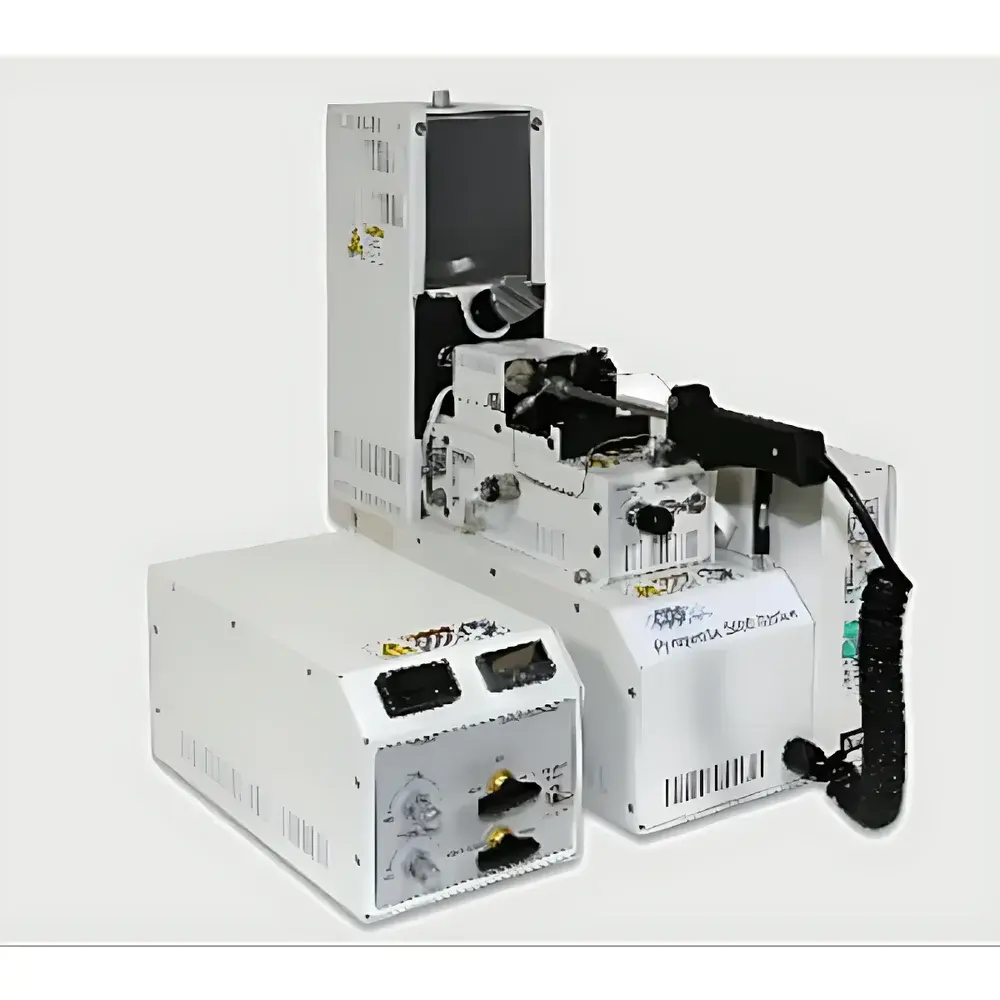
LabTech CDS 5200 Automated Pyrolyzer
| Brand | LabTech |
|---|---|
| Origin | Beijing, China |
| Model | CDS 5200 |
| Pyrolysis Temperature Range | Ambient to 1400 °C (±0.1 °C accuracy) |
| Maximum Pressure Resistance | 500 PSI (3400 kPa) |
| Heating Rates | 10–20,000 °C/sec (pulse), 0.01–999.9 °C/sec or 0.01–999.9 °C/min (programmed) |
| Transfer Line Max Temp | 350 °C |
| Interface Temp | ≥350 °C |
| Reactor | 3″ × 1/4″ OD 316 stainless steel, catalyst-compatible up to 800 °C |
| Atmosphere Options | N₂, air, or custom gas |
| Integrated Cold Trap | Yes, with thermal desorption capability |
| Sample Path Materials | Inert (e.g., quartz, deactivated metal) |
Overview
The LabTech CDS 5200 Automated Pyrolyzer is a high-precision, benchtop thermal decomposition system engineered for coupling with gas chromatography (GC) and GC/mass spectrometry (GC/MS) platforms from any manufacturer. It operates on the principle of controlled thermal degradation—subjecting solid or viscous samples to rapid, reproducible heating under inert or reactive atmospheres to generate volatile fragments representative of polymer backbone structure, additive composition, or complex organic matrices. Unlike conventional furnace-based systems, the CDS 5200 employs resistive filament (hot-wire) pyrolysis, enabling microsecond-scale thermal ramping and precise temporal control over decomposition kinetics. This architecture supports both single-pulse and multi-step programmed pyrolysis protocols, making it suitable for structural elucidation of synthetic polymers, natural biopolymers, composite materials, and forensic trace evidence.
Key Features
- Ultra-Wide Thermal Range: Programmable pyrolysis from ambient temperature to 1400 °C with ±0.1 °C stability—critical for differentiating thermal transitions in co-polymers or char-forming resins.
- Dual-Mode Heating Control: Pulse heating rates up to 20,000 °C/sec for flash pyrolysis; programmable ramping from 0.01 °C/sec to 999.9 °C/min (or /min equivalent), supporting kinetic modeling and stepwise decomposition studies.
- 8-Step Programmed Pyrolysis: Each temperature segment can be independently configured with dwell time, ramp rate, and GC start signal output—enabling acquisition of discrete chromatograms per stage for multicomponent deconvolution.
- High-Pressure & High-Temperature Integrity: Pyrolysis chamber rated to 500 PSI (3400 kPa); transfer line and interface maintained at ≥350 °C to prevent condensation of semi-volatile pyrolysates.
- Catalytic Reaction Compatibility: Integrated 3″ × 1/4″ OD 316 stainless steel reactor capable of sustained operation up to 800 °C; designed for interchangeable catalyst cartridges (e.g., Pt, Ni, zeolites) to enable hydropyrolysis, oxidative cracking, or selective deoxygenation.
- Inert Sample Pathway: Quartz-lined sample tubes and passivated metal conduits minimize surface-catalyzed reactions and preserve labile analyte integrity during transfer.
Sample Compatibility & Compliance
The CDS 5200 accommodates solid, gel, film, fiber, and viscous liquid samples—including thermoplastics (e.g., PE, PP, PET), elastomers (e.g., SBR, EPDM), lignocellulosic biomass, tobacco particulates, electronic solder flux residues, and aged archaeological adhesives. Its modular design allows seamless integration into existing GC/GC-MS workflows without hardware modification. The system supports method validation under GLP and GMP frameworks: audit-trail-enabled method storage, user-access logging, and electronic signature readiness align with FDA 21 CFR Part 11 requirements when paired with compliant chromatography data systems (CDS). Routine operation complies with ASTM D7216 (standard test method for pyrolysis-GC analysis of polymers) and ISO 17201-3 (forensic pyrolysis applications).
Software & Data Management
Control is executed via LabTech’s PyroVision™ software—a Windows-based application supporting method development, real-time temperature profiling, GC synchronization, and automated report generation. All pyrolysis parameters (temperature setpoints, ramp rates, dwell times, gas flow profiles, and trigger logic) are stored as encrypted method files with version timestamping. Raw thermal and chromatographic data are exported in open formats (e.g., .csv, .cdf) compatible with third-party chemometric tools (e.g., MATLAB, Pirouette, SIMCA). Optional add-ons include peak deconvolution modules for co-eluting pyrolyzates and spectral library matching against the Wiley/NIST mass spectral databases.
Applications
- Polymer Identification & Failure Analysis: Rapid fingerprinting of unknown plastics in recycling streams or quality deviations in injection-molded components.
- Biomass Characterization: Quantitative assessment of cellulose/hemicellulose/lignin ratios in biofuel feedstocks via anhydrosugar and phenolic fragment profiling.
- Forensic Trace Evidence: Differentiation of tire rubber formulations, paint binders, or explosive residues based on thermal degradation signatures.
- Electronics Reliability Testing: Detection of brominated flame retardants (e.g., PBDEs) or plasticizer migration in printed circuit board laminates.
- Archaeological Material Science: Non-destructive compositional analysis of historical adhesives, varnishes, and binding media without solvent extraction.
FAQ
Can the CDS 5200 be used with Agilent, Thermo Fisher, or Shimadzu GC systems?
Yes—the system features universal GC interface hardware and TTL-trigger compatibility, requiring no vendor-specific firmware or proprietary drivers.
Is calibration traceable to NIST standards?
Temperature calibration is performed using certified reference materials (e.g., high-purity metals with defined melting points), and documentation follows ISO/IEC 17025-compliant procedures upon request.
What maintenance is required for long-term reliability?
Routine maintenance includes quarterly inspection of filament integrity, annual replacement of quartz liners, and biannual verification of pressure sensor accuracy—no consumables beyond standard GC septa and liner kits.
Does the system support unattended overnight operation?
Yes—fully automated batch processing with up to 16 sample positions (optional autosampler), integrated GC start/stop coordination, and thermal safety interlocks ensure robust 24/7 operation.
Related Products



