
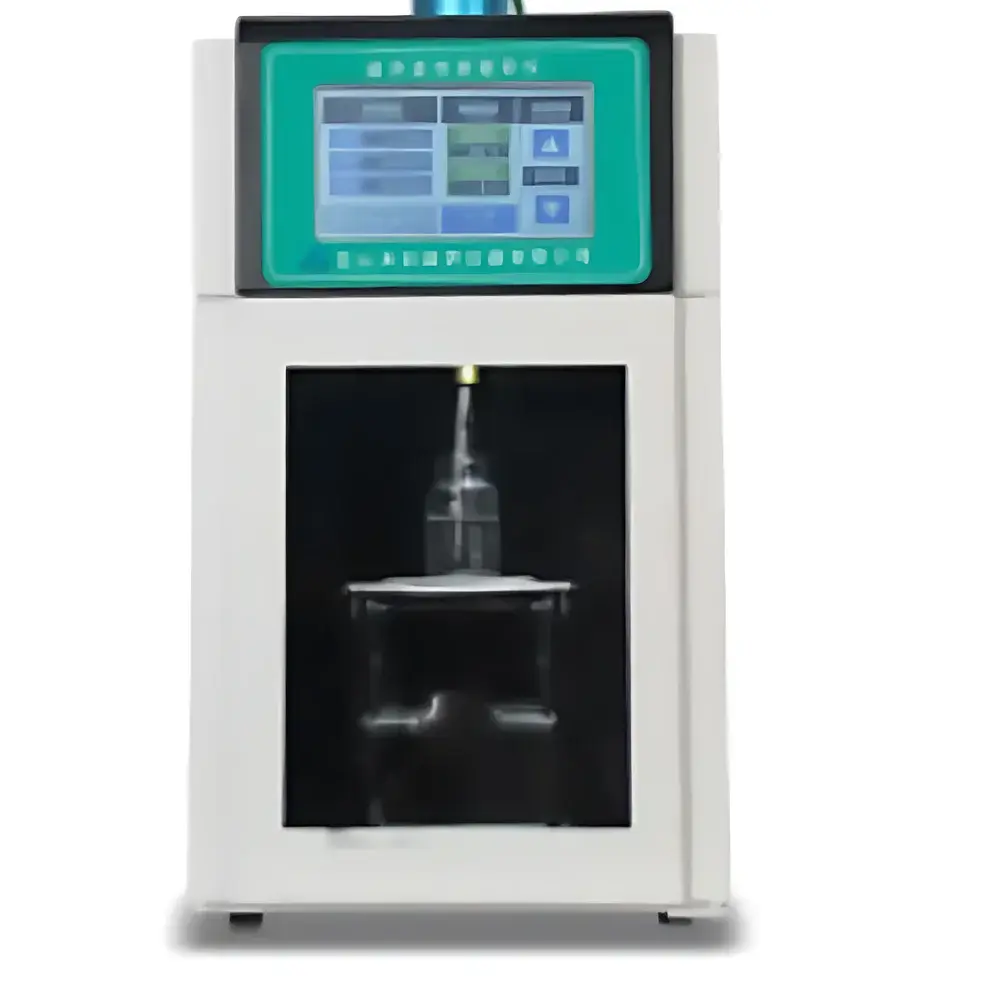
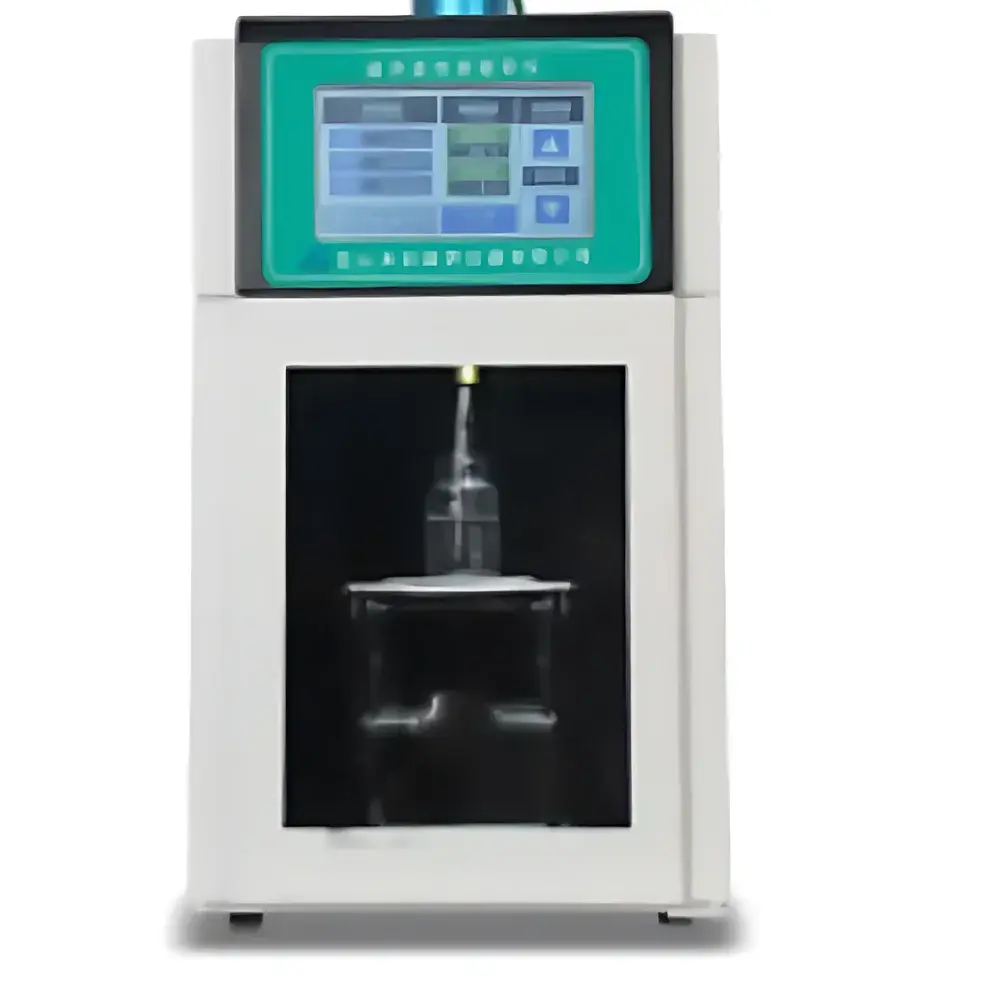
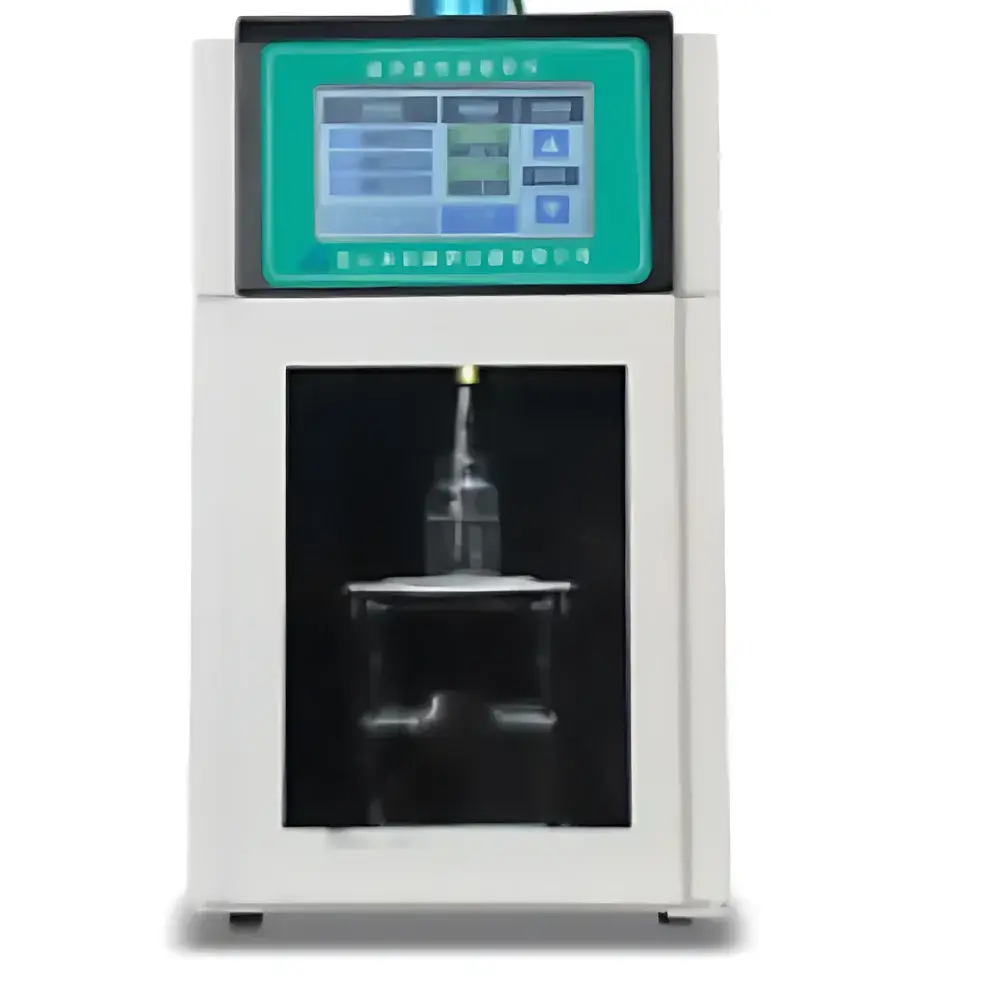
Hechuang HC-1500T Ultrasonic Cell Disruptor
| Brand | Hechuang |
|---|---|
| Origin | Jiangsu, China |
| Manufacturer Type | Authorized Distributor |
| Country of Origin | China |
| Model | HC-1500T |
| Instrument Type | Ultrasonic Cell Disruptor |
| Temperature Range | 0–120 °C |
| Operating Frequency | 25 kHz |
| Ultrasonic Power Output | 1500 W |
| Sample Volume Capacity | 0.2–2000 mL |
| Control Interface | 7-inch capacitive touchscreen |
| Pulse Mode | Adjustable from 0.1 s to 999.9 s (on/off) |
| Amplitude Compensation | Auto-compensated |
| Transducer Material | PZT ceramic (lead zirconate titanate) |
| Probe Material | ASTM-grade TC4 titanium alloy (Ti-6Al-4V) |
| Standard Probe Diameter | 15 mm (optional: 8/10/12/20 mm) |
| Integrated Cooling Compatibility | Yes |
| Enclosure | Powder-coated steel frame with polymer housing |
| Dimensions (W×D×H) | 350 × 300 × 500 mm |
| Built-in Stainless Steel Vertical Stage | Yes |
Overview
The Hechuang HC-1500T Ultrasonic Cell Disruptor is a high-power, digitally controlled sonication system engineered for reproducible and scalable disruption of biological cells, microorganisms, and subcellular structures. It operates on the principle of acoustic cavitation—generating intense localized pressure differentials in liquid media via high-frequency ultrasonic waves (25 kHz), leading to rapid formation and collapse of microbubbles that mechanically shear cellular membranes and organelles. Designed for laboratory-scale bioprocessing, the HC-1500T delivers up to 1500 W of stable ultrasonic power with real-time amplitude regulation and automatic frequency tracking to maintain resonance under variable load conditions. Its integrated temperature monitoring (0–120 °C) and compatibility with external chillers or recirculating cooling systems enable thermally sensitive applications—including protein extraction, nucleic acid isolation, and enzyme preservation—without denaturation artifacts.
Key Features
- Digital PZT transducer with hermetically sealed ceramic elements (Pb(Zr,Ti)O₃), resistant to moisture and corrosive vapors, ensuring long-term stability and consistent energy transfer.
- Auto-resonance tracking and closed-loop amplitude compensation: dynamically adjusts output to maintain set vibration amplitude regardless of sample viscosity, volume, or probe immersion depth.
- 7-inch industrial-grade capacitive touchscreen interface with intuitive graphical workflow navigation; displays real-time parameters including power (%), elapsed time, temperature, and cumulative operating hours.
- Precise pulsed sonication control: independent ON/OFF timers adjustable from 0.1 s to 999.9 s, supporting both continuous and duty-cycle modes for optimized energy delivery and thermal management.
- TC4 titanium alloy probe (ASTM F136-compliant), standard 15 mm diameter, with optional diameters (8/10/12/20 mm) for tailored energy density across diverse sample volumes and viscosities.
- Integrated stainless-steel vertical lift stage with fine-positioning capability, enabling repeatable probe depth control and alignment with vessel geometry.
- Robust mechanical architecture: powder-coated steel chassis combined with chemical-resistant polymer housing, designed for benchtop durability and ISO Class 5–7 cleanroom compatibility.
Sample Compatibility & Compliance
The HC-1500T accommodates a broad range of biological and synthetic samples—from microbial suspensions (E. coli, yeast, Bacillus spp.) and mammalian cell lines (CHO, HEK293) to plant tissues, viral lysates, and nanomaterial dispersions. Its 0.2–2000 mL processing range supports both microscale screening (e.g., 200 µL bacterial pellets) and preparative-scale lysis (e.g., 2 L fermentation broths). The system meets general laboratory safety standards per IEC 61000-6-3 (EMC) and IEC 61010-1 (electrical safety). While not certified for GMP manufacturing, its data logging, parameter traceability, and audit-ready operation history support GLP-compliant workflows. Optional integration with validated temperature probes enables compliance with USP and guidelines for sterile compounding environments where thermal validation is required.
Software & Data Management
The HC-1500T embeds firmware-level data retention: all executed protocols—including amplitude setting, pulse profile, duration, and temperature readings—are timestamped and stored locally for ≥10,000 cycles. Export is supported via USB 2.0 to CSV format for downstream analysis in MATLAB, Python (Pandas), or LIMS platforms. No proprietary cloud dependency exists; raw logs contain no PII or encryption barriers, facilitating internal QA review and regulatory submissions. Though lacking FDA 21 CFR Part 11 electronic signature functionality out-of-the-box, the device’s deterministic parameter locking and immutable session logs align with ALCOA+ principles when paired with institutional SOPs governing electronic records.
Applications
- Cell lysis and intracellular content release: efficient disruption of Gram-negative/positive bacteria, fungi, algae, and suspension-adapted mammalian cells without protease inhibitors.
- Nanomaterial processing: deagglomeration of carbon nanotubes, metal oxides (TiO₂, ZnO), and polymeric nanoparticles in aqueous or organic solvents.
- Extraction enhancement: accelerated release of alkaloids, flavonoids, and polysaccharides from botanical matrices under controlled thermal conditions.
- Catalytic reaction intensification: ultrasound-assisted esterification, hydrolysis, and nanoparticle-mediated redox reactions.
- Vaccine development: antigen liberation from whole-pathogen preparations and adjuvant dispersion in emulsion-based formulations.
- Environmental sample prep: extraction of microplastics, biofilm-associated microbes, and sediment-bound contaminants for analytical chemistry workflows.
FAQ
Is the HC-1500T suitable for cryogenic sonication?
Yes—when used with an external recirculating chiller (e.g., Julabo F25) and insulated probe jacket, the system maintains stable operation at sub-zero bath temperatures down to –20 °C.
Can the device be integrated into automated liquid handling platforms?
It features RS-232 and TTL trigger inputs for external start/stop signaling, enabling synchronization with robotic arms or PLC-controlled reactors.
What maintenance intervals are recommended for the transducer and probe?
Transducer performance verification is advised every 1,000 operating hours; probe tip inspection (for pitting or erosion) should occur after each 200 high-power cycles (>80% amplitude, >5 min duration).
Does the HC-1500T comply with CE or UL certification requirements?
The unit carries CE marking per Directive 2014/30/EU (EMC) and 2014/35/EU (LVD); UL certification is available upon request for North American distribution channels.
How is calibration traceability established?
Factory calibration uses NIST-traceable hydrophone measurements (Onda HNC-1000) at 25 kHz; users receive a calibration certificate with serial-number-matched transducer and probe assemblies.
Related Products




