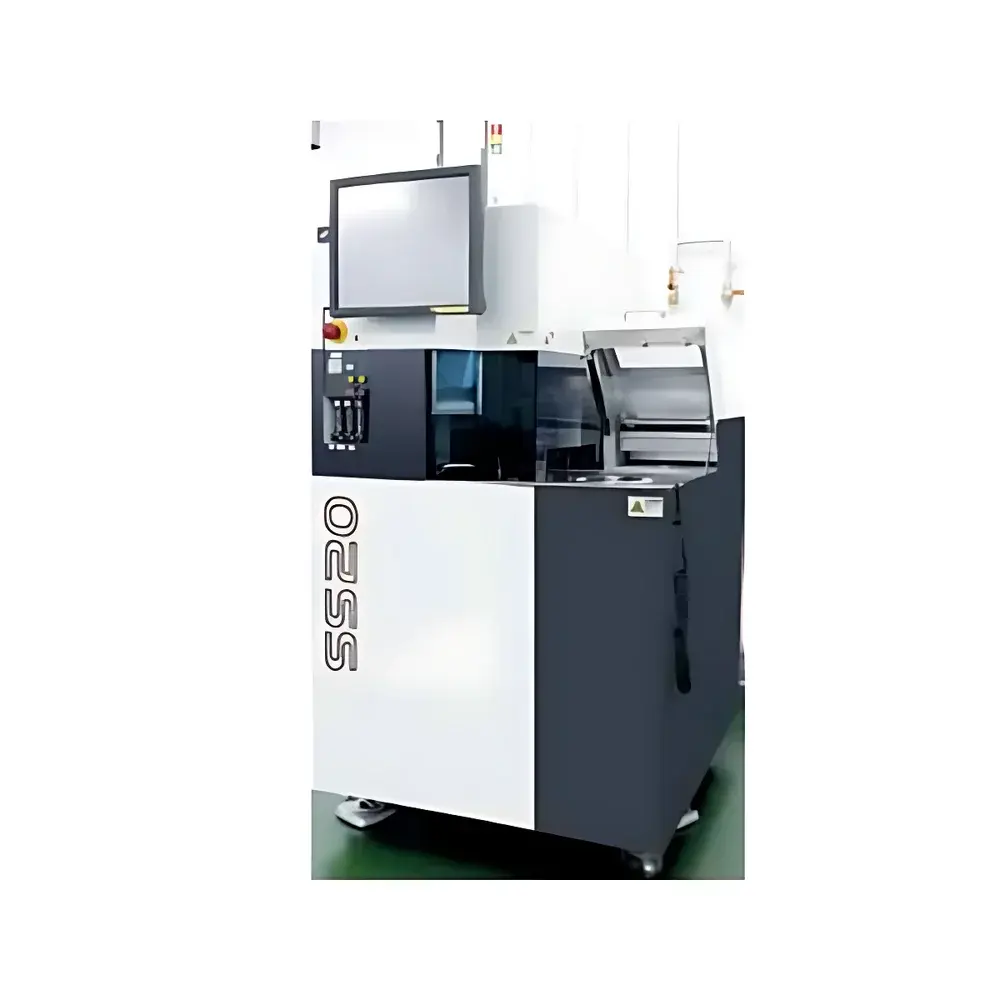
ACCRETECH SS20 Wafer Slicing Machine
| Brand | ACCRETECH |
|---|---|
| Origin | Japan |
| Model | SS20 |
| Type | Semi-Automatic Diamond Blade Dicing Saw |
| Cutting Method | Wet/Dry Compatible Blade Dicing |
| Blade Diameter | Standard 6-inch (152 mm) |
| Maximum Wafer Size | 200 mm (8-inch) |
| Z-Axis Travel | ≥30 mm |
| Spindle Speed Range | 1,000–45,000 rpm |
| Coolant System | Integrated Deionized Water Delivery with Filtration |
| Machine Dimensions (W×D×H) | 1,200 × 950 × 1,700 mm |
| Weight | ≈ 1,200 kg |
| Compliance | CE Marked, ISO 9001 Certified Manufacturing Process |
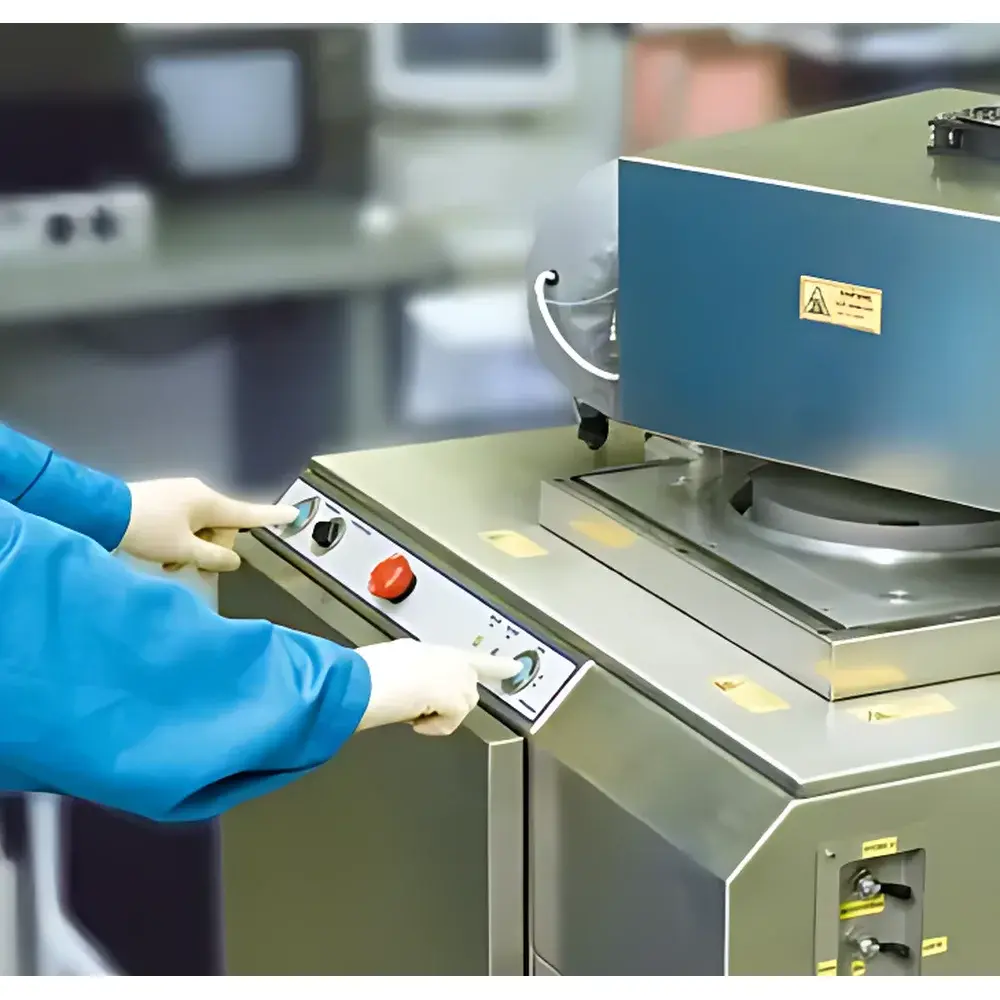
| Control Interface | Touchscreen HMI with Programmable Motion Axes (X/Y/Z/θ) |
Overview
The ACCRETECH SS20 Wafer Slicing Machine is a precision-engineered semi-automatic dicing saw designed for high-accuracy separation of semiconductor wafers into individual die. It operates on the principle of mechanical blade dicing—utilizing ultra-fine diamond-impregnated blades rotating at controlled high speeds to cut through silicon, SiC, GaN, sapphire, and other brittle substrate materials. Unlike laser-based or plasma-assisted methods, the SS20 employs a proven mechanical kerf-cutting approach that delivers consistent edge quality, minimal chipping, and excellent process repeatability across production lots. Its architecture integrates rigid granite base construction, air-bearing spindles, and closed-loop motion control to maintain sub-micron positional stability during high-speed cutting sequences. The system supports both wet and dry dicing modes, enabling optimization for thermal management and particle control depending on material stack and device geometry.
Key Features
- Semi-automatic operation with intuitive touchscreen HMI—reducing operator dependency while preserving full manual override capability for R&D and low-volume prototyping.
- High-speed, low-vibration spindle (1,000–45,000 rpm) compatible with standard 6-inch diamond blades; optimized for narrow kerf widths (≤25 µm) and smooth sidewall finish (Ra < 0.2 µm).
- Integrated deionized water coolant delivery system with real-time flow monitoring and multi-stage filtration—ensuring consistent thermal regulation and minimizing slurry accumulation in critical zones.
- Programmable X/Y/Z/θ axes with ±0.5 µm repeatability; accommodates wafer mapping via optional integrated vision alignment module for precise die registration.
- Modular design supporting future upgrades—including automated cassette loading, optical inspection integration, and SECS/GEM interface for factory automation (SEMI E30/E40 compliant).
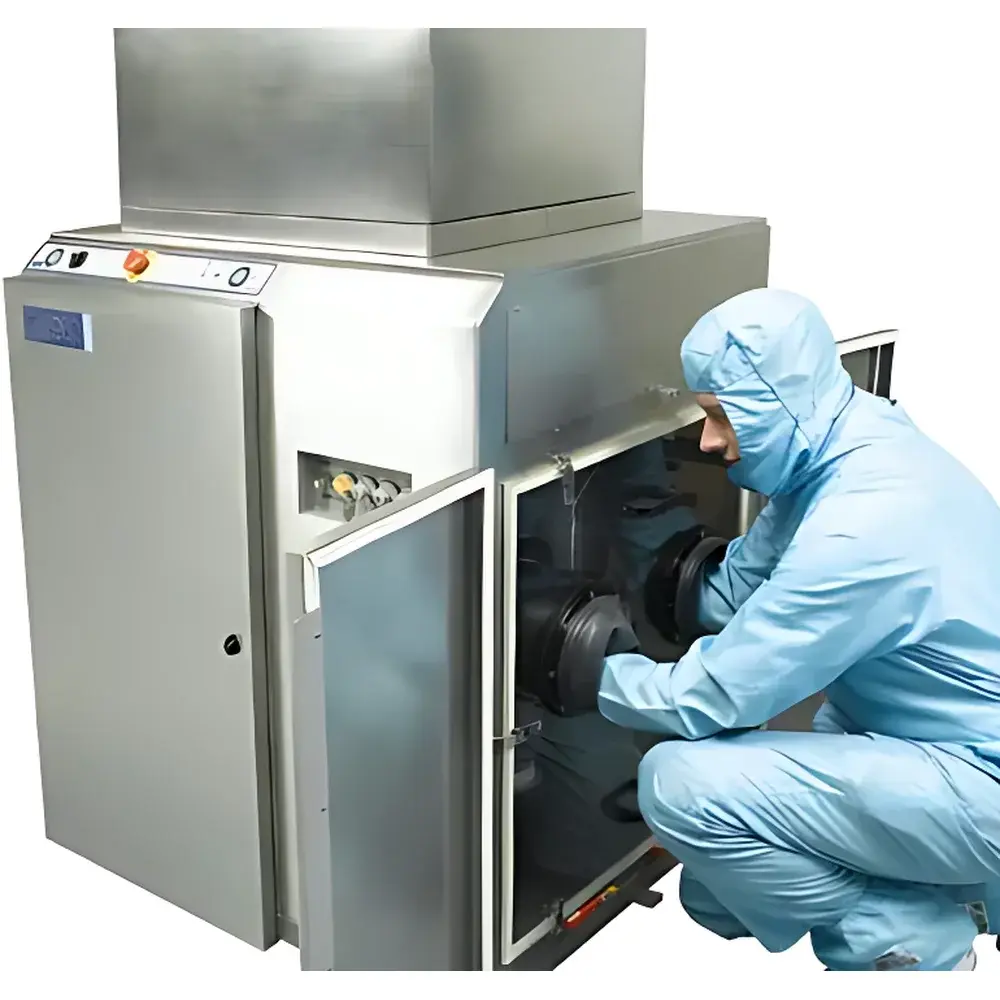
- CE-marked enclosure with interlocked safety doors, emergency stop circuitry, and exhaust-compatible fume extraction ports for cleanroom Class 100–1000 environments.
Sample Compatibility & Compliance
The SS20 accommodates wafers up to 200 mm (8-inch) in diameter and thicknesses ranging from 50 µm to 1,000 µm—including patterned, bonded, thin-ground, and temporary-bonded substrates. It is routinely deployed for dicing silicon power devices, MEMS sensors, RF filters, LED epitaxial wafers, and compound semiconductor substrates such as GaAs and SiC. Process validation documentation supports compliance with JIS B 7021 (Japanese Industrial Standard for Semiconductor Equipment), ISO 14644-1 (cleanroom classification), and internal fab requirements aligned with JEDEC JEP122G reliability guidelines. While not inherently FDA-regulated, its construction materials (316 stainless steel, anodized aluminum, EPDM seals) meet USP Class VI biocompatibility criteria where applicable in compound semiconductor packaging lines.
Software & Data Management
The embedded control software provides recipe-driven operation with version-controlled parameter sets (cut speed, feed rate, depth per pass, coolant pressure). All motion logs, alarm history, and operational timestamps are stored locally with optional network export via Ethernet/IP or Modbus TCP. Audit trail functionality meets GLP and GMP-aligned data integrity expectations—supporting user-level access control (three-tier authentication), electronic signatures, and tamper-evident file encryption. Raw log files export in CSV/ASCII format for traceability in MES or QMS platforms. No cloud connectivity is enabled by default; all data remains on-device unless explicitly configured per customer IT policy.
Applications
- Front-end semiconductor manufacturing: singulation of IC wafers post-metalization and passivation.
- Power electronics fabrication: dicing of SiC MOSFET and GaN HEMT wafers requiring low-damage kerf profiles.
- MEMS and sensor production: precise separation of fragile cantilevers, accelerometers, and pressure diaphragms without microcrack propagation.
- LED and photonics packaging: handling of sapphire- and GaN-based epiwafers with minimal subsurface damage.
- R&D laboratories: flexible setup for evaluating novel substrate materials, blade chemistries, and dicing strategies under controlled environmental conditions.
FAQ
What wafer sizes does the SS20 support?
The SS20 is configured for 150 mm (6-inch) and 200 mm (8-inch) wafers, with optional chuck adapters available for smaller formats down to 50 mm.
Is the SS20 compatible with tape-mounted or frame-mounted wafers?
Yes—it accepts standard dicing frames (e.g., 8-inch and 12-inch ring frames) and supports vacuum chucking for tape-down or bare-wafer configurations.
Can the machine be integrated into an automated fab environment?
It supports SECS/GEM communication protocols and offers digital I/O expansion for PLC handshaking; full integration requires coordination with ACCRETECH’s Applications Engineering team for site-specific validation.
Does the SS20 require special facility utilities beyond standard cleanroom power and exhaust?
It operates on single-phase 200–240 V AC, 50/60 Hz, with dedicated DI water supply (≥2 L/min, resistivity >1 MΩ·cm) and compressed dry air (0.5 MPa, ISO 8573-1 Class 2:2:2).
What maintenance intervals are recommended for the spindle and coolant system?
Spindle bearing service is scheduled every 3,000 operating hours; coolant filter replacement is required every 200 hours or per fluid contamination analysis—log entries are tracked automatically in the system maintenance calendar.