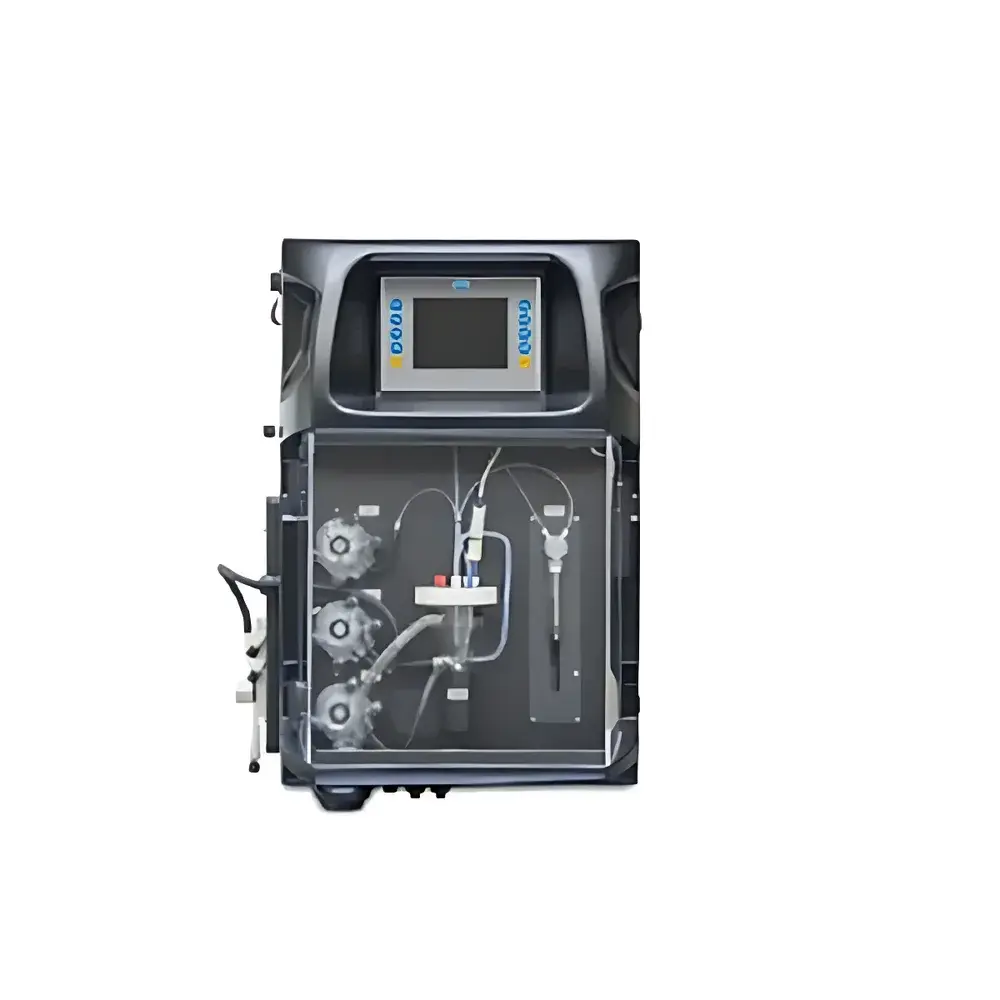
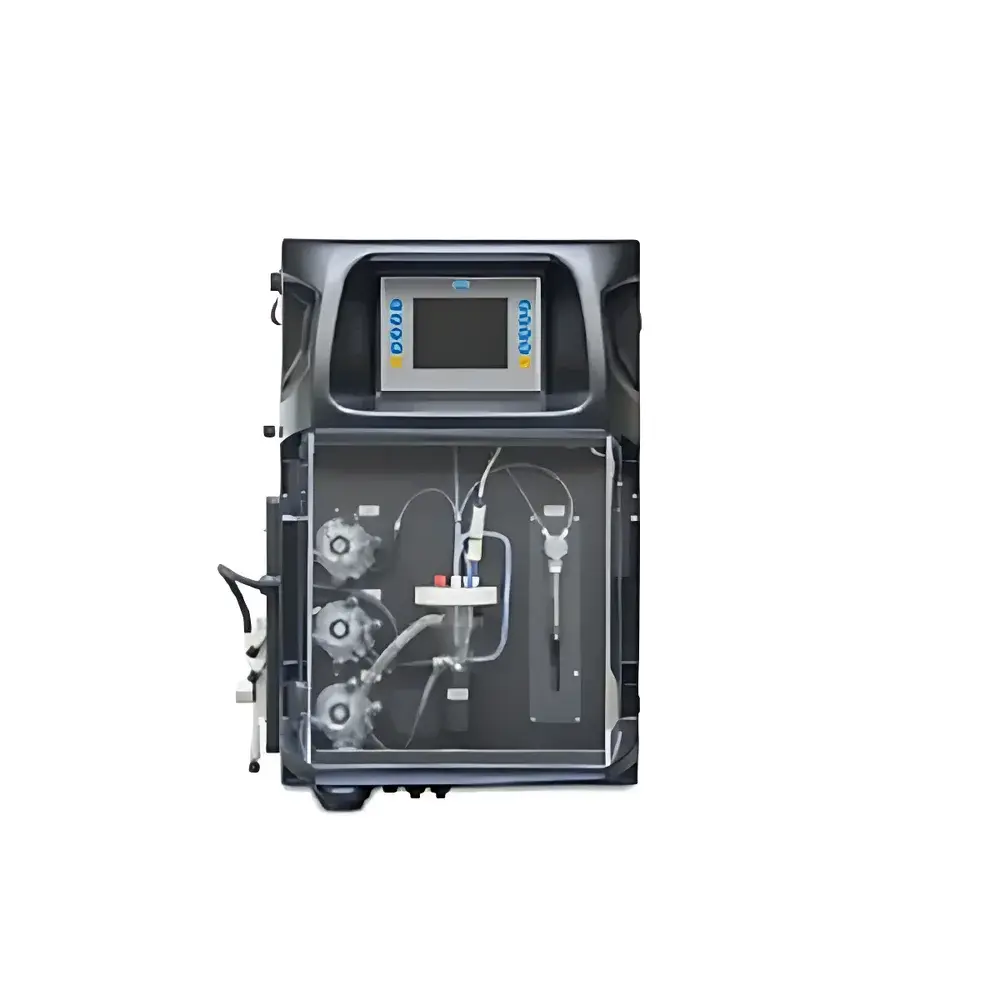
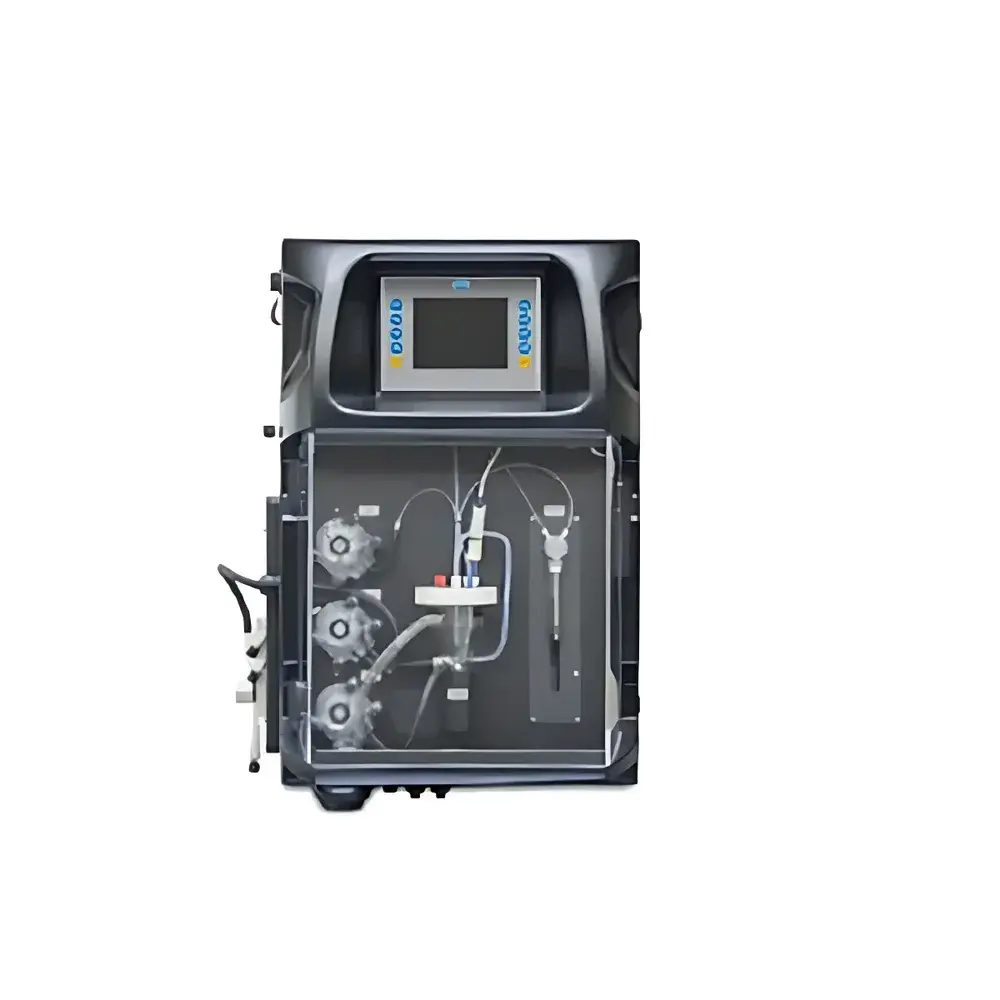
Hach EZ4000 Total Alkalinity Analyzer
| Brand | Hach |
|---|---|
| Origin | USA |
| Manufacturer Type | Authorized Distributor |
| Product Origin | Imported |
| Model | EZ4000 |
| Pricing | Available Upon Request |
| Measurement Principle | Acid–Base Titration with Standardized HCl |
| Detection Method | Photometric Endpoint Detection (610 nm or 620 nm) |
| Measured Parameters | Total Alkalinity, Free Alkalinity, Total Hardness, Calcium Hardness |
| Range (Alkalinity) | 100–5000 mg/L as CaCO₃ |
| Range (Hardness) | 100–1000 mg/L as CaCO₃ (EZ4041/EZ4044) |
| LOD (EZ4043) | ≤0.05 mg/L (via LED Immersion Probe) |
| Other Models | ≤10 mg/L |
| Cycle Time | 10–15 min per analysis |
| Operating Temperature | 5–35 °C ±5 °C (indoor, non-sunlit, non-rain-exposed) |
| Sample Temperature | 10–30 °C |
| Storage Temp (Analyzer) | −20 to +55 °C |
| (Electrodes) | −15 to +55 °C |
| Relative Humidity | 5–95% RH (non-condensing) |
| Power Supply | 110–240 VAC, 4 A, 50/60 Hz |
| Max. Power Consumption | 150 VA |
| Analog Output | 4–20 mA (1 standard channel, up to 8 optional) |
| Pneumatic Supply | Dry, oil-free air compliant with ISA-S7.0.01-1996 |
| Sample Flow Rate | 100–300 mL/min |
| Sample Requirements | Particulate max. 100 µm, suspended solids <0.1 g/L, turbidity <50 NTU |
| Certifications | CE, UL |
| Enclosure Rating | Analyzer Cabinet IP55, Front Panel PC IP65 |
| Dimensions (W×H×D) | 690 × 465 × 330 mm |
| Shipping Weight | 25 kg |
Overview
The Hach EZ4000 Total Alkalinity Analyzer is a fully automated, online photometric titration system engineered for continuous, unattended measurement of total alkalinity and free alkalinity in water and wastewater streams. It operates on the principle of standardized acid–base titration using hydrochloric acid (HCl) as the titrant, with endpoint detection achieved via high-stability LED photometry at precisely defined wavelengths (610 nm or 620 nm). Unlike manual or semi-automated benchtop methods, the EZ4000 integrates precise reagent dosing, controlled sample conditioning, and real-time optical endpoint recognition into a single robust platform—ensuring consistent stoichiometric reaction completion and minimizing operator-dependent variability. Designed for deployment in municipal drinking water treatment plants, industrial cooling towers, boiler feedwater systems, and effluent monitoring stations, the analyzer delivers traceable, repeatable alkalinity data aligned with regulatory reporting requirements under EPA Method 310.1 and ISO 9963-1.
Key Features
- Integrated titration architecture with calibrated peristaltic pumps, chemically resistant fluidic pathways (PTFE/PFA tubing), and precision-machined dispensing manifolds
- Dual-wavelength photometric detection module optimized for carbonate/bicarbonate endpoint resolution in complex matrices
- Modular design supporting simultaneous or sequential measurement of total alkalinity, free alkalinity, total hardness, and calcium hardness
- Self-diagnostic routines including reagent depletion alerts, flow verification, air bubble detection, and photometer zero/stability validation
- Industrial-grade enclosure rated IP55 (cabinet) and IP65 (front panel), suitable for indoor process environments with ambient temperature control
- Configurable 4–20 mA analog outputs with galvanic isolation, supporting up to eight independent channels for multi-parameter trending or DCS integration
- Compliance-ready firmware with audit trail logging, user access levels (admin/operator/viewer), and timestamped event records per FDA 21 CFR Part 11 guidance principles
Sample Compatibility & Compliance
The EZ4000 accepts raw or filtered water samples meeting defined physical constraints: suspended solids <0.1 g/L, particle size ≤100 µm, and turbidity <50 NTU. It is validated for use with potable water, surface water, treated wastewater, and low-salinity industrial process streams. The system conforms to CE and UL safety standards, and its analytical performance adheres to ASTM D1067 (Standard Test Methods for Acidity or Alkalinity of Water) and ISO 9963-1 (Water Quality — Determination of Alkalinity — Part 1: Determination of Total and Carbonate Alkalinity). Reagent delivery and endpoint detection are traceable to NIST-traceable HCl standard solutions, enabling laboratory correlation studies and method validation per GLP protocols.
Software & Data Management
Operation is managed through the embedded Hach EZView™ interface—a web-accessible, password-protected HTML5 dashboard supporting remote configuration, real-time trend visualization, historical data export (CSV/Excel), and alarm management. All measurements include metadata tags: sample ID, analysis timestamp, reagent batch number, calibration status, and diagnostic flags. Data integrity safeguards include write-protected memory, cyclic redundancy checks (CRC) on stored logs, and automatic backup to external USB storage. For enterprise integration, Modbus TCP and OPC UA drivers are available as optional modules, facilitating seamless ingestion into SCADA, LIMS, or cloud-based asset monitoring platforms without custom middleware.
Applications
- Municipal drinking water treatment: Real-time alkalinity monitoring for lime softening and coagulant dosing optimization
- Power generation: Boiler feedwater alkalinity control to prevent caustic embrittlement and corrosion
- Food & beverage processing: pH stability verification in rinse water and CIP solution recovery loops
- Chemical manufacturing: Effluent alkalinity compliance tracking prior to discharge to municipal sewers
- Environmental monitoring stations: Long-term trend analysis of watershed buffering capacity and acid rain impact assessment
FAQ
What titration method does the EZ4000 use for alkalinity measurement?
It employs standardized acid–base titration with 0.1 N hydrochloric acid, detecting the phenolphthalein and methyl orange endpoints photometrically.
Can the EZ4000 measure both alkalinity and hardness simultaneously?
Yes—the platform supports configurable assay sequences, allowing alternating or parallel analysis of total alkalinity, free alkalinity, total hardness, and calcium hardness using shared fluidic hardware.
Is the instrument suitable for outdoor installation?
No—it requires an indoor, climate-controlled environment (5–35 °C, non-condensing humidity, no direct sunlight or precipitation exposure) per IEC 60529 and UL 61010-1 specifications.
How often does the system require calibration verification?
Daily verification with certified reference standards (e.g., 250 mg/L and 1000 mg/L CaCO₃ alkalinity standards) is recommended; full calibration every 7 days or after reagent replacement.
Does the EZ4000 support regulatory audit trails for GMP environments?
Yes—audit trail functionality meets core elements of FDA 21 CFR Part 11, including electronic signatures, immutable event logging, and role-based access control, subject to site-specific validation protocols.
Related Products