
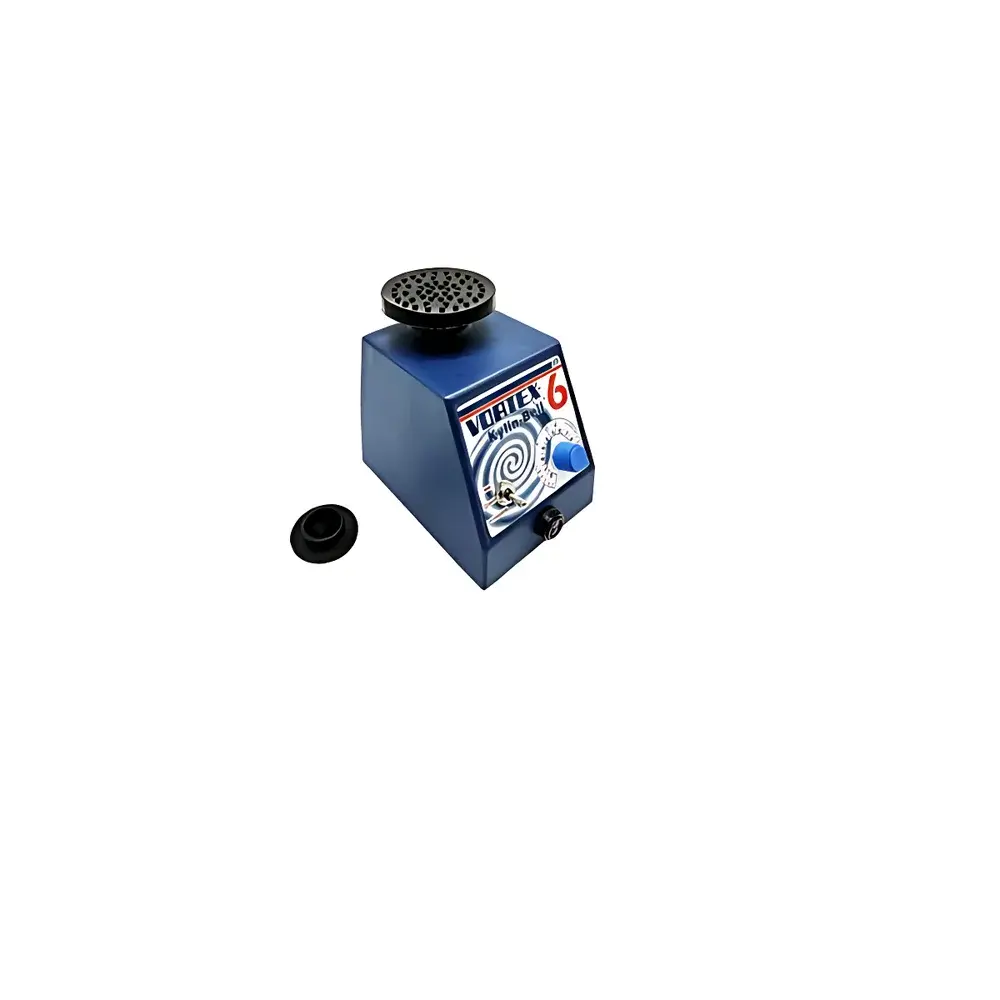
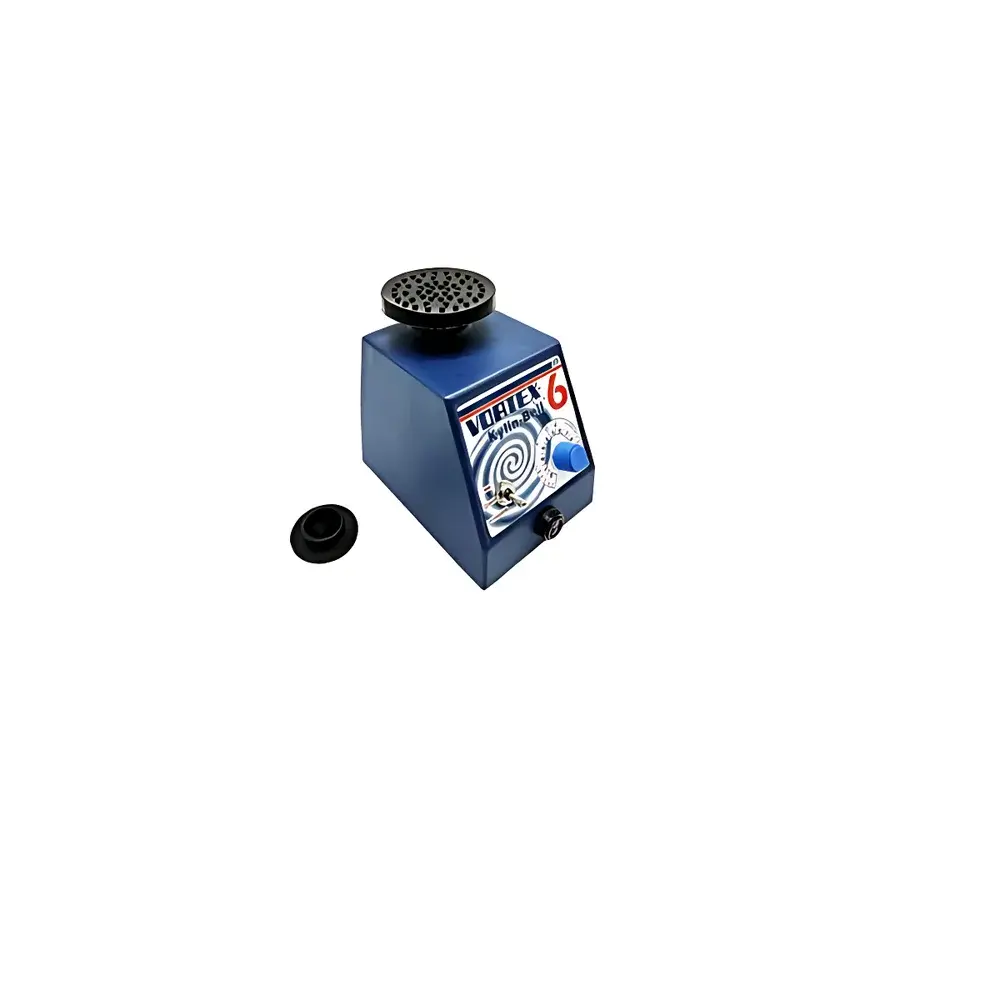
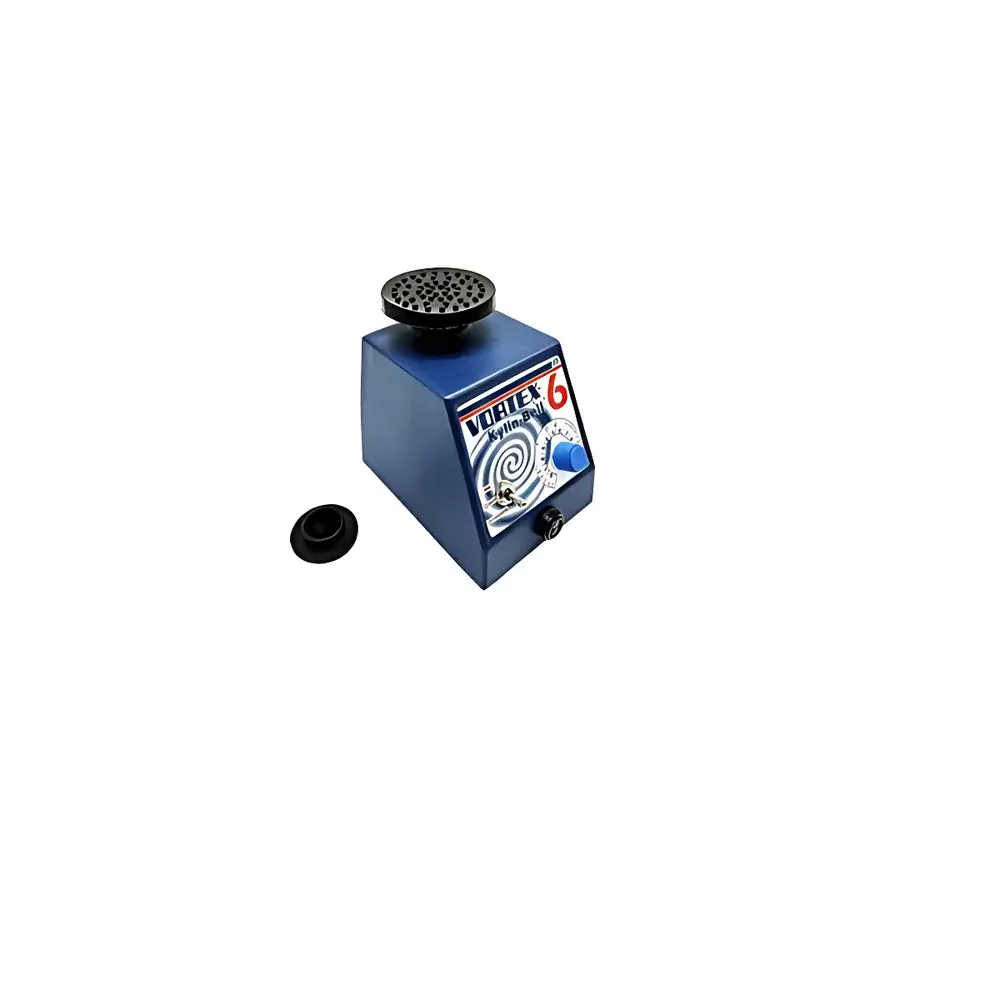
Kylin-Bell VORTEX-6+ Variable-Speed Vortex Mixer
| Brand | Kylin-Bell |
|---|---|
| Origin | Jiangsu, China |
| Manufacturer Type | Authorized Distributor |
| Country of Origin | China |
| Model | VORTEX-6+ |
| Operating Mode | Touch-Activated (Point-Action) |
| Maximum Speed | 2800 rpm |
| Speed Control | Continuously Adjustable |
| Housing Material | Full Metal Enclosure |
| Speed Display | Digital RPM Indicator (0–2800 rpm) |
| Ambient Temperature Range | 0–40 °C |
| Power Supply | 220 V AC |
| Power Consumption | 40 W |
| Operating Modes | Continuous, Touch-Activated (Point-Action), and Variable-Speed Vortex |
| Platform Options | Interchangeable Concave (for tubes) and Flat (for plates/vials) Platforms |
| Control Interface | Optical Proximity Sensor (30 cm sensing range) |
| Dimensions (W×D×H) | 170 × 120 × 170 mm |
| Net Weight | 4.8 kg |
Overview
The Kylin-Bell VORTEX-6+ is a precision-engineered variable-speed vortex mixer designed for reproducible, high-efficiency sample homogenization in life science and analytical laboratories. It operates on the principle of orbital eccentric motion—generating controlled centrifugal force to induce rapid vortex formation in liquid or suspension samples placed in tubes, vials, or microplates. Unlike fixed-speed units, the VORTEX-6+ integrates continuously adjustable speed control (0–2800 rpm), enabling users to optimize mixing intensity for diverse sample viscosities, volumes, and container geometries. Its mechanical architecture prioritizes stability and minimal energy dissipation: the full metal housing provides inertial mass to suppress resonance and vibration transmission, while the low-noise motor ensures compliance with ISO 14040-accredited laboratory acoustic environments (<55 dB at 1 m). The device meets general electrical safety requirements per IEC 61010-1 for laboratory equipment and is rated for continuous operation under ambient conditions ranging from 0 to 40 °C.
Key Features
- Three-mode operational flexibility: continuous rotation, touch-activated (point-action) vortex, and stepless speed adjustment via rotary dial — supporting both hands-free and operator-triggered protocols.
- Dual-platform interchangeability: concave platform optimized for standard 0.2–50 mL conical tubes and centrifuge tubes; flat platform compatible with 96-well plates, PCR strips, and shallow reservoirs.
- Optical proximity sensing interface: non-contact activation within 30 cm detection range eliminates mechanical wear and cross-contamination risk associated with push-button interfaces.
- Digital RPM display with real-time feedback: enables precise method documentation and inter-laboratory protocol transfer without reliance on external tachometers.
- Robust thermal management: aluminum heat-sink integrated into motor housing ensures stable torque output across extended duty cycles (≥8 h/day).
- Compact footprint (170 × 120 × 170 mm) and 4.8 kg mass: achieves optimal center-of-gravity stability without requiring anchoring or additional counterweights.
Sample Compatibility & Compliance
The VORTEX-6+ accommodates common laboratory containers including polypropylene and glass test tubes (up to 50 mL), Eppendorf-style microcentrifuge tubes (0.2–2.0 mL), PCR tubes, deep-well plates, and flat-bottom vials. Its torsional output is calibrated to avoid sample foaming in low-viscosity buffers (e.g., PBS, TE) and ensure particle resuspension in dense suspensions (e.g., bacterial pellets, magnetic beads). While not certified to GLP/GMP Annex 11 or FDA 21 CFR Part 11 out-of-the-box, the device supports audit-ready workflows when paired with laboratory information management systems (LIMS) that log operator ID, timestamp, speed setting, and duration per run. It complies with CE marking requirements for electromagnetic compatibility (EN 61326-1) and low-voltage directive (2014/35/EU).
Software & Data Management
The VORTEX-6+ operates as a standalone analog-digital hybrid instrument with no embedded firmware or network connectivity. All operational parameters—including speed setpoint, active mode, and runtime—are manually configured and visually confirmed via the front-panel digital display. For traceable method execution, users may integrate the mixer into validated SOPs using external timers or LIMS-linked barcode scanners that trigger logging upon optical sensor activation. No proprietary software or drivers are required; however, optional third-party data acquisition modules (e.g., USB-connected tachometer loggers) can record speed profiles for IQ/OQ validation packages.
Applications
- Routine reagent resuspension prior to pipetting or dilution series preparation.
- Homogenization of cell lysates and protein extraction buffers in molecular biology workflows.
- Uniform dispersion of nanoparticles, liposomes, or polymer emulsions during formulation development.
- Pre-analytical mixing of clinical specimens (e.g., whole blood, serum, urine) prior to centrifugation or immunoassay loading.
- Accelerated dissolution testing of solid dosage forms in pharmaceutical QC labs (per USP <701> guidance).
- Standardized vortexing steps in ISO/IEC 17025-accredited testing procedures where mixing consistency directly impacts measurement uncertainty.
FAQ
Is the VORTEX-6+ suitable for mixing viscous samples such as glycerol-based solutions?
Yes — its high-torque motor maintains consistent 2800 rpm output even at full load, though optimal mixing efficiency for >500 cP fluids is achieved at reduced speeds (800–1500 rpm) to minimize air entrapment.
Can the optical sensor be disabled for manual switch operation?
No — the optical interface is integral to the control circuitry; however, the unit includes a physical power switch for complete de-energization during maintenance.
Does the VORTEX-6+ support calibration verification per ISO/IEC 17025?
Yes — the digital RPM display allows direct comparison against NIST-traceable handheld tachometers; calibration certificates for speed accuracy (±2% full scale) are available upon request.
What maintenance is required for long-term reliability?
Annual inspection of motor brushes and platform mounting screws is recommended; no lubrication is required due to sealed bearing design.
Is the metal housing grounded for ESD-sensitive environments?
Yes — the chassis is connected to protective earth via the 3-pin mains plug, meeting IEC 61340-5-1 requirements for electrostatic discharge protection.



