
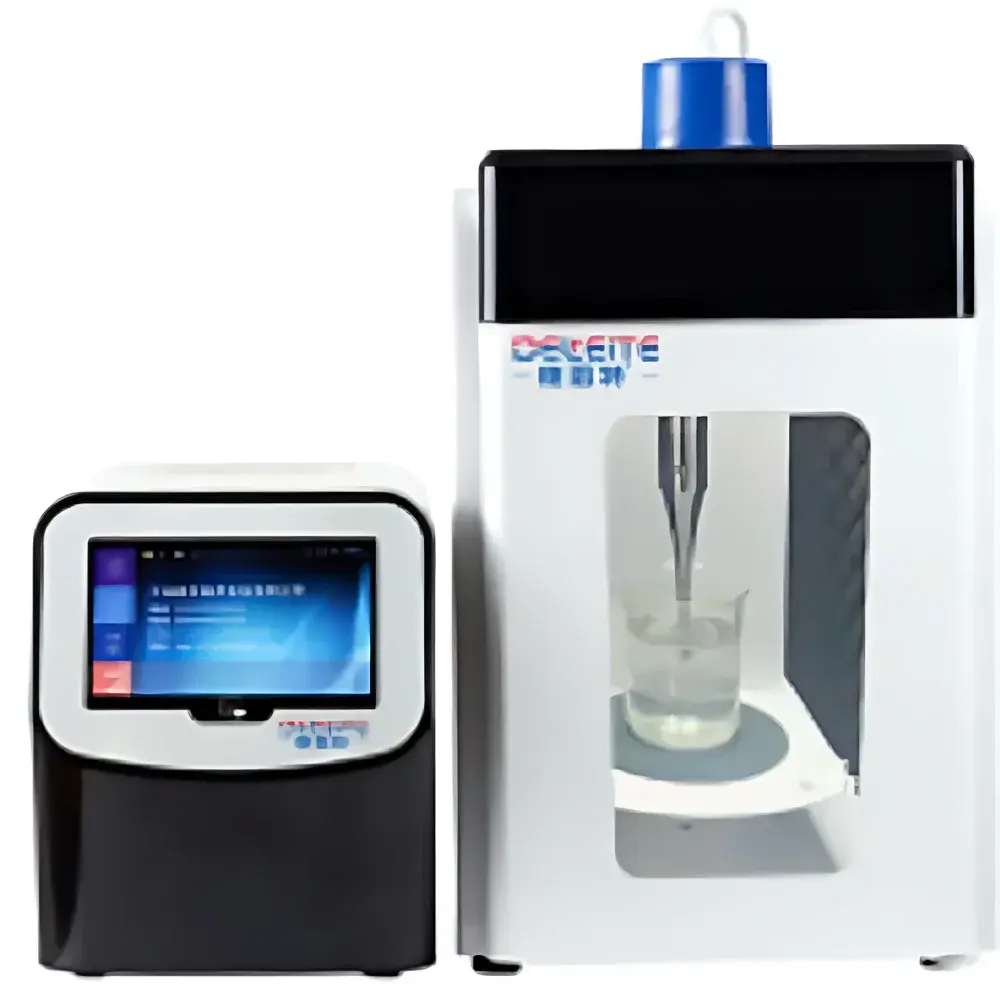
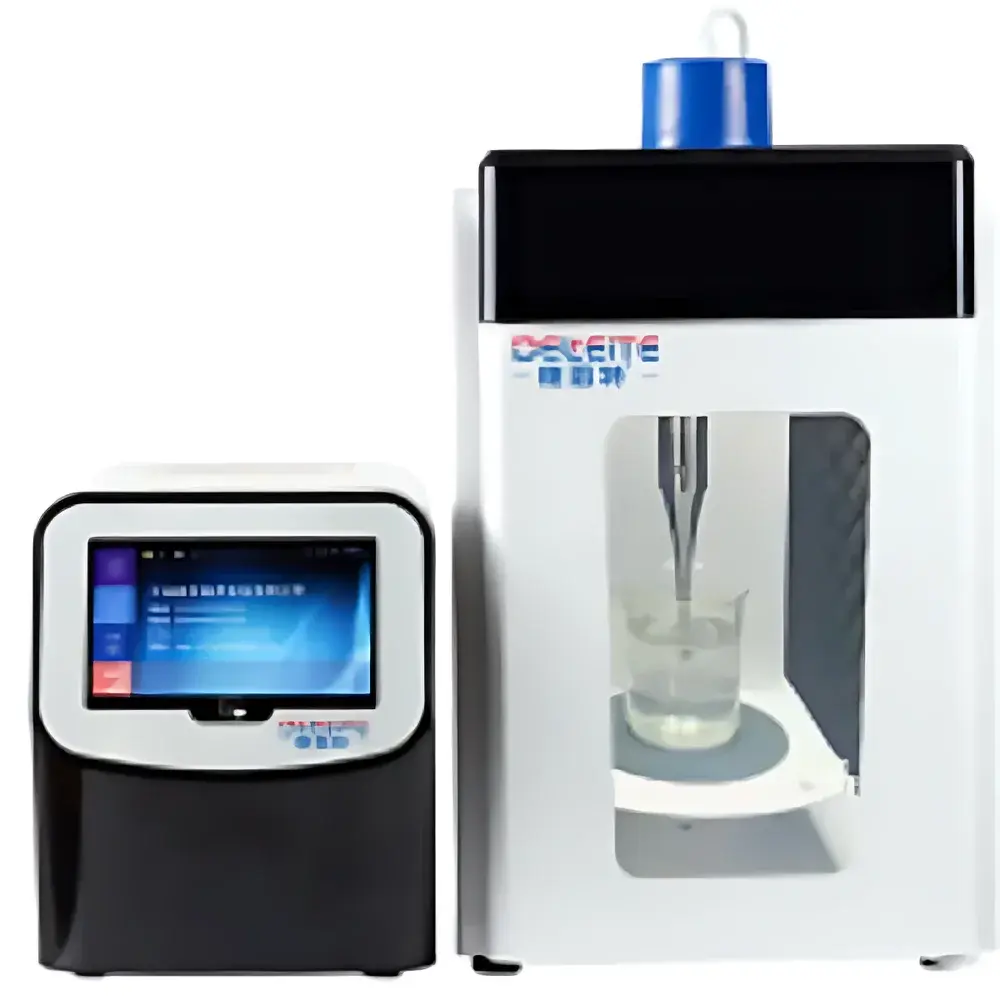
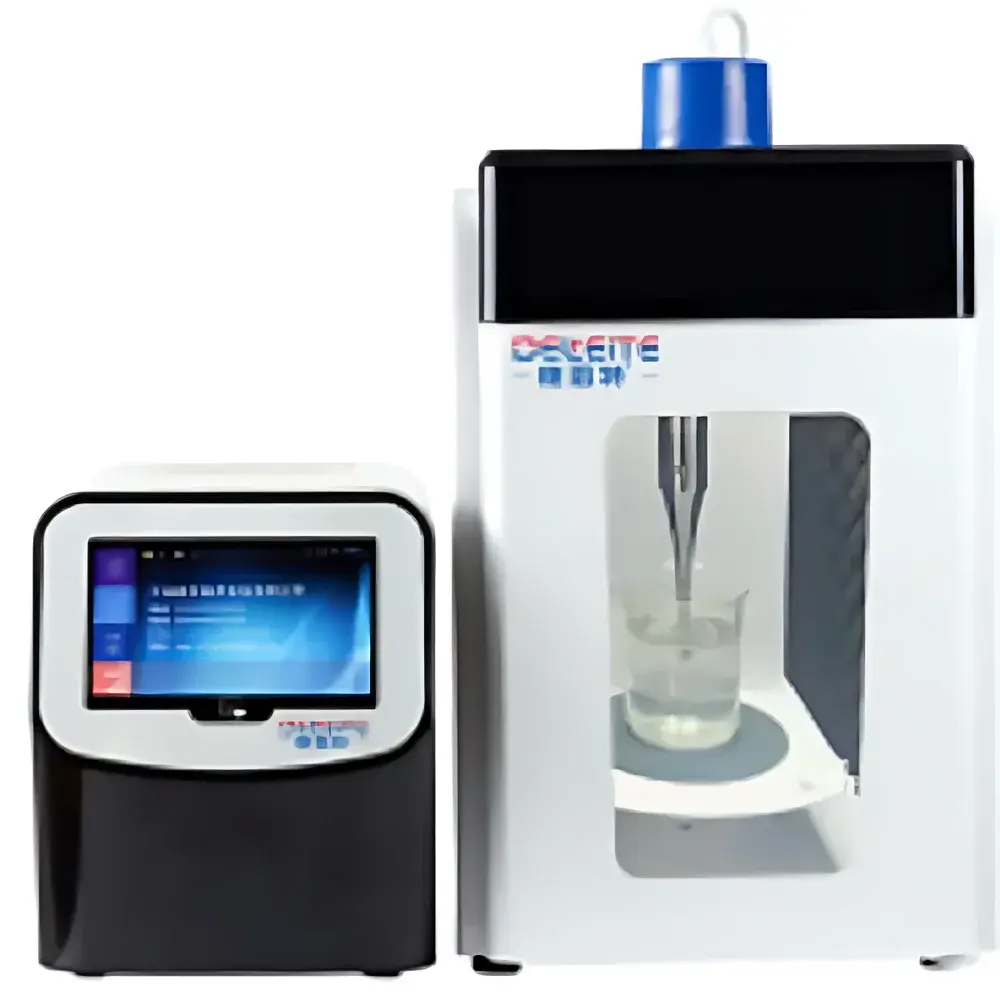
DELEITE DLT-2400 High-Power Ultrasonic Cell Disruptor
| Brand | DELEITE |
|---|---|
| Origin | Shanghai, China |
| Model | DLT-2400 |
| Instrument Type | Ultrasonic Cell Disruptor |
| Operating Frequency | 20 kHz ± 0.5 kHz |
| Ultrasonic Power Output | 2400 W (continuously adjustable from 1% to 100%) |
| Sample Volume Capacity | 500–2000 mL |
| Temperature Control Range | 0–99.9 °C |
| Duty Cycle Adjustment | 0.1–99.9% |
| Display | 7-inch TFT capacitive touchscreen |
| Probe Material | TC4 titanium alloy |
| Standard Horn Diameter | Φ25 mm (optional horns: Φ3, 6, 10, 15, 20, 22, 25, 28 mm) |
| Safety Features | Overcurrent, overvoltage, overtemperature, and timer fault protection |
| Cooling | Integrated NTC thermistor-based sample temperature monitoring |
| Configuration | Separated main unit + acoustic isolation chamber with motorized lift stage and LED illumination |
| Optional Upgrades | UV sterilization module |
Overview
The DELEITE DLT-2400 High-Power Ultrasonic Cell Disruptor is an engineered solution for controlled, scalable mechanical lysis of biological cells, microbial aggregates, and particulate suspensions. It operates on the principle of high-intensity ultrasonic cavitation—where rapid pressure fluctuations in a liquid medium generate transient microbubbles that collapse violently, producing localized shear forces, microstreaming, and shockwaves sufficient to disrupt cellular membranes and subcellular structures. Designed for reproducible processing of volumes ranging from 500 mL to 2000 mL, the DLT-2400 delivers consistent energy input across batch-scale applications in molecular biology, biopharmaceutical development, and industrial microbiology laboratories. Its 2400 W nominal output power, combined with real-time frequency tracking and adaptive amplitude compensation, ensures stable acoustic energy delivery regardless of load impedance variation—a critical requirement for maintaining process fidelity during extended sonication cycles.
Key Features
- Intelligent digital control architecture with 7-inch capacitive TFT touchscreen interface for intuitive parameter configuration and real-time feedback.
- Microprocessor-driven frequency auto-tracking system maintains resonance at 20 kHz ± 0.5 kHz, minimizing harmonic drift and maximizing transduction efficiency.
- Continuous and pulsed (duty-cycle) operation modes: continuous mode supports up to 999 minutes; pulsed mode enables precise on/off timing (0.1–99.9 s pulse width) within total cycle durations up to 99 h 59 min 59 s.
- 20 programmable method storage slots allow rapid recall of validated protocols—ideal for multi-user environments requiring traceable, repeatable workflows.
- TC4 titanium alloy horn with optimized horn geometry (tapered “gourd” profile) ensures uniform radial and axial wave propagation, enhanced energy transfer, and superior resistance to erosion and thermal fatigue.
- Integrated NTC temperature sensor continuously monitors sample temperature (0–99.9 °C), triggering automatic shutdown if preset thermal thresholds are exceeded—preserving biomolecular integrity.
- Acoustic isolation chamber with layered sound-absorbing insulation, motorized height-adjustable platform, and transparent viewing window enables safe, unattended operation while minimizing ambient noise exposure (<65 dB(A) at 1 m).
Sample Compatibility & Compliance
The DLT-2400 accommodates heterogeneous sample types—including bacterial cultures, yeast suspensions, tissue homogenates, and nanoparticle dispersions—in liquid, solid-liquid, or gas-liquid systems. Its modular horn system (Φ3–Φ28 mm options) permits optimization of power density per volume, supporting applications from small-volume lysate preparation to large-batch emulsification. The instrument meets general laboratory safety standards for Class II ultrasonic equipment (IEC 61000-6-3 EMC compliance). While not certified under FDA 21 CFR Part 11 by default, its audit-ready data logging capability—including timestamped parameter records, alarm logs, and user ID tagging—supports GLP/GMP-aligned documentation when integrated into validated lab information management systems (LIMS).
Software & Data Management
All operational parameters—including time, temperature, power level, duty cycle, frequency deviation, and alarm events—are logged locally with timestamps and retained for ≥30 days. Export is supported via USB flash drive in CSV format for external analysis. The embedded firmware supports firmware updates via secure USB interface. Optional RS-485 or Ethernet connectivity modules (sold separately) enable remote monitoring and integration into centralized lab automation platforms. Audit trail functionality includes operator login tracking and immutable parameter change history—facilitating regulatory review in quality-controlled environments.
Applications
- Cell lysis for protein extraction, genomic DNA isolation, and RNA stabilization in upstream bioprocessing.
- Preparation of antigenic extracts and subunit vaccines through controlled disruption of pathogenic microorganisms.
- Nanomaterial dispersion and deagglomeration in colloidal formulation development.
- Homogenization of plant and animal tissues prior to metabolite profiling or proteomic analysis.
- Enhancement of enzymatic reaction kinetics via ultrasonically induced mass transfer acceleration.
- Emulsification of oil-in-water and water-in-oil systems for food science and cosmetic R&D.
FAQ
What is the maximum recommended processing volume for optimal lysis efficiency?
For uniform energy distribution and thermal management, the DLT-2400 achieves highest reproducibility within the 800–1500 mL range using the standard Φ25 mm horn. Volumes below 500 mL require smaller-diameter horns to avoid excessive localized cavitation damage.
Can the instrument operate unattended overnight?
Yes—provided the acoustic chamber is properly sealed, cooling conditions are maintained, and temperature limits are conservatively set. All safety interlocks remain active during extended runs.
Is calibration traceable to national standards?
Power output calibration is performed using NIST-traceable hydrophone-based acoustic power measurement during factory acceptance testing. Certificate of Conformance is supplied with each unit.
Does the system support IQ/OQ/PQ documentation packages?
Standard IQ/OQ templates are available upon request. PQ validation support—including protocol drafting and test execution guidance—is offered through DELEITE’s Application Engineering team.
How does the automatic amplitude compensation function maintain consistency?
The system dynamically adjusts drive voltage in response to real-time impedance shifts caused by sample viscosity changes or probe erosion—ensuring constant displacement amplitude at the horn tip across variable loads.




