
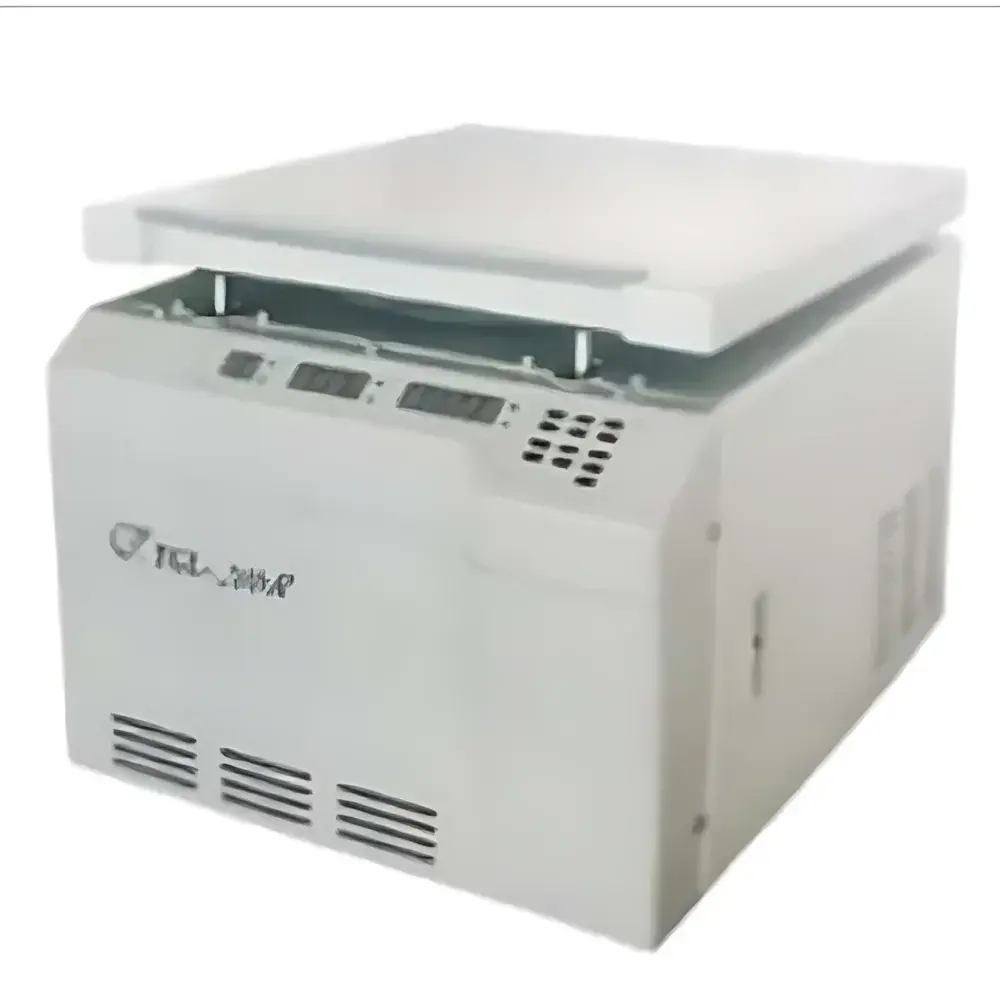
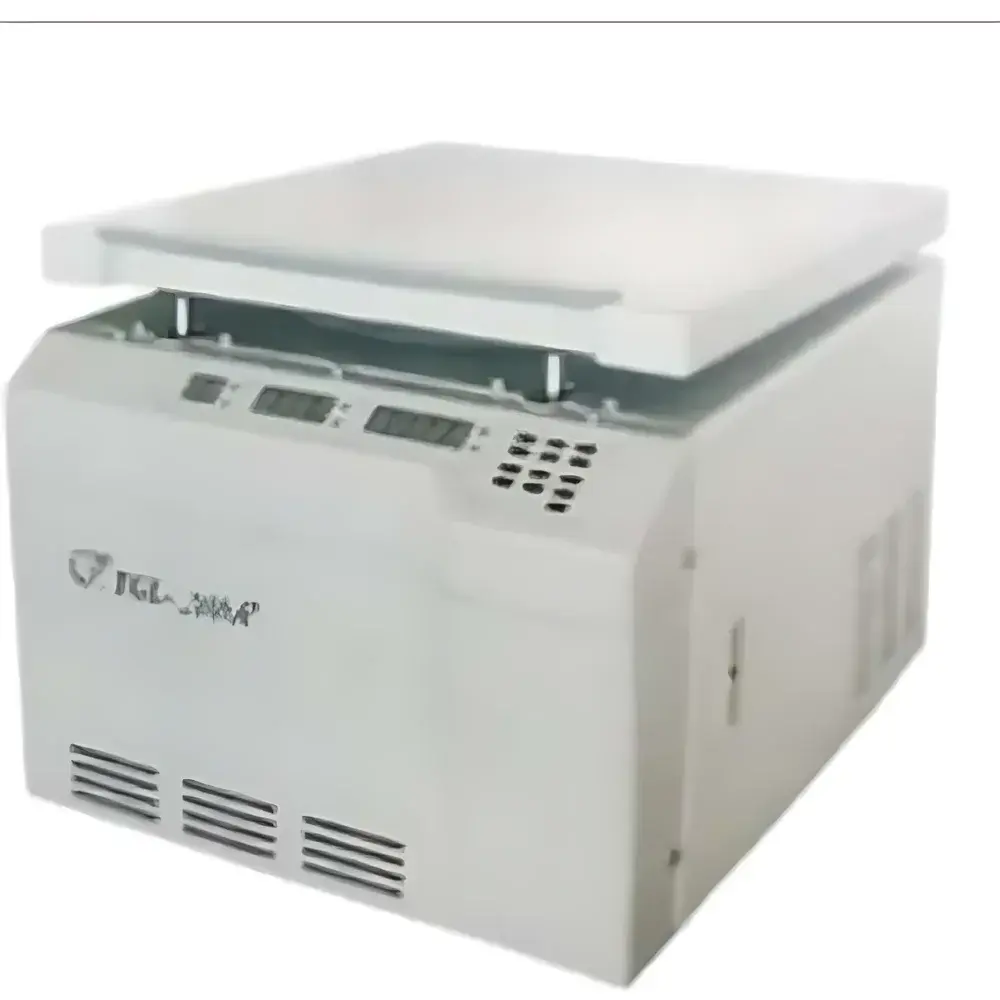
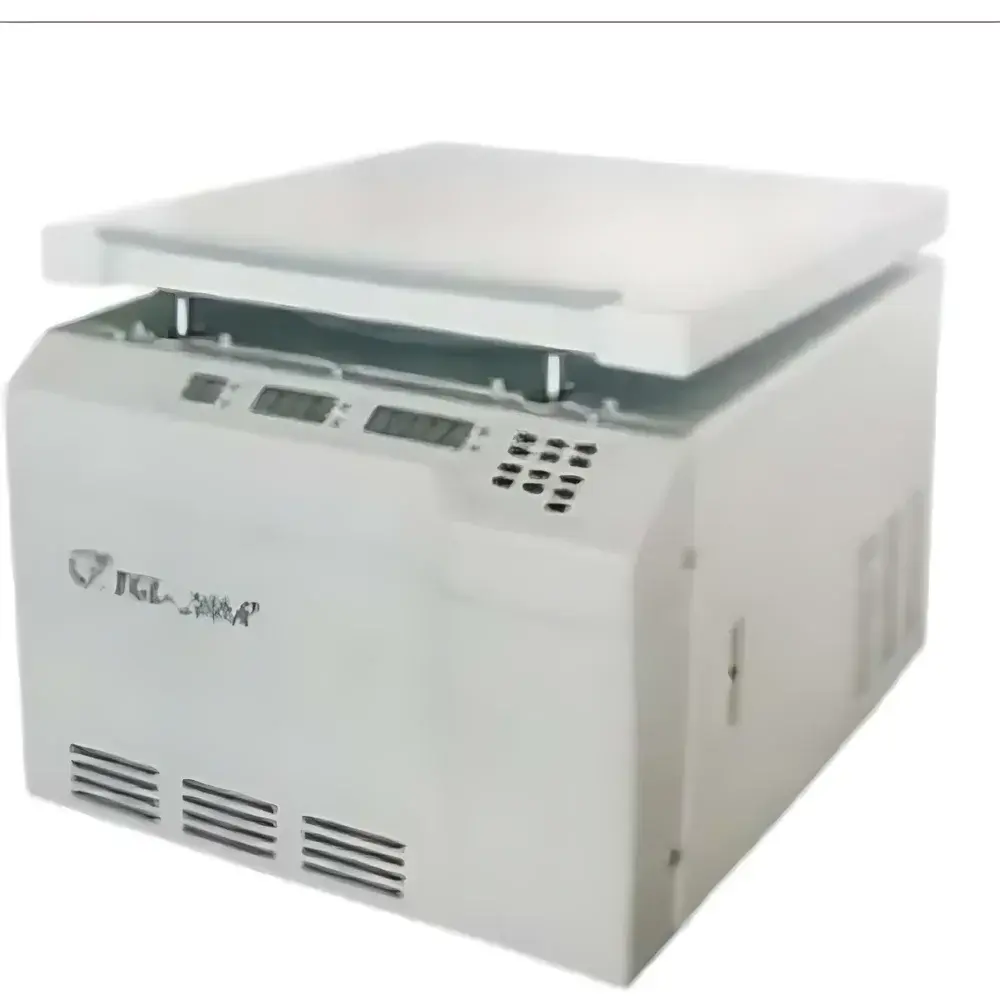
AnTing TGL-20bR High-Speed Refrigerated Benchtop Centrifuge
| Brand | AnTing |
|---|---|
| Origin | Shanghai, China |
| Model | TGL-20bR |
| Instrument Type | Benchtop Centrifuge |
| Cooling Function | Refrigerated (−20 °C to +30 °C) |
| Rotor Configuration | Fixed-Angle Rotor |
| Maximum Speed | 20,000 rpm |
| Maximum RCF | 24,598 ×g |
| Maximum Capacity | 6 × 50 mL |
| Timer Range | 0–99 min |
| Power Consumption | 1.25 kW |
| Dimensions (L×W×H) | 570 × 500 × 395 mm |
| Weight | 85 kg |
| Housing Material | Reinforced Engineering Plastic |
| Safety Feature | Electronic Lid Lock |
| Centrifugation Class | High-Speed Refrigerated Centrifuge |
Overview
The AnTing TGL-20bR is a high-speed refrigerated benchtop centrifuge engineered for precise, reproducible separation of biological, chemical, and pharmaceutical samples under controlled thermal conditions. It operates on the principle of sedimentation under centrifugal force—generating up to 24,598 ×g at its maximum rotational speed of 20,000 rpm—to accelerate phase separation based on particle density, size, and shape. Designed for routine and research-grade applications in academic laboratories, QC/QA facilities, and bioprocessing support labs, the TGL-20bR maintains sample integrity through active refrigeration across a wide operating temperature range (−20 °C to +30 °C), minimizing thermal degradation during extended runs. Its compact footprint and reinforced engineering plastic housing provide structural rigidity while reducing overall mass—enhancing operational stability and vibration damping without compromising mechanical robustness.
Key Features
- Refrigerated operation with independent compressor-based cooling system ensuring accurate temperature control within ±2 °C across the full −20 °C to +30 °C range
- Microprocessor-controlled speed regulation with digital display and real-time rpm/RCF conversion
- Electronic lid interlock mechanism compliant with IEC 61010-2-020 safety standards for centrifuge equipment
- Fixed-angle rotor configuration optimized for rapid pelleting of microcentrifuge tubes, conical tubes, and standard 50 mL polypropylene centrifuge tubes
- Programmable timer (0–99 minutes) with automatic deceleration and audible end-of-run alert
- Brushless DC motor delivering high torque at elevated speeds, low electromagnetic interference, and extended service life
- Vibration-dampened base and precision-balanced rotor assembly ensuring <0.05 mm runout tolerance and silent operation below 65 dB(A)
Sample Compatibility & Compliance
The TGL-20bR accommodates common laboratory vessels including 1.5–2.0 mL microtubes, 15 mL and 50 mL conical centrifuge tubes, and select swing-out adapters (optional). Its fixed-angle rotor supports standardized tube geometries conforming to ISO 8573-1 and ASTM D3490 specifications for centrifuge tube dimensional tolerances. The instrument meets essential electrical safety requirements per IEC 61010-1 and electromagnetic compatibility (EMC) per IEC 61326-1. While not certified for GMP or FDA 21 CFR Part 11 environments out-of-the-box, its programmable parameters, non-volatile memory retention, and electronic access control provide foundational traceability suitable for GLP-aligned workflows when integrated into documented SOPs.
Software & Data Management
The TGL-20bR features embedded firmware with local parameter storage for up to 10 user-defined protocols, each retaining speed, temperature, time, and acceleration/deceleration profiles. All settings are retained after power cycling via EEPROM. No external software interface or USB/RS-232 connectivity is provided; data logging is limited to manual recording of displayed values. For laboratories requiring audit trails, integration with LIMS or ELN systems must be achieved through operator-entered metadata entry—not automated export. This architecture prioritizes reliability and regulatory simplicity over digital connectivity, aligning with environments where cybersecurity constraints or legacy infrastructure limit networked instrumentation.
Applications
- Cell pellet isolation from mammalian, bacterial, and yeast cultures prior to lysis or cryopreservation
- Clarification of crude protein extracts and nucleic acid preparations following enzymatic digestion or binding steps
- Separation of subcellular organelles—including mitochondria and lysosomes—in differential centrifugation protocols (e.g., adapted from Alberts et al., Molecular Biology of the Cell)
- Routine quality control of colloidal suspensions, emulsions, and nanoparticle dispersions in materials science labs
- Preparative fractionation of plasma components (e.g., platelet-rich plasma, exosome enrichment) in translational research settings
- Stabilization of temperature-sensitive analytes—such as labile enzymes or RNA-binding proteins—during high-g-force separation
FAQ
What is the minimum operating temperature, and how quickly does the chamber reach setpoint?
The refrigeration system achieves −20 °C nominal setpoint; stabilization time from ambient (25 °C) to −20 °C is approximately 22–25 minutes under no-load conditions.
Is rotor imbalance detection included?
Yes—the unit performs automatic imbalance sensing during acceleration and halts operation if vibration exceeds ISO 1940-1 G6.3 class thresholds.
Can this centrifuge accommodate swing-bucket rotors?
No—only the supplied fixed-angle rotor (6 × 50 mL) is validated for use; third-party or swing-bucket configurations are unsupported and void warranty.
Does it meet ISO 22870 requirements for point-of-care testing environments?
While not formally certified to ISO 22870, its electrical safety, mechanical stability, and temperature consistency align with key performance indicators referenced in that standard.
What maintenance intervals are recommended for optimal performance?
Rotor inspection every 500 runs or annually (whichever occurs first); refrigerant pressure check every 24 months; condenser coil cleaning every 6 months in high-dust environments.



